
For global buyers, 2026 is reshaping the market for Low-Pressure Cast Wheels. The International Energy Agency reported that electric car sales exceeded 17 million worldwide in 2024, creating stronger demand for efficient, durable, and weight-conscious wheel designs. The report also expects electric vehicles to represent more than one-fifth of global car sales. More EVs mean higher vehicle mass, greater torque, and stricter requirements for fatigue resistance.
Industry forecasts from Grand View Research and Fortune Business Insights indicate continued growth in automotive alloy wheels, supported by vehicle production, replacement demand, and premium customization. However, market projections are not purchasing decisions. A wheel may look polished under showroom lights yet fail through poor porosity control, uneven heat treatment, or weak coating adhesion. Small details matter.
John Campbell, a widely recognized casting-process authority and author of Complete Casting Handbook, stated, “The quality of a casting can never be better than the quality of the liquid metal.” His warning remains highly relevant to Low-Pressure Cast Wheels. Molten aluminum cleanliness, controlled filling, and reliable X-ray inspection directly influence safety and service life. In factory evaluations, buyers should examine test records, alloy certificates, dimensional reports, and traceability codes—not only catalog photographs.
The outlook is promising, but not flawless. Supplier claims can be incomplete. Weight reductions may compromise durability when engineering is rushed. This 2026 guide compares manufacturing quality, load performance, corrosion protection, certification practices, and global supply reliability, helping buyers choose wheels that perform beyond the first attractive quotation.
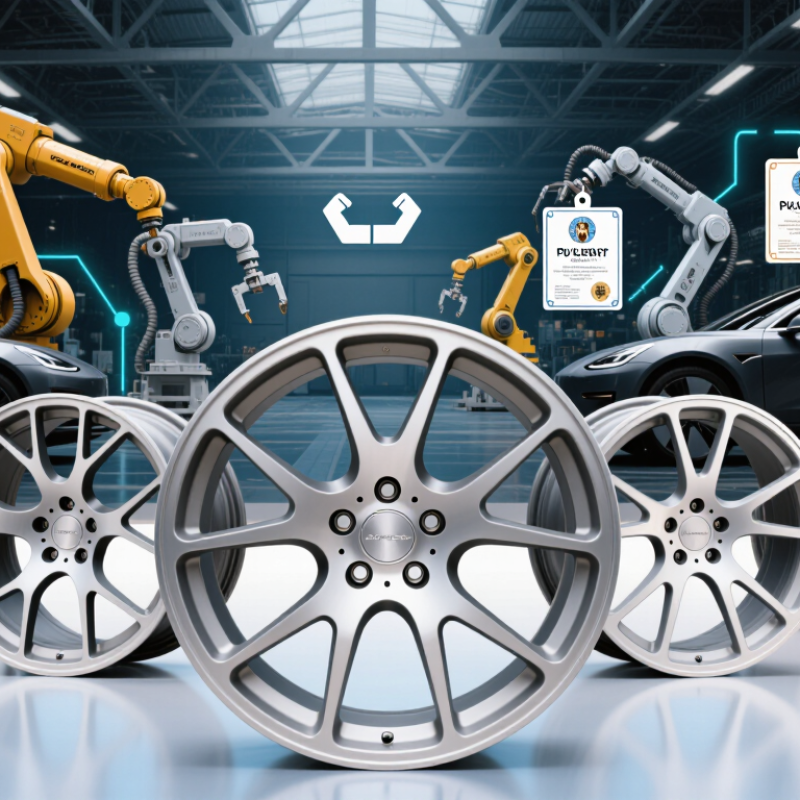
Low pressure cast wheels are aluminum wheels formed inside a sealed metal mold. Molten aluminum rises from a furnace through a feed tube. Gentle pressure then pushes the metal upward into the cavity. This method usually operates near 0.3 to 1 bar, helping reduce turbulence and trapped air.
The process is controlled, not magical. The wheel begins with alloy preparation, mold preheating, and temperature checks. After solidification, workers remove the casting, heat-treat it, and machine the hub and bolt holes. X-ray inspection can reveal internal pores. Pressure testing, runout measurement, and dynamic balancing follow. A small assumption can become a vibration complaint.
The World Foundry Organization reported more than 180 million tonnes of global castings in its 2023 census, showing the scale of modern metal production. However, that figure covers many industries, not wheels alone. The International Aluminium Institute states that recycled aluminum needs roughly 5% of the energy required for primary aluminum production. This supports careful scrap separation during wheel manufacturing. Buyers should request alloy certificates, heat-treatment records, dimensional reports, and inspection results. ISO 9001 and automotive-process controls can strengthen traceability, but certificates do not replace physical testing. Fitment still depends on load rating, offset, center bore, and vehicle-specific clearance. Data varies by producer, and published market reports often use different definitions. That deserves honest review.
2026 Top Low Pressure Cast Wheels for Global Buyers
Low-pressure cast wheels commonly use A356 aluminum alloy, often modified with silicon and magnesium. Its balance of strength, corrosion resistance, and casting flow suits passenger vehicles. T6 heat treatment can improve yield strength, but it cannot repair poor casting quality. Buyers should request chemical certificates and heat-treatment records. The U.S. Department of Energy reports that a 10% vehicle weight reduction can improve fuel economy by approximately 6–8%. Wheel weight matters, especially because it is unsprung and rotating mass.
Design details affect real-world performance. Thinner spokes can reduce weight, yet sharp transitions may increase stress concentration. Rounded spoke roots, controlled wall thickness, and a reinforced bead seat are safer choices. X-ray inspection helps identify internal porosity. It is not perfect. Fatigue testing remains necessary. SAE J2530 testing evaluates aftermarket wheel durability through radial fatigue, cornering fatigue, and impact procedures. TÜV technical guidance also emphasizes load capacity, dimensional accuracy, and impact resistance. For global buyers, confirm the wheel’s maximum load exceeds the vehicle’s axle requirement, not merely its average curb weight.
European Aluminium research places typical automotive aluminum weight-saving potential near 100 kilograms in broader vehicle applications, with measurable efficiency benefits. Still, lighter is not always better. Poor spoke stiffness can create vibration, uneven tire wear, or cracking around the hub. Check runout, mounting-face flatness, coating thickness, and test documentation before ordering. Supplier claims deserve verification.
Representative mechanical properties of common cast-aluminum alloy options used in low-pressure wheel production.
A356-T6 remains a widely used baseline because it combines low density, good castability, corrosion resistance, and reliable heat-treated strength. A357-T6 generally offers higher strength, while 319-T6 provides strong thermal conductivity and good castability. Actual wheel performance also depends on spoke geometry, rim thickness, heat treatment, porosity control, fatigue testing, and regional safety requirements. Values shown are representative published ranges and may vary by specification and supplier.
2026 Top Low Pressure Cast Wheels for Global Buyers
Global wheel safety depends on verified performance, not casting claims. UNECE Regulation No. 124 covers replacement wheels in many markets. SAE J2530 supports aftermarket wheel testing in North America. ISO 3006 and ISO 7141 describe passenger-car alloy wheel test methods. These tests examine radial fatigue, cornering fatigue, and curb impact resistance. Load ratings must match the vehicle axle loads. Small mismatches can create serious risk.
NHTSA’s Traffic Safety Facts 2023 reported 40,901 road fatalities in the United States. The report does not assign these deaths to wheel failures. That limitation matters. Buyers should request laboratory reports, traceable serial numbers, material records, and dimensional inspection results. Check bolt-hole accuracy, center-bore fit, offset, and valve-seat quality. A certificate is not magic. Production variation still deserves attention.
Tips: Confirm the exact market approval before ordering. Ask for test loads and cycle counts, not only a compliance logo. Review corrosion results for coastal or winter regions. Inspect sample wheels independently when possible. I would also compare advertised load ratings with real axle weights. This step is easy to skip. That is the weak point.
Choosing low pressure cast wheels for global vehicles requires more than matching a diameter. Measure the vehicle’s bolt pattern, center bore, offset, and brake clearance. A 18-inch wheel can still fit poorly. The wrong offset may touch suspension parts or push the tire beyond the fender.
Load rating deserves careful attention. The Tire and Rim Association Year Book provides regional load and inflation tables for wheel and tire selection. Compare the wheel’s rated capacity with the vehicle’s axle load, not only its curb weight. NHTSA reported 738 fatalities in tire-related crashes in 2017, showing why pressure and load checks matter. Keep a safety margin for passengers, cargo, and rough roads. Test real conditions.
Finish affects service life and appearance. Powder coating usually suits daily use, while machined surfaces may need stronger protection against salt and moisture. ETRTO guidance helps buyers review dimensional compatibility across European applications. Surface quality still varies between factories. Ask for coating thickness, corrosion testing, and inspection records. A polished finish can look excellent under showroom lights, but maintenance changes that result. That part is easy to underestimate.
Check the certificate, not just the photograph. Request impact-test results, batch traceability, and clear marking for size, offset, and load rating. I would also confirm replacement availability before ordering. A cheaper wheel becomes expensive when one damaged unit cannot be matched. Small mistakes remain possible, so a local fitment inspection is worth the extra hour.
For global buyers, low pressure cast wheels should be purchased by specification, not appearance. I compare diameter, width, bolt pattern, offset, center bore, load rating, and vehicle application. A clean finish helps, but it cannot prove structural quality. Ask for alloy details, production dates, inspection records, and dimensional tolerances. I have seen attractive samples fail because the offset was measured incorrectly.
Before payment, request clear photos of the mounting pad, bead seat, valve hole, and wheel face. Use a dial gauge to check radial and lateral runout on samples. Confirm that cracks, deep pores, machining marks, and coating bubbles are absent. Where available, review pressure testing and non-destructive inspection reports. Third-party inspection adds cost, but it may prevent a larger loss. One detail is easily missed: the declared load rating must match the intended vehicle and local requirements.
Tips: Confirm packaging before production. Each wheel should have separators, edge protection, and moisture control for sea transport. Ask for carton dimensions, gross weight, packing photos, and a complete commercial invoice. Verify shipping terms, destination port, customs documents, and cargo insurance in writing. Keep one approved sample for comparison. Small errors become expensive across a full container.
A356 aluminum alloy is common. Silicon and magnesium can improve casting flow, strength, and corrosion resistance. Ask for chemical certificates.
No. T6 heat treatment can improve yield strength, but it cannot fix poor casting quality. Review heat-treatment records and inspection results.
Wheel weight affects fuel efficiency, handling, and suspension response. Rotating, unsprung mass matters more than many buyers expect. Weight still matters.
Rounded spoke roots reduce sharp stress concentrations. Controlled wall thickness and reinforced bead seats can improve durability. Thinner spokes are not automatically better.
X-ray inspection can reveal internal porosity, but it is not perfect. Fatigue and impact testing remain necessary. Looks can mislead.
Confirm diameter, width, bolt pattern, offset, center bore, load rating, and vehicle application. Check the required axle load, not only curb weight.
Request photos of the mounting pad, bead seat, valve hole, and wheel face. Use a dial gauge to check radial and lateral runout.
Each wheel needs separators, edge protection, and moisture control. Confirm carton size, gross weight, packing photos, insurance, and customs documents in writing.
An attractive sample may have incorrect offset or poor dimensional accuracy. Keep one approved sample for comparison. I would still recheck every measurement before production.
This guide explains what Low-Pressure Cast Wheels are, how molten aluminum is formed under controlled pressure, and why the process can provide a practical balance of strength, weight, appearance, and production efficiency. It reviews key material choices, spoke and rim design considerations, corrosion resistance, heat management, and performance characteristics that matter for passenger vehicles, commercial applications, and varied driving conditions.
For global buyers, the article outlines how to evaluate safety documentation and applicable international standards before purchase. It also provides a practical framework for comparing wheel diameter, width, bolt pattern, offset, center bore, load rating, and surface finish to ensure proper vehicle fitment. Finally, it covers supplier communication, sample inspection, quality checks, packaging, shipping preparation, customs documentation, and delivery planning, helping buyers source and receive Low-Pressure Cast Wheels safely and efficiently in different markets.