
China Top Brushed Alloy Wheel Manufacturers?

Time:2026-11-02 Author:Oliver
0%

China is an important sourcing base for alloy wheels, with manufacturers serving both domestic and international markets. Yet “top” depends on what a buyer needs: custom styling, steady production, clear communication, or dependable quality control. This guide introduces Chinese manufacturers of Brushed Alloy Wheel products and the practical details worth checking before making a shortlist.

A brushed finish is created through controlled surface treatment, often followed by a protective coating. The grain direction, spoke edges, and coating consistency can change how a wheel looks under workshop lights or in direct sunlight. Small flaws show. A good product description should explain materials, finish options, available sizes, and fitment limits rather than relying on attractive photos alone.

Manufacturer comparisons should consider more than price. Ask how dimensions are checked, how samples match production batches, and what inspection records can be shared. Confirm the supplier’s stated certifications and traceability directly; a logo on a brochure is not enough evidence. Review communication, order capacity, packaging, and experience with your target market, while verifying claims independently. A polished catalog is not proof. Nor is a low quotation. This overview offers a starting point for evaluating suppliers, not a universal ranking: buyers should test samples and match specifications to their vehicles and intended use. Even careful checks cannot remove every risk, but they make decisions more informed and expectations clearer.
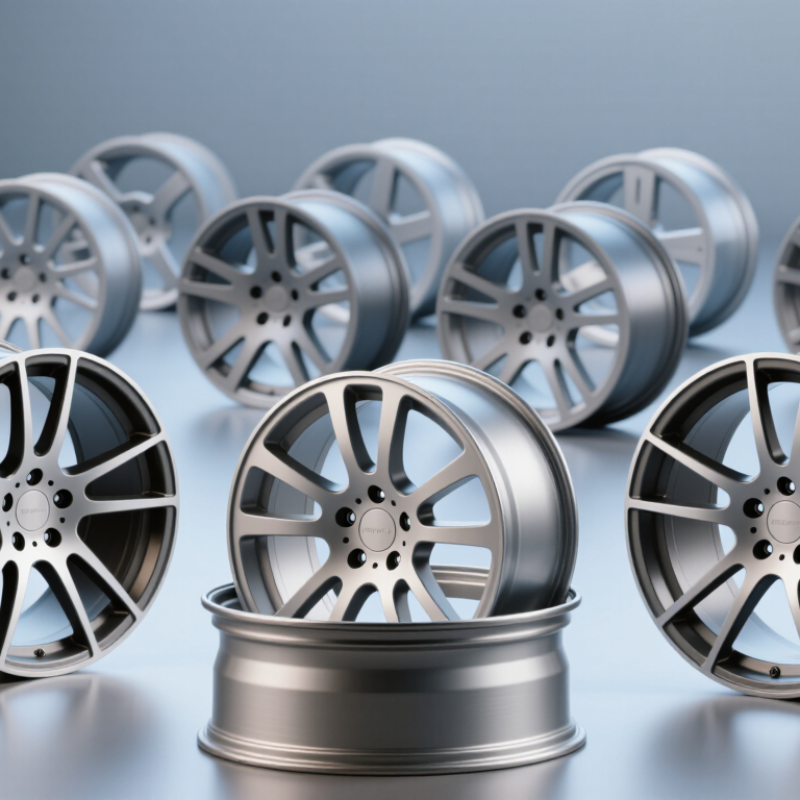
China Top Brushed Alloy Wheel Manufacturers?

Understanding Brushed Alloy Wheels and Their Surface Finish

Brushed alloy wheels get their appearance from fine, directional abrasion across the metal surface. The lines catch light at different angles, creating a satin sheen rather than a mirror-like polish. Their spacing and depth matter. Uneven brushing can leave dark bands or visible swirls, especially around spoke edges. A transparent protective coating helps shield the finish from moisture, road grit, and brake dust. It does not make the surface maintenance-free.

Material choice affects the wheel, but finish quality depends on process control. The Aluminum Association lists aluminum’s density at about 2.7 g/cm³, compared with roughly 7.8 g/cm³ for steel. The U.S. Department of Energy’s vehicle lightweighting guidance estimates that a 10% reduction in vehicle weight can improve fuel economy by about 6–8%; this is a vehicle-level estimate, not a wheel-specific guarantee. For buyers, inspect the brushed grain under angled light and check that the clear coat looks continuous near corners. Small flaws can be easy to miss. Harsh cleaners may dull the coating, and a scratch through it can expose metal to corrosion. Even careful production cannot prevent every mark.

How China’s Alloy Wheel Manufacturing Industry Is Organized

China’s brushed alloy wheel industry is organized as a connected production network, not a collection of identical factories. Wheel makers source aluminum, operate casting or forging lines, and coordinate machining, finishing, testing, and packing. Some facilities control most steps in-house; others rely on nearby specialist suppliers. This affects lead times and how quickly a finish can be adjusted.

Brushed surfaces require careful coordination. After the wheel is formed and heat-treated, machining creates the spoke contours and visible grain. Workers then apply protective coatings, often checking sample pieces under bright, angled light. Small marks can stand out on a brushed face. Quality teams may inspect dimensions, coating consistency, and balance, while laboratory tests assess strength and durability. Details vary by process and customer specification.

The industry also includes mold makers, equipment providers, coating shops, logistics firms, and independent testing services. Regional supplier networks can make production efficient, but proximity alone does not guarantee consistency. Buyers should review process records, test reports, and inspection methods for the specific wheel design. A factory tour helps, but it is only a snapshot. I would not treat one clean production line as proof of routine performance; repeat orders reveal more.

Leading Chinese Brushed Alloy Wheel Manufacturers and Their Strengths

Chinese brushed-alloy-wheel manufacturers often stand out for combining casting, CNC machining, surface brushing, and coating within one supply chain. This can shorten sampling cycles and make spoke designs easier to customize. Small details matter. A brushed face should show even grain direction, clean transitions around the spokes, and no rough patches near the center bore. Buyers should also check runout, coating adhesion, and corrosion-test results, not just polished samples.

Market scale supports this manufacturing base. The China Association of Automobile Manufacturers reported 31.28 million vehicles produced in China in 2024. The International Energy Agency’s Global EV Outlook 2025 reported more than 11 million electric-car sales in China that year, increasing demand for varied wheel designs and weight-conscious components. These figures describe the wider vehicle market, not brushed-wheel output. That distinction matters. Suppliers may offer broad finishing options, but process control can vary between production runs. Ask for inspection records from multiple batches and confirm whether brushing and coating are performed in-house. A flawless sample is useful; it is not proof of consistent volume quality.

How to Compare Manufacturers by Quality, Certification, and Production Capacity

China Top Brushed Alloy Wheel Manufacturers?

How to Compare Manufacturers by Quality, Certification, and Production Capacity

When comparing Chinese brushed alloy wheel manufacturers, look beyond showroom samples. A smooth face can hide uneven machining or inconsistent coating beneath the finish. Ask for inspection records from recent production runs, not only a carefully selected sample. Check dimensions, runout measurements, surface defects, and how rejected wheels are handled. Ask for proof. Numbers can mislead: stated capacity may describe ideal conditions rather than typical monthly output. A factory visit or live video review can help you see machining, finishing, and packing processes more clearly.

Review certificates carefully. Confirm the issuing body, validity dates, covered products, and whether the certificate applies to the actual production site. Do not treat a certificate as a substitute for product-level test reports. For capacity, ask about monthly output by wheel size, current order load, lead times, and backup equipment. Look for documented maintenance and traceability from incoming alloy to finished wheel. A pilot order can reveal more than a presentation, especially when you inspect several pieces for finish consistency. One limitation is that a small batch may not reflect peak-season performance, so ask how quality checks hold up during busy periods.

Key Considerations When Sourcing Brushed Alloy Wheels from China

When sourcing brushed alloy wheels from China, assess process control before comparing catalogue prices. The China Association of Automobile Manufacturers reported 30.094 million vehicle sales in 2023, indicating a substantial automotive supply base. Scale alone proves nothing about an individual factory. Ask for the wheel’s material grade, heat-treatment records, dimensional inspection results, and load-test reports. Tie every report to the exact model and production batch.

The brushed face needs its own specification. Confirm brush direction, surface consistency, clear-coat coverage, and acceptable cosmetic limits in writing. Inspect a physical sample under neutral light; online images can hide uneven grain and small coating defects. Request evidence of runout, fatigue, and impact testing against the requirements for your intended vehicle. A certificate alone is thin evidence. Factory audits can help, but they do not replace batch-level checks.

Material sourcing also deserves scrutiny. The International Aluminium Institute’s aluminium-recycling information states that recycled aluminium can require up to 95% less energy than primary production. That is useful context, not proof of wheel quality. Ask suppliers to document recycled content and verify alloy chemistry and mechanical properties. This part is easy to overlook. Even a strong sample may not represent later production, so define inspection frequency and rejection criteria before placing an order.

FAQS

What gives brushed alloy wheels their satin appearance?

Fine, directional abrasion creates lines that catch light from changing angles. The finish looks satin, not mirror-like.

How can I check the brushed finish?

View the wheel under angled light. Look for uneven grain, dark bands, or swirls near spoke edges. Small flaws hide.

Does a clear coat prevent all damage?

No. It helps shield the finish from moisture, road grit, and brake dust, but does not eliminate maintenance. Harsh cleaners may dull it.

What should I inspect around the wheel’s corners?

Check that the clear coat looks continuous, especially near edges and spoke corners. A scratch through the coating can expose metal to corrosion.

Does an aluminum wheel’s lower weight guarantee better fuel economy?

No. Aluminum has a density of about 2.7 g/cm³, compared with roughly 7.8 g/cm³ for steel. Vehicle-level weight savings may help fuel economy, but this is not a wheel-specific guarantee.

What production records should I request from a manufacturer?

Ask for recent inspection records covering dimensions, runout, surface defects, and rejected wheels. A polished sample alone tells little.

How should I verify a manufacturer’s certificates?

Check the issuing body, validity dates, covered products, and production site. Also request product-level test reports. A certificate is not enough.

How can I judge production capacity and finish consistency?

Ask about monthly output by wheel size, current orders, lead times, and backup equipment. A pilot order helps, but may not reflect peak-season quality. I still find that easy to overlook.

Conclusion

This article explains what defines a Brushed Alloy Wheel, including how its directional surface finish is created and how that finish affects appearance, care, and consistency. It also outlines the structure of China’s alloy wheel manufacturing industry, from specialized producers to larger facilities with integrated design, machining, finishing, and inspection capabilities.

Readers will learn how to compare potential manufacturers using practical criteria such as material and process controls, quality certifications, testing procedures, production capacity, and communication. The final section highlights sourcing considerations, including clear specifications, sample evaluation, finish consistency, lead times, packaging, and after-sales support. Together, these points offer a straightforward framework for assessing suppliers and selecting a manufacturing partner whose capabilities align with a project’s requirements.

Oliver

Oliver

Oliver is a seasoned marketing professional with a wealth of expertise in driving brand awareness and engagement. With a deep understanding of our company's product offerings, he consistently delivers high-quality content that enriches our professional blog. His insights not only shed light on......