
China Top Casting Aluminum Rim Manufacturers?
China Top Casting Aluminum Rim Manufacturers? This question deserves more than a supplier list. It requires evidence about alloy quality, casting control, machining accuracy, and long-term wheel performance.
China remains a major aluminum production center. The U.S. Geological Survey reported approximately 41 million metric tons of primary aluminum production in China during 2023. Demand is also substantial. The China Association of Automobile Manufacturers recorded more than 30 million vehicle sales in 2023. These figures explain why Chinese Casting Aluminum Rim manufacturers continue investing in low-pressure casting, heat treatment, X-ray inspection, and automated machining.
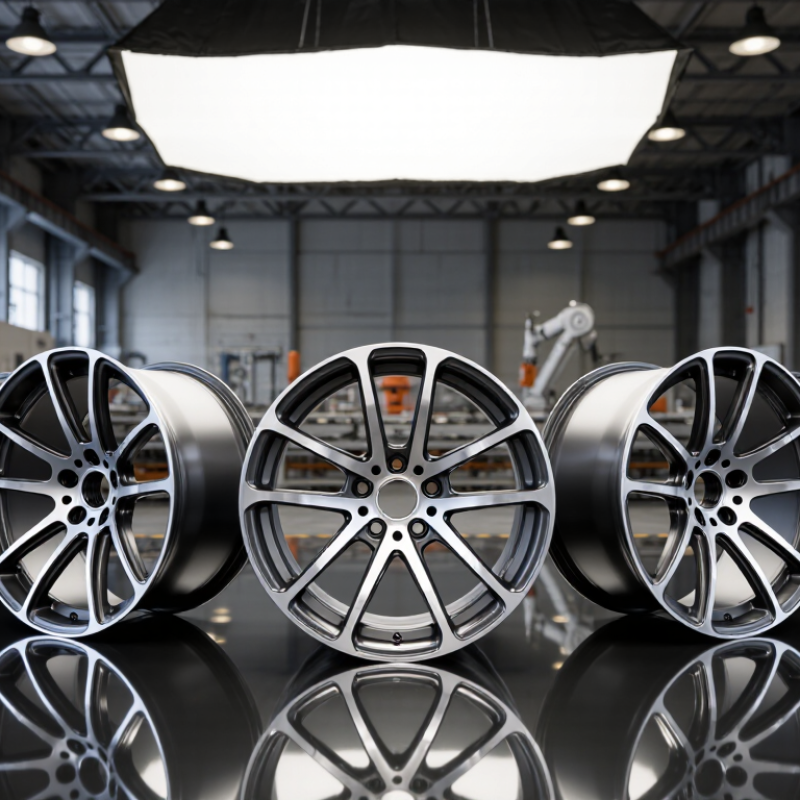
The details matter. A rim may look flawless under bright factory lighting, yet hidden porosity can weaken it. John Campbell, a recognized casting researcher and author, stated, “The quality of a casting is determined by the quality of the liquid metal.” His principle remains highly relevant to wheel production. Material cleanliness, hydrogen control, mold filling, and thermal treatment directly influence fatigue resistance.
Industry reports from Grand View Research and MarketsandMarkets identify lightweight aluminum wheels as an important automotive component segment. However, market reports are not perfectly comparable. Some combine forged, cast, passenger-car, and commercial-vehicle wheels. That limitation deserves attention. A reliable comparison should examine alloy certificates, IATF 16949 systems, ISO 9001 certification, dimensional reports, impact tests, and fatigue-test records. It should also verify production experience rather than trust polished catalogs alone. The following guide evaluates China’s leading Casting Aluminum Rim manufacturers through these practical and technical criteria.
China’s Casting Aluminum Rim Manufacturing Industry
China Top Casting Aluminum Rim Manufacturers?
China’s casting aluminum rim manufacturing industry has developed through large-scale foundries, skilled machining teams, and increasingly controlled inspection systems. Many manufacturers use low-pressure casting for consistent metal flow and reduced porosity. Some facilities also use gravity casting for selected wheel designs and production volumes.
The process usually begins with alloy preparation and mold control. Chemical composition matters because small variations can affect strength and elongation. After casting, heat treatment can improve mechanical performance. CNC machining then refines the hub face, bolt holes, and rim profile. Technicians commonly check runout, balance, surface defects, and dimensional accuracy. X-ray inspection can reveal internal porosity that visual checks cannot detect.
Quality records are important. Reliable factories maintain material certificates, process parameters, inspection reports, and traceable batch numbers. They may perform fatigue, impact, corrosion, and air-leak testing according to the customer’s required standards. Factory audits should examine calibration systems, worker training, and corrective-action records, not only showroom samples.
The industry still has weaknesses. A polished sample may hide unstable mass production. Supplier communication can also become unclear when drawings change quickly. Some manufacturers promise strict consistency before collecting enough production data. That deserves caution. Buyers should review first-article results and monitor repeat batches. Even experienced engineers can miss small dimensional drift without regular measurement. Casting remains efficient, but mold wear, alloy cleanliness, and heat-treatment control require constant attention.
| Data Dimension | Industry Parameter | Typical Data or Requirement | Manufacturing Relevance | Reference or Qualification |
|---|---|---|---|---|
| Product Scope | Cast aluminum wheel types | Passenger-car wheels, light-commercial-vehicle wheels, trailer wheels, and selected specialty wheels | Product design is determined by vehicle load, mounting system, brake clearance, tire size, and intended road use | Application-specific engineering data required |
| Casting Process | Low-pressure die casting | Molten aluminum is forced into a permanent metal mold by controlled gas pressure | Commonly selected for automotive wheels because it can provide good filling control, repeatability, and material utilization | Process capability varies by equipment and mold design |
| Casting Process | Gravity die casting | Molten aluminum fills a permanent mold primarily under gravity | Suitable for certain wheel designs and lower-volume production, but filling and internal soundness require careful control | Actual suitability depends on geometry and validation testing |
| Casting Process | High-pressure die casting | Molten metal is injected into a steel die at high speed and pressure | Offers high productivity and good dimensional repeatability; wheel applications require strict control of porosity and fatigue performance | Not all wheel designs use this process |
| Material | Aluminum-silicon casting alloys | Al-Si alloys are widely used because of their castability, corrosion resistance, and balance of strength and ductility | Silicon content improves fluidity and reduces casting shrinkage; alloy selection affects heat treatment and fatigue behavior | Exact alloy grade should be confirmed in the material certificate |
| Material | Typical wheel alloy families | Heat-treatable Al-Si-Mg and related automotive casting alloy families are commonly considered | Magnesium and silicon support precipitation hardening after suitable solution treatment and aging | Grade designation differs by national and customer specification |
| Heat Treatment | T6-type treatment | Typically includes solution heat treatment, quenching, and artificial aging | Can improve yield strength and fatigue performance when the casting has adequate internal soundness | Cycle parameters must be qualified for the selected alloy and wheel design |
| Physical Property | Aluminum alloy density | Approximately 2.6–2.8 g/cm³ for common cast aluminum alloys | Lower density than steel supports weight reduction, although final wheel mass depends on design and load requirements | Typical range; alloy-specific values apply |
| Design Range | Common passenger-wheel diameters | Approximately 13–22 inches in many passenger-vehicle programs | Diameter, width, offset, bolt pattern, and center bore must match the vehicle application | Market range varies by vehicle segment |
| Design Control | Critical wheel dimensions | Rim diameter, rim width, offset, bolt-hole pattern, center bore, mounting face, and valve-hole position | These dimensions affect fitment, wheel balance, brake clearance, handling, and tire compatibility | Controlled drawing and approved samples required |
| Dimensional Quality | Runout and roundness | Measured using radial and lateral runout equipment; limits are defined by the applicable drawing or wheel standard | Excessive runout may cause vibration, uneven tire wear, or mounting problems | No universal value should be assumed across all wheel programs |
| Internal Quality | Porosity and shrinkage control | Controlled through melt cleanliness, degassing, gating, solidification management, and process parameter monitoring | Internal defects can reduce fatigue life and pressure tightness, especially in highly stressed regions | Acceptance criteria are normally customer- and design-specific |
| Inspection | X-ray or radiographic inspection | Used to identify internal porosity, shrinkage, inclusions, and other casting discontinuities | Often applied to development samples, process audits, and production verification plans | Inspection frequency depends on risk and customer requirements |
| Inspection | Leak testing | Air-pressure testing may be used to verify sealing performance of the wheel and tire-contact region | Helps detect through-wall defects and leakage paths that may not be visible externally | Test pressure and allowable leakage are specification-dependent |
| Performance Testing | Rotating-bending fatigue test | Simulates repeated bending loads applied to the wheel during service | Evaluates fatigue resistance around the spokes, rim, hub, and mounting areas | Test method and load level depend on the applicable wheel standard |
| Performance Testing | Radial fatigue test | Applies repeated radial loading to represent wheel and tire loads during operation | Used to assess durability under cyclic vertical loading | Vehicle load rating and test protocol must be defined before testing |
| Performance Testing | Impact test | Evaluates wheel behavior under a localized impact event, such as a severe road obstacle | Helps assess fracture, deformation, and loss of tire retention after impact | Applicable impact method varies by market and certification requirement |
| Surface Finish | Common finishing systems | Machining, powder coating, wet painting, clear coating, or combinations of these finishes | Finishing affects appearance, corrosion resistance, coating adhesion, and dimensional control | Finish specification should define color, gloss, thickness, and defect limits |
| Corrosion Protection | Salt-spray and cyclic corrosion evaluation | Testing may be performed on coated wheels to evaluate resistance to corrosive environments | Important for wheels exposed to water, road salt, humidity, and temperature changes | Test duration and acceptance criteria depend on the customer specification |
| Quality System | Automotive manufacturing controls | Common control tools include process flow charts, control plans, FMEA, measurement-system analysis, and statistical process control | Supports repeatable production and traceability from raw material through final inspection | Many automotive supply chains require IATF 16949-based systems |
| Standards | Wheel safety and aftermarket requirements | Applicable requirements may include SAE J2530, JWL/VIA requirements, ECE regulations, or other regional rules | Target market determines the required design validation, marking, documentation, and testing | Requirements are not interchangeable; confirm the destination-market rules |
| Traceability | Production records | Typical records include alloy batch, melt or furnace identification, casting date, heat-treatment lot, inspection results, and shipment lot | Enables root-cause analysis, controlled recalls, and verification of product conformity | Retention period is defined by contract or quality-system requirements |
| Supplier Evaluation | Key manufacturer-selection criteria | Process capability, alloy control, tooling engineering, inspection equipment, testing capacity, surface finishing, traceability, and delivery performance | A factory should be evaluated using audited evidence rather than product images or stated capacity alone | Request current certificates, test reports, control plans, and sample approval records |
| Sustainability | Aluminum recycling potential | Aluminum can be recycled repeatedly when scrap is segregated and properly remelted | Use of controlled recycled content can reduce material impact, subject to alloy chemistry and customer requirements | Recycled-content claims require documented mass-balance or material records |
FAQS
Low-pressure casting supports controlled metal flow and can reduce porosity. Gravity casting suits selected designs and smaller production volumes.
Engineers study vehicle loads, brake clearance, tire dimensions, spoke thickness, and target weight. Sharp spoke corners may increase fatigue risk.
Small chemical changes can affect strength and elongation. Each batch should have material records and traceable identification.
Workers remove gates, apply heat treatment, and use CNC machining. Machining refines bolt holes, hub faces, and rim profiles.
Visual checks find surface defects, while X-ray inspection can reveal internal porosity. Technicians also measure runout, balance, and dimensions.
Depending on requirements, testing may include fatigue, impact, corrosion, and air-leak checks. Actual production samples matter more than polished showroom pieces.
Lower weight may improve fuel economy and handling. However, thinner sections can reduce stiffness or impact resistance if poorly engineered.
Recycled aluminum generally requires much less energy than primary aluminum. Clean scrap separation remains important for stable alloy quality.
Mold wear, alloy contamination, temperature drift, and inconsistent heat treatment can affect quality. Promises alone are not enough.
Review first-article results, audit calibration systems, and compare repeated batch measurements. Small dimensional drift is easy to miss.
Conclusion
China’s casting aluminum rim manufacturing industry combines mature foundry capabilities, advanced machining, and efficient supply chains to serve automotive, commercial, and specialty vehicle markets. A Casting Aluminum Rim is typically developed through engineering design, alloy selection, mold preparation, gravity or low-pressure casting, heat treatment, CNC machining, surface finishing, and strict quality inspection. Each stage affects the rim’s strength, weight, appearance, durability, and compatibility with the intended vehicle.
When evaluating Chinese manufacturers, buyers should consider material consistency, dimensional accuracy, load and fatigue performance, testing procedures, production capacity, certifications, traceability, and environmental management. Reliable suppliers should also provide clear technical documentation, stable lead times, responsive communication, and effective quality-control systems. Comparing samples, factory capabilities, customization support, packaging, and after-sales service can help buyers identify a dependable partner. By assessing both manufacturing expertise and long-term cooperation capability, customers can select a Casting Aluminum Rim supplier that offers consistent quality, competitive efficiency, and products suited to their specific requirements.
