
Precision Engineered Forged & Heavy-Duty Offroad Wheels
Direct factory exports manufactured under rigorous JWL/VIA standards, catering to international distributors, OEM platforms, and specialized off-road tuning houses.

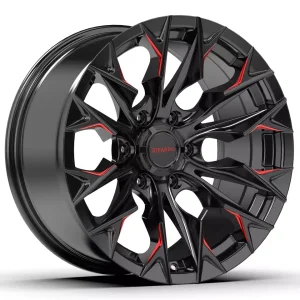
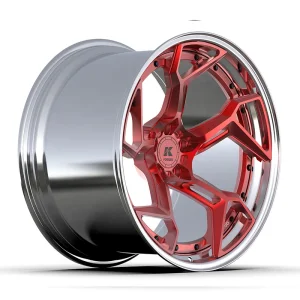
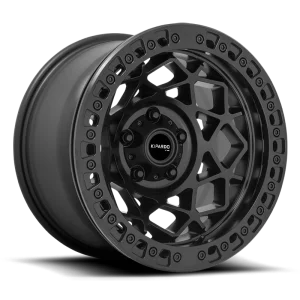
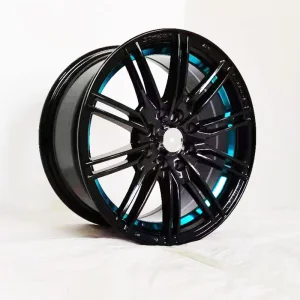
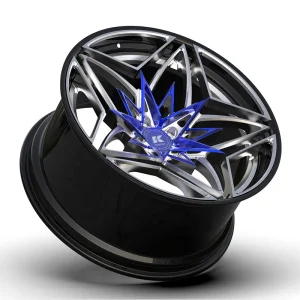
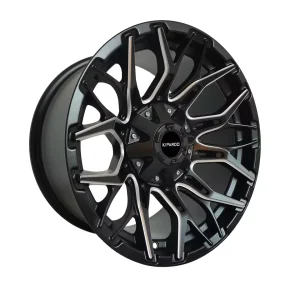
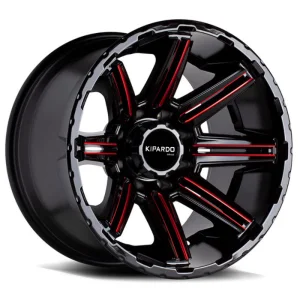
Technological Evolution of Forged Aluminum Wheels in Modern Mobility
Analyzing microstructural grain refinement, unsprung weight optimization, and the transition from casting to aerospace-grade 6061-T6 alloys.
The automotive wheel industry is undergoing its most profound metallurgical and structural paradigm shift in four decades. Historically dominated by conventional gravity and low-pressure aluminum casting (utilizing hypoeutectic alloys like A356.2), the modern engineering environment demands significantly elevated strength-to-weight ratios. As vehicle architectures evolve toward heavier, instant-torque battery electric vehicles (BEVs) and extreme off-road overland expeditions, cast aluminum faces structural limitations. Porosity, dendritic segregation, and random crystal orientation inherent in liquid-to-solid phase transformations impose severe fatigue thresholds.
In contrast, advanced Alloy Forged Wheels manufactured from aerospace-grade 6061-T6 (Aluminum-Magnesium-Silicon alloy) utilize solid-state deformation. When solid billet cylinders undergo multi-stage closed-die isothermal forging under 10,000 to 12,000 tons of hydraulic pressure, the aluminum's metallic grain boundary is radically compressed and aligned along the mechanical contour of the wheel spoke and rim barrel. This continuous directional grain flow eliminates micro-porosity, producing a component with exceptional fracture toughness, higher elongation before failure (typically 10–14% compared to 3–5% in cast alloys), and a yield strength exceeding 275 MPa.
Microstructural Superiority
Solid-state plastic deformation under intense tonnage eliminates hydrogen gas inclusion and micro-shrinkage. The resultant compact crystal matrix yields fatigue resistance up to 300% higher than traditional casting.
Rotational Inertia Reduction
Forged wheels reduce unsprung rotating mass by 20% to 30%. Operating under the law of angular momentum, lower rim inertia directly enhances damper response, shortens braking distance, and extends EV operational range.
High-Stress Caliper Clearance
Because forged 6061-T6 aluminum possesses superior tensile strength, wheel spokes can be engineered significantly thinner without compromising load ratings, creating massive spatial clearance for multi-piston carbon-ceramic brake systems.
Global B2B Sourcing Strategies: Compliance, Auditing & TCO
How international automotive brands, rim importers, and wholesale distributors de-risk capital through rigorous supply chain verification.
Procuring forged alloy wheels at an enterprise scale differs drastically from spot-market aftermarket purchases. Tier-1 wholesale importers, tuning brands, and commercial fleet operators evaluate factories based on Total Cost of Ownership (TCO), defect rates measured in Parts Per Million (PPM), and multi-jurisdictional compliance credentials. A defective wheel batch carries catastrophic financial liability, including maritime recalls, port rejections, and irrevocable brand dilution.
Consequently, procurement directors prioritize manufacturing partners with vertically integrated testing facilities capable of executing real-time JWL (Japan Light Alloy Wheel), VIA (Vehicle Inspection Association of Japan), SAE J2530 (Society of Automotive Engineers), and ISO 3006 destructive and non-destructive protocols. A verified factory must present documented traceability linking every individual production serial number to its initial billet smelting batch, spectroscopic melt analysis, heat-treatment temperature logs, and CNC dimensional coordinates.
| Evaluation Parameter | Standard Cast Wheel | Flow-Forming (Rotary Forged) | Kipardo Aerospace 6061-T6 Forged |
|---|---|---|---|
| Base Material Specification | A356.2 (AlSi7Mg) Ingot | A356.2 Cast Center + Rolled Rim | 6061-T6 Aerospace Grade Solid Billet |
| Yield Strength (Rp 0.2) | 160 – 180 MPa | 210 – 240 MPa (Barrel Only) | 275 – 310 MPa (Entire Monoblock) |
| Ultimate Tensile Strength | 220 – 250 MPa | 280 – 310 MPa | 310 – 360 MPa |
| Material Elongation at Break | 3.0% – 5.0% | 6.0% – 8.0% | 10.0% – 14.0% (Superior Impact Dissipation) |
| Dynamic Radial Fatigue Life | 500,000 cycles (JWL standard) | 1,000,000 cycles | 2,500,000+ cycles (Exceeds SAE J2530) |
| Tooling & Mold Amortization | High tooling cost ($3,000 - $8,000/mold) | Moderate tooling cost | Zero mold cost (100% CNC Programmed) |
| Minimum Production Run (MOQ) | 60 – 100 units per fitment | 40 – 80 units per fitment | 1 Set (4 Units) Custom Bespoke Capability |
China Factory 4.0: Metallurgical Precision & Automation at Scale
How Shanghai Rimax Industry integrates digital twin simulation, 5-axis robotic machining, and automated finishing to outpace international competitors.
FEA Digital Twin Modeling
Before metal is cut, every wheel geometry undergoes finite element analysis (FEA). Virtual load cases simulate 13-degree curb impact, radial overload, and cornering fatigue, optimizing spoke webbing for structural stiffness with zero redundant weight.
5-Axis CNC Precision Cells
Our machining lines feature multi-spindle, high-torque CNC milling centers executing complex 3D concave profiles with tolerances within ±0.02 mm. Hub bore concentricity and lug hole pitch circle diameter (PCD) runout are calibrated to aerospace standards.
Robotic Surface Finishing
Automated multi-stage pre-treatment, nano-ceramic conversion coating, electrostatic powder prime, and solvent-free acrylic clear coats ensure zero orange peel and 2,000+ hours of ASTM B117 salt-spray corrosion resistance against winter de-icing chemicals.
End-to-End MES Traceability
Every wheel blank is laser-engraved with an immutable DataMatrix QR code tracking its entire journey: raw ingot chemical composition, forging batch timestamp, quenching medium temperature, and final CMM dimensional check inspection.
China's manufacturing ecosystem provides an unbeatable synthesis of upstream raw material availability and downstream logistics infrastructure. Operating out of Kunshan, Jiangsu, Shanghai Rimax Industry harnesses direct proximity to world-leading aluminum smelters and deep-water container terminals at Shanghai Port. This integrated industrial cluster insulates our global clients from volatile freight spikes, provides predictable 15-to-25 day production cycles for bespoke forged wheels, and guarantees absolute supply chain continuity even amid global geopolitical and trade shifts.
Application Scenarios: From Desert Overlanding to EV Staggered Setups
Engineered wheel solutions purpose-built for the distinct stress vectors of international market segments.
Heavy Overland & 4x4 Off-Road
In regions such as North America, the Australian Outback, and the Middle East, vehicles like the Toyota Land Cruiser 300, Lexus GX460/GX470, Ford Raptor, and Nissan Patrol demand massive static wheel load ratings (exceeding 1,100 kg per corner). Kipardo 4x4 forged wheels incorporate knurled bead seats to prevent tire slippage during severe tire deflation (down to 12 PSI), reinforced inner rim bells to survive high-speed rock impacts, and oversized 6x139.7 / 5x150 bolt pattern hubs.
Next-Gen High-Torque Electric Vehicles
Electric platforms (Tesla Model S/X Plaid, Porsche Taycan, Lucid Air, BMW i7) produce instant peak torque and carry heavy battery curb weights. Our forged monoblock EV series features computational aero-spoke ducting that reduces aerodynamic turbulence around brake assemblies, minimizing coefficient of drag ($C_d$) while effortlessly handling instant 1,000+ Nm drivetrain shear loads.
Modular Multi-Piece Exotic Builds
For luxury vehicle bespoke personalization and competitive motorsport, Rimax engineers modular 2-piece and 3-piece forged constructions. Featuring 6061-T6 forged center discs bolted to spin-formed 5051 aluminum outer rims with aerospace titanium hardware, these systems allow millimeter-custom offsets (ET -50 to +60) and staggered widths up to 13.5J with deep concave outer lips.
Frequently Asked Questions for Wheel Importers & Engineers
Authoritative answers on certifications, production tolerances, metallurgy, and custom OEM program timelines.
What specifically separates Kipardo 6061-T6 forged wheels from standard low-pressure cast wheels?
How does Shanghai Rimax Industry guarantee structural compliance with JWL, VIA, and SAE J2530?
Can you manufacture custom private-label wheel designs with bespoke PCD, offset, and center bore?
What is the production lead time for sample development versus full container export orders?
What surface finishes are available, and what are their corrosion protection ratings?
What warranty coverage accompanies Kipardo forged and cast products?
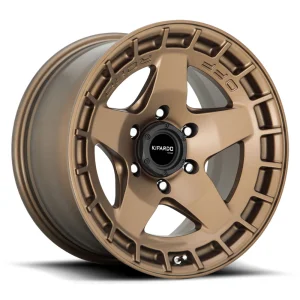
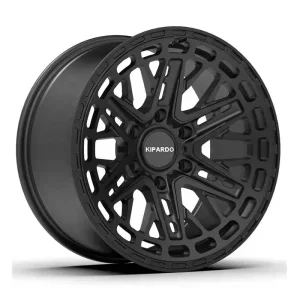
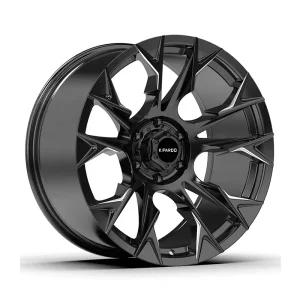
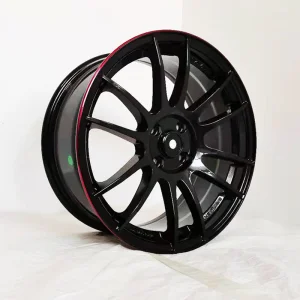
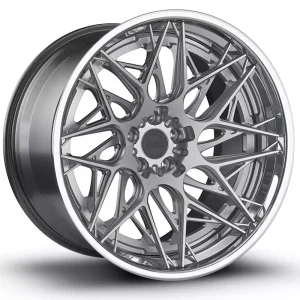
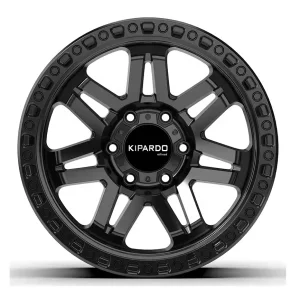
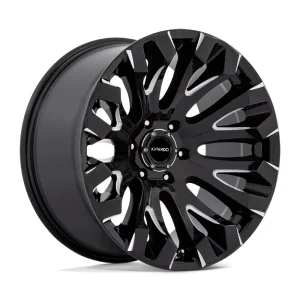
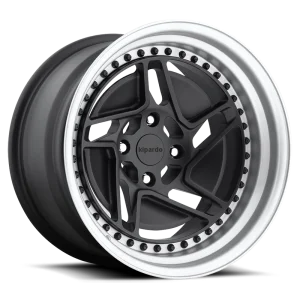
Global Export Catalog: Advanced Alloy Wheels
Explore high-demand SKUs engineered for immediate volume container export and custom private-label procurement.
Initiate Your Custom Wheel Program with Shanghai Rimax Industry
Whether you are seeking wholesale container allocations for verified cast/flow-formed SKUs or engineering a bespoke 6061-T6 forged monoblock line, our technical sales and CAD engineering teams are ready to collaborate.