
Featured Engineering Hubs & Off-Road Assemblies
Explore the vanguard of wheel hub manufacturing. From 4x4 multi-lug heavy-load designs to monoblock bespoke engineering, each platform is built for uncompromising rotational dynamics.
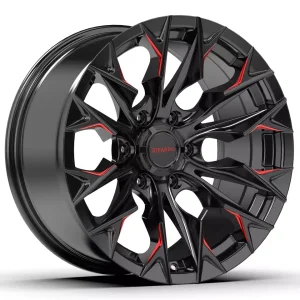
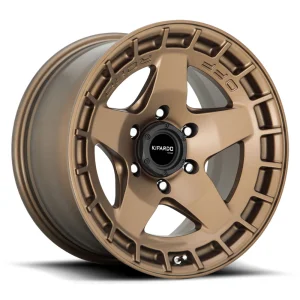
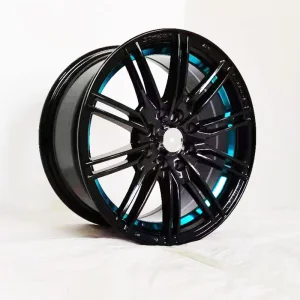
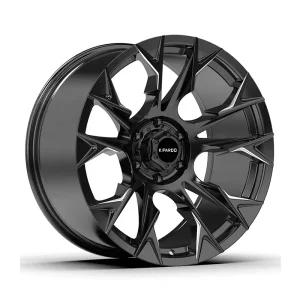
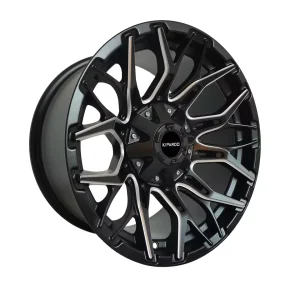
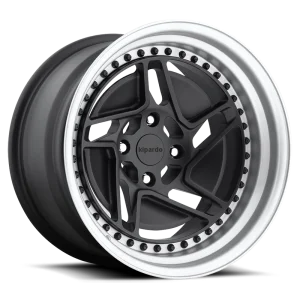
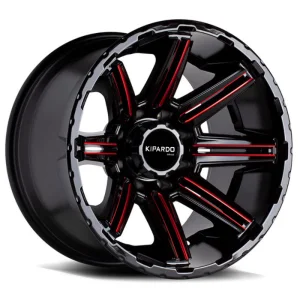
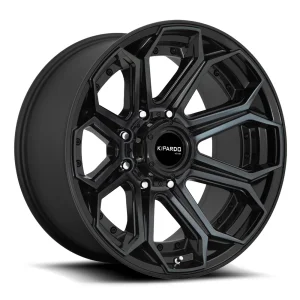
Engineering Roadmap: High-Torque Dynamics & Lightweight Metallurgy
The automotive chassis ecosystem is experiencing a structural revolution driven by high-instant-torque Electric Vehicles (EVs), increased battery curb weights, and the relentless demand for un-sprung mass minimization.
A356.2 Microstructure Refining
Our low-pressure casting foundry utilizes primary A356.2 aluminum ingot enriched with Strontium (Sr) modifier to transform brittle needle-like silicon phases into fibrous eutectic structures. Combined with ultrasonic in-line degassing, we suppress micro-porosity to achieve fatigue resistance exceeding OEM baseline limits by 28%.
Rotary Flow-Forming Rheology
By applying controlled hydraulic radial rollers at 350°C to cold-cast preforms, grain flow lines along the wheel rim barrel are elongated and condensed. This strain-hardening technique yields tensile strengths comparable to forged alloys (up to 330 MPa) while eliminating 12-15% of rotational inertia for optimized EV battery range.
Aerodynamic EV Hub Optimization
Future hub architectures must balance thermal dissipation with aerodynamic drag (Cd). Our generative engineering modules synthesize turbulent-boundary reduction with ventilated hub apertures, ensuring regenerative braking friction elements operate within the ideal thermal envelope of 180°C - 320°C.
Macro-Industry Solutions: Segment-Specific Chassis Co-Development
Different automotive applications impose fundamentally divergent mechanical stresses on wheel hubs. We formulate specialized metallurgy and structural matrix solutions across distinct operational segments.
Tier-1 Passenger Cars & BEVs
Engineered for high instantaneous acceleration and regenerative torque. Hub pad configurations feature reinforced back-cavity webbing to neutralize cyclical shear stress while keeping unsprung weight low to preserve battery efficiency and electronic steering responsiveness.
High-Payload 4x4 Off-Road & Pickups
Built for off-camber torsional loads, severe drop-shock, and hostile environments. With rated load capacities extending to 2,500 lbs (1,134 kg) per wheel, thick inner bead seats prevent de-beading during low-PSI rock crawling and overland expeditions.
Fleet Operations & Commercial Vans
Optimized for low Total Cost of Ownership (TCO). Focuses on high-silicon, corrosion-resistant cast geometries, wear-resistant zinc/anti-seize hub mating surfaces, and high resistance to repetitive curb impacts during dense urban last-mile delivery cycles.
Motorsport & Bespoke Tuning
6061-T6 aerospace aluminum billet monoblock and modular 2-piece / 3-piece bolted configurations. Machined on 5-axis DMG MORI centers to millimeter-precise custom backspacing, concave profiles, and brake-caliper clearance for track-day applications.
China Factory 4.0: Supply Chain Resilience & Smart Foundry Infrastructure
Shanghai Rimax Industry Co., Ltd. (Kunshan Manufacturing Base) leverages end-to-end automated metallurgy, IoT process monitoring, and integrated vertical supply networks to deliver absolute quality repeatability.
Automated LPDC & Controlled Pressurization
Our low-pressure die-casting cells utilize digital pressure curves calibrated to 0.01 bar accuracy. Molten alloy is gently lifted through the riser tube from below, eliminating turbulent oxide folding and ensuring consistent grain density throughout the hub face and spoke roots.
Continuous T6 Thermal Treatment
Casting batches transition directly into automated quenching and aging furnaces. Solid solution soaking at 535°C followed by precision water quenching within 15 seconds, and subsequent artificial aging at 155°C, precipitates magnesium-silicide (Mg2Si) phases to lock in Rockwell B-scale hardness and ductile yield.
Automated In-Line Flaw Detection
100% of cast wheels pass through enclosed real-time radiographic X-ray chambers with AI defect recognition, flagging internal porosities smaller than 0.3 mm. Robotic coordinate measuring machines (CMM) certify center bore circularity, PCD pitch diameter, and wheel runout.
Comparative Technical Matrix: Sourcing Specification Guide
Strategic buyers require factual trade-offs between tooling amortization, un-sprung weight metrics, tensile limits, and lead-time schedules across distinct production methods.
| Evaluation Parameter | Low-Pressure Cast (LPDC) | Flow-Formed (Rotary Spun) | Monoblock Forged (6061-T6) | Modular Multi-Piece Forged |
|---|---|---|---|---|
| Base Metallurgy | A356.2 (Al-Si7Mg0.3) Primary Ingot | A356.2 Cast Preform + Flow Rolled | Aerospace 6061-T6 Solid Billet | Forged Center + 6061 Spun Rim Halves |
| Tensile Strength (UTS) | 220 – 250 MPa | 300 – 340 MPa (Rim Barrel) | 350 – 380 MPa (Omnidirectional) | 340 – 370 MPa (Components) |
| Relative Weight vs Baseline | Standard OEM Baseline (100%) | 12% – 16% Reduction | 22% – 30% Reduction | 18% – 25% Reduction |
| Dynamic Cornering Fatigue | Exceeds JWL (100,000 cycles) | Exceeds JWL/VIA (150,000 cycles) | Exceeds SAE J2530 (250,000+ cycles) | Engineered per Application Class |
| Tooling Investment / Lead Time | Steel Mold ($2,500 - $4,500 / 30-45d) | Hybrid Cast Mold ($3,500 / 35d) | Zero Mold Cost (CNC Code / 5-10d) | Minimal Center Tooling (10-15d) |
| Target Buyer Profile | Volume Tier-1, OEM, Importers | Performance Brands, EV Upgrades | Supercar Tuning, Pro Racing | Stance, Custom Fitment, Show Fleets |
Localized Support, Regulatory Homologation & Warranty Framework
Navigating global compliance frameworks is essential for uninterrupted market access. Our manufacturing ecosystem integrates regulatory verification across major jurisdictions.
JWL, VIA & SAE J2530 Validation
Every wheel pattern undergoes destructive radial fatigue, 13-degree / 30-degree impact drop tests, dynamic cornering tests, and air leakage verification. Test records are registered and archived for direct cross-border customs and safety clearance.
Regional Homologation Support
We supply complete engineering dossiers, material spectroscopic reports, and FEM stress calculation sheets required for German TÜV certification, US DOT / NHTSA reporting, Brazilian INMETRO registration, and European ECE R124 roadworthiness compliance.
5-Year / 100,000 KM Warranty
Every Kipardo-branded and private-label wheel hub manufactured under our quality management system is supported by a 5-year / 100,000 km structural integrity warranty and a 2-year anti-delamination warranty on electroplated, powder-coated, and diamond-cut finishes.
Frequently Asked Questions: Global Wheel Engineering & Sourcing
Authoritative engineering and trade responses for technical buyers, procurement directors, and tier-1 product development specialists.
What structural tests are mandatory for certifying car wheel hubs prior to export?
Under JWL/VIA and SAE J2530 criteria, wheels must complete three core mechanical tests without cracking or loss of tire pressure: (1) Dynamic Cornering Fatigue Test, validating bending moments around the hub over 100,000 cycles; (2) Dynamic Radial Fatigue Test, rotating the hub under 2.25x maximum rated vehicle load for over 500,000 cycles; and (3) 13-Degree (or 30-Degree) Impact Test, dropping a heavy wedge directly onto the rim flange to verify ductile energy absorption without catastrophic fracture. Additionally, 100% helium/air leak testing and CASS salt spray testing (up to 720 hours) ensure environmental durability.
Why is Low-Pressure Die Casting (LPDC) superior to Gravity Casting for passenger car wheels?
In gravity casting, molten metal cascades down into the mold under its own weight, causing atmospheric air entrapment, turbulence, and oxide inclusions. Low-pressure die casting introduces molten aluminum from the bottom under a controlled positive pressure gas blanket (0.2 - 0.8 bar). This laminarly fills the die cavities, generating a significantly denser micro-dendritic structure with negligible shrinkage porosity, allowing thinner spoke profiles with substantially higher yield strengths.
How does Flow-Forming bridge the price-performance gap between Cast and Forged wheels?
Flow-forming utilizes an engineered low-pressure cast preform whose barrel section is subsequently spun, heated, and compressed with hydraulic rollers. This plastic deformation elongates the crystal grains along the direction of rotation, breaking down the cast dendritic matrix into a dense, fibrous structure akin to forged metal. The result is a 12-16% weight reduction, improved rim tensile yield (up to 330 MPa), and higher elongation before failure, at a tooling cost almost identical to standard cast wheels.
Can you provide custom engineering for PCD, offset (ET), and center bore (CB)?
Yes. Our CNC machining centers operate with fully parametric tooling programs. For cast wheel orders, hub pads can be drilled to custom bolt patterns (e.g., 5x100, 5x114.3, 5x120, 6x139.7), back-milled to calibrate offsets (ET-44 to ET+50), and center bores bored to match exact vehicle hub spigots or aftermarket centric rings, avoiding vibrations.
What is the typical Minimum Order Quantity (MOQ) and production cycle time?
For custom cast alloy wheels requiring new mold tooling, prototype sampling takes approximately 30-35 days, with production MOQs starting at 60-100 units per size/fitment. For flow-formed wheels, batch runs typically require 80 units. In contrast, custom 6061-T6 forged wheels have no minimum tooling cost and can be produced in batch sizes as low as 4 units per custom fitment with a rapid 15-day turn-around.
Expanded Wheel Engineering, Forged & Aftermarket Platforms
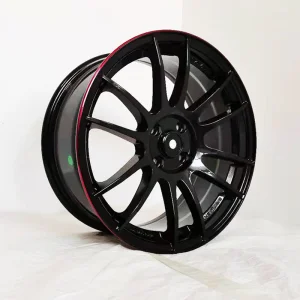
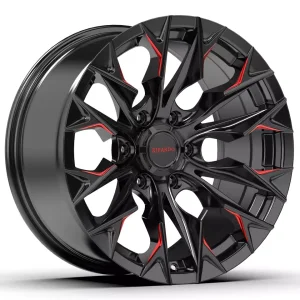
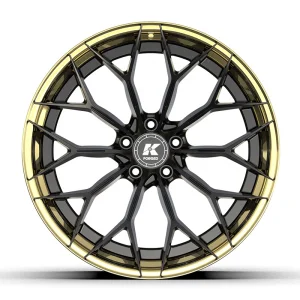
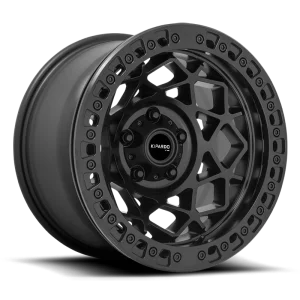
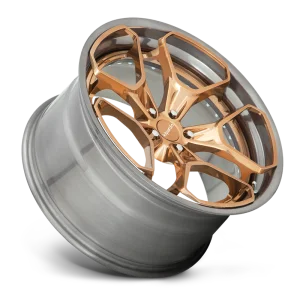
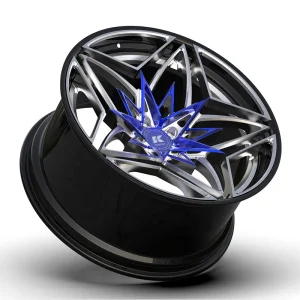
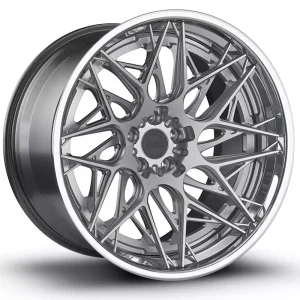
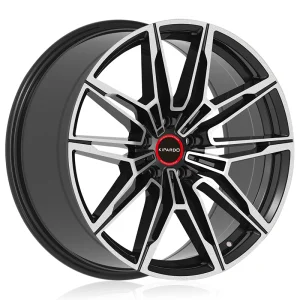
Explore advanced multi-piece forged assemblies, precision-cast performance platforms, and export-ready aftermarket wheel collections engineered for global road environments.
Consult With Rimax Automotive Engineering Team
Whether you require new casting molds for high-volume automotive distribution or rapid-turnaround 6061-T6 forged designs for boutique performance brands, our Kunshan engineering facility provides end-to-end support from CAD modeling to international containerized logistics.