
Featured Forged & High-Performance Wheels
Explore production-grade monoblock and multi-piece alloy wheels engineered to JWL, VIA, and SAE J2530 safety standards with competitive Tier-1 factory unit costs.
-
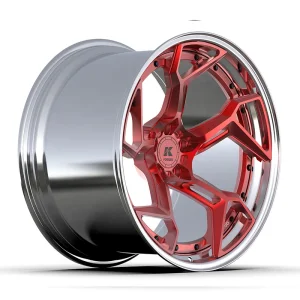
OEM Kipardo Custom 18-22" 6061-T6 Aluminum Concave Forged Wheels
View Specifications -
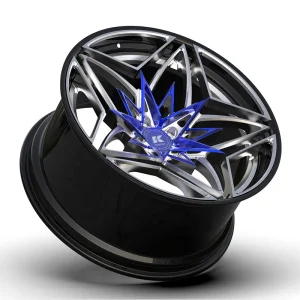
Custom Kipardo 18 to 30 Inch 2-3 Pieces Modular Forged Rims
View Specifications -
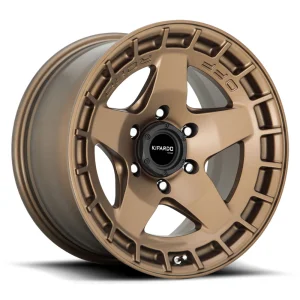
China Kipardo 17-18" Factory High-Quality 4x4 Offroad Alloy Wheels
View Specifications -
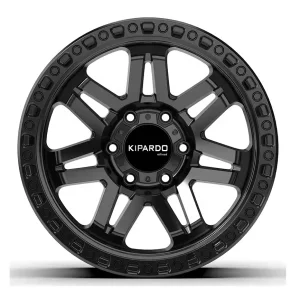
Kipardo 17-18" 6-Hole Heavy-Duty Custom 4x4 Alloy Rims
View Specifications -
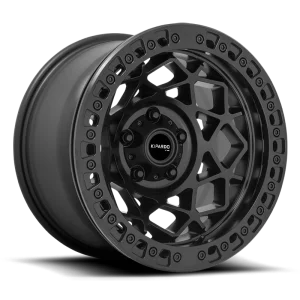
Buy KIPARDO Manufacturer 6 Holes 17" 4x4 Aluminum Alloy Wheels
View Specifications -
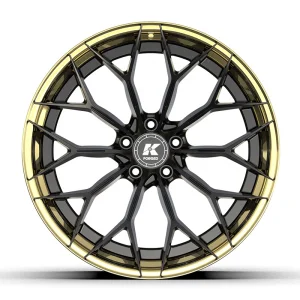
OEM Kipardo Luxury Custom 3-Pieces Modular Forged Performance Rims
View Specifications -
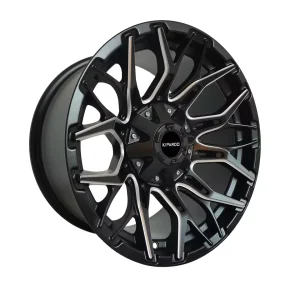
Cheap Kipardo 17-18" 5-6 Hole Custom Casting 4x4 Off-Road Rims
View Specifications -
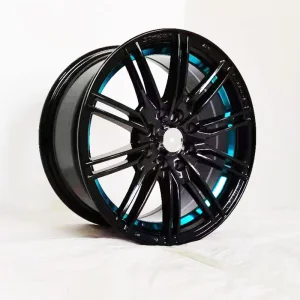
Wholesale KIPARDO 15" Black Machine Face Tuner Alloy Wheel Rims
View Specifications
The 20x12 Forged Geometry Phenomenon: Global Commercial Dynamics
The 20x12 inch fitment has evolved from a niche specialty aftermarket size into one of the highest-margin, highest-turnover SKUs in the global off-road, pickup truck, and luxury widebody segment. Understanding its engineering stress points explains why B2B buyers are migrating from casting to forged billet architectures.
Aggressive Stance & Negative Offsets
The 20x12 format is distinguished by its extreme negative offset profiles—most commonly -44mm to -51mm. This deep offset creates the distinctive 4 to 6-inch deep concave lip sought after in high-end truck personalization across North America, the Middle East, and Australia. However, this configuration subjects the wheel’s hub mounting pad and inner barrel to immense cantilevered shear stress.
Failure Modes in Cast 20x12 Units
Conventional low-pressure or gravity cast aluminum alloys (such as A356.2) inherently contain microscopic dendritic shrinkage porosity. Under the extreme lever-arm moments produced by a 35-inch or 37-inch tire mounted on a 12-inch wide barrel with a -44mm offset, cast wheels suffer from accelerated fatigue cracking at the spoke-rim junction. Forged 6061-T6 aluminum eliminates this vulnerability.
The "Cheap" Paradigm Shift
In institutional wholesale procurement, the term "cheap forged wheels" does not imply compromised metallurgical integrity or substandard machining. Rather, it represents the breakthrough in cost-per-yield efficiency achieved by modernized Chinese smart manufacturing: high-speed multi-axis CNC blanking, optimized billet utilization, automated toolpath optimization, and vertical extrusion clusters.
Why Chinese Forging Facilities Deliver Unmatched Price-to-Yield Ratios
Understanding the real cost drivers of 20x12 forged aluminum wheels allows global brand managers, tier-1 distributors, and commercial wholesalers to unlock direct OEM factory pricing without sacrificing JWL/VIA structural integrity.
Hydraulic Forging Press Tonnage aligning anisotropic crystal grain matrices.
Aerospace-Grade Solid Aluminum Billets with solution heat treatment and artificial aging.
Tolerance accuracy maintained via 5-Axis High-Speed CNC Machining Centers.
Standard Heavy-Duty Load Rating per corner for Class 2/3 Truck Fitments.
Vertical Cluster Integration
In Chinese automotive manufacturing hubs (such as Jiangsu, Zhejiang, and Shandong), wheel factories are situated within a 30-kilometer radius of virgin aluminum ingot smelters, continuous billet casters, tooling foundries, and automated surface treatment plants. This cluster density slashes internal transit overhead, reduces raw material handling costs, and eliminates multi-tier middleman markups.
High-Speed Automated CNC Toolpaths
A major cost factor in custom 20x12 forged wheels is CNC machine runtime. Chinese factories utilize optimized CAD/CAM scripting with high-feed cutter paths and robotic loading arms. This cuts the roughing and finishing cycle time for a complex 20x12 negative-offset face from 180 minutes down to under 55 minutes, significantly lowering machine hour costs per unit.
Closed-Loop Chip Recycling
Carving a 20x12 inch deep-dish forged monoblock wheel out of a 110 kg solid cylinder billet results in approximately 75% material removal. Chinese factories run real-time pneumatic vacuum evacuation of 6061 aluminum chips directly back to clean melting furnaces for immediate re-billeting into certified industrial extrusions, reclaiming maximum scrap metal value to subsidize the finished wheel price.
Engineering Matrix: 20x12 Cast vs. Flow-Formed vs. 6061-T6 Forged
Objective metallurgical testing demonstrates why the 20x12 size requires forged construction for maximum fatigue resistance in high-stress vehicle applications.
| Evaluation Parameter | A356.2 Low-Pressure Cast | Rotary Flow-Formed (Hybrid) | 10,000T Forged 6061-T6 |
|---|---|---|---|
| Raw Material Formulation | Molten A356.2 Alloy (Al-Si7-Mg) | A356.2 Cast Center + Spun Barrel | Solid Extruded 6061 (Al-Mg-Si-Cu) Billet |
| Yield Strength (Rp 0.2) | 160 – 185 MPa | 210 – 240 MPa (Barrel Only) | 276 – 310 MPa (Entire Monoblock) |
| Ultimate Tensile Strength (UTS) | 220 – 260 MPa | 280 – 310 MPa | 310 – 350 MPa |
| Elongation at Break (A5) | 3% – 5% (Brittle Under Shock) | 6% – 8% | 10% – 14% (Ductile Energy Absorption) |
| Grain Structure Micrograph | Random dendritic cast crystals with micro-porosity | Elongated flow lines in rim; cast center | Continuous, compacted radial grain flow lines |
| Average 20x12 Net Weight | 38.5 – 43.0 lbs (17.5 – 19.5 kg) | 33.0 – 36.5 lbs (15.0 – 16.5 kg) | 28.0 – 31.0 lbs (12.7 – 14.0 kg) |
| JWL 13° Impact Resistance | Prone to rim crack propagation at high loads | Acceptable barrel deflection | Zero crack propagation; superior elastic return |
| Negative Offset Suitability (-44mm to -51mm) | High warranty failure risk over 2,800 lbs load | Moderate; requires heavy spoke roots | Optimal; withstands 3,650+ lbs corner load easily |
Localized Application Scenarios: Where 20x12 Forged Wheels Dominate
Vehicle platforms and operational environments determine specific engineering parameters, bolt circle requirements, and surface treatment requirements across key continental markets.
North American Heavy-Duty Pickups
The core market for 20x12 forged rims centers on the Ford Super Duty (F-250/F-350), Chevrolet Silverado 2500/3500 HD, and RAM 2500/3500. Equipped with 6-inch to 8-inch suspension lift kits and wide 35x12.50R20 or 37x13.50R20 tires, these vehicles require:
- High PCD specs: 8x170, 8x180, and 8x165.1 (8x6.5”) patterns.
- Center bore hub-centric matching (124.9mm, 124.2mm).
- High corner-load ratings verified up to 3,650 lbs (1,650 kg) to maintain factory towing capability.
Middle East (GCC) Sand Dune Cruisers
In Saudi Arabia, UAE, and Qatar, 20x12 setups are widely fitted to the Nissan Patrol Y62, Toyota Land Cruiser 300, and RAM TRX for desert dune driving. Key operating parameters include:
- Knurled bead seats to prevent tire slippage at ultra-low inflation (8–12 PSI).
- Extreme heat tolerance against high brake disc thermal radiation.
- High UV resistance powder-clear coats resistant to fine silica sand abrasion.
Australian Out-Back & Mining Retrofits
Australian touring rigs (Toyota Hilux, Ford Ranger, Land Cruiser 79 Series) operating in remote conditions mandate ADR (Australian Design Rules) compliance. In these operations, forged 20x12 configurations provide:
- High fatigue margin against washboard corrugation roads.
- Ductile aluminum behavior preventing sudden rim fracture in remote off-grid environments.
- Dual-drilled bolt patterns (e.g. 6x139.7 / 6x135) to optimize mixed-fleet spare tire interchangeability.
Verification Pipeline: Zero-Defect Testing from Ingot to Export
Achieving low manufacturing costs while delivering reliable safety performance requires automated in-line quality controls that prevent machining scrap before value is added.
1. Ultrasonic Flaw Detection
Before mounting a 6061 cylinder onto the CNC lathe, the raw forged blank undergoes automated immersion ultrasonic immersion testing. This guarantees that internal inclusions, hydrogen voids, or shear tears generated during the initial 10,000-ton forging stage are detected immediately, ensuring only 100% sound blanks proceed to turning.
2. Coordinate Measuring Machine (CMM)
High-precision Zeiss CMM probes measure critical geometric parameters across 100% of production runs: center bore tolerance (H7), bolt circle pitch diameter (within 0.05mm), back-pad perpendicularity, and radial runout (within 0.3mm), eliminating vibration issues on heavy wheel packages.
3. Dynamic Biaxial Fatigue Rig
Random batch samples undergo destructive testing on biaxial wheel test benches replicating 250,000 cycles of aggressive cornering and radial impact, far exceeding basic JWL/VIA criteria. The wheel must exhibit zero structural cracks and zero loss of air retention pressure through the rim barrel.
B2B Procurement Blueprint: Maximizing Margins for Importers & Brands
Strategic buyers navigate order structure, tooling amortizations, private label branding, and logistics packing density to achieve optimal landed costs per set.
MOQ Structure & Blank Stocking
While casting requires high minimum runs (typically 80–100 pieces per mold size), forged production enables flexible order schemes. Tier-1 Chinese suppliers pre-forge and warehouse standardized 20x12 T6-6061 blanks. Importers can place customized orders in batches as small as 4 to 20 pieces per specific PCD/offset/finish, minimizing inventory lock-up.
Custom OEM Engineering
Suppliers offer rapid turnaround OEM engineering. From a hand sketch or 2D image, engineering teams deliver FEA-verified 3D STEP models within 48 to 72 hours. CNC mill programs run within 5 days, allowing distributors to introduce seasonal styles or exclusive private label lines ahead of regional tuning seasons.
High-Cube Freight Optimization
A 20x12 inch wheel carton has significant volumetric footprint. Modern packaging uses reinforced edge guards, plastic lip shower-caps, non-woven protective bonnets, and nested palletizing schemes. A standard 40-foot High-Cube (40HQ) ocean container can accommodate approximately 480 to 520 units, cutting landed ocean freight per wheel down to negligible levels.
Future Trends: Evolution of 20x12 Heavy Fitments
The forged wheel sector continues to innovate through lightweighting strategies, electrification adaptation, and eco-friendly surface finishing.
EV Truck Load Adaptation
With the rapid rollout of high-torque electric trucks like the GMC Hummer EV, Rivian R1T, Ford F-150 Lightning, and Tesla Cybertruck, curb weights often top 6,500 to 9,000 lbs. These battery-heavy platforms deliver instantaneous 1,000+ lb-ft wheel torque, making forged 6061-T6 wheel centers necessary to prevent hub distortion and wheel slip under rapid acceleration.
Back-Pocket Milling & Weight Tuning
Advanced CAM software can now execute back-pocket milling, sculpting away non-structural aluminum from the rear of the spokes and mounting flanges. This shaves up to 4.2 lbs (1.9 kg) of unsprung rotational mass from a 20x12 forged wheel without reducing its JWL load capacity, delivering noticeable improvements in vehicle suspension response, ride comfort, and brake cooling.
Eco-Friendly PVD & Ceramic Coatings
Traditional hexavalent chrome electroplating is being phased out globally due to environmental restrictions. Modern Chinese forging facilities have transitioned to clean Physical Vapor Deposition (PVD) and ultra-thin ceramic nano-clearcoats. These finishes replicate deep chrome mirror reflections with superior resistance against salt-spray corrosion (tested over 1,000+ hours ASTM B117).
Frequently Asked Questions: Sourcing Forged 20x12 Wheels
Detailed answers to the key commercial, engineering, and logistics questions asked by enterprise procurement managers.
How can Chinese factories supply forged 20x12 wheels at a fraction of Western retail prices?
Western retail prices ($800–$1,500+ per wheel) include heavy distributor margins, multi-tier retail markups, brand royalties, and high localized labor and machining overhead. Direct Chinese B2B factory pricing reflects high-tonnage automated scale, lower CNC machine-hour operational costs, local aluminum supply clusters, and high-volume closed-loop scrap recycling, without sacrificing virgin 6061-T6 metallurgical quality.
What is the difference between true 10,000-ton forged wheels and cast wheels with forged center caps?
Some budget offerings market cast wheels with CNC-machined surface treatments as "forged look." A true forged wheel begins as a solid cylinder of 6061 aerospace alloy subjected to 10,000 tons of hydraulic pressure, consolidating the crystal matrix and eliminating internal voids. It is then fully 3D CNC-machined. Authentic forged wheels have continuous grain alignment, weigh 20–25% less than cast counterparts, and deliver more than twice the yield strength.
Can our company order custom PCD, center bore, and offset combinations on the same style?
Yes. Because each forged wheel is individually milled via CNC programming from solid forged blanks, bolt circle (e.g. 5x127, 5x139.7, 6x135, 6x139.7, 8x165.1, 8x170, 8x180), center bore, and back-pad thickness (which defines offset from 0mm down to -51mm) can be configured to order without requiring custom tooling molds.
What minimum order quantity (MOQ) applies to custom private-label forged wheel programs?
Unlike casting lines that require 80–100 pieces per mold, our forged blank inventory system allows flexible batch manufacturing. The standard MOQ for private-label designs is 1 set (4 to 5 wheels) for sample prototypes, and 20 to 40 wheels for production-run wholesale volume discounts.
How is structural safety validated on extreme -44mm to -51mm deep-lip offsets?
Every custom design undergoes Finite Element Analysis (FEA) computer simulation to model localized stress distributions at the spoke-rim junction under simulated cornering and impact loads. Physical test articles are then subjected to JWL/VIA-standard 13-degree impact, dynamic radial fatigue, and rotational bending fatigue testing to certify maximum rated capacities.
What surface finishes are available for harsh winter and salt-spray road environments?
Available finishes include full mirror hand-polishing, precision brushed metal with tinted clear coats, diamond-cut CNC faces, gloss/matte powder coats, and advanced PVD (Physical Vapor Deposition) coatings. For harsh winter road salt environments, our dual-stage electrodeposition epoxy primers and acrylic powder clearcoats provide over 1,000 hours of continuous ASTM B117 salt spray corrosion resistance.
What is the typical production and delivery lead time for an FCL container order?
Sample prototype orders typically ship within 15 to 20 business days from 3D CAD approval. Full container load (FCL) orders (400–500 wheels) require approximately 30 to 40 business days for complete forging, multi-axis machining, finishing, inspection, and ocean packing.
Explore Additional Forged & Cast Off-Road Product Series
Discover more specialized fitments, from lightweight 15-inch Japanese tuner designs to heavy-duty 20-inch 6-lug truck wheels engineered for commercial export.
-
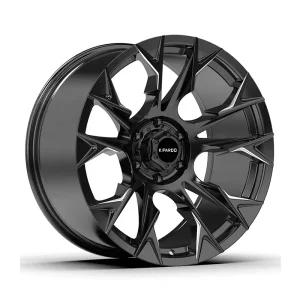
Custom Kipardo 20" Factory 5-6 Hole Aluminum Alloy Offroad Wheels
View Specifications -
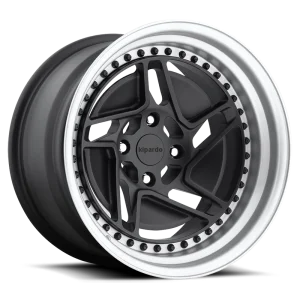
OEM Custom New Design 3-Piece Multi-Spoke Modular Forged Wheels
View Specifications -
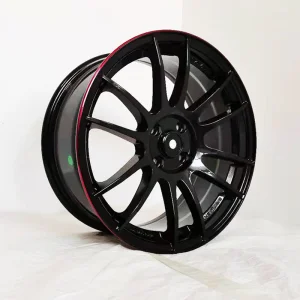
Cheap KIPARDO 15" 5x100 Undercut Red Japanese Tuner Design Wheel
View Specifications -
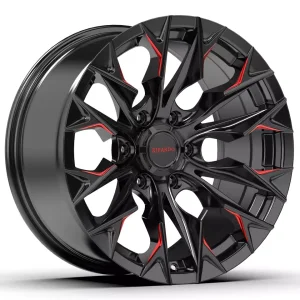
Cheap Kipardo 16-18" 6-Hole Custom Casting Offroad Wheels
View Specifications -

CE Certified Kipardo 17-20" 6x139.7 4x4 Alloy Wheels for Lexus GX
View Specifications -
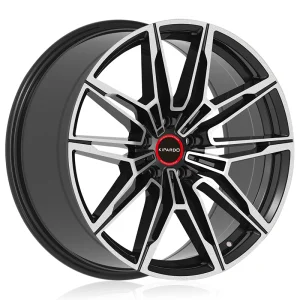
China Kipardo 18-20" Factory Cast Alloy Aluminum 4x4 Offroad Wheels
View Specifications -
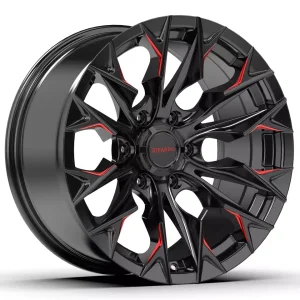
Discount Kipardo RTS 17x9 4x4 Alloy Wheels 6x139.7 / 5x150 Fitments
View Specifications -
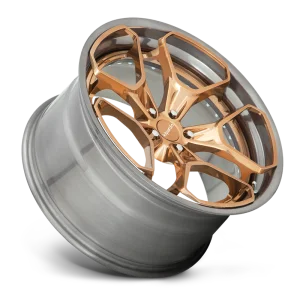
OEM Kipardo Custom 1, 2, and 3-Piece Modular Forged Aluminum Wheels
View Specifications