
Primary Precision Wheels Catalog & Quotations
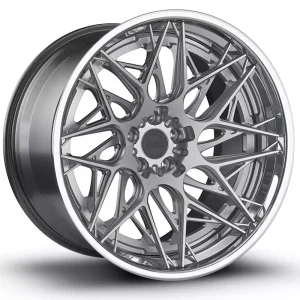
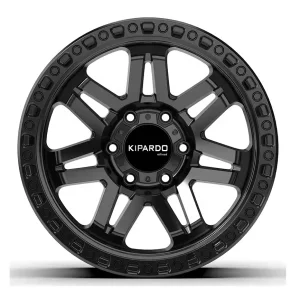
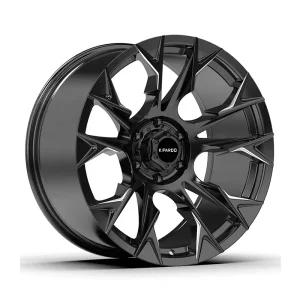
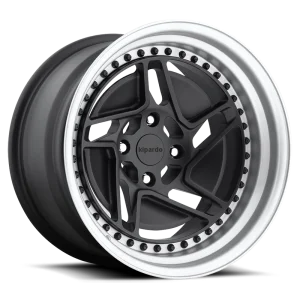
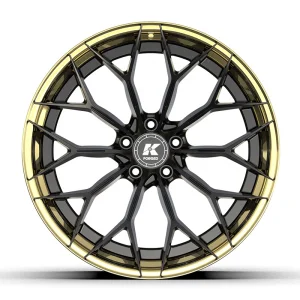
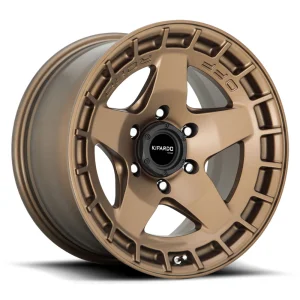
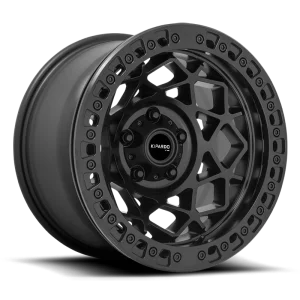
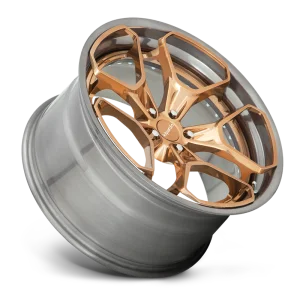
Explore our top-tier casting, concave, and multi-piece forged assemblies engineered for precision fitment across light passenger vehicles, off-road applications, and commercial tiers.
The Global Cast Aluminum Wheel Ecosystem & China's Foundry Dominance
Evaluating structural shifts in unsprung weight reduction, low-pressure casting throughput, and macroeconomic dynamics governing international tier-1 rim distribution.
Shifting Vehicle Dynamics & Unsprung Mass
Modern internal combustion, hybrid, and electric vehicle (EV) architectures demand substantial reductions in unsprung mass to maximize battery range, enhance regenerative braking performance, and dampen road harmonics. China's casting industrial clusters leverage advanced Low-Pressure Die Casting (LPDC) to cast thin-walled yet structurally fortified wheels utilizing refined A356.2 aluminum alloys.
Integrated Supply Chain Aggregation
The concentration of smelting, automated mold tool shops, automated powder coating, and CNC machining lines in Yangtze River and Bohai Rim industrial hubs allows Chinese factories to achieve unmatched economies of scale. Sourcing directly from high-capacity foundries minimizes middleman markups, secures alloy ingot futures hedging, and ensures container-level price stability.
Precision Cost Engineering & Quotations
Factory quotes for aluminum alloy rims are heavily governed by ingot spot prices (Shanghai Metals Market / LME), mold tooling amortisation, machine-cycle durations, and finishing specifications (diamond cut, tinted clear, hyper black). Partnering with a vertically integrated OEM producer guarantees competitive BOM pricing, reliable volume discounting, and structured MOQs.
Metallurgical Architecture: LPDC vs Flow-Forming vs Forged
An empirical evaluation of mechanical properties, crystal grain boundaries, and production economics across key automotive wheel manufacturing methodologies.
Melting, Degassing & LPDC
Primary A356.2 aluminum is molten at 720°C–750°C, followed by rotary degassing with argon/nitrogen gas mixtures to reduce hydrogen porosity below 0.12 cm³/100g. The melt is injected from the holding furnace upward into permanent steel molds under 0.2–0.6 bar pressure, eliminating turbulent oxides and micro-shrinkage in spoke junctures.
T6 Solution & Aging Cycle
Cast wheels undergo rigorous T6 thermal treatment: solution heat treatment at 535°C (±5°C) for 4–6 hours dissolves copper/magnesium phases, followed by a rapid water quench within 15 seconds to freeze the microstructure. Subsequent artificial aging at 155°C–165°C precipitates Mg2Si micro-crystals, elevating tensile and yield limits.
Multi-Axis CNC & Balance Verification
Precision dual-spindle CNC turning centers true the wheel rim lip, center bore, hub mount pad, and lug holes to within ±0.05 mm concentricity. Dynamic balancing machines measure static and couple unbalance, rejecting raw rims exceeding 30g before progressing to automated electrostatic powder and wet paint lines.
| Manufacturing Technology | Alloy Formulation | Tensile Strength (Rm) | Elongation at Break (A) | Weight Delta | B2B Cost Efficiency |
|---|---|---|---|---|---|
| Low-Pressure Die Casting (LPDC) | A356.2 (AlSi7Mg0.3) | 230 – 260 MPa | 6% – 9% | Baseline (1.0x) | Optimal High-Volume Tier |
| Flow-Forming (Rotary Forged) | A356.2 Modified | 290 – 320 MPa | 10% – 13% | -12% to -15% | Mid-Tier Performance |
| Aerospace Billet Forged | 6061-T6 (AlMg1SiCu) | 310 – 350 MPa | 12% – 16% | -20% to -28% | Bespoke / Motorsport |
| Gravity Die Casting (Standard) | A356 / ZL101 | 200 – 220 MPa | 3% – 5% | +8% to +12% | Budget Replacement |
International Testing Protocols & Regulatory Assurance
How Shanghai Rimax enforces strict structural validation to satisfy North American SAE J2530, Japanese JWL/VIA, German TÜV StVZO, and European ECE R124 benchmarks.
Dynamic Radial Fatigue Testing
Simulating intense long-distance highway travel under severe vertical axle loads. The wheel is fitted with a drum tire and rotated under an accelerated radial load coefficient (typically 2.25x design load) for over 500,000 to 1,000,000 cycles without structural fatigue cracking or pressure loss.
Dynamic Cornering Fatigue (Bending)
Validates the junction between spokes and hub pad during hard lateral cornering. The rim is clamped to a rigid test bed, and a cyclic bending moment is applied to the hub flange across a minimum of 100,000 revolutions, verifying zero micro-crack propagation across critical spoke stress risers.
13° & 30° Curb Impact Rigidity
Assessing wheel structural defense against sudden curb strikes or pothole collisions. A calibrated striker weight drops onto the tire-wheel assembly at a 13-degree angle. Failure criteria strictly prohibit sudden air decompression, spoke detachment, or through-wall fracture within 60 seconds of impact.
Salt-Spray CASS & Chemical Endurance
Coastal environments and salted winter roads demand superior paint adhesion. Our multi-stage automated pre-treatment includes zirconium conversion coating, powder primer, and solvent acrylic clear coats tested against 1,000+ hours of continuous neutral salt spray (NSS) and Copper-Accelerated Acetic Acid Salt Spray (CASS).
Targeted Application Architectures: Passenger, 4x4 & EV
Customizing mechanical profiles, load indices, and PCD configurations to meet distinct operating stresses across global market niches.
Heavy-Duty 4x4 Off-Road & Overlanding
Off-road pickup trucks (e.g., Ford F-150, Toyota Land Cruiser, Hilux) operate in demanding torsional environments. Our 4x4 cast line features thickened outer rim flanges, dual-lug drilling patterns (6x139.7, 5x150, 6x114.3), reinforced bead seat knurling to stop tire slip during low-PSI crawling, and certified load capacities up to 2,500 lbs (1,134 kg) per corner.
Electric Vehicle (EV) High-Torque Calibrations
Battery electric vehicles generate instant peak torque and carry heavy battery packs that exert intense lateral forces. We engineer specialized low-drag aerodynamic spoke profiles that minimize air turbulence across the brake caliper, integrate sound-deadening cavity resonators, and strengthen spoke-to-rim transitions to endure aggressive regenerative braking deceleration.
OE-Style Replacement & Direct-Fit Replicas
For tire retail chains and automotive dealer networks requiring direct hub-centric fitments, our tooling library includes thousands of direct-fit molds matching OEM offset (ET), PCD, and center bore without necessitating spigot rings. Every casting accommodates original manufacturer center caps, TPMS sensors, and factory lug nuts.
Technology Roadmap: Decarbonization, AI Simulation & Metallurgy
Pioneering green primary aluminum sourcing, generative AI finite element analysis, and closed-loop scrap recovery across modern casting production lines.
Hydro-Powered Green Aluminum Sourcing
Transitioning raw A356.2 smelting inputs to zero-emission hydroelectric aluminum sources in southwest China. This initiative caps Scope 1 & 2 embedded carbon emissions below 4.0 kg CO2e per kg of finished cast wheel, aligning with EU CBAM (Carbon Border Adjustment Mechanism) compliance standards.
AI Generative Spoke Optimization (FEA)
Embedding machine-learning algorithms into MAGMAsoft casting simulation workflows. Generative topology optimization identifies stress nodes, removing non-structural alloy mass in the barrel and inner spokes, achieving a 7%–10% weight drop while increasing rotational fatigue life.
Digital Twin Automated Casting Foundries
Deploying end-to-end IoT sensor nodes throughout mold thermal cooling circuits. In-line predictive analytics automatically regulate low-pressure riser temperatures, reducing internal micro-porosity reject rates below 0.3% while maintaining total automated palletizing and traceability.
Wholesale Cast, Multi-Lug & Concave Rim Solutions
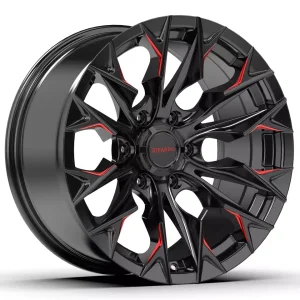
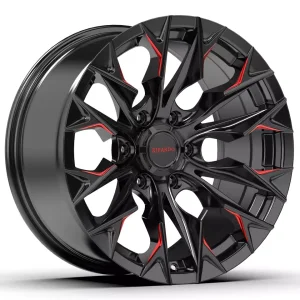
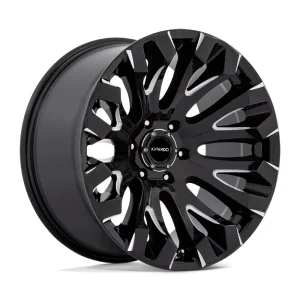
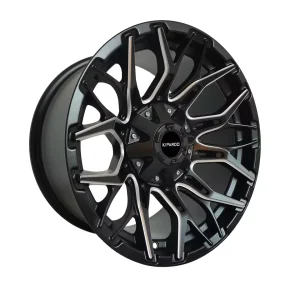
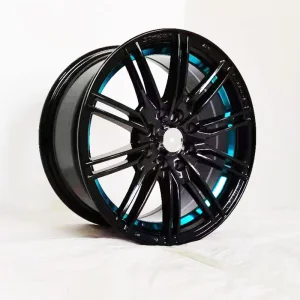
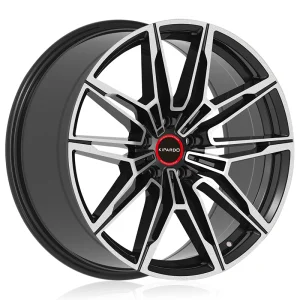
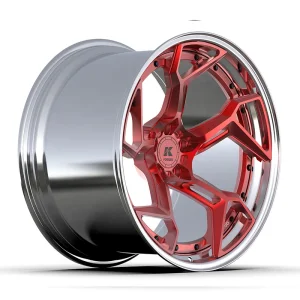
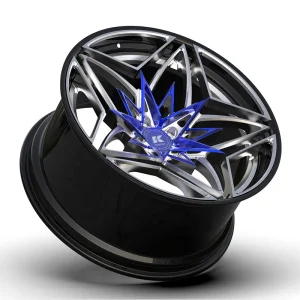
Explore our competitive wholesale off-road, deep lip, candy finish, and custom cast rim designs available for immediate FCL/LCL global export.
Frequently Answered Questions by Global Wheel Importers
Direct technical clarifications on foundry MOQs, tooling amortization, JWL certifications, anti-dumping compliance, and pricing formulas.
How does Rimax calculate factory quotes and what components comprise the unit BOM price?
What are the typical tooling investment costs and lead times for custom wheel designs?
What specific quality verifications prevent wheel porosity and structural cracking?
How does Rimax handle global trade compliance, HS classification, and regional anti-dumping tariffs?
What Minimum Order Quantities (MOQs) apply for standard vs custom painted wheel batches?
Accelerate Your Automotive Wheel Program with Rimax Foundry
Connect directly with our senior metallurgical engineers and export pricing directors. Request complete CAD fitment drawings, physical sample inspections, and comprehensive container-level quotes.