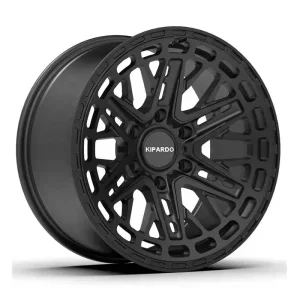
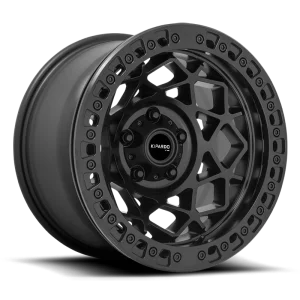
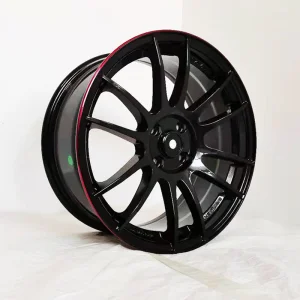
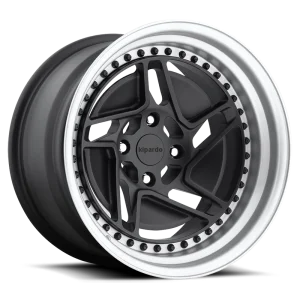
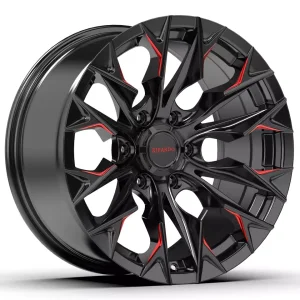
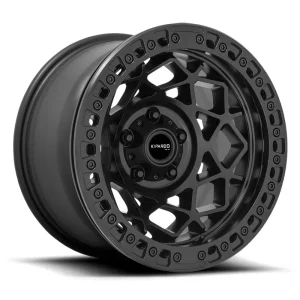
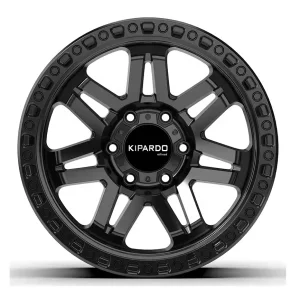
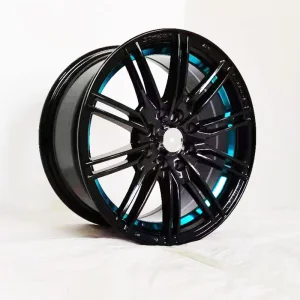
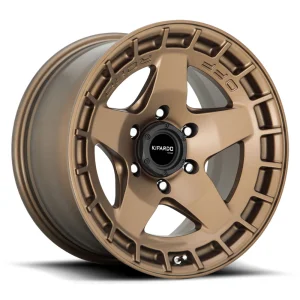
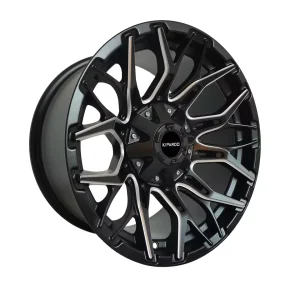
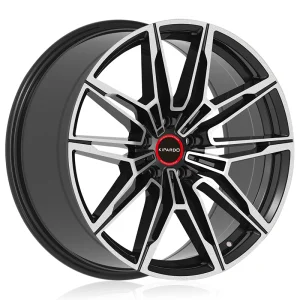
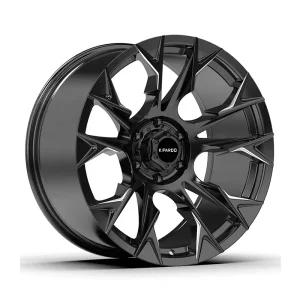
Precision Forged & Heavy-Duty Wheel Selections
Direct factory wholesale lines meeting rigorous JWL, VIA, and SAE J2530 safety standards across passenger, overlanding, and luxury segment wheel assemblies.

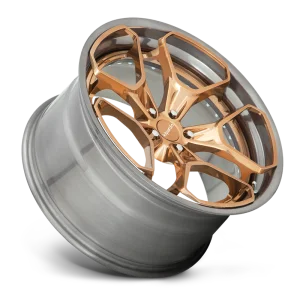
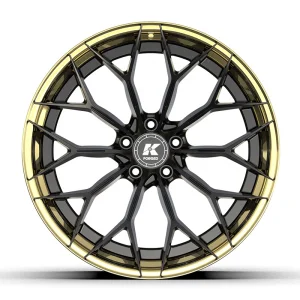
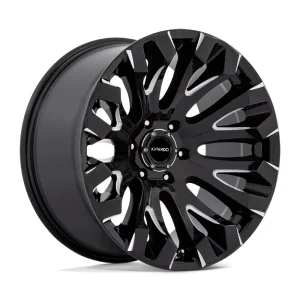
Global Commercial Ecosystem & Industrial Demand
The global precision automotive wheels industry is accelerating toward high-tensile lightweighting, driven by battery electric vehicle (BEV) curb weight challenges and heavy-duty overlanding resilience.
Electric Vehicle (EV) Structural Range Demands
Modern premium EVs impose massive torque spikes and battery pack loads, demanding structural wheels with higher yield strength (>310 MPa) and minimal rotational inertia to recover precious kilowatt-hours per hundred kilometers.
Commercial Overlanding & Fleet Logistics
In the North American, GCC, and Australian mining and touring markets, extreme radial shock loading requires 6-lug and 5-lug forged rims engineered with thick rim flanges and reinforced bead seats to counter tire de-beading under zero-psi airing.
Supply Chain Realignment toward Precision China OEM
Tier-1 aftermarket distributors are shifting from fragmented broker networks to integrated manufacturing hubs in Jiangsu, China, where billet extrusion, 5-axis CNC machining, and automated PVD finishing are co-located.
Comparative Metallurgical Benchmarks & Process Physics
Understanding the microstructural transition from cast dendritic crystals to continuous forged grain flow enables engineering procurement teams to optimize cost-to-performance metrics.
| Performance Dimension | A356.2 Low-Pressure Casting | Rotary Flow-Forming (Spun Rim) | Monoblock 6061-T6 Precision Forging |
|---|---|---|---|
| Crystal Grain Matrix | Dendritic, non-directional grain with micro-porosity risks | Elongated, aligned grain flow confined to the rim barrel section | Dense, unbroken, directional grain flow matching wheel contours |
| Tensile Strength (UTS) | ~220 - 250 MPa | ~280 - 310 MPa (barrel region) | ≥ 340 - 370 MPa (entire structure) |
| Yield Strength (0.2% Offset) | ~160 - 180 MPa | ~210 - 240 MPa | ≥ 290 - 320 MPa |
| Elongation at Break (δ) | 3% - 6% | 7% - 10% | 11% - 15% (Superior Impact Elasticity) |
| Weight Reduction Index | Baseline (Standard Weight) | 12% - 16% weight reduction vs cast | 24% - 32% weight reduction vs cast |
| Tooling & Setup Lead Time | High tooling cost, 35-45 day mold machining | Medium mold cost, 30 day mandrel fabrication | Zero mold charge for bespoke runs, CNC programmed directly |
Enterprise Solutions: From Engineering Blank to Homologation
Shanghai Rimax Industry Co., Ltd. (established in 2010) integrates CAD/FEA simulation, robotic forging lines, and multi-tier surface finishing to serve global private-label brands and automotive importers.
1. Finite Element Analysis (FEA) Topology Optimization
Every wheel design begins in digital stress simulators. We map cornering strain, 13-degree edge impacts, and torsional stress fields, shaving material at non-load-bearing spoke junctions while adding thickness to the bead hump and hub seat.
2. High-Precision 5-Axis CNC Milling
Utilizing high-speed Brother and Doosan machining centers, our workshop processes multi-piece modular centers, mono-blocks, and beadlock contours with tolerances down to ±0.015mm, guaranteeing precise runout and dynamic balance.
3. Full Spectrum Physical Verification
Our in-house JWL-verified testing facility operates 3-axis dynamic cornering fatigue machines, 13° / 30° / 90° pendulum impact rigs, helium mass-spectrometer air leakage chambers, and 1,000-hour CASS neutral salt spray cabinets.
4. OEM & Private Label Customization
We deliver turn-key distribution ready packages: bespoke center cap engraving, forged logo pocketing, CNC undercut coloring, barcoded master cartons, custom offset/PCD batch machining, and localized distributor fitment data tables.
Localized Application Engineering Scenarios
Operational duty cycles demand vehicle-specific configurations across diverse global terrains and localized commercial platforms.
North American Full-Size Truck & Heavy Duty (HD)
Fitments for Ford F-Series, GM Silverado/Sierra, and RAM 1500/2500 require extreme static load ratings (>2,500 lbs to 3,650 lbs per wheel). Our forged 20x9, 20x10, and 17x9 wheels use reinforced back-pad architectures to accommodate heavy payload towing and extreme axle torque.
Australian Outback & Middle East Sand Dune Overlanding
Platforms like the Toyota Land Cruiser (LC70, LC200, LC300), Nissan Patrol Y61/Y62, and Lexus GX460/GX470 operate under high ambient heat and low tire pressures. Our 6x139.7 and 5x150 rims feature knurled safety bead locks to eliminate rim-slip during high-torque sand climbing.
European Track & High-Output GT Tuning
Engineered for Porsche, BMW M, Mercedes-AMG, and Audi RS chassis. Monoblock forged wheels with deep concave spoke designs provide generous caliper clearance for 380mm–420mm carbon-ceramic brakes while maintaining optimum heat convection under repeated track-day braking cycles.
Industry Technological Roadmap (2025–2030)
The convergence of material science, automation, and environmental compliance is reshaping wheel forging.
Hybrid Aluminum-Carbon Fiber Composites
By coupling a 6061-T6 forged aerospace center disc with a resin-infused dry carbon fiber outer barrel, wheel assembly weights can drop below 7.5 kg for 20-inch specs, trimming unsprung mass for hypercar and high-end EV projects.
AI-Driven Generative Spoke Architecture
Autonomous neural algorithms evaluate complex dynamic stress tensors to generate biomimetic spoke matrices. These organic lattices retain structural stiffness along primary load lines while minimizing excess alloy in secondary zones.
Closed-Loop Circularity & Low-Carbon Billets
Incorporating hydro-powered smelting and verified 100% clean-recycled aluminum scrap in upstream billets allows wholesale distributors in the EU and North America to comply with escalating Scope 3 ESG carbon border adjustments (CBAM).
Frequently Asked Questions (FAQ) for Importers & Engineers
Essential operational and metallurgical guidance for wheel brands, distributors, and procurement teams.
Is Rimax an actual precision wheel manufacturer or an export trading intermediary?
What metallurgical tests validate structural integrity before export palletization?
What structural and surface finish warranty coverage applies to Kipardo and OEM product lines?
How does 10,000-ton forging enhance wheel impact resilience over flow-formed barrels?
Can Rimax engineer custom offsets, PCDs, and private-label center caps for specialized platforms?
Custom & Production Cast / Forged Solutions
Explore additional high-demand inventory lines available for container-load shipment and OEM private-label development.