
Precision Engineered Wheels Catalog (Series Alpha)
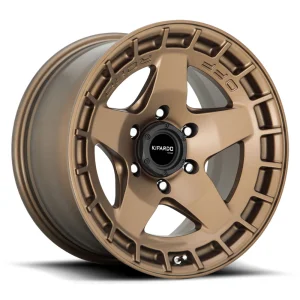
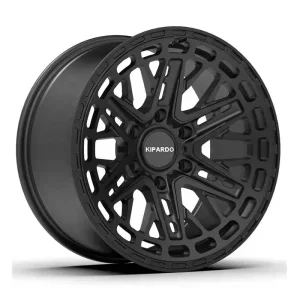
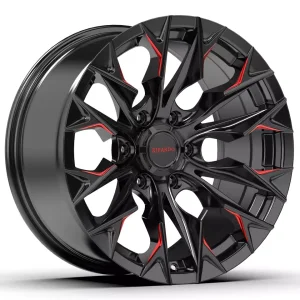
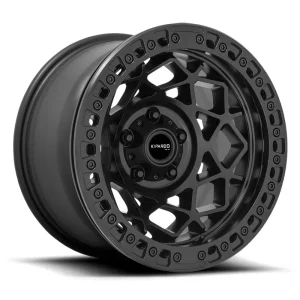
Direct OEM & wholesale performance wheel configurations engineered for rugged 4x4, forged multi-piece setups, and deep-dish automotive platforms.
The Economics of Modern Aftermarket Wheel Manufacturing
A macroeconomic perspective on how global automotive distribution pivots toward standardized casting, multi-axis flow forming, and aerospace-grade monoblock forging.
Material Optimization
Global aftermarket wheel supply transitions strictly from pure gravity casting to primary A356.2 aluminum ingot melt processes, leveraging electromagnetic degassing to minimize hydrogen inclusion down to under 0.12 cm³/100g Al.
Flow-Forming Transition
By cold-rolling the rim barrel across three opposing CNC rollers under 120-150 kN of force, mechanical elongation values increase by 300%, offering forged-level tensile properties at low cast unit costs.
Global Certification Matrix
International compliance demands full traceability across JWL, VIA, SAE J2530, and TÜV standards, requiring destructive dynamic radial and cornering fatigue benchmarks to surpass 2.5 million operational revolutions.
The Operational Advantage of Chinese Manufacturing Hubs
Understanding why leading Tier-1 distributors and national wheel brands anchor their volume production in China's integrated coastal automotive clusters.
Cluster Ecosystems
Proximity to bauxite refining, molten metal pipelines, precision tooling ateliers, and automated coating lines reduces raw material logistics cycle time by 45% compared to fragmented offshore markets.
Robotic Cell Casting
Automated low-pressure die-casting (LPDC) furnaces operating with programmable multi-stage bottom-fill pressure profiles yield zero turbulent oxidation and maintain an automated scrap rate below 1.4%.
Scale Cost Amortization
High-tonnage die-mold amortization enables rapid iteration of trending concave profiles, beadlocks, and spoke variations without saddling distributors with prohibitive initial NRE tooling outlays.
Integrated Export Customs
Complete multi-tier export processing handling container load optimization, sea-freight vapor-barrier barrier packaging, and harmonized code documentation across 60+ global customs jurisdictions.
Localized Fitment Matrices & Application Scenarios
Global aftermarket wheel procurement requires rigorous regional customization. Explore the technical divergence between North American, European, Australian, and Middle Eastern demands.
1. North American Light Truck, Overlanding & Performance Platforms
In the United States and Canada, wheel demand is anchored in pickup trucks (Ford F-150, Chevy Silverado, Ram 1500) and off-road SUVs. This requires high static and dynamic load ratings (often exceeding 2,500 lbs to 3,650 lbs per corner). Fitment priorities revolve around negative offsets (-12mm to -44mm) for aggressive track stance, deep lips, and simulated or true beadlock lips. Furthermore, electric vehicle retrofits (Tesla Model 3/Y/S) demand aero-efficient, high-tensile, low-drag forged designs engineered specifically to carry elevated battery curb weight while preserving range efficiency.
| Region | Dominant Platforms | Critical Sizing & Fitment | Core Mechanical Stress Criteria |
|---|---|---|---|
| North America | Full-Size Pickups, Overland 4x4, EV Heavy Platforms | 17x9 (-12 ET), 20x10 (-24 ET), 22x10 (0 ET), 5x127, 6x135, 6x139.7 | High static load (3,000+ lbs), 13° oblique wheel impact resistance |
| Europe (EU/UK) | German Luxury Saloons, Track Hatchbacks, OE Replacements | 18x8.5 (+45 ET), 19x9 (+35 ET), 20x9.5 (+25 ET), 5x112, 5x120 | TÜV dynamic cornering clearance, strict caliper clearance, ECE compatibility |
| Australia / GCC | Toyota Land Cruiser (LC79/LC300), Nissan Patrol, Desert Crawlers | 16x8 (0 ET), 17x8.5 (0 to +25 ET), 18x9 (+18 ET), 5x150, 6x139.7 | Extreme sand scrub resistance, thermal dissipation under 50°C+ ambient load |
2. Middle Eastern Desert Overlanding & High-Heat Scrub Dynamics
In GCC markets (UAE, Saudi Arabia, Kuwait), vehicle platforms such as the Toyota Land Cruiser 300 series and Nissan Patrol Super Safari operate under relentless thermal stress. Ambient asphalt temperatures exceeding 60°C combined with deflated tire dune bashing introduce severe bead seating strain. Exporters serving this sector engineer specialized bead-seat knurling to eliminate tire-to-rim slippage under high-torque low-PSI conditions, paired with UV-resistant acrylic powder coatings that withstand intense particulate sand abrasion.
Future Trends Transforming Aftermarket Wheel Engineering
Where engineering meets market evolution: lightweighting mandates, aero-curated profiles, and modular multi-piece structures dominate the next decade.
EV Lightweighting & Range Extension
As gross vehicle weight surges due to heavy lithium and solid-state battery packs, aftermarket wheels must balance un-sprung rotational mass reduction with extreme yield strength. Flow-formed hybrid geometries and aero-shield inserts are reducing drag coefficients (Cd) by up to 0.02 while shaving 15% off rotational inertia.
6061-T6 Monoblock Forging
High-end tuning companies increasingly demand 10,000-ton forging presses that compact 6061-T6 aluminum billets into continuous molecular alignments. The resulting monoblock architecture eliminates structural porosity completely, enabling featherweight, ultra-thin spoke designs that accommodate massive 6-piston and 8-piston carbon ceramic brake packages.
Sustainable Metallurgy & Closed-Looping
Global ESG mandates require exporters to adopt low-carbon primary smelting powered by hydropower, alongside closed-loop CNC aluminum chip remelting. Modern factories now operate in-house chip briquetting lines to reprocess 100% of CNC swarf without altering alloying chemistries, driving down carbon tax exposure across European ports.
How Global Buyers Structure Their Aftermarket Wheel Procurement
Tier-1 distributors, e-commerce retailers, and wholesale chains employ structured auditing matrices to mitigate supplier risk, balance MOQ tiers, and secure reliable supply chains.
Systematic Verification & Supplier Auditing Protocol
Enterprise procurement departments no longer rely solely on sample photos or trade show claims. Experienced buyers evaluate Chinese wheel exporters using a four-tier auditing paradigm:
1. In-Line Metallurgical Assay
Verification of optical emission spectrometers (OES) ensuring A356.2 alloy chemical composition strictly abides by ASTM B179 standards, specifically keeping iron (Fe) content below 0.12% to prevent brittle intermetallic compound formation.
2. Dynamic Radiography (X-Ray)
100% in-line digital radiography of hub junctions, spoke roots, and rim flanges to catch micro-shrinkage and gas inclusions before heat treatment, eliminating premature cracking under cyclic stress.
3. T6 Solution & Aging Integrity
Inspection of computerized continuous heat-treatment furnaces. Accurate soaking at 540°C followed by a 15-second rapid quench and artificial aging at 155°C is essential to achieve a Brinell hardness rating exceeding HB 65-75.
4. Finish Durability Validation
Automated powder coating and wet paint lines must demonstrate compliance with 1,000-hour CASS (Copper-Accelerated Acetic Acid Salt Spray) and cross-hatch adhesion testing according to ASTM D3359 standards.
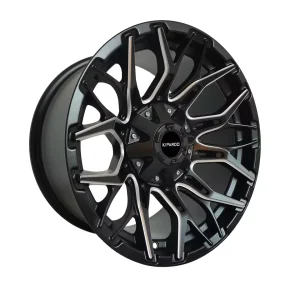
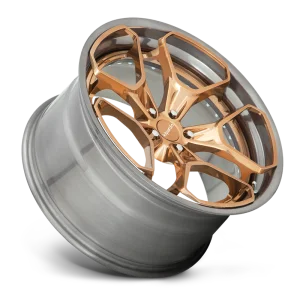
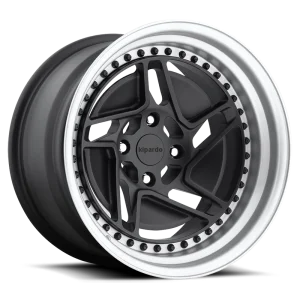
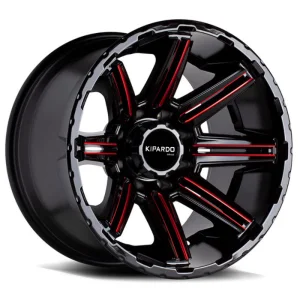
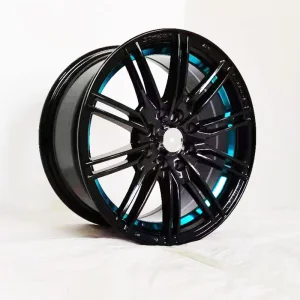
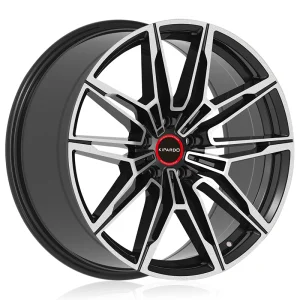
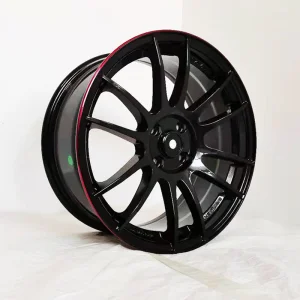
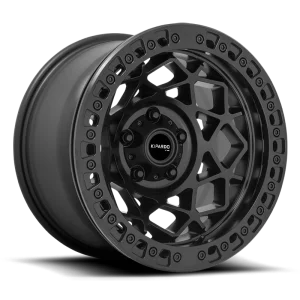
Advanced Fitment & Performance Lineup (Series Beta)
Explore our verified high-volume low-pressure cast, machine-faced, multi-piece forged, and bespoke tuner fitments built for global wholesale export.
Frequently Asked Questions by Wheel Importers & Brand Owners
Technical, operational, and commercial insights derived from real-world global procurement contracts.
What are the key technical differences between Low-Pressure Casting, Flow-Forming, and Forging?
Low-Pressure Die Casting (LPDC) forces molten A356.2 aluminum into the mold from the bottom under low gas pressure (approx. 0.2 to 1.0 bar). This reduces turbulence, air entrapment, and internal porosity compared to gravity casting, making it the industry standard for cost-effective, high-volume production. Flow-Forming begins with a specialized LPDC pre-form cast; the barrel area is heated and mechanically drawn using heavy rollers over a steel mandrel. This aligns the aluminum grain structure, dramatically increasing tensile yield strength and allowing for a thinner, lighter barrel profile (reducing un-sprung weight by 10-15%). Forging begins with a solid billet of aerospace-grade 6061-T6 aluminum subjected to 8,000 to 10,000 metric tons of direct hydraulic pressure, followed by multi-axis CNC milling. Forged wheels boast an uninterrupted grain matrix, offering the ultimate strength-to-weight ratio and custom single-set flexibility, but with a significantly higher manufacturing cost per unit.
How do Chinese wheel manufacturers guarantee compliance with JWL, VIA, and SAE J2530 standards?
Compliance is verified via a closed-loop metallurgical quality system. First, sample castings undergo non-destructive digital radiographic (X-ray) inspections to ensure absence of internal porosities at the hub-spoke juncture. Second, physical stress testing is executed in accredited laboratories: 1) The Dynamic Cornering Fatigue Test evaluates the wheel center under continuous bending moments (typically 100,000 to 250,000 cycles). 2) The Dynamic Radial Fatigue Test checks barrel endurance under heavy radial loads rotating at high speed across a minimum of 500,000 to 2,000,000 cycles. 3) The 13-degree (and 30-degree) Impact Test drops a weighted striker onto the rim flange to verify ductile deformation without instantaneous catastrophic failure or instantaneous air pressure loss. Exporters provide complete test documentation and certification stamping (JWL/VIA) on the inner wheel rim lip.
What is the standard Minimum Order Quantity (MOQ) and lead time structure for OEM & ODM projects?
For custom low-pressure cast wheels requiring new tooling, the typical mold development cycle takes 30-40 days, including 3D CAD modeling, FEA (Finite Element Analysis) simulation, steel tool CNC machining, and sample test batch production. The standard MOQ for cast configurations ranges between 60 to 100 pieces per mold (size/width combination), with color/finish splits permissible in batches of 40 pieces. For custom forged wheels (monoblock or multi-piece), because manufacturing relies entirely on CNC billet milling rather than fixed casting dies, the MOQ is significantly lower—typically starting from just 4 pieces (one car set) with an agile production turnaround of 15 to 25 days from final CAD sign-off.
How are wheel surface finishes protected against severe winter salting and desert sand abrasion?
High-reliability exporters apply automated multi-stage pre-treatment and powder-liquid hybrid coating lines. Castings pass through an automated 7-stage chemical degreasing, deoxidizing, and chromate/zirconium passivation wash to form a microscopic anti-corrosion barrier. Wheels then receive an electrostatically applied epoxy/polyester thermoset powder primer cured at 180°C-200°C. Color basecoats (wet spray or candy lacquer) are applied in dust-free cleanrooms, followed by a thick, UV-stabilized acrylic or polyurethane liquid clear coat. This multilayer matrix is validated by passing 1,000-hour CASS testing, 240-hour water immersion testing, and gravel chip impact resistance testing (SAE J400), ensuring zero peeling, filiform corrosion, or color fading under road de-icing salt and extreme desert heat.
What private-label branding and packaging customization options are provided for distributors?
Comprehensive private-label support includes custom-engraved hub center caps (injection molded ABS, machined aluminum, or acrylic gel lenses), laser-engraved spoke logos, customized inner rim barrel stamping, and branded packaging systems. Packaging is built with export-grade heavy corrugated outer cartons (5-ply or 7-ply), customized full-color artwork, barcoding, internal non-woven protective bonnets, foam rim edge rings, plastic bag humidity barriers, and palletization wrapped with water-resistant stretch films to guarantee damage-free long-distance maritime transit.
Engineer Your Next-Generation Wheel Program
Connect directly with experienced casting engineers, fitment specialists, and supply chain coordinators. Request our comprehensive master catalog, tool lists, and OEM load validation dossiers.