
Tier-1 Engineered Wheel Portfolio • Batch Phase I
Explore production-validated rotary forged, high-load off-road casting, and multi-piece modular structural rims manufactured under automated metallurgical process monitoring.
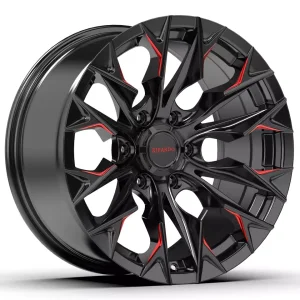
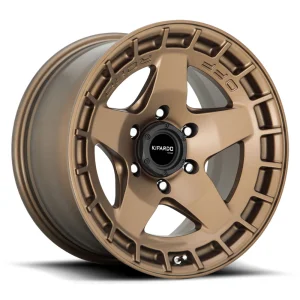
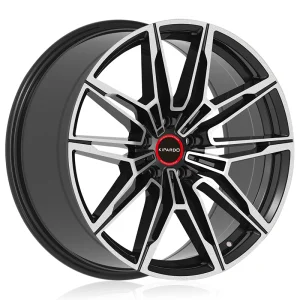
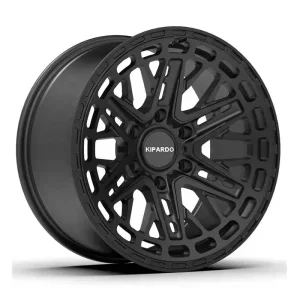
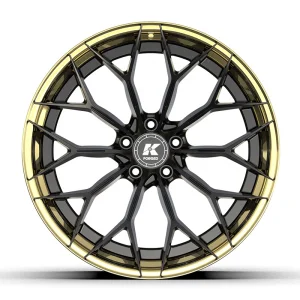
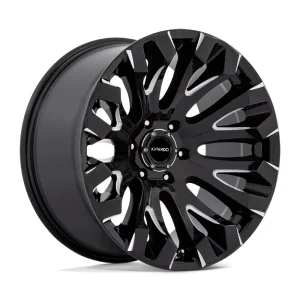
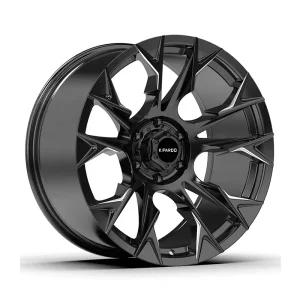
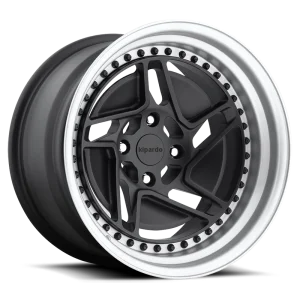
Rotary Forging Science: Flow-Forming Mechanics & Grain Refinement
Bridging the structural gap between conventional low-pressure casting and monolithic aerospace billet machining through high-pressure multi-roller radial elongation.
Plastic Deformation Mechanics
Rotary forging, universally designated as flow-forming or spin-forging, subjects a low-pressure cast preform to high-tonnage hydraulic rollers. While the wheel spins at controlled thermomechanical temperatures (300°C–350°C), three-dimensional compressive shear forces elongate the barrel section. This cold-working realignment forces dendritic aluminum boundaries into uninterrupted, parallel crystalline lines, eliminating microscopic casting porosity and optimizing grain directionality.
Tensile & Fatigue Thresholds
By shifting from unoriented crystalline structures to strain-hardened flow orientations, the resulting aluminum barrel approaches the structural density of forged 6061-T6 alloy. Ultimate tensile strength climbs from an average 220 MPa in standard gravity molds to upwards of 300–320 MPa. Yield strength improves by over 30%, permitting engineers to specify razor-thin 3.2mm barrel cross-sections that endure extreme rotational deflection and curb shock loads without micro-fracturing.
Dynamic Unsprung Mass Reduction
Vehicle unsprung weight carries an amplified inertial coefficient roughly 4 to 8 times greater than sprung weight during dynamic acceleration and braking cycles. Rotary forged wheels eliminate peripheral rotational mass directly at the outer rim barrel circumference. This drop in angular momentum directly translates to crisper steering transient response, lowered shock damping thermal load, shortened braking distances, and measurable range improvements across heavy BEV platforms.
Comprehensive Engineering Matrix: Casting vs. Rotary Forged vs. Monoblock Billet
Technical evaluation for global distributors and OEMs determining procurement trade-offs across capital expense, unsprung mass optimization, and homologation stress ratings.
| Evaluation Parameter | Conventional Gravity / LPDC | Rotary Forged (Flow-Forming) | Monoblock Forged (6061-T6) |
|---|---|---|---|
| Preform Base Ingot | A356.2 Virgin Primary Ingot | A356.2 Refining Ingot + Ti Strontium | Aerospace Billet Grade 6061-T6 Bar |
| Metallurgical Structure | Isotropic Dendritic Micro-Porosity | Anisotropic Elongated Parallel Grain | Continuous Dense Closed-Die Grain Flow |
| Tensile Strength (Yield) | 160 – 180 MPa | 230 – 260 MPa | 275 – 310 MPa |
| Ultimate Tensile (UTS) | 220 – 250 MPa | 300 – 330 MPa | 340 – 370 MPa |
| Typical Barrel Thickness | 5.0 mm – 6.5 mm | 3.2 mm – 4.0 mm | 2.8 mm – 3.5 mm |
| Weight Reduction Baseline | Baseline (Standard) | 12% to 18% Lighter | 22% to 30% Lighter |
| Tooling & Mold Amortization | Moderate ($5,000 – $9,000 / tool) | Controlled ($8,000 – $14,000 / tool) | Near Zero Mold (CNC Lathe Programmed) |
| Minimum Production MOQs | 80 – 100 Pcs / Spec | 60 – 80 Pcs / Spec | 4 – 20 Pcs (Custom Engineering) |
| Target Vehicle Applications | OE Replacement, High-Volume Fleet | Sport Sedans, Track Tuners, EV Crossovers | Supercars, Armored Limousines, Motorsport |
China Factory 4.0: Metallurgical Control, MES Traceability & Scale
Inside Shanghai Rimax Industry’s Kipardo casting and flow-forming plants: digitalized metallurgy, automated thermal treatment, and rigorous destructive testing protocols.
Raw A356.2 aluminum ingots undergo continuous rotary degassing via high-purity argon bubbling and ultrasonic flux injection, lowering hydrogen gas volume below 0.10 cm³/100g. Low-pressure bottom-up injection minimizes turbulent oxidation during mold fill.
Cast preforms are heated via precision induction pyrometers and loaded onto multi-axis hydraulic spin mandrels. Synchronized CNC rollers exert down-axis and radial pressure, flowing the barrel section into final profile dimensions with millimetric run-out tolerances.
Components pass through solution furnaces at 535°C (±3°C) for 6 hours, followed by rapid quenching into 60°C water agitators within a strict 15-second transfer window. Artificial aging at 155°C for 4 hours precipitates Mg2Si micro-crystals for maximum structural stiffness.
100% of manufactured blanks undergo automated industrial digital X-ray inspection to detect hidden core porosity. Dynamic coordinate measuring machines (CMM) and balance testing eliminate static harmonic runout before wheels reach the anti-corrosion coating line.
JWL & VIA Structural Benchmarks
Our Kipardo casting and rotary facilities are formally JWL and VIA verified. In-house test benches execute rigorous dynamic cornering fatigue (100,000 cycles at 1.5× rated bending moment), dynamic radial fatigue (500,000 continuous drum rotations), and 13° / 30° lateral impact drops with multi-ton dropped striker weights.
MES Supply Chain Traceability
Utilizing digital Manufacturing Execution Systems (MES), every production run is serialized with indelible laser-etched QR identifiers. Enterprise clients gain visibility down to specific furnace batch numbers, chemical spectrometer certifications, CNC shift operators, and powder-coat mill thickness verifications.
Eco-Friendly Closed-Loop Smelting
Swarf, edge clippings, and trimmed barrel stock from our multi-axis CNC machines are routed directly to automated vacuum briquetting lines and remelted on-site. This closed-loop resource recovery yields a 92% aluminum recovery rate, slashing embodied carbon metrics for environmentally regulated European and North American distributors.
Engineered Fleet Solutions: BEV Dynamics, Commercial Logistics & 4x4 Overland
Modern vehicular architectures demand specialized metallurgical load profiles. How rotary forging resolves current structural bottlenecks across disparate automotive domains.
Electric Vehicle Range
Battery packs push curb weights 25% higher while requiring increased range. Rotary forged rims shave 3.5kg per corner while increasing load capacities to 950kg+, directly mitigating battery efficiency penalties without safety margins compromise.
Commercial Last-Mile Fleets
High-center-of-gravity urban delivery vans destroy standard cast bead seats under chronic pothole impact. Flow-formed outer rim flanges exhibit plastic yield rather than catastrophic brittle fracturing, keeping fleet downtime minimized.
4x4 Extreme Off-Road
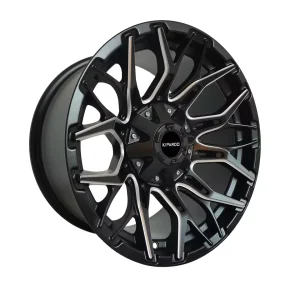
Overland rigs operating low tire pressures demand bead retention under severe lateral torsional scrub. Kipardo's knurled bead seat machining pairs with reinforced spoke transitions to resist rotational tire slippage under full crawl torque.
Track Tuning & Brake Flow
Large multi-piston carbon ceramic and monoblock calipers require aggressive drop-center barrel clearances. Flow-forming allows sculpted back-spoke milling and wide inner barrels, ensuring unimpeded cooling duct airflow and thermal dissipation.
Tire Bead Wear Resistance
Micro-deflection in cheap cast rims causes uneven tire shoulder scrubbing. The higher modulus of elasticity provided by rotary forging stabilizes tire contact patches during aggressive transient maneuvers, prolonging tire tread longevity.
Enterprise Procurement: Localized Compliance, Tariff Mitigation & Logistics
Strategic frameworks for international distributors managing multi-container wheel sourcing, customs homologation, container optimization, and brand customization.
Customs Homologation
Complete documentary compliance across US DOT SAE J2530, Japanese JWL/VIA testing declarations, and German TÜV structural sample files. Shanghai Rimax provides complete test bench recordings and laboratory certification dossiers for hassle-free regional registration.
Optimized Container Stowage
Engineered dual-wall export cartons, reinforced woven edge protection, and form-fitted internal shower caps prevent finish abrasions during maritime transit. Our logistics coordinators maximize 40ft HQ cube utilization, stowing up to 1,800 units per container depending on staggered offset fitments.
Private-Label OEM Branding
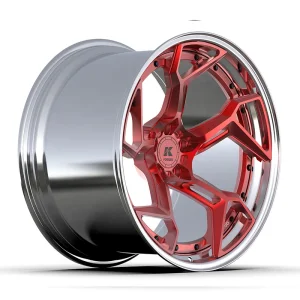
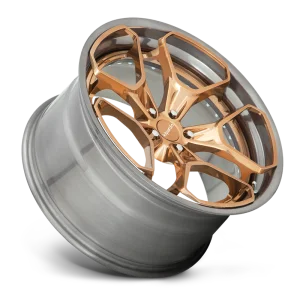
Full brand integration support including custom mold insert CNC machining for proprietary inner-lip markings, personalized billet center caps, bespoke packaging design, barcoded warehouse SKUs, and customized paint-color codes (Candy Red, Tinted Bronze, Satin Gloss).
Bonded Warehousing & DDP
Flexible delivery terms tailored to regional trade conditions, including FOB Shanghai/Ningbo, CIF major deepwater ports, or complete door-to-door Delivered Duty Paid (DDP) arrangements backed by bonded storage hubs to optimize working capital turnover.
Next-Generation Roadmap: FEA Topology, Aero Blades & Hybrid Alloys
Pioneering wheel metallurgy through automated algorithmic optimization, active aerodynamic management, and hybrid carbon composite barrel integration.
AI Structural Topology Optimization
Finite Element Analysis (FEA) is shifting from retroactive validation to generative synthesis. AI algorithms iteratively hollow non-structural aluminum mass along load trajectories, generating bionic spoke geometries that drop overall wheel weight an additional 8% without diminishing dynamic cornering stiffness under high-lateral-G racing conditions.
Hybrid Carbon Barrel Co-Development
Addressing extreme luxury and GT motorsport demands, our R&D engineers are pairing rotary forged aluminum center spiders with autoclave dry-carbon outer barrels. This architecture delivers dramatic mass drops—averaging 7.8kg total wheel weight in 21-inch dimensions—while maintaining aerospace grade fatigue mitigation under thermal braking stress.
Active Aerodynamic Insert Systems
Integrating snap-in interchangeable carbon composite and ABS aero vanes directly into rotary forged wheel spokes. These assemblies regulate turbulences in the wheel wells at highway cruise speeds, trimming drag coefficient (Cd) figures by up to 0.02 while maintaining brake rotor cooling airflow during deceleration.
Frequently Asked Questions on Rotary Forged Engineering
In-depth technical answers addressing metallurgy, factory audits, quality certifications, load calculations, and OEM/ODM private-label wheel manufacturing.
What fundamentally differentiates Rotary Forging from conventional Low-Pressure Casting?
How does Shanghai Rimax Industry verify structural safety across global markets?
What are the lead times, MOQs, and tooling investments for proprietary custom wheel programs?
Can Rimax custom-engineer wheel load ratings specifically for heavy Electric Vehicles (BEVs)?
What warranties and after-sales guarantees cover Kipardo and Rimax wheel shipments?
Specialized Heavy-Duty & Custom Forged Configurations • Batch Phase II
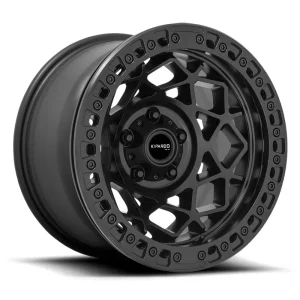
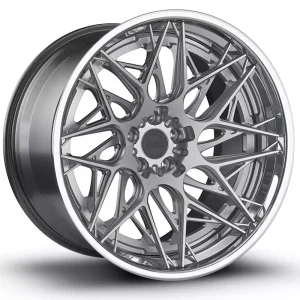
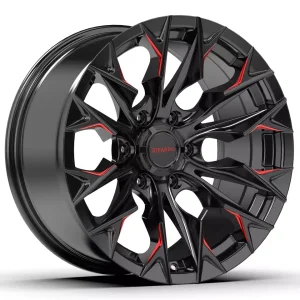
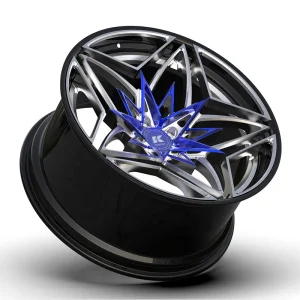
High-load 6-lug overland configurations, lightweight concave monoblock billets, and modular 2-piece/3-piece assemblies engineered for global aftermarket distributors.

Launch Your Strategic Rotary Forged Wheel Program
Connect directly with Shanghai Rimax Industry’s automotive engineering teams. Obtain CAD parametric fitment files, complete JWL/VIA test reports, containerized pricing, and comprehensive factory audit credentials.