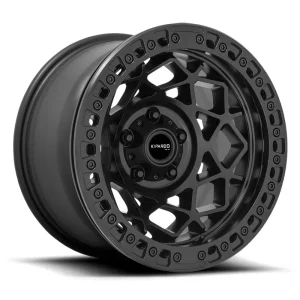
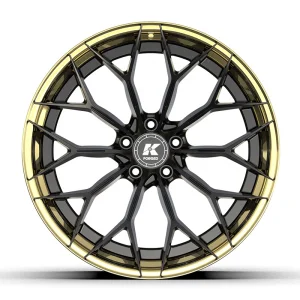
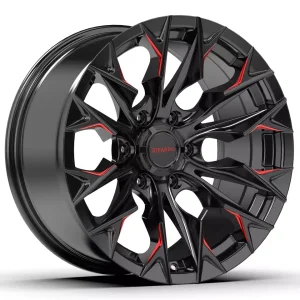
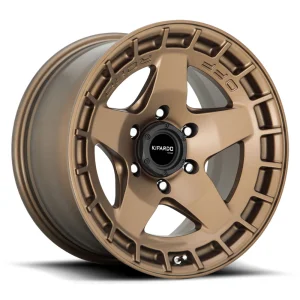
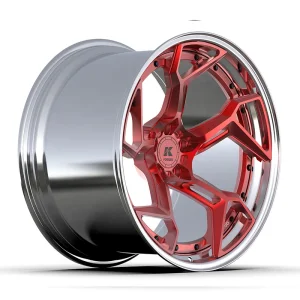
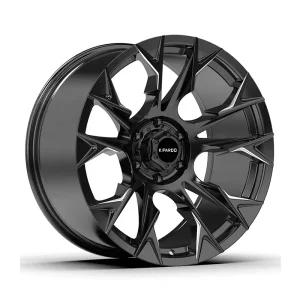
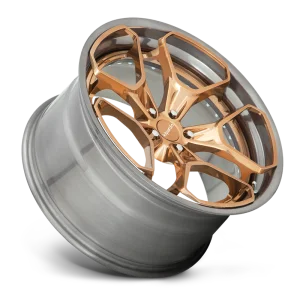
Featured High-Performance Wheel Formats
Explore initial core series configurations spanning multi-piece forged assemblies, precision concave contours, and heavy-duty casting designs.
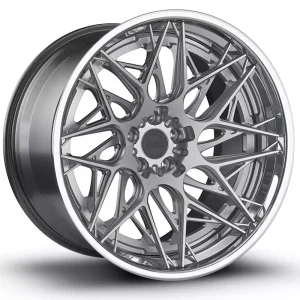
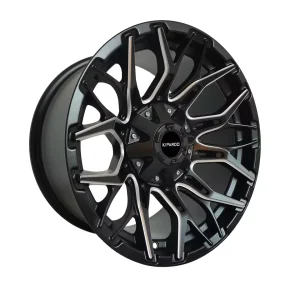
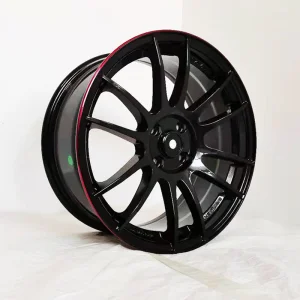
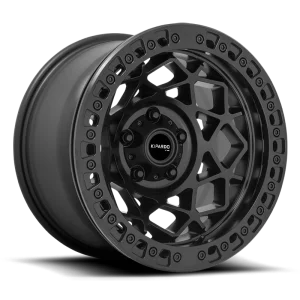
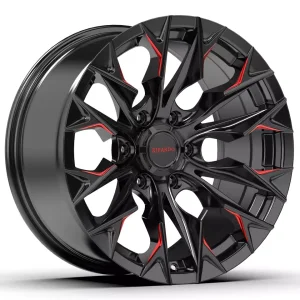
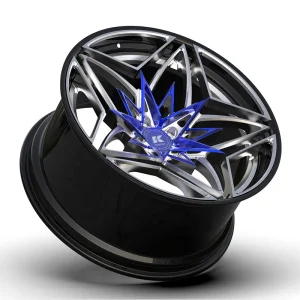
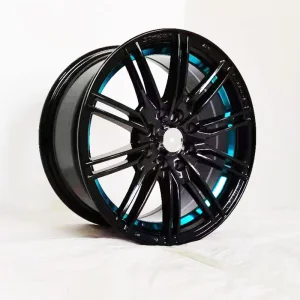
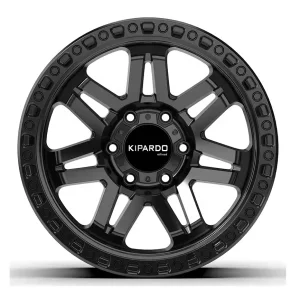
Global Landscape: Commercial & Industrial Status of Chrome Forged Rims
The transition toward electrification, elevated axle loads, and uncompromised aesthetics is reshaping how tier-1 buyers, fleet managers, and regional distributors assess wheel metallurgy.
Metallurgical Density & Grain Flow
Unlike conventional gravity or low-pressure casting, true forged wheels originate from solid cylindrical 6061-T6 aerospace aluminum billets. Subjected to hydraulic presses from 10,000 to 12,000 tons, the crystal lattice realigns organically, yielding uninterrupted grain flow. This eliminates voids and porosity while dramatically increasing tensile strength and resistance to fatigue crack propagation under aggressive cyclic stresses.
Advanced Chrome Plating & PVD
Modern chrome forging has surpassed legacy copper-nickel-chrome immersion baths by integrating high-integrity Physical Vapor Deposition (PVD) environmentally compliant coatings alongside multi-layer micro-crack trivalent chromium. This delivers deep optical luster, complete passivity against road salts, chemical resistance to de-icing polymers, and thermal threshold endurance exceeding CASS 72-hour salt-spray standards.
Sprung vs. Unsprung Mass Dynamics
Forging achieves structural yield thresholds identical to cast components while shedding 20% to 30% of total mass. This drop in rotational inertia yields measurable reductions in suspension damper wear, shortens braking distances, sharpens steering responsiveness, and directly combats range degradation across heavy electric vehicle (EV) platforms and heavy-payload commercial overlanding conversions.
China Factory Efficiency & Engineering Infrastructure
Vertical manufacturing ecosystems integrate raw metallurgy, 5-axis CNC machining, and automated plating lines to compress production lead times without sacrificing precision.
Integrated Upstream Material Access
By establishing plants directly adjacent to certified domestic aluminum smelting facilities, Rimax guarantees supply chains of high-purity aluminum with uniform manganese, silicon, and magnesium balancing. This spatial proximity limits exposure to market fluctuations in ingot pricing and minimizes transit-related carbon overhead while upholding tight material certifications.
5-Axis High-Velocity Tooling
Equipped with high-precision multi-axis machining cells operating at micrometric spindle run-out limits, designs move directly from FEA stress analysis simulations to production billets in hours. Specialized custom profiles, deep concave drops, lightweight perimeter pockets, and bespoke center-lock architectures are milled with absolute zero-backlash consistency.
Continuous Quality Gate Protocols
Production cycles integrate destructive and non-destructive protocols at every transition. Dynamic cornering fatigue tests, radial rolling resistance simulation, automated multi-axis coordinate measuring machines (CMM), helium leak spectrometry, and optical coordinate scanners ensure compliance with ISO/IEC 17025 accredited laboratory expectations.
OEM Chrome Forged Rims Comprehensive Pricelist & Engineering Matrix
B2B tier pricing references volume manufacturing agreements, wholesale container allocations, and turn-key private-label engineering packages. Final unit cost is governed by structural architecture, diameter, surface plating method, and custom PCD tooling.
| Architecture Class | Diameter Range | Primary Material | Finish / Plating System | Target Load Rating | MOQ (Per Fitment) | Indicative OEM Price (FOB) |
|---|---|---|---|---|---|---|
| 1-Piece Monoblock Forged | 18" – 20" | Aerospace 6061-T6 Billet | Direct Triple Chrome / PVD Clear | 850 kg – 1,050 kg | 4 Sets (16 Pcs) | $220 – $310 / pc |
| 1-Piece Concave Monoblock | 21" – 24" | Aerospace 6061-T6 Billet | Mirror High-Luster Chrome / PVD | 950 kg – 1,200 kg | 4 Sets (16 Pcs) | $340 – $480 / pc |
| 2-Piece Modular Forged | 18" – 22" | 6061-T6 Center + 6061 Rim Barrel | Chrome Center / Polished Chrome Lip | 900 kg – 1,150 kg | 2 Sets (8 Pcs) | $380 – $560 / pc |
| 3-Piece Bespoke Modular | 19" – 26" | Billet Center + Spun Outers/Inners | Multi-Step Trivalent Chrome Plating | 1,000 kg – 1,350 kg | 1 Set (4 Pcs) | $520 – $790 / pc |
| Off-Road Heavy-Duty Forged | 17" – 22" | High-Density Compressed 6061-T6 | PVD Extreme-Environment Chrome | 1,250 kg – 1,850 kg | 5 Sets (20 Pcs) | $290 – $440 / pc |
| Ultra-Large Custom Diameter | 26" – 30" | Bespoke Extruded 6061-T6 Blank | Show-Quality Hand-Buffed Chrome | 1,200 kg – 1,600 kg | 1 Set (4 Pcs) | $750 – $1,250 / pc |
*Notes: Tooling fees for fully non-standard PCD custom drillings are waived for annual volume contracts over 200 units. Packaging includes high-density EPE foam cap protectors, custom edge guards, moisture barrier bags, and double-corrugated drop-tested cartons.
Localized Application Scenarios & Engineering Fitments
Optimizing mechanical tolerance, backspacing, brake caliper clearance, and load ratings across targeted automotive segments.
High-Output EV & Performance Sedans
Modern performance electric vehicles deliver instant torque spikes exceeding 1,000 Nm. Traditional cast wheels often struggle with circumferential tire slip and premature fatigue along the inner barrel drop center. Our monoblock forged configurations incorporate diamond-knurled bead seats to completely eliminate tire slippage under full acceleration while maintaining structural rigidity.
Severe-Duty Overlanding & 4x4 Commercials
For specialized platforms traversing gravel corridors, deep ruts, and desert sand, forged wheels provide the ductility required to absorb violent lateral curb impacts without experiencing catastrophic spoke fractures. Tested up to 1,850 kg dynamic axle loads, these rims provide durability for commercial armor, field exploration, and off-road builds.
Luxury Armored Fleet & Executive Transport
Executive transport vehicles operate with gross vehicle weights exceeding standard OEM suspension envelopes. Our multi-piece and monoblock designs preserve luxury aesthetic expectations through mirror-finish chrome plating, coupled with reinforced hub pads capable of supporting extended run-flat assemblies and heavy-duty braking packages.
Industry Trends & Global Procurement Drivers
Strategic purchasing behavior in the automotive forged wheel market focuses on flexible supply chains, verifiable quality standards, and environmental compliance.
Lean Batch Flexibility & SKU Diversification
Global distributors are moving away from monolithic 500-unit casting runs that tie up cash flow. Modern procurement prioritizes low-MOQ CNC flexibility, allowing brand owners to order 4 to 20 units across multiple niche fitments, customized offsets, and bespoke finishes, maintaining diverse catalogs with reduced inventory carrying costs.
Regulatory Conformance: TÜV, JWL & SAE
Stringent road safety liability standards mandate that aftermarket components possess documented traceability. Wheel importers require verified proof that rims meet JWL/VIA, SAE J2530, and TÜV dynamic cornering and 13-degree impact standards, supported by material chemical analysis reports validating true 6061-T6 aluminum alloys.
Clean Metallurgy & Closed-Loop Plating
Corporate ESG directives are reshaping industrial finishing. Global brands prioritize manufacturers utilizing zero-discharge wastewater filtration plants and energy-efficient PVD vacuum deposition over open-air toxic chromium baths. Clean plating processes protect corporate reputations while meeting North American and European environmental import regulations.
Technical & Commercial Frequently Asked Questions
Direct answers for automotive product managers, sourcing specialists, and enterprise rim distributors.
How does true 6061-T6 forged aluminum differ from cast A356.2?
Cast aluminum is poured in liquid state into molds, creating micro-level dendritic structures that can harbor micro-porosity and brittle failure points. Aerospace-grade 6061-T6 forged aluminum is solid-state forged under hydraulic pressures exceeding 10,000 tons, creating aligned crystalline grain lines. Yield strength increases from approximately 160 MPa (cast) to over 275 MPa (forged), and ultimate tensile strength jumps to 310 MPa, allowing for lighter, thinner spokes with higher structural safety margins.
What makes Chrome Plating on Forged Rims resistant to peeling?
Peeling issues on lower-tier rims occur due to micro-void gas release underneath the electroplated skin during thermal cycles. Because forged blanks are fully dense with zero structural porosity, plating layers adhere with high chemical bonding integrity. We apply a multi-tier micro-cracked trivalent chrome process (incorporating copper and dual nickel barrier coatings) or advanced PVD clear coatings, providing salt-spray corrosion thresholds that pass strict 72-hour CASS testing.
Can we specify custom offsets, PCDs, and center bores per vehicle?
Yes. Because each forged wheel is individually milled on 5-axis CNC machines from a dedicated forging blank, we configure bolt patterns (PCD: 4-lug, 5-lug, 6-lug, 8-lug, or center-lock), offsets (ET: from -76 to +65), and center bore profiles to original vehicle hub dimensions without requiring dedicated physical molds.
What is the standard manufacturing turnaround time for custom runs?
From final CAD engineering validation and Finite Element Analysis (FEA) sign-off, standard monoblock CNC cutting requires 12 to 15 working days. Applying multi-step high-luster chrome dipping or specialized PVD finishes adds approximately 7 to 10 days, allowing air-freight samples or production batches to ship within 25 to 30 calendar days.
Additional Specialized Wheel Architectures
Complete product range supporting heavy axle configurations, bespoke multi-piece modular setups, and commercial 4x4 alloy implementations.