
Primary Engineered Wheel Architectures
Direct factory supply lines for low-pressure cast, flow-formed, multi-piece modular forged, and composite hybrid wheel variants engineered to global safety specifications.
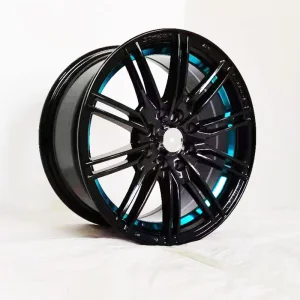
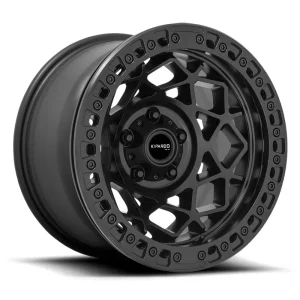
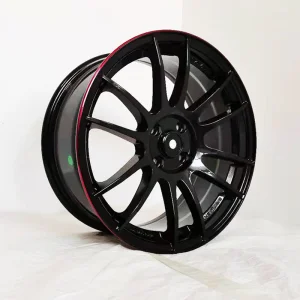
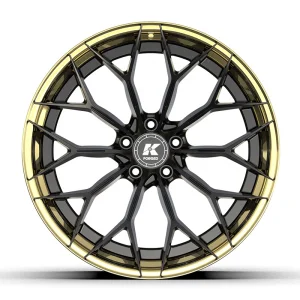
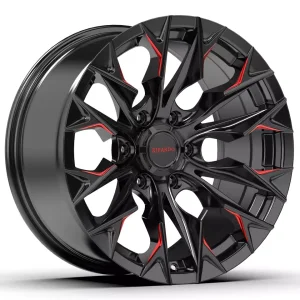
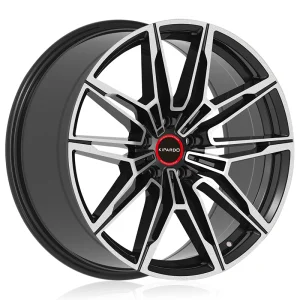
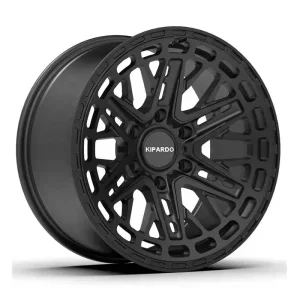
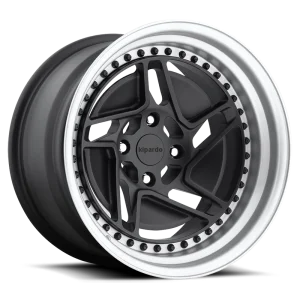
The Structural Shift: Forged Carbon Fiber & Composite Hybrid Wheel Technology
The transition from monolithic metallurgical casting to carbon matrix engineering represents the single largest leap in un-sprung automotive mass reduction since the invention of the magnesium race wheel.
Rotational Inertia Dissipation
Every kilogram eliminated from a wheel's outer barrel rim is exponentially superior to static chassis weight removal. Forged carbon fiber composite barrels cut moment of inertia by up to 40%, dramatically shortening braking distance, eliminating gyroscopic precession, and accelerating throttle response on high-output EV and ICE drivetrains.
EV Range & Battery Efficiency
As original equipment manufacturers confront the battery payload penalty in electric mobility architectures, composite forged wheels deliver a certified 5% to 8% extension in WLTP drive cycle efficiency. By minimizing structural parasitic load on dynamic acceleration cycles, OEM EV wheel specifications increasingly prioritize carbon-hybrid integration.
Acoustic NVH Attenuation
Unlike monolithic aluminum which acts as an acoustic resonator transmitting road surface frequencies into the vehicle chassis, the discontinuous strand matrix in forged carbon SMC dampens vibration internally. This inherent high structural damping coefficient lowers cabin decibel levels by 3.5 dB across harmonic bands.
Discontinuous Fiber Architecture
Moving beyond conventional 3K woven prepreg twills, our forged carbon wheels utilize chopped carbon fiber tow combined with vinylester and epoxy resins forged under 1,000+ tons of hydraulic compression. This eliminates directional grain vulnerability, achieving quasi-isotropic mechanical strength in all axes.
Global B2B Procurement Specifications & OEM Requirements
Procurement departments and automotive tier suppliers demand far more than aesthetic visual weave. Sourcing carbon fiber composite wheel sets requires stringent engineering compliance, process stability, and total lifecycle auditability.
PPAP Level 3 & APQP Discipline
Every commercial quote from Shanghai Rimax Industry Co., Ltd. incorporates standard automotive production part approval procedures. We deliver complete dimensional FAI (First Article Inspection), gage repeatability and reproducibility (GR&R), material certs, control plans, and Design Failure Mode and Effects Analysis (DFMEA) documents.
Tooling Amortization & Low MOQs
Addressing the barrier of steep mold investment, Rimax leverages flexible, rapid CNC billet cavity tooling alongside multi-cavity SMC compression dies. This dual-track strategy enables OEM prototype validation batches (MOQ 4 to 20 units) and scaled production runs (500+ units/quarter) with accelerated capital payback cycles.
Custom Offset & Caliper Clearance
Modern performance platforms feature massive 6-piston and 10-piston carbon-ceramic braking assemblies. Our composite wheel engineering accommodates deep barrel bell-drop dimensions, aggressive negative offsets (ET), and multi-spoke hub concavity with zero rotor or tie-rod interference.
Macro Industry Solutions: Materials, Fastening & Galvanic Protection
Deploying composite materials in high-load dynamic applications introduces severe engineering hurdles: localized thermal conductivity, high shear stress around fasteners, and electrochemical galvanic corrosion when carbon interfaces directly with metal alloys.
Galvanic Barrier Engineering
Carbon is highly electronegative compared to aluminum. Direct contact in conductive moisture causes galvanic pitting. Rimax implements a proprietary non-conductive, continuous glass-fiber veil barrier layer and specialized ceramic-coated titanium or aerospace titanium Grade 5 (Ti-6Al-4V) fasteners with insulated delrin washers to guarantee zero galvanic potential degradation.
High-Tg Resin Matrices
Under aggressive track decelerations, rotor radiation can exceed 600°C, elevating bead rim temperatures. Our carbon matrix utilizes proprietary bis-maleimide and modified epoxy resin blends with a glass transition temperature (Tg) exceeding 235°C, ensuring rim flange rigidity under heavy thermal loads without bead slip.
Dual-Piece Hybrid Synergy
By marrying an ultra-lightweight high-pressure forged carbon fiber outer barrel with a precision CNC-machined aerospace 6061-T6 forged aluminum center spoke disc, Rimax achieves infinite styling flexibility for custom bolt patterns (PCD 4x100 to 6x139.7) alongside the structural rotational savings of full composite engineering.
High-Pressure Molding Cells
Our Kunshan facilities deploy closed-mold high-pressure compression systems generating up to 15 MPa of uniform hydraulic force. This high compaction ratio eliminates microscopic resin-rich pockets, yielding internal void content under 0.8%—exceeding commercial aerospace composite standards.
Technical Specification & Materials Comparison Matrix
Direct performance parameter benchmarking to support engineering specification selection.
| Engineering Metric | A356.2 Low-Pressure Cast | Flow-Formed (Rotary Forged) | Monoblock Forged (6061-T6) | OEM Forged Carbon Composite Hybrid |
|---|---|---|---|---|
| Average Weight (20"x10.5") | 14.8 – 16.5 kg | 12.2 – 13.5 kg | 9.8 – 11.2 kg | 6.8 – 7.9 kg (-48% vs Cast) |
| Yield Strength (Tensile) | 180 – 220 MPa | 240 – 280 MPa | 310 – 350 MPa | 680 – 850 MPa (Matrix Core) |
| Rotational Mass Inertia (kg·m²) | 0.88 – 0.95 | 0.74 – 0.81 | 0.62 – 0.68 | 0.44 – 0.49 (Peak Efficiency) |
| Impact Failure Mode | Brittle catastrophic cracking | Flange bending / crack | Plastic deformation / bend | Progressive localized delamination |
| NVH Damping Capacity | Low (Transfers road hum) | Moderate | Moderate | Exceptional (Viscoelastic absorption) |
| Thermal Heat Dissipation | High (Convective) | High (Convective) | Very High (Direct Conductive) | Engineered Aluminum Core Transfer |
| Tooling & Amortization Cost | Low – Medium | Medium | Zero (CNC Billet Cut) | Flexible CNC / Precision Molding |
| Primary Market Tier | Mass Market OEM / Replacement | Performance Retail / Tuning | Motorsport / Bespoke Luxury | Hypercar OEM / Elite Performance / EV |
Localized Support, Global Homologation & Quality Compliance
Navigating regional automotive homologation requires uncompromising adherence to sovereign regulatory testing protocols. Shanghai Rimax Industry Co., Ltd. provides certified test records and total supply chain traceability for every export batch.
JWL / VIA Verified Laboratory
Our Kunshan facilities feature on-site dynamic testing benches validated against Japanese Light Alloy Wheel standards. Every design undergoes 13-degree impact drop tests, dynamic radial endurance cycling exceeding 1,000,000 cycles, and rotating bending moment cornering tests under severe overload conditions.
TÜV & SAE J2530 Homologation
For European and North American distributors, Rimax prepares all essential documentation for German TÜV Rheinland / Kraftfahrt-Bundesamt (KBA) certification, as well as SAE J2530 aftermarket conformity. This streamlined technical file preparation mitigates border inspection holds and accelerates retail distribution.
Global DDP Logistics & Warehousing
We eliminate supply chain volatility with bonded export staging, comprehensive marine insurance, and Delivered Duty Paid (DDP) logistics channels directly serving ports across Los Angeles, Rotterdam, Jebel Ali, and Melbourne. FCL container optimization ensures safe transit with custom anti-abrasion packaging.
Non-Destructive Testing (NDT)
100% of composite carbon components are subjected to digital ultrasonic C-scan inspection and X-ray radiometry prior to CNC assembly. This rigorous inspection protocol identifies subsurface micro-porosity, fiber wrinkles, or resin voids long before the product ships to customer assembly lines.
Technology Roadmap: 2025–2035 Composite Milestones
Rimax continuously invests R&D capital into automated composite processes, advancing from manual vacuum-assisted resin transfer to intelligent, automated continuous manufacturing systems.
Phase 1: Automated Tow Placement (AFP)
Transitioning from chopped strand sheet molding to 6-axis robotic Automated Tow Placement allows computer-directed laying of continuous unidirectional carbon filaments along critical spoke stress pathways, maximizing torsional rigidity while trimming an extra 800 grams per rim.
Phase 2: Closed-Loop Recycled Feedstocks
Targeting strict ESG and carbon-neutral footprint standards, our next-generation composite program incorporates up to 35% reclaimed aerospace carbon fibers into low-stress barrel regions, slashing energy consumption by 65% with zero mechanical shear compromise.
Phase 3: Embedded Piezoelectric Sensors
Integrating micro-thin piezoelectric strain sensors and RFID telemetry within the carbon laminate structure allows real-time telemetry streaming of rim temperature, load deflection, and micro-crack onset directly to vehicle autonomous management controllers.
Phase 4: Bio-Derived Epoxy Resins
Formulating advanced bio-derived epoxies extracted from sustainable agricultural byproducts without sacrificing high glass-transition (Tg) tolerances. This eco-resin advancement delivers superior green manufacturing metrics for tier-1 European sustainability audits.
Frequently Asked Engineering & Procurement Questions
Detailed technical insights answering common OEM queries regarding forged carbon composite wheels, load limits, and commercial quoting procedures.
What is the exact mechanical difference between traditional woven carbon wheels and forged carbon wheels?
How does Rimax prevent galvanic corrosion between the carbon fiber barrel and aluminum center?
How do forged carbon fiber wheels handle severe pothole and curb impacts compared to cast alloy?
What are the typical lead times and minimum order quantities (MOQ) for custom OEM wheel programs?
What high-temperature resins are used to combat heat transfer from high-performance carbon-ceramic brakes?
Are specialized tire mounting procedures required for composite and forged carbon wheels?
Which international quality and homologation standards are Rimax wheels certified to meet?
Can Rimax support customized surface aesthetics for forged carbon patterns?
What structural warranties does Shanghai Rimax Industry Co., Ltd. provide on forged wheel platforms?
How does a client initiate an RFQ (Request for Quote) for custom brand labeling and packaging?
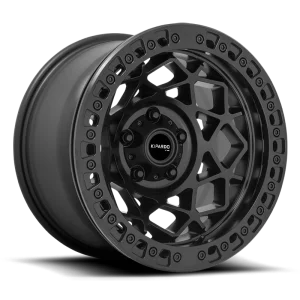
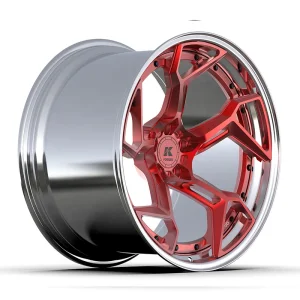
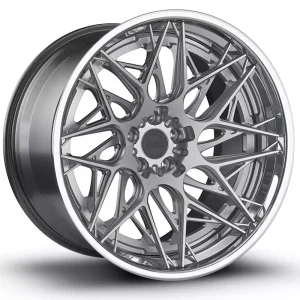
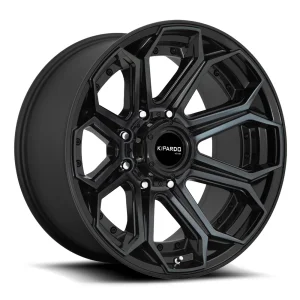
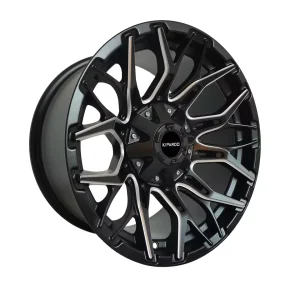
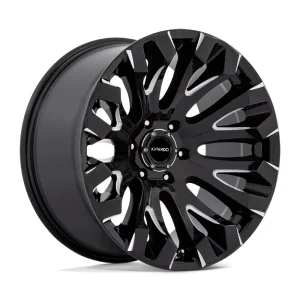
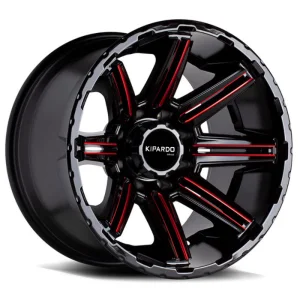
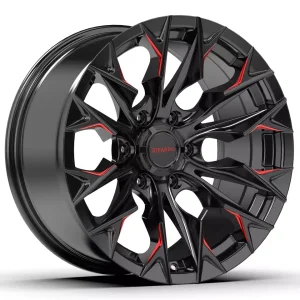
Specialized Offroad, Monoblock Forged & Heavy-Duty Wheel Series
Explore our expanded inventory of heavy-duty 4x4, concave monoblock forged 6061-T6, and high-load offroad designs engineered for international distribution channels.
Request an Official Engineering Quote & Fitment Feasibility Study
Whether you are developing a hyper-EV production program, launching a custom forged carbon private-label brand, or procuring container shipments of JWL-verified cast and forged wheels, our Shanghai engineering team provides full technical and commercial support.