
Featured OEM Original Alloy Rim Solutions
Explore our high-performance forged, heavy-duty 4x4 offroad, and precision-machined aluminum alloy wheels engineered to exceed JWL, VIA, and SAE J2530 rigorous fatigue testing benchmarks.
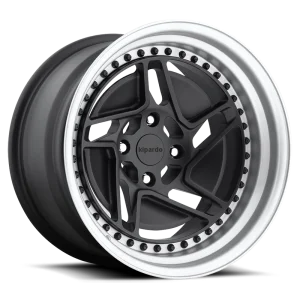
OEM Custom wholesale new design Forged car 3 pieces forged wheels Companies, Service
View Specifications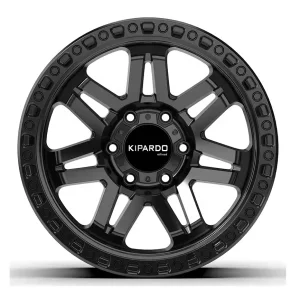
China Kipardo 17 18 inch factory wholesale 6 hole custom car aluminum alloy rims 4x4 offroad wheels Supplier, Service
View Specifications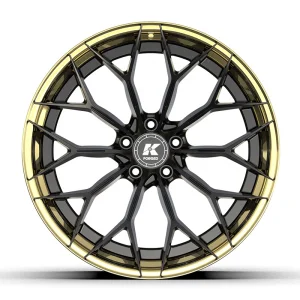
OEM Kipardo Luxury forged wheels 3 Pieces forged Rims Manufacturers, Companies
View Specifications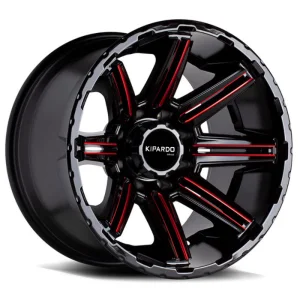
Wholesale Kipardo 17 18 inch factory customized aluminum alloy car rims offroad wheels Suppliers, Factories
View Specifications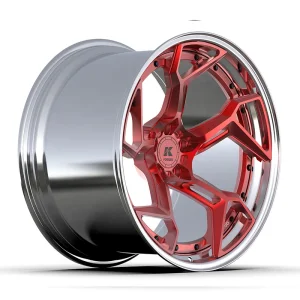
OEM Kipardo Custom 18 19 20 21 22 inch 6061-T6 aluminum concave forged wheels Suppliers, Exporter
View Specifications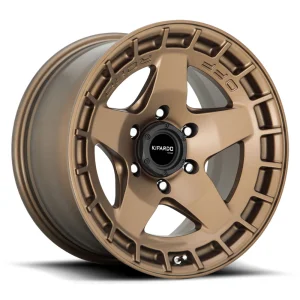
China Kipardo 17 18 inch high quality factory wholesale aluminum alloy rims 4x4 offroad wheels Manufacturer, Companies
View Specifications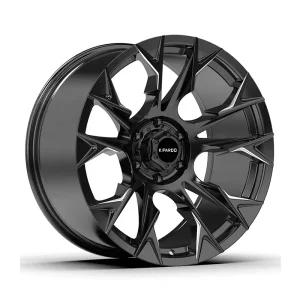
Custom Kipardo 20 inch factory wholesale 5 6 hole aluminum alloy rims 4x4 offroad wheels Supplier, Companies
View Specifications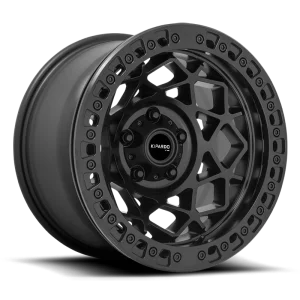
Buy KIPARDO manufacturer 6 holes 17 inch 4x4 wholesale aluminum alloy wheels rims Supplier, Quotes
View SpecificationsThe Global Commercial & Engineering State of Original Alloy Rims
An authoritative analysis of metallurgical evolution, supply chain reshoring, and the critical transition from conventional low-pressure casting to advanced rotary flow-forming and aerospace-grade forged structures.
Tier-1 OEM Metallurgy Requirements
Modern automotive original equipment manufacturers demand extreme mechanical uniformity. Primary aluminum alloys such as A356.2 (AlSi7Mg0.3) must undergo rigorous vacuum degassing, flux refining, and strontium modification to suppress micro-porosity. In forged applications, aviation-grade 6061-T6 aluminum provides minimum yield strengths of 276 MPa, preventing rim flange deformation under extreme dynamic cornering loads.
Finite Element Analysis (FEA) Pre-Tooling
Gone are the days of iterative trial casting. Engineering departments leverage non-linear Finite Element Analysis (FEA) and computerized mold-flow simulations prior to tooling fabrication. Spoke thickness, hub geometry, and bead seat contours are computationally optimized for weight reduction while preserving critical safety factors for 13° impact and biaxial rotary fatigue cycles.
Supply Chain Resiliency & Dual-Sourcing
Global automakers and tier-1 distributor networks face stringent delivery deadlines and fluctuating tariff boundaries. Integrated manufacturing hubs in Kunshan, Jiangsu combine die development, automated casting lines, precision 5-axis CNC machining centers, and automated painting systems within one ecosystem, cutting lead times from 16 weeks down to 35 calendar days for bespoke programs.
Low-Pressure Casting vs. Flow-Forming vs. Multi-Piece Forging
Selecting the optimal production pathway directly governs wheel mass, tensile fatigue life, rotational inertia, tooling amortization, and unit profitability across target distribution tiers.
| Engineering Parameter | Low-Pressure Die Casting (LPDC) | Rotary Flow-Forming (Spun Rim) | Monoblock & 3-Piece Forging |
|---|---|---|---|
| Raw Material & Metallurgy | A356.2 Liquid Aluminum Ingots (AlSi7Mg) | Pre-formed A356.2 Cast Preform | Solid 6061-T6 Aerospace Aluminum Billet |
| Mechanical Microstructure | Homogeneous dendritic grain structure; low porosity via controlled bottom-filling pressure. | Elongated, cold-worked dense grain boundary along the barrel section. | Continuous directional metal grain flow resulting from 10,000-ton forging pressure. |
| Tensile & Yield Strength | Tensile: ~240 MPa | Yield: ~165 MPa | Tensile: ~290 MPa | Yield: ~210 MPa | Tensile: ~310 MPa | Yield: ~276 MPa |
| Weight Differential vs. Standard | Baseline Reference Mass (100%) | 12% – 18% Weight Reduction | 25% – 32% Weight Reduction (Unsprung Mass) |
| Tooling & Production MOQ | Dedicated Steel Dies (MOQ: 100–300 pcs) | Hybrid Cast Die + Mandrel (MOQ: 100 pcs) | Direct 5-Axis CNC Milling (MOQ: 4 pcs bespoke) |
| Primary Automotive Use Case | High-volume OE replacement, fleet supply, volume retail. | Track-day vehicles, performance sedans, EV range-stretch packages. | Supercars, armored transports, custom offroad rock-crawlers, bespoke tuning. |
The Electric Vehicle (EV) Transition & Green Wheel Metallurgy
How electrification, heavy battery kerb weights, regenerative torque spikes, and Scope 3 decarbonization mandates are completely rewriting the wheel engineering blueprint.
Aerodynamic Drag & Range Optimization
EV wheel designs now combine aerodynamic closed-face architectures with targeted ventilation channels. By smoothing turbulent air wake around wheel arches, aero-styled alloy wheels reduce vehicle aerodynamic drag (Cd) by 3% to 5%, yielding an extra 10 to 18 km of battery range on highway cycles without compromising disc brake thermal dissipation.
Severe Dynamic Load Index Ratings
Battery packs add 400 kg to 800 kg of static kerb weight over internal combustion counterparts. Furthermore, instant peak electric motor torque places immense torsional shearing loads at the wheel center pad. Modern OEM rim engineering reinforces spoke-to-rim blend radii, escalating standard passenger wheel test load requirements from 650 kg to over 950 kg per corner.
Decarbonized Circular Aluminum Smelting
Global Tier-1 procurement policies strictly audit carbon intensity per metric ton of cast aluminum. Rimax factories have deployed closed-loop scrap recycling systems where in-house CNC chips and gate residues are melted under inert atmospheres, coupled with primary ingots derived from hydroelectric smelting, achieving up to 60% lower carbon footprints than coal-fired smelting routes.
Application Scenarios Engineered for Regional Environments
From arctic salt spray exposure to desert thermal expansion and severe rocky impacts, Kipardo wheels are customized for target geographic realities.
North American Heavy 4x4 & Overlanding
Built for Ford F-Series, Chevy Silverado, and Toyota Tacoma platforms with 5-hole and 6-hole configurations (PCD 6x139.7, 5x150). Features bead-seat knurling to eliminate tire slippage at low psi, along with reinforced outer flanges that resist side impacts on boulder trails.
Nordic & Northern European De-Icing Salt Durability
Engineered for sub-zero climates with multi-layer surface protection: chemical chromate-free pre-treatment, electro-deposited electrostatic powder primer, double base coats, and UV-stabilized acrylic clear coat tested to 1,500 hours of continuous Copper-Accelerated Acetic Acid Salt Spray (CASS).
Middle East High Thermal Stress Desert Driving
With ambient road surface temperatures surpassing 65°C, hub mounting pads are machined with expanded thermal relief channels. T6 solution and artificial aging processes prevent structural annealing or micro-fatigue creep during sustained desert high-speed highway transit.
Urban Electric & Hybrid Commuter Fleets
Tailored for rapid-acceleration EV passenger cars, urban crossovers, and delivery vans. Prioritizes lightweight flow-formed barrels that minimize rotational moment of inertia, significantly improving stop-and-go regenerative braking efficiency and city charging economy.
Strict Metallurgical Testing & International Certifications
Every single casting lot and forged blank produced under Kipardo's quality umbrella undergoes non-destructive and destructive metallurgical evaluation.
Dynamic Radial Fatigue
Simulates continuous high-speed cruising with a radial load multiplier of 2.25x the vehicle's rated axle weight, running for 500,000 to over 2,500,000 cycles without structural fatigue or air pressure loss.
Rotary Dynamic Cornering
Applies severe bending moments to the wheel mounting pad, verifying that spoke roots and bolt seats withstand the lateral g-forces encountered during extreme track cornering or emergency evasion maneuvers.
13° & 30° Curb Impact Tests
A heavy drop hammer strikes the wheel rim flange at 13 degrees, simulating accidental curb collision. The wheel must exhibit zero catastrophic spoke fractures, sudden deflation, or structural separation.
Real-Time Radiographic X-Ray
100% of cast wheel centers undergo multi-axis computerized X-ray imaging before machining to detect any internal micro-shrinkage cavities, trapped dross, or gas porosity in critical spoke-pad intersections.
Macro Industry OEM/ODM Manufacturing & Custom Engineering
From initial industrial sketching and 3D Class-A surface modeling to mold tooling, automated machining, bespoke packaging, and containerized logistics.
CAD Styling & Reverse Engineering
Our in-house design studio translates client concept sketches into fully parametric SolidWorks and Siemens NX 3D assemblies. Brake caliper clearance profiles (X-factor) are modeled against OEM performance brake templates (Brembo, Akebono, AP Racing) to ensure guaranteed direct bolt-on clearance without spacers.
Bespoke Surface Finishes & Styling
Equipped with computerized robotic paint lines supporting an expansive array of finishes: high-gloss piano black, hyper silver, deep candy red, satin bronze, brushed translucent tinted clears, mirror diamond-cut CNC faces, and authentic PVD (Physical Vapor Deposition) bright chrome alternatives.
Private-Label Packaging & Palletization
Complete branding integration for aftermarket wholesalers and OEM suppliers: high-strength double-wall corrugated cartons with custom brand graphics, protective non-scratch edge caps, moisture-barrier poly bags, branded aluminum center caps, and standardized heat-treated wooden export pallets.
Frequently Asked Questions by OEM Procurement Teams
Detailed technical and commercial answers addressing alloy wheel engineering, metallurgical compliance, MOQ considerations, and global shipping logistics.
Specialized OEM/ODM Alloy Wheel Catalog
Discover additional production-ready models including compact tuner designs, deep-concave offroad fitments, two-tone machine-faced styles, and ultra-high-diameter multi-piece configurations.
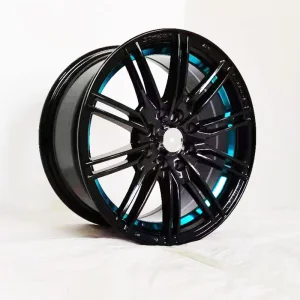
Wholesale KIPARDO 15 inch black color machine face alloy wheel rims for sale Manufacturer, Quotes
View Specifications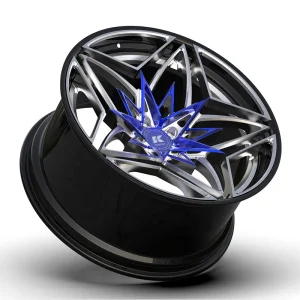
Custom Kipardo Custom 18 to 30 inch 2 Pieces forged wheels 3 Pieces forged Rims Pricelist, Exporters
View Specifications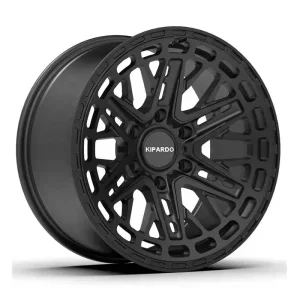
Wholesale Kipardo China factory 20 inch 5 6 hole alloy rims aluminum 4x4 offroad wheels Supplier, Factories
View Specifications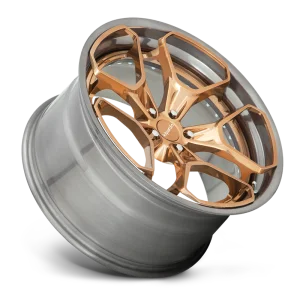
OEM Kipardo alloy wheels Forged car 3 pieces forged wheels 2 pieces,monoblock Manufacturer, Products
View Specifications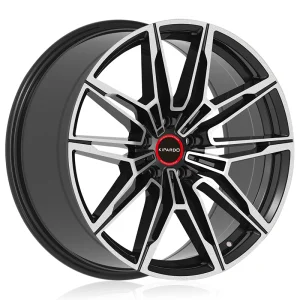
China Kipardo 18 19 20 inch factory wholesale cast alloy rims aluminum 4x4 offroad wheels Manufacturers, Suppliers
View Specifications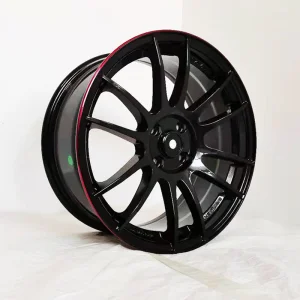
Cheap KIPARDO 15 inch 5x100 undercut red new japan design wheel Quotes, Products
View Specifications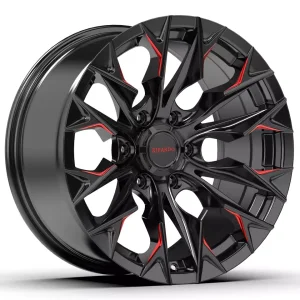
Cheap Kipardo 16 17 18 inch 6 hole custom casting car aluminum alloy rims 4x4 offroad wheels Exporters, Service
View Specifications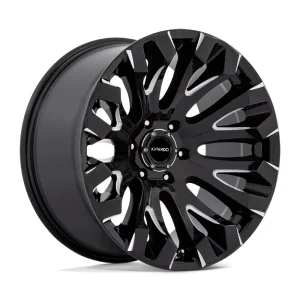
Wholesale Alloy wheels rims 20X8 20X10,4x4 rines wheels candy red 16x8 17x9 pcd 6x139.7 5x150 offroad wheels Supplier, Exporters
View SpecificationsLaunch Your OEM Wheel Program with Rimax Industry
Access our complete engineering CAD fitment library, technical tooling schedules, and bulk quotation pricelists. Our engineering and international logistics teams provide end-to-end guidance from preliminary FEA simulation to container port delivery.