
Engineered Heavy-Duty & Custom Forged Wheel Portfolio
Precision-machined from solid forged aluminum billets to satisfy high payload capacities, extreme cyclic stress, and stringent global roadway safety compliances.
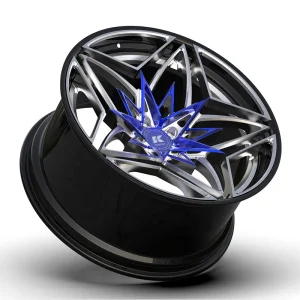
Custom Kipardo Custom 18 to 30 inch 2 Pieces forged wheels 3 Pieces forged Rims Pricelist, Exporters
View Product Specifications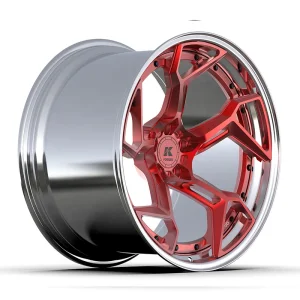
OEM Kipardo Custom 18 19 20 21 22 inch 6061-T6 aluminum concave forged wheels Suppliers, Exporter
View Product Specifications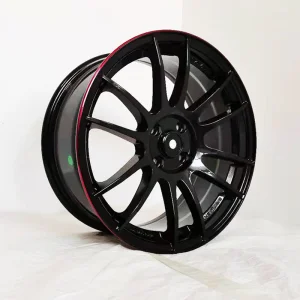
Cheap KIPARDO 15 inch 5x100 undercut red new japan design wheel Quotes, Products
View Product Specifications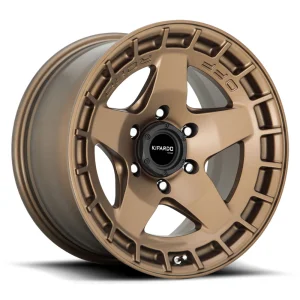
China Kipardo 17 18 inch high quality factory wholesale aluminum alloy rims 4x4 offroad wheels Manufacturer, Companies
View Product Specifications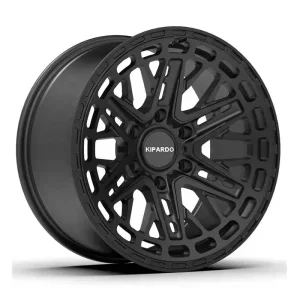
Wholesale Kipardo China factory 20 inch 5 6 hole alloy rims aluminum 4x4 offroad wheels Supplier, Factories
View Product Specifications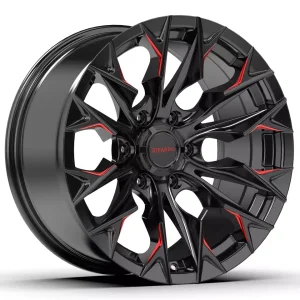
Discount Kipardo RTS 17x9 4x4 alloy car wheels with pcd 6x139.7 6x114.3 5x150 velg offroad wheels Quotes, Exporter
View Product Specifications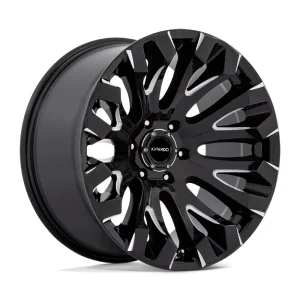
Wholesale Alloy wheels rims 20X8 20X10,4x4 rines wheels candy red 16x8 17x9 pcd 6x139.7 5x150 offroad wheels Supplier, Exporters
View Product Specifications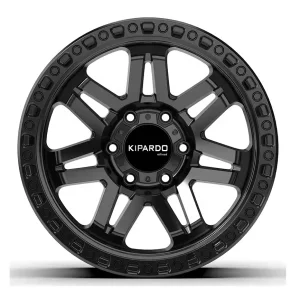
China Kipardo 17 18 inch factory wholesale 6 hole custom car aluminum alloy rims 4x4 offroad wheels Supplier, Service
View Product SpecificationsGlobal Commercial Transportation & Fleet Decarbonization
Evaluating the systemic shift from legacy pressed steel wheels to high-tensile forged aluminum assemblies across global logistics hubs.
Kinetic Physics of Rotating Mass
In long-haul commercial logistics, wheel assemblies constitute unsprung rotational inertia. Unlike static cargo tare weight, rotating mass demands angular acceleration torque directly from the powertrain. Upgrading an 18-wheel tractor-trailer setup from heavy steel wheels to monolithic forged aluminum trims over 500 kilograms (1,100 lbs) of deadweight. This structural reduction translates into immediate thermal and kinetic savings, optimizing fuel burn by 3% to 5.5% while expanding net revenue payload thresholds.
Fleet Total Cost of Ownership (TCO)
Beyond direct diesel consumption metrics, high thermal dissipation of 6061-T6 aluminum mitigates thermal transfer to braking systems and pneumatic tire beads. Operating temperatures run up to 22°C lower than steel assemblies, mitigating tread separation, casing embrittlement, and premature brake pad glazing. Commercial operators achieve an average return on investment (ROI) within 14 to 18 months, with secondary markets recognizing high residual salvage values for raw aerospace aluminum billets.
Electrified Heavy Haulage Dynamics
With the rapid deployment of battery-electric commercial vehicles (BEVs) and hydrogen fuel cell commercial chassis, axle curb weight limits have tightened globally. Forged aluminum wheels represent an indispensable engineering lever to neutralize excess battery pack mass, enabling class 8 electric haulers to maintain profitable freight capacity margins while minimizing rotational kinetic drain during aggressive regenerative braking phases.
Die-Forging Architecture & Technical Roadmap
How extreme plastic deformation under 10,000-ton hydraulic force eliminates internal voids, creating molecular alignment superior to conventional cast alloys.
1. Billet Heating & Hydro-Forging
Starting with high-purity aerospace-grade 6061 aluminum cylindrical ingots (Al-Mg-Si composition), raw stock is induction-heated to precise plastic deformation temperatures (450°C–480°C). A massive 10,000 to 12,000-ton closed-die hydraulic press subjects the material to multi-axial compression, compacting the crystalline grain boundary structure and eliminating microscopic porosity typical of casting.
2. Rotary Flow Forming & Spin Profiling
The forged preform undergoes high-speed rotary roll spinning under continuous heat and massive lateral pressure. This continuous plastic deformation stretches and compresses the outer rim barrel profile. The metallic grain flow becomes aligned along radial stress vectors, yielding an ultra-dense, unbroken structural grain pattern that significantly resists radial and cornering fatigue failures.
3. T6 Solution & Artificial Aging
Components enter specialized solution heat-treatment furnaces at 530°C to achieve single-phase solid solution homogenization, followed by rapid sub-second pressurized cold water quenching. Subsequent multi-stage artificial aging at 175°C to 185°C induces precise precipitation hardening (Mg2Si phase dispersion), boosting tensile strength beyond 310 MPa and yield strength past 260 MPa with 12% elongation.
4. Multi-Axis Precision CNC Profiling
Sub-millimeter dimensional precision is executed on multi-axis Japanese CNC machine cells. Hub center bores, PCD bolt circles, tire bead retention ridges, and lightening pockets are machined within a tolerance of ±0.03 mm. Dynamic run-out checks across axial and radial vectors guarantee vibration-free high-speed rotation, mitigating uneven tire tread wear across thousands of highway miles.
5. Advanced Surface Passivation & Polish
Truck wheels face abrasive salts, gravel impacts, and acidic washdowns. Surfaces are treated with robotic automated mechanical mirror polishing, chemical conversion coatings (chromium-free zirconium passivation), and dual-layer electrostatic thermosetting clear powders. Specialized diamond-cut CNC lines achieve striking aesthetic finishes for premium flagship heavy rigs.
6. In-Line Destructive & Non-Destructive QA
Every single rim undergoes 100% helium gas air-leak detection alongside ultrasonic flaw inspection to detect micro-inclusions. Destructive batch testing validates radial fatigue past 1,000,000 cycles at 2.5x rated load and 13° / 30° impact resistance to ensure zero rim separation or rapid air depressurization upon catastrophic roadway curb impact.
Localized Application Scenarios & Operating Environments
Engineering wheel architectures adapted to localized climate extremes, legal axle limits, and distinct geographic operating conditions.
North American Long-Haul Logistics
Operating on Class 8 long-haul routes spanning interstate transit systems, US and Canadian fleets mandate wheels compliant with SAE J267 and EPA SmartWay criteria. Operating in winter brine and calcium chloride conditions across the Rust Belt requires specialized anti-corrosion barrier coatings that prevent galvanic corrosion between wheel hubs and brake drums, eliminating rim flaking and wheel-off vibration risks.
European Regional & Intermodal Freight
Under strict EU gross vehicle weight directives and stringent TÜV / ECE R124 homologation requirements, European transport requires lightweight alloy solutions for low-deck semi-trailers, bulk liquid hazardous transports (ADR compliance), and city distribution fleets. Here, tight roundabout curb strikes necessitate reinforced outer rim flanges engineered to resist blunt mechanical deformation without pressure loss.
Australian Heavy Road Trains & Mining
The Australian Outback demands unmatched structural endurance for multi-trailer road trains traversing hundreds of miles of unpaved, severely corrugated outback tracks with ambient temperatures exceeding 50°C. Forged aluminum wheels for this territory are engineered with high-load offsets and heavy-duty hub flanges rated for up to 5,000 kg per assembly, ensuring heat dissipation prevents tire blowouts in isolated desert operations.
China Factory Ecosystem: Efficiency, Scale & Integration
How Shanghai Rimax Industry leverages full vertical integration and advanced industrial clusters to deliver cost-efficiency and supply certainty.
Upstream Material Integration
Our strategic partnerships with primary Chinese electrolytic aluminum refiners guarantee certified A356.2 and 6061 billet availability, buffered against global London Metal Exchange (LME) spot volatility. Molten refining and precise spectroscopic batch audits guarantee impurity control (iron, zinc, titanium) at parts-per-million levels.
Automated Manufacturing Scale
Operating high-tonnage multi-station automated forging presses synchronized with automated guided vehicles (AGVs) reduces cycle times. Mass batch processing minimizes energy consumption per forged wheel unit, creating a cost advantage of 25% to 35% compared to Western European or American manufacturers.
Export Logistics Infrastructure
Situated in Kunshan, Jiangsu Province, within the core Yangtze River Delta industrial belt, Rimax benefits from proximity to Shanghai and Ningbo deep-water ports. We support continuous, protected containerized dispatch (FCL and LCL) with customized ISPM-15 heat-treated export crating and barcoded SKU tracking.
Engineering Property Matrix: Forged vs. Alternatives
Direct technical comparison of physical metallurgy, mechanical properties, and economic profiles across modern wheel manufacturing formats.
| Evaluation Parameter | Forged 6061-T6 Aluminum | Flow-Formed Aluminum | Low-Pressure Cast A356.2 | Commercial Stamped Steel |
|---|---|---|---|---|
| Tensile Strength (Rm) | ≥ 310 MPa | 240 – 260 MPa | 205 – 225 MPa | 370 – 440 MPa |
| Yield Strength (Rp0.2) | ≥ 260 MPa | 180 – 200 MPa | 150 – 175 MPa | ≥ 240 MPa |
| Elongation at Break (A5) | 12% – 14% | 8% – 10% | 5% – 7% | ≥ 20% |
| Typical 22.5×8.25 Weight | 22 – 24 kg | 27 – 29 kg | 32 – 35 kg | 42 – 48 kg |
| Grain Structure | Continuous Dense Radial Flow | Compressed Radial Barrel | Random Dendritic Crystals | Directional Cold-Rolled Plate |
| Thermal Conductivity | ~205 W/m·K | ~160 W/m·K | ~150 W/m·K | ~50 W/m·K |
| Fatigue Resistance Life | Extreme (>1,000,000 cycles) | High (~500,000 cycles) | Standard JWL Baseline | Prone to Bolt-Hole Cracking |
| Primary B2B Best-Fit | Class 8 Fleets, Mining, Luxury | Performance, Light Duty | Aftermarket Wholesale, Replica | Low-Budget Utility / Spares |
Compliance Assurance & Destructive Testing Standards
Validating road safety through third-party verification, laboratory destruct testing, and meticulous quality management systems.
Dynamic Radial Fatigue Bench
Testing evaluates high-mileage road endurance by loading the wheel assembly against a rotating drum with 2.25x the rated vertical design load. Specimens must exceed SAE J267 and ISO 3894 mandates without developing fatigue cracks, bolt loosening, or air pressure loss.
Dynamic Bending Fatigue Test
Simulating extreme lateral g-forces during aggressive high-speed turning and swerving maneuvers. The hub flange is clamped securely while a rotating bending moment arm imparts cyclic lateral deflection across 100,000 cycles, verifying that spoke roots and inner flange fillets retain structural integrity.
13° & 30° Calibrated Impact Drops
A free-falling structural steel striker matching regulated gross axle weight ratios drops onto the outer tire bead flange. To pass SAE J2530 and JWL standards, the forged wheel must absorb the deformation energy without through-wall fractures or catastrophic air deflation within 60 seconds.
CASS 720-Hour Salt Spray Testing
Evaluating finish adhesion and corrosion resistance in accelerated Copper-Accelerated Acetic Acid-Salt Spray chambers. Mirror polish and clear powder-coated surfaces withstand over 720 hours of continuous caustic exposure without blistering, filiform corrosion, or gloss degradation.
Helium Mass Spectrometer Leak Detection
While conventional water dunk tanks may miss sub-micron pathways, Rimax runs commercial rims through pressurized vacuum helium leak detection chambers. This guarantees zero molecular porous seepage through the flow-formed barrel and CNC machined valve core seats.
Full Batch Traceability Systems
Every single rim is laser-engraved with an individual industrial serial number, forging heat-lot code, dimensional PCD/ET specs, and production date. Importers receive full factory Material Test Reports (MTR) guaranteeing complete metallurgical transparency for customs and insurance validation.
Frequently Asked Technical & Sourcing Questions
Providing clear, engineering-backed answers to support international B2B buyers, fleet directors, and automotive wheel importers.
What are the definitive metallurgical differences between cast, flow-formed, and forged aluminum truck wheels?
How do forged aluminum truck wheels calculate to a measurable fleet ROI and fuel savings?
What international testing standards and load certifications do Rimax truck wheels comply with?
Can Rimax customize wheel parameters such as PCD, offset (ET), center bore, and custom spoke architecture?
What surface finish treatments are available, and how do they resist winter corrosion and road salts?
What is the standard warranty coverage and defect resolution process for wholesale B2B accounts?
Specialty Forged & Performance Truck Wheel Series
Expand your dealership and distribution catalogs with reinforced 4x4 off-road wheel fitments, multi-piece modular designs, and concave forged builds.
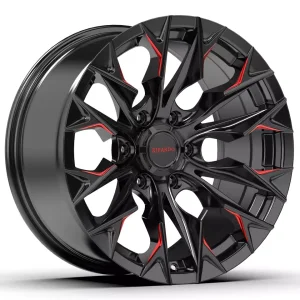
Cheap Kipardo 16 17 18 inch 6 hole custom casting car aluminum alloy rims 4x4 offroad wheels Exporters, Service
View Product Specifications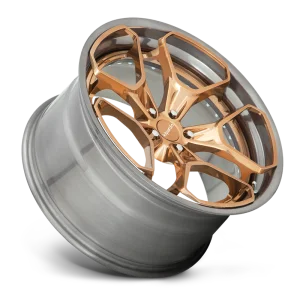
OEM Kipardo alloy wheels Forged car 3 pieces forged wheels 2 pieces,monoblock Manufacturer, Products
View Product Specifications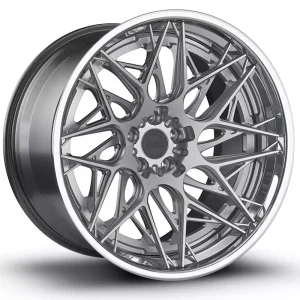
Discount Kipardo 18 inch to 24 inch fully custom 6061-T6 aluminum concave forged wheels Suppliers, Company
View Product Specifications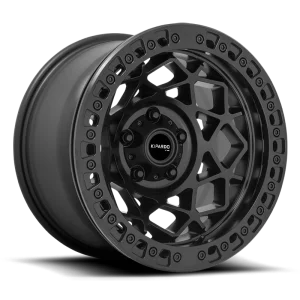
Buy KIPARDO manufacturer 6 holes 17 inch 4x4 wholesale aluminum alloy wheels rims Supplier, Quotes
View Product Specifications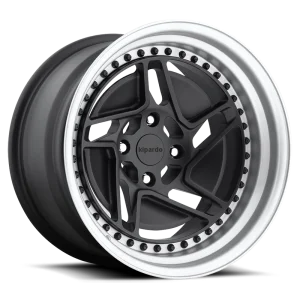
OEM Custom wholesale new design Forged car 3 pieces forged wheels Companies, Service
View Product Specifications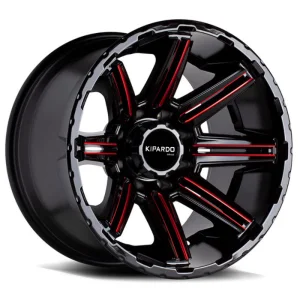
Wholesale Kipardo 17 18 inch factory customized aluminum alloy car rims offroad wheels Suppliers, Factories
View Product Specifications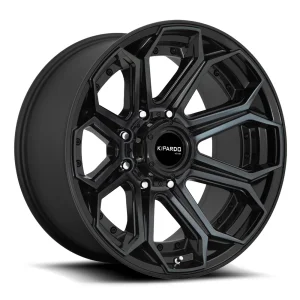
CE Certification Kipardo 17 20 inch 6lug 6x1397 4x4 offroad car alloy wheels rims for lexus GX460 GX470 Company, Products
View Product Specifications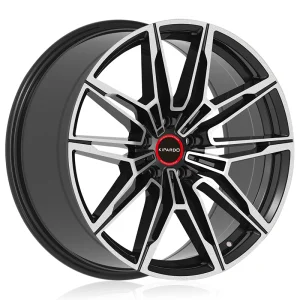
China Kipardo 18 19 20 inch factory wholesale cast alloy rims aluminum 4x4 offroad wheels Manufacturers, Suppliers
View Product SpecificationsPartner with an Established Wheel Manufacturer
Connect directly with Shanghai Rimax Industry’s engineering team to initiate custom CAD modeling, request wholesale volume container pricelists, or review complete JWL/VIA and SAE laboratory certifications.