
Featured Melbourne Engineering Product Allocations
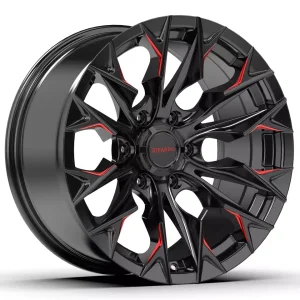
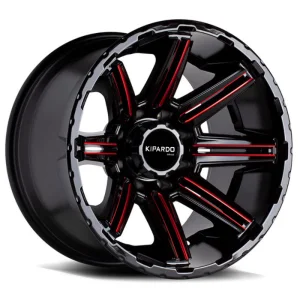
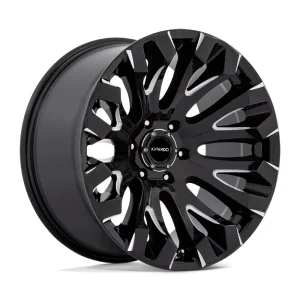
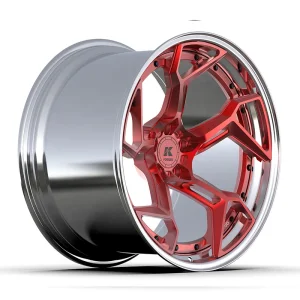
Validated under strict dynamic cornering and radial fatigue criteria for Australasian operating conditions. Direct-from-foundry allocations configured for wholesale distributors across Victoria.
Melbourne's Aftermarket Automotive Landscape: Industrial Realities & Trade Dynamics
Melbourne represents the undisputed heartland of Australia’s engineering tradition and automotive commercialization. From the industrial distribution corridors of Dandenong South, Campbellfield, and Altona to the port handling terminals of Webb Dock, Victorian wheel distributors require engineering precision calibrated to extreme regional demands.
Stringent Regulatory Baselines (VSB 14 & ADR)
Victoria's VicRoads enforce Vehicle Standards Bulletin 14 (VSB 14) and Australian Design Rule ADR 18/03 with absolute rigidity. Aftermarket wheels fitted across Greater Melbourne cannot compromise axle track limits, offset tolerances (+/- 12.5mm per side on passenger vehicles), or gross vehicle mass (GVM) load envelopes. Our production systems embed localized CAD tolerance models to guarantee total regulatory compliance.
Port of Melbourne Intermodal Freight Efficiencies
As Australia's largest containerized cargo terminal, the Port of Melbourne processes over 3.2 million TEU annually. For Victorian tier-1 distributors, landed cost optimization is governed by container cubic volume utilization, optimized nested carton geometry, and localized customs tariff alignment under the Australia-China Free Trade Agreement (ChAFTA), eliminating avoidable import duty burdens.
Outback Touring & Commercial Fleet Environments
Victorian motorists demand multi-role capabilities. Vehicles operate as urban daily commuters across the Monash and Tullamarine Freeways before transitioning directly into high-shock corrugated outback environments across the Victorian High Country, Mallee scrub, and Alpine national parks. Alloy tensile yield limits must exceed baseline international passenger norms by a minimum of 35%.
Foundry Metallurgy, Rotary Flow-Forming, and Precision Billet Forging
Modern wheel manufacturing has transcended conventional gravity mold tooling. In an era dictated by higher battery weights in Electric Vehicles (EVs) and intensified load expectations for dual-cab utility vehicles, our manufacturing infrastructure employs aerospace metallurgy and multi-stage crystallization controls.
Advanced Low-Pressure Die Casting (LPDC) with T6 Matrix
Unlike fragile gravity-cast wheels, our LPDC process introduces virgin A356.2 molten aluminum from bottom-sealed holding furnaces under controlled pneumatic pressure (0.6 to 1.2 bar). This bottom-up laminar progression prevents atmospheric air entrapment and eliminates oxide film development within the wheel spokes.
Subsequent multi-stage T6 heat treatment (solution heat treatment at 535°C followed by precision water quenching and artificial aging at 155°C) reorganizes the silicon-magnesium microstructures, generating a consistent ultimate tensile strength exceeding 250 MPa and elongation at break surpassing 8%.
Rotary Flow-Forming: Cold-Flow Microstructure Compaction
Flow-forming bridge technology combines the economic scalability of cast centers with barrel properties mirroring aerospace forged alloys. After initial casting, high-pressure hydraulic rollers press and spin the barrel preform across a mandril rotating at high velocity under thermal assistance.
This continuous mechanical shear stress forces aluminum grain elongation along the longitudinal circumference, drastically refining crystal boundaries. The resulting barrel exhibits wall thicknesses reduced by up to 22% while boosting grain fracture resistance against severe rim-curbing impact shock.
| Manufacturing Vector | Standard Gravity Casting | Low-Pressure Cast (LPDC + T6) | Rotary Flow-Formed | Aerospace 6061-T6 Forged |
|---|---|---|---|---|
| Crystal Grain Structure | Random, coarse, micro-porous | Dense, controlled laminar orientation | Longitudinally aligned, dense barrel | Ultra-dense, closed continuous grain |
| Tensile Strength (Yield) | ~120 - 140 MPa | ~190 - 225 MPa | ~230 - 260 MPa | ~275 - 310 MPa |
| Impact Resistance (13° Drop) | Brittle crack susceptibility | Elastic deformation absorption | High ductility, minimal barrel deflection | Ultimate dynamic impact durability |
| Unsprung Mass Reduction | Baseline (0%) | -5% to -8% vs Gravity | -15% to -20% vs Gravity | -25% to -35% vs Gravity |
| Melbourne Application Scope | Entry-level replacement, budget | High-turnover wholesale, GVM 4WD | EVs, sports-luxury, gravel touring | Motorsport, GVM heavy armored, bespoke |
Engineered Use-Cases Across Greater Melbourne & Regional Victoria
From urban commuter logistics to heavy-duty outback agricultural and recreation setups, wheel fitments must reflect the distinctive topographical and demographic realities of southeastern Australia.
Dual-Cab Utes & GVM Suspension Upgrades
Australia’s top-selling commercial vehicles—the Toyota HiLux, Ford Ranger, Isuzu D-Max, and LandCruiser 79/300 series—frequently operate in Melbourne equipped with Second Stage of Manufacture (SSM) GVM upgrade kits. Standard wheels fail under 3,500 kg to 4,200 kg upgraded axle loads. Our specialized 4x4 alloy wheels provide tested 1,150 kg to 1,350 kg load certifications per corner, ensuring full legal engineering sign-off under Victorian VATS certification.
Electric Vehicle (EV) Dynamic Range Optimization
With Victoria's accelerating adoption of battery-electric platforms (Tesla Model 3/Y, BYD, Hyundai Ioniq, and European prestige EVs) operating across Melbourne's outer-suburban commuting belts (Werribee, Craigieburn, Pakenham), wheel weight directly impacts rotational inertia and range. Our flow-formed aerodynamic profiles minimize aerodynamic vortex drag while lowering un-sprung rolling resistance, boosting highway battery efficiency by up to 4.5%.
Victorian Track Days & Performance Motorsport
Victoria boasts an unmatched motorsport infrastructure encompassing Sandown Raceway, Calder Park, and the Phillip Island Grand Prix Circuit. Performance enthusiasts require track-grade 6061-T6 monoblock forged wheels capable of clearing oversized multi-piston Brembo or AP Racing calipers, maintaining high thermal heat dissipation under repeated high-speed braking zones into Sandown's Turn 1.
Finite Element Analysis (FEA), Closed-Loop Circular Alloys, & Surface Shielding
Anticipating evolving environmental imperatives, increased vehicle kerb weights, and advanced vehicle automation requirements over the coming decade.
Topology Optimization & AI-Driven FEA Simulation
Our design engineering utilizes generative AI stress models and advanced Finite Element Analysis (FEA) to strip redundant aluminum mass from low-stress zones. Material is redistributed exclusively to high-moment spoke corners and bead locks, maximizing dynamic cornering fatigue resistance while reducing gross wheel weight.
Low-Carbon Circular Metallurgy & ESG Transparency
With Australian corporate consumers enforcing ESG supply-chain transparency, our foundry operations incorporate up to 40% certified clean closed-loop hydro-smelted aluminum. By migrating to low-carbon primary ingots, we reduce the embodied carbon footprint per wheel below 4.8 kg CO2e/kg alloy, assisting fleet compliance.
Coastal Victoria Salt-Spray & Gravel-Blast Surface Metallurgy
Wheels driven along Victoria’s coastal Great Ocean Road and alpine salt-treated winter roads encounter aggressive corrosive exposure. Our 7-stage automated conversion treatment incorporates zirconium nano-coatings and double electro-deposited clear coats subjected to 1,500-hour ASTM B117 neutral salt spray trials without surface blistering.
B2B Supply Solutions: From Private-Label Tooling to Landed Pallet Logistics
We eliminate commercial volatility for wholesale distributors, wheel retailers, and tuning brands across Melbourne through guaranteed capacity allocation and rigorous quality assurance.
Private-Label Mold Development & Brand IP Protection
For Victorian wholesalers creating proprietary in-house wheel brands, we offer full lifecycle industrial design support: rapid 3D CAD modeling, 3D sand-printed preforms, steel die tooling within 35 days, and exclusive tooling protection agreements ensuring absolute intellectual property security.
Optimized FCL / LCL Container Palletization
Carton geometry is precision-engineered to maximize volumetric cubic space inside 40ft High-Cube ocean containers, fitting up to 1,400 units per FCL. Wheels are encased in customized soft-foam edge cushions, dual-walled corrugated boxes, and moisture-absorbing silica packets for flawless sea-freight arrivals.
Comprehensive Verification & Traceability Records
Every single manufactured batch is inscribed with permanent traceability lot codes on the rear hub pad. Consignments destined for Melbourne are provided with verified test reports covering JWL/VIA cornering fatigue, dynamic radial fatigue, and X-ray flaw detection documentation for customs clearance.
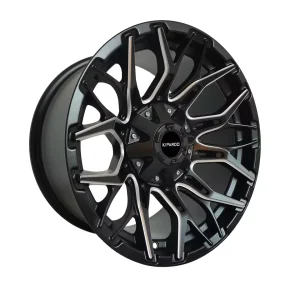
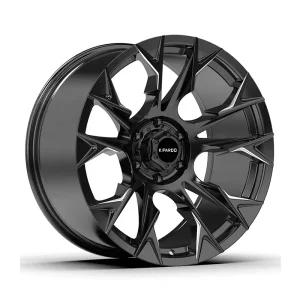
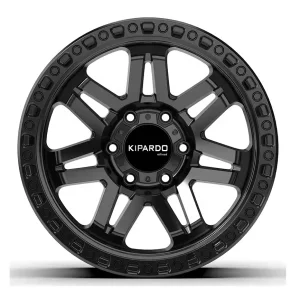
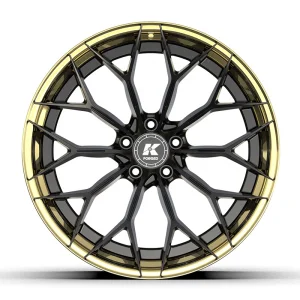
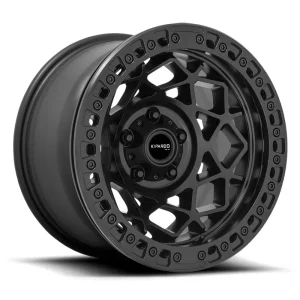
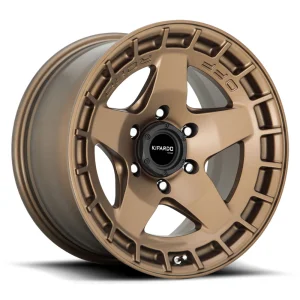
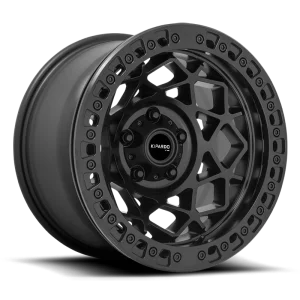
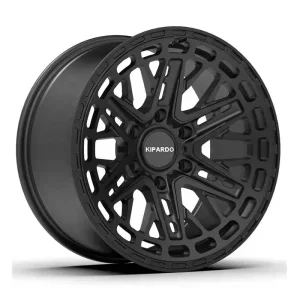
Industrial Wheel Catalog for Melbourne Wholesale Distributors
Explore our expanded low-pressure cast, flow-formed, and forged catalog. Engineered to withstand harsh Victorian touring, highway logistics, and bespoke aftermarket stylings.
Frequently Asked Questions for Melbourne Importers & Wholesalers
Clear, authoritative information addressing engineering standards, import duty mechanics, load certifications, and custom tooling parameters.
How do your wheels ensure compliance with Australian ADR 18/03 and VSB 14?
What are the shipping transit times and logistics routes from your factory to the Port of Melbourne?
Can you support custom PCD, offset (ET), and center bore configurations for the Australian 4WD market?
What structural warranties and finish guarantees are provided for Melbourne commercial buyers?
What are the minimum order quantities (MOQ) for custom private-label branding?
Elevate Your Wheel Program in Melbourne & Regional Victoria
Partner directly with an established alloy wheel manufacturing powerhouse. Obtain comprehensive technical catalogs, verified AS 1638 engineering data, and customized wholesale pricing for container shipments into Melbourne.