
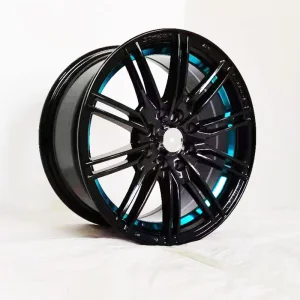
Direct Sourcing Catalog • Batch 01
High-Velocity Cast Wheel Solutions for Osaka Importers
Engineered for Japanese vehicle road dynamics, urban delivery cycles, and tuner aesthetics across Osaka Prefecture and the wider Hanshin metropolitan network.
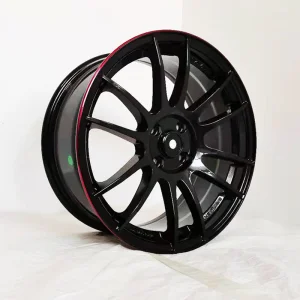
Kansai Tuner Line: KIPARDO 15-Inch 5x100 Undercut Red Alloy Wheel

Osaka 4x4 Off-Road: 17-20 Inch 6x139.7 Cast Wheel for GX & Land Cruiser
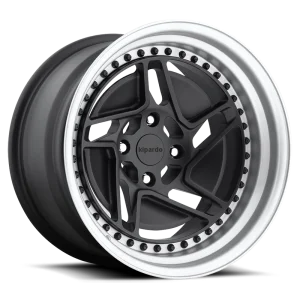
Osaka Bespoke Series: Multi-Piece Custom Luxury Modular Wheels
Industrial Ecosystem Analysis
The Commercial and Industrial Cast Wheel Landscape in Osaka
A strategic breakdown of the Keihanshin metropolitan region, encompassing commercial fleet demands, aftermarket tuning culture, and port logistical efficiencies.
48-72h
Shanghai to Osaka Port Transit
100%
JWL & VIA Protocol Alignment
A356.2
Primary Ingot Grade Alloy
120K+
Monthly LPDC Casting Capacity
Kansai Hub Dynamics
Osaka serves as the economic nucleus of the Hanshin Industrial Region, generating intense demand for secondary automotive manufacturing, tier-2 fleet maintenance, and regional distribution. Wholesalers based in Sakai, Higashiosaka, and Nanko require continuous containerized replenishment of cast alloy wheels optimized for Japanese-spec PCD configurations, high load-index ratings, and zero-defect surface finishes.
Direct Maritime Corridors
With daily maritime roll-on/roll-off (RoRo) and container liner services connecting Shanghai/Ningbo directly to the Port of Osaka and nearby Port of Kobe, shipping transit times are reduced to a hyper-efficient 48 to 72 hours. This proximity enables Kansai wheel distributors to maintain lean inventory reserves, counter cash-flow strain, and rapidly respond to seasonal demand spikes like winter tire conversions.
Osaka Tuning & Dress-Up
From the iconic highway cruising legacy along the Hanshin Expressway to modern VIP-car salons and custom overlanding garages across Wakayama and Hyogo borders, Osaka represents a diverse consumer base. High-gloss black, diamond machined face, bronze, and brushed finishes must withstand high humidity, coastal salinity, and aggressive urban brake dust without clearcoat flaking.
Localized Application Architecture
Engineering Cast Wheels for Osaka's Unique Operating Environments
How our low-pressure casting specifications solve real-world mechanical, structural, and regulatory challenges across specific Japanese vehicle segments.
Kei-Car & Compact Urban Logistics (4x100 Fitments)
Osaka’s narrow neighborhood streets in districts like Joto, Taisho, and historic Sakai rely heavily on 660cc Kei passenger cars and commercial delivery vans (Daihatsu Tanto, Honda N-Box, Suzuki Spacia, Hijet). Our 14-inch and 15-inch cast aluminum wheels provide exact center-bore centering (54.1mm / 56.1mm) and precise ET40-ET45 offsets. By utilizing low-pressure die casting (LPDC) with T6 heat treatment, we reduce unsprung rotating mass by up to 18% compared to stamped steel wheels, improving stop-and-go fuel efficiency and extending regenerative braking efficiency on hybrid powertrains.
Commercial Transport: Probox, NV200 & HiAce (JWL-T Rigor)
Kansai freight forwarding networks running between Nanko container yards and regional cross-docking warehouses demand uncompromising load resilience. Wheels fitted to Toyota HiAce, RegiusAce, and Nissan Caravan platforms must satisfy strict Japanese JWL-T standards (tested for commercial vehicles up to 955 kg static load rating per wheel). Our reinforced spoke transitions, thickened inner rim flanges, and dense metallurgy eliminate bead leakage under full payloads on elevated expressway expansion joints.
VIP Style & Japanese Luxury Sedans (Staggered 18-20")
The Kansai custom scene remains the spiritual birthplace of VIP sedan styling (Toyota Crown, Celsior, Alphard/Vellfire, Lexus LS). We manufacture high-offset, aggressive concave casting designs that accommodate large multi-piston brake calipers without requiring wheel spacers. Deep rim lips, diamond-cut brushed spoke surfaces, and gloss-metallic finishes are protected under dual-layer acrylic powder clearcoats that resist micro-abrasions from salt-treated winter mountain highways in northern Kansai.
Overlanding & 4x4 Off-Road Customization (6x139.7 / 5x150)
The outdoor touring boom across Mount Rokko, Yoshino, and the Kii Peninsula has catalyzed massive interest in ruggedized off-road wheels for Toyota Land Cruiser Prado, Hilux, and RAV4 platforms. Our casting molds integrate reinforced outer bead protection styling, heavy-duty spoke geometry, and durable semi-gloss textured coatings that withstand trail mud, rock debris, and repeated high-pressure wash cycles without surface degradation.
Metallurgical Engineering
Advanced Low-Pressure Casting (LPDC) & Manufacturing Architecture
A transparent technical overview of the eight-stage metallurgical cycle that separates premium JWL-compliant wheels from generic cast alternatives.
| Process Stage | Technical Parameters & Control Metrics | Mechanical Objective | Impact on Osaka Client Base |
|---|---|---|---|
| 1. Ingot Refining & Degassing | Primary A356.2 aluminum ingot, rotary argon degassing, rotary impeller speed 450 RPM, hydrogen density <0.12 cm³/100g Al. | Elimination of gaseous micro-porosity and oxide inclusions within molten core. | Zero rim porosity leaks under high tire pressure; uniform structural density. |
| 2. Low-Pressure Die Casting | Controlled bottom-up pressurization (0.6 to 1.2 bar), precision multi-piece steel tooling, regulated mold cycle time. | Uniform directional solidification from outer rim barrel toward the center hub. | Dense spoke grain structure capable of enduring high-stress pothole impacts. |
| 3. Radiographic X-Ray Verification | 100% inline automated 7-axis real-time digital radiographic imaging; ASTM E505 Reference Radiographs Class 1-2. | Identification of subsurface shrinkage, cold shuts, or micro-cracks before machining. | 100% yield compliance for stringent Japanese Ministry (MLIT) vehicle inspections. |
| 4. T6 Solution & Artificial Aging | Solution treatment at 535°C (±3°C) for 5 hours, rapid water quench (<25 seconds), artificial aging at 155°C for 4 hours. | Yield strength >210 MPa; Ultimate Tensile Strength >275 MPa; Elongation >7%. | Elastic resilience that prevents catastrophic failure during road debris strikes. |
| 5. Ultra-Precision CNC Lathe Turning | Dual-spindle CNC machining centers, PCD bolt hole tolerance within ±0.03mm, center bore concentricity <0.05mm. | True dynamic rotational balance; elimination of axial and radial runout. | Vibration-free high-speed performance along the Hanshin Expressway and Meishin Route. |
| 6. Automated 7-Stage Pretreatment | Silane/zirconium conversion coating, multi-stage DI water cascade rinse, temperature-controlled drying ovens. | Superior chemical adhesion interface for subsequent primer and clearcoat layers. | Protection against coastal sea spray and corrosive magnesium de-icing salts. |
| 7. Powder & Liquid Coating Application | Robotic electrostatic powder primer (80-120μm), waterborne base color, high-solid polyurethane clearcoat (40-60μm). | Surface hardness >2H; specular gloss stability; UV yellowing resistance. | Long-term showroom finish preservation in intense Kansai summer UV exposure. |
| 8. Multi-Axis Dynamic Testing | Cornering fatigue (100,000+ cycles), radial fatigue (500,000+ cycles), 13° and 30° dynamic impact drops. | Absolute verification exceeding JWL, JWL-T, and VIA destructive test thresholds. | Guaranteed liability protection and brand reputation for Osaka wholesale distributors. |
Supply Chain Resilience
Chinese Manufacturing Ecosystem vs. Kansai Operational Demands
Leveraging China's world-leading aluminum wheel industrial clusters to provide Osaka clients with unmatched cost efficiency, tooling velocity, and delivery certainty.
Rapid Tooling Development
Developing new wheel styles for the Japanese domestic aftermarket demands rapid turnaround. Our engineering center utilizes advanced CAM five-axis mold carving, reducing tooling lead times from the industry-standard 60 days down to just 25 to 30 days. For Osaka clients launching private-label brand lines, 3D prototype rendering and finite element analysis (FEA) are finalized within 72 hours, allowing rapid market entry ahead of competing distributors.
Raw Material Hegemony & Cost Certainty
Our facility in Kunshan, Jiangsu benefits from immediate upstream integration with major Chinese electrolytic aluminum producers and high-purity alloy masterbatch suppliers. This direct integration eliminates multiple intermediary margins, shielding our Osaka clients from volatile London Metal Exchange (LME) or Shanghai Futures Exchange fluctuations through transparent formulaic contract pricing.
Short-Sea Shipping Reliability
Situated within 80 kilometers of Shanghai Port and Taicang Port, container drayage to the berth is accomplished in hours. Multiple weekly departures on express shipping lanes to Osaka Port (Nanko Pier) and Kobe Port ensure steady container pipelines. In emergencies, express LCL or air freight consolidation out of Shanghai Pudong (PVG) to Kansai International Airport (KIX) ensures replacement batches arrive within 48 hours.
Compliance & Quality Governance
Regulatory Verification: Total Alignment with JWL, JWL-T and VIA
Navigating the stringent standards established by the Japanese Ministry of Land, Infrastructure, Transport and Tourism (MLIT) and the Japan Light Alloy Automotive Wheel Testing Council.
JWL & JWL-T Technical Standards Compliance
In the Japanese automotive market, self-declaration via the JWL (Japan Light Alloy Wheel for Passenger Cars) and JWL-T (for Trucks and Commercial Vehicles) mark is legally mandated. Our casting factory maintains calibrated, in-house testing equipment matching Japan's national criteria:
• Dynamic Cornering Fatigue Test: Continuous rotational bending moment applied to the hub pad for over 100,000 cycles without structural fatigue cracking.
• Dynamic Radial Fatigue Test: Constant radial loading on the tire-wheel assembly exceeding 500,000 revolutions.
• 13° & 30° Impact Test: Calibrated striker dropped from specified heights striking the tire flange to verify energy absorption without rapid deflation or catastrophic spoke detachment.
VIA Registration Support & Kansai Customs Clearance
For Japanese distributors wishing to submit test data to the Vehicle Inspection Association of Japan (VIA) for official registration, our metallurgical engineering team supplies comprehensive testing documentation, chemical spectrometry reports (showing precise Cu, Mg, Si, and Fe ratios), and dimensional CMM layout drawings.
Additionally, our experienced export division handles all Japan Customs documentation—including Generalized System of Preferences certificates, EPA preferential tariff documentation, commercial invoices, and packing lists with bilingual English/Japanese part numbering—ensuring seamless customs clearance at Osaka Port without costly port storage delays.
Engineering Horizon
Technical Roadmap: Next-Generation Wheel Architectures (2025-2030)
How our ongoing research and development aligns with Japan’s aggressive carbon neutrality targets and the electrification of Osaka’s commercial transport sector.
Flow-Forming Hybridization
Bridging the cost efficiency of LPDC casting with the mechanical tenacity of forging. By rotary-spinning and heating the cast barrel under high-pressure rollers, we create an elongated, dense grain structure. This lowers barrel thickness by up to 25%, resulting in unsprung mass parity with entry-level forged rims while preserving cast wheel pricing for Osaka retail programs.
EV-Optimized Aerodynamic Wheels
As electric delivery vans and passenger EVs proliferate across the Osaka-Kobe corridor, aerodynamic drag and curb-weight penalties demand new engineering paradigms. Our upcoming wheel programs integrate computational fluid dynamic (CFD) designed aero-spokes and clip-on composite inserts that reduce drag coefficient (Cd) by 3-5%, visibly extending single-charge commercial route ranges.
Closed-Loop Circular Metallurgy
Aligning with Japanese ESG initiatives and corporate decarbonization mandates, we are ramping up the integration of 100% clean-source certified recycled automotive aluminum ingots. Using electromagnetic induction melt filtration and precise strontium grain refiners, we achieve virgin A356.2 tensile metrics while slashing embedded carbon emissions by up to 60%.
Wholesale Inventory Catalog • Batch 02
Specialty Cast & Forged Lineup for Osaka Regional Distribution
Explore our extended series of cast, multi-piece, and high-load off-road configurations available for full-container load (FCL) export directly to Kansai maritime terminals.
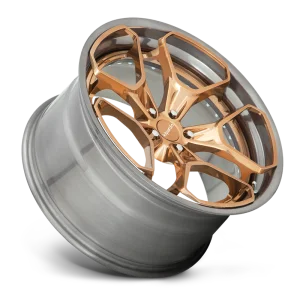
Kansai Luxury Line: OEM Kipardo Multi-Piece & Monoblock Custom Wheels
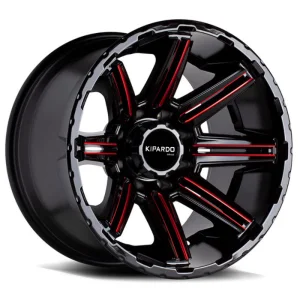
Osaka Overland Series: Kipardo 17-18 Inch Custom Alloy 4x4 Off-Road Rims
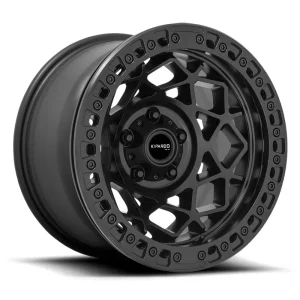
Kansai 4WD Line: 17-20 Inch ODM Black Custom Cast Off-Road Wheels
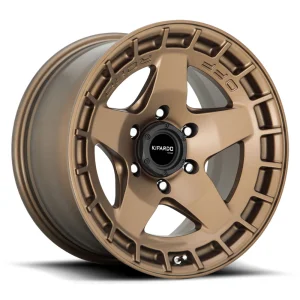
Osaka Commercial/4x4: Kipardo 17-18 Inch Reinforced Off-Road Alloy Wheels
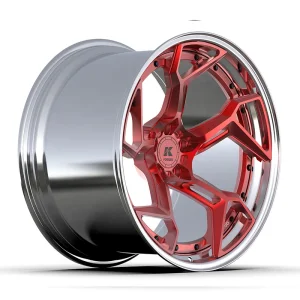
Osaka Precision Tuner: Kipardo 18-22 Inch Deep Concave Forged Wheels
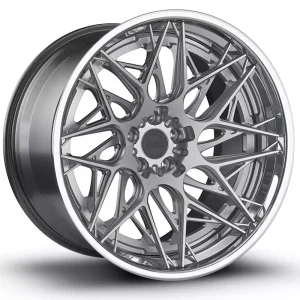
Kansai Stance Custom: Kipardo 18-24 Inch Bespoke Concave Alloy Wheels
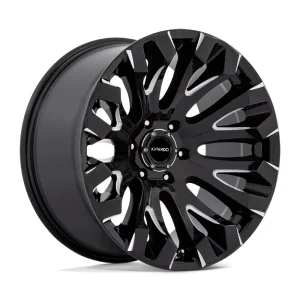
Osaka Premium 4WD: 20-Inch Staggered Candy Red 6x139.7 Off-Road Wheels
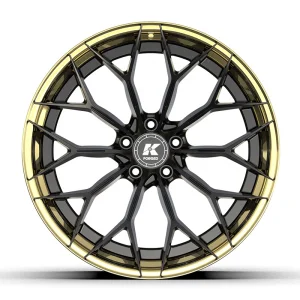
Osaka Executive VIP: Kipardo 3-Piece Modular Luxury Polished Rims
Authoritative Knowledge Base
Frequently Asked Questions: Sourcing Cast Wheels for Osaka
In-depth responses covering engineering tolerances, JWL/VIA compliance, container shipping schedules to Kansai, and custom mold production.
How does Rimax guarantee that cast wheels pass Japanese vehicle inspections (Shaken)?
Every cast wheel intended for the Japanese market is engineered to conform rigorously to the technical standards established by Japan’s Ministry of Land, Infrastructure, Transport and Tourism (MLIT). Our Kipardo casting facility incorporates calibrated three-stage JWL/JWL-T testing protocols: the dynamic cornering fatigue test (100,000+ cycles at 1.35x nominal load moment), dynamic radial endurance (500,000 cycles), and a 13° / 30° impact drop test. Every wheel is engraved with clear, permanent JWL / JWL-T casting marks, ensuring frictionless verification during periodic Japanese vehicle inspection (Shaken) protocols.
What is the typical maritime shipping time from your factory to the Port of Osaka?
Our primary manufacturing operations in Kunshan, Jiangsu are located only 80 kilometers from Shanghai Port and Taicang Port. Container vessels sail on express direct routes to Osaka Port (Nanko Pier) and Kobe Port multiple times per week, with an ocean transit time of just 48 to 72 hours. From factory gate release, port staging, and customs inspection to berthing and final discharge in Osaka, total logistics velocity is typically achieved within 5 to 7 calendar days.
Can you provide custom center bore and PCD machining for Japanese Kei cars and light vans?
Yes. We engineer center bores directly matching Japanese vehicle hubs (e.g., 54.1mm for Toyota/Daihatsu/Mazda, 56.1mm for Honda/Subaru, and 60.1mm for Nissan/Toyota). This enables hub-centric mounting without the need for aftermarket centering rings, eliminating high-speed steering wobble. We routinely produce high-precision 4x100, 5x100, 5x114.3, and heavy commercial 6x139.7 PCD configurations machined on high-speed CNC centers to ±0.03mm radial true runout.
What minimum order quantity (MOQ) is required for custom finishes or new cast wheel molds?
For existing catalog styles and existing tooling, our standard MOQ is generally 60 to 80 pieces per size and colorway, allowing Osaka tire dealerships and accessory retailers to mix various fitments within a single 20-foot or 40-foot container. For completely bespoke OEM casting molds, our typical tooling MOQ is 200 to 300 pieces per mold set, with tool creation completed within 25 to 30 business days including first-article CMM and X-ray inspection reports.
How does low-pressure casting (LPDC) differ structurally from gravity casting?
In standard gravity casting, aluminum enters the mold via atmospheric weight, which frequently captures air pockets and creates uneven grain densities. In low-pressure die casting (LPDC), molten A356.2 alloy is injected from the bottom crucible upward into the steel die under a controlled pressure of 0.6 to 1.2 bar. This forces air out through engineered chill vents, producing uniform directional solidification from the outer rim barrel toward the center hub. The resulting micro-structure has higher tensile strength, minimal porosity, and increased elongation before crack propagation.
How does your finishing process protect wheels against sea spray in coastal Kansai?
Wheels operating near Osaka Bay and coastal Kobe face accelerated electrolytic corrosion due to marine salinity combined with winter de-icing chemicals used on mountain bypasses. We employ a 7-stage automated chemical pretreatment featuring zirconium silane conversion coating, followed by thermosetting electrostatic powder primer, robotically sprayed acrylic or polyurethane color coats, and an ultra-durable high-solid clearcoat. Finished wheels must pass rigorous 1,000-hour CASS (Copper Accelerated Acetic Acid Salt Spray) testing with zero surface filiform corrosion or clearcoat delamination.
What structural and finish warranties do you provide to Kansai wholesalers?
Every Kipardo and Rimax wheel exported to the Japanese market carries an ironclad 5-year / 100,000-kilometer structural warranty guaranteeing against fatigue failure, spoke fracture, or rim bead cracking under normal operating conditions. Surface finishes, including painted, machined, polished, and chrome treatments, are supported by a full 2-year warranty covering oxidation, peeling, and UV degradation, backed by serial-numbered traceability for every production batch.
Accelerate Your Osaka Wheel Supply Chain
Direct factory quotes, comprehensive JWL engineering dossiers, and optimized FCL/LCL shipping schedules tailored specifically for Kansai distributors and automotive brands.