
Primary Portfolio
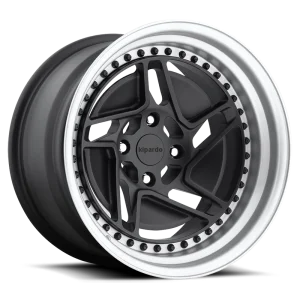
Precision High-Impact Performance Wheels for Moscow Highways
Engineered for high unsprung mass management, structural elasticity over severe surface irregularities, and high-offset clearance for oversized carbon-ceramic brake calipers.
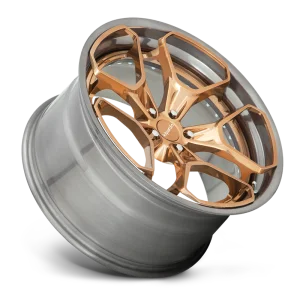
Moscow Executive Monoblock & 2-Piece Lightweight Kipardo Engineering Suite
Configure Fitment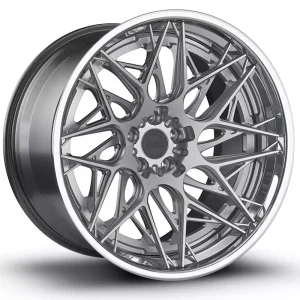
Severe Cold Calibrated 18-24 Inch Ultra-Deep Concave 6061-T6 Forged Wheel Matrix
Configure Fitment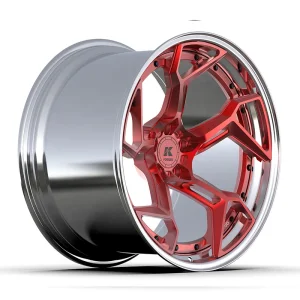
Moscow Prestige Urban Bespoke 18-22 Inch Monoblock Directional Forged Alloy
Configure Fitment
Macro Dynamics & Market Intelligence
Navigating Moscow’s Structural Alloy Demand in a Global Context
A rigorous industrial perspective on why custom 10,000-ton forged aluminum architectures are replacing conventional gravity casting across Eurasian luxury and fleet applications.
10,000T
Forging Pressure
-45°C
Impact Toughness Tested
1,250 KG
Per-Wheel Max Load Rating
0.05 mm
CNC Radial Runout Limit
The Moscow Regional Ecosystem
The automotive landscape of the Moscow Metropolitan Area presents one of the world's most demanding proving grounds for forged components. Operating conditions are characterized by extreme seasonal temperature swings—spanning from -35°C during peak winter spells to +35°C in high summer. Chemical exposure is heavily amplified by high-concentration liquid de-icing agents such as technical chlorides and magnesium solutions applied along the MKAD (Moscow Ring Road), TTK, and major suburban arteries.
Simultaneously, the structural shifts in automotive import channels within the Russian Federation have generated an urgent requirement for tailored wheel fitments for heavy luxury crossovers, armored executive transports, and imported flagship electric sedans. Factory-cast alternatives consistently fail through rim flange fracturing and chronic fatigue cracking caused by pothole impacts along thawing pavement. Custom forged engineering solves these mechanical vulnerabilities by achieving superior tensile elasticity and yield strength.
Global Sourcing & Metallurgical Shifting
Across the international automotive aftermarket, procurement strategies are pivoting away from multi-tiered dealer markups toward direct manufacturer integration. The high-performance rim industry is dominated by high-pressure thermal mechanical processing. While traditional gravity or low-pressure casting creates inherent micro-porosity and grain boundary coarseness, closed-die billet forging rearranges the molecular crystal lattice along radial stress vectors.
This continuous grain alignment yields an exceptional strength-to-weight ratio: forged 6061-T6 wheels average 20% to 30% lighter than cast wheels while exceeding dynamic cornering and radial fatigue benchmarks by upwards of 200%. For high-output vehicles, this mass reduction sharply lowers rotational inertia, improving brake responsiveness, suspension rebound calibration, and overall fuel and battery efficiency.
Metallurgical Specification
Structural Analysis: 6061-T6 Forged vs. Conventional Castings
A rigorous examination of material properties under dynamic physical stress and cold-climate endurance conditions.
| Performance Dimension | Monoblock 6061-T6 Forged | 2-Piece / 3-Piece Modular Forged | Flow-Formed Aluminum | Standard Low-Pressure Cast |
|---|---|---|---|---|
| Billet Pressing Force | 10,000 – 12,000 Metric Tons | Forged Centers + 6061 Spun Rim Halves | Rotary Rim Expansion Only | Zero (Atmospheric / Mold Fill) |
| Yield Strength (Rp 0.2) | 276 MPa – 310 MPa | 265 MPa – 295 MPa | 180 MPa – 210 MPa | 120 MPa – 150 MPa |
| Low-Temp Brittle Point | Ductile below -50°C (No Cleavage) | Ductile below -45°C | Transition risks below -25°C | High notch sensitivity below -15°C |
| De-icing Reagent Resistance | Multi-stage CASS salt spray > 1,000h | Titanium fastener sealing barrier | Standard clear-coat coverage | Porous edge peeling risk |
| Bespoke Fitment Agility | Direct 5-axis CNC from raw disc | Modular offset and width tuning | Fixed mold required (Slow tooling) | Fixed mold with high MOQ tooling |
Operational Assurance
End-to-End Compliance & Eurasian Logistics Architecture
Mitigating cross-border procurement risks through structured customs classification, certified metallurgical testing, and multi-modal transport corridors.
EAC & GOST-R Harmonization
Every wheel consignment exported to the Moscow customs union region complies strictly with the technical regulations of TR CU 018/2011 ("On Safety of Wheeled Vehicles"). Batch traceability begins at spectrographic chemical ingot analysis, supported by X-ray non-destructive porosity clearance and 13-degree dynamic cornering fatigue reports verified to JWL/VIA standards.
Intermodal Transit Solutions
Direct supply lines are executed via expedited bonded rail freight (China-Europe / Eurasian Railway corridor) entering Moscow hubs like Vorsino and Bely Rast within 14–18 transit days. For urgent tuning studio prototyping, direct air express delivery routes to SVO/DME customs terminals ensure single-set bespoke deliveries with complete documentation.
CASS-Tested Multi-Layer Finishes
To endure the aggressive salt and magnesium slush of central Moscow winters, our wheel coatings undergo an electrostatic powder priming phase followed by automotive-grade thermoset paint and ultra-dense acrylic or ceramic top-clear finishes. Each batch passes rigorous 1,000-hour Copper-Accelerated Acetic Acid Salt Spray (CASS) anti-corrosion testing.
Field Applications
Mission-Specific Moscow Deployment Scenarios
Bespoke engineering programs formulated for unique real-world operational challenges.
Armored Fleet Escort Platforms
B6 and B7 ballistic-protection vehicles (Toyota LC300, Mercedes-Benz G-Class, Aurus Senat) operating in the Moscow District demand reinforced load indexes up to 1,350 kg per wheel. Our monoblock forging guarantees structural integrity through bead-lock retention profiles that support emergency run-flat ring systems under sustained velocity.
Electric Super-Sedan Dynamics
Instant high torque from premium electric and hybrid vehicles causes rotational rim slippage inside the tire bead during high-acceleration maneuvers. We integrate micro-knurled anti-slip grooves directly onto the outer barrel bead seat, ensuring total rotational lock-in and zero balance loss under full electric launch power.
Suburban Moscow Off-Road Expeditions
For cross-country trails spanning Moscow Oblast, Dmitrov, and neighboring zones, extreme wheel flex can dislodge tire beads. Our 4x4 heavy-duty forged wheel options feature thickened rim flanges, specialized 6-lug and 8-lug architectures, and reinforced spoke-root junctions designed to withstand direct ledge impacts.
R&D Horizons
Next-Generation Forging Technologies: The 2026-2030 Roadmap
Strategic advancements in material sciences and intelligent design optimization for the next generation of Eurasian mobility.
AI Topology Optimization
By integrating cloud-based finite element analysis (FEA) algorithms, our engineering team generates load-path-optimized spoke geometry. Material is strategically concentrated in zones experiencing severe rotational bending moments while removing parasitic mass from neutral areas, creating ultra-aerodynamic, ultra-light wheel profiles.
Scandium-Doped 6000-Series Alloys
Experimental trials involving the micro-alloying of scandium and zirconium into traditional 6061 billet formulas indicate a 15% increase in tensile strength and significantly improved recrystallization resistance during high-temperature baking cycles, pushing fatigue thresholds to unprecedented milestones.
Carbon-Forged Hybrid Construction
Preparing for the next phase of supercar tuning, our engineers are completing endurance trials on two-piece modular wheels coupling a 6061-T6 forged aluminum center disc with a full dry-carbon fiber outer barrel, dropping assembly weight under 8.2 kg per 21-inch wheel unit.
Procurement Inquiries
Frequently Asked Technical & Sourcing Questions
Essential answers for Moscow distributors, wheel brands, tuning ateliers, and supply chain managers.
What is the engineering difference between 6061-T6 forged aluminum and standard cast wheels?
Cast wheels are produced by pouring molten aluminum alloy (typically A356.2) into a mold, which can leave microscopic voids and an unaligned crystal grain structure. In contrast, 6061-T6 forged wheels utilize a solid billet of aerospace-grade alloy subjected to 10,000 to 12,000 tons of extreme hydraulic pressure, followed by precise T6 thermal heat treatment (solution heat treat and artificial aging). This forces the grain flow of the metal to follow the contour of the wheel, eliminating structural porosity and providing over double the fatigue resistance and yield strength, alongside a 20-30% weight reduction.
How do custom forged wheels withstand Moscow's harsh winter freeze and road de-icers?
The durability of our wheels rests on two factors: metallurgy and surface finish technology. The ductile nature of forged 6061-T6 prevents the sudden cold-brittleness fractures common in standard cast wheels subjected to sub-zero pothole strikes down to -45°C. For chemical protection, every wheel receives an advanced multi-layer automated powder-coat primer, specialized base pigment, and high-durability clear acrylic seal tested against 1,000+ hours of continuous CASS (Copper-Accelerated Acetic Acid Salt Spray) salt-spray exposure to protect against sodium and calcium chloride damage.
What are the Minimum Order Quantities (MOQ) and production turnaround times for custom wheel quotes?
Because our production relies on custom 5-axis CNC machining centers rather than fixed permanent tooling molds, our Minimum Order Quantity for bespoke forged programs is just 1 set (4 wheels) for private clients and custom tuning studios. Batch OEM private-label programs for wholesalers typically start at 20 to 40 sets. The typical design and manufacturing timeline spans 12–18 business days from 3D CAD fitment sign-off, with delivery to Moscow taking approximately 14–18 days via dedicated rail express or 5–7 days via direct air cargo.
Can you accommodate custom PCD, offset (ET), center bore, and high-clearance brake profiles?
Yes. Every order is engineered to specific vehicle fitment requirements. Our engineering team utilizes comprehensive brake scan databases (including OEM Brembo, Akebono, AMG carbon-ceramic, and bespoke aftermarket Big Brake Kits) to map spoke concavity, caliper clearance, exact hub center bores (direct fit without centering rings), PCD bolt circles, and offset depths down to the millimeter.
What documentation is provided to support Eurasian customs clearance and registration?
We provide full export documentation packs tailored to Russian customs clearance: detailed commercial invoices, packing lists with net/gross weights, certificates of origin, mill test reports verifying 6061-T6 alloy composition, and laboratory test reports covering JWL/VIA and EAC (TR CU 018/2011) radial fatigue and impact parameters. We work closely with your appointed broker or can recommend established freight forwarding partners.
Full Product Portfolio
Complete Forged, Modular & Heavy-Duty Wheel Collection
Explore our full range of 18-30 inch monoblock wheels, 2-piece and 3-piece modular forged assemblies, and heavy-duty 4x4 reinforced alloy rims.
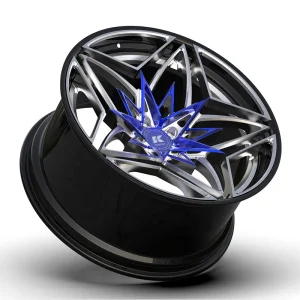
Moscow Luxury Masterclass: 18-30 Inch Bespoke 2-Piece & 3-Piece Deep Modular Rims
Configure Fitment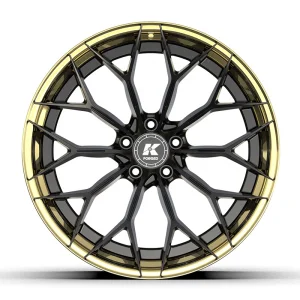
Moscow High-Net-Worth Executive 3-Piece Precision Modular Forged Collection
Configure Fitment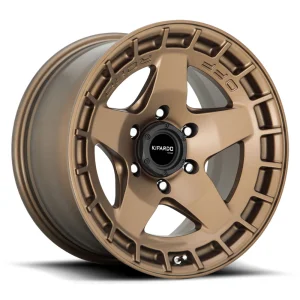
Eurasian Trail Expedition: 17-18 Inch Reinforced 4x4 Off-Road Alloy Wheel Matrix
Configure Fitment
Bespoke Concave Engineering: Kipardo Luxury 3-Piece Deep Lip Forged Wheels
Configure Fitment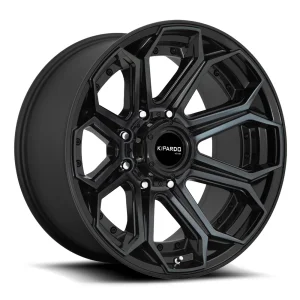
Moscow Severe Terrain 17-20 Inch 6-Lug (6x139.7) Heavy-Duty Wheels for Lexus GX/LX
Configure Fitment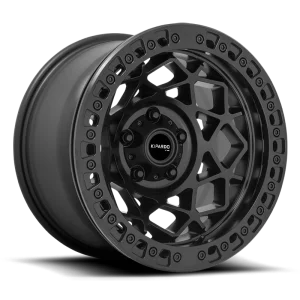
High-Capacity 6-Hole 17-Inch All-Terrain Alloy Wheels for Heavy Commercial Fleet Defense
Configure Fitment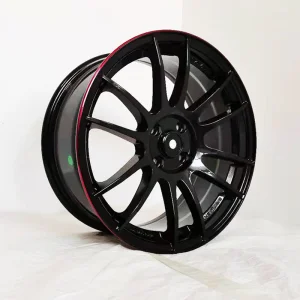
Moscow Sport Compact Class: 15-Inch 5x100 Undercut Red Geometric Tuner Wheels
Configure Fitment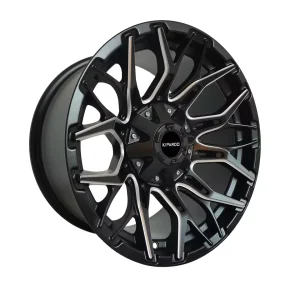
Reinforced Hub-Centric 17-18 Inch 5/6-Hole Multi-Application Overland Alloy Wheels
Configure FitmentInitiate Your Bespoke Forged Wheel Engineering Program
Whether you require a one-off set for an executive transport vehicle or a dedicated container-load manufacturing line for Eurasian distribution, our engineering team delivers precise 3D CAD modeling, FEA verification, and direct factory pricing.
Send Inquiry Now