
High-Velocity Cast Alloy Wheel Series for Mexican Distributors
Pre-engineered aluminum casting wheels manufactured to SAE J2530 and JWL standards, optimized for volume container orders and popular Mexican vehicle platforms.
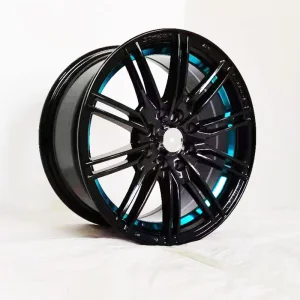
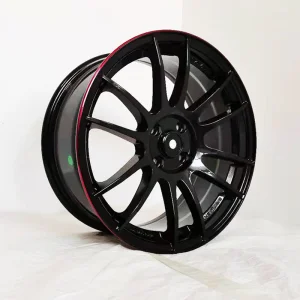
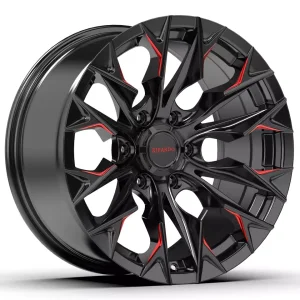
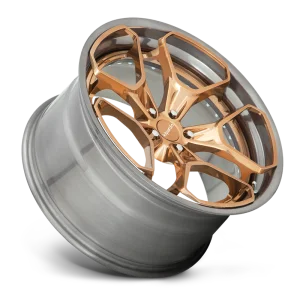
The Automotive Dynamics of Mexico: Nearshoring, Fleet Demands, & Pothole Topology
Why procurement officers, wholesale tire distributors, and aftermarket automotive chains across Mexico are bypassing intermediary trading desks to establish direct casting factory partnerships.
The Bajío & Northern Auto Hubs
Mexico stands as the world's 7th largest vehicle manufacturer, with industrial concentration along the Bajío Corridor (Guanajuato, Querétaro, Aguascalientes, San Luis Potosí) and Northern frontiers (Monterrey, Saltillo). While OEM assembly consumes millions of units, the secondary domestic aftermarket is historically underserved by domestic foundries who prioritize outbound North American Tier-1 supply chains, opening massive commercial opportunities for cost-advantaged, imported cast aluminum wheels.
"Topes", Potholes & Elongation
Standard European or North American wheel metallurgy frequently fails in Mexican localized operation. Severe urban speed reducers ("topes"), asphalt rutting caused by monsoon rainfalls in central highland valleys, and unpaved secondary freight routes require higher mechanical elongation ratings (>7% to 9% strain at break). Inferior gravity-cast wheels crack catastrophically; A356.2 T6 low-pressure cast wheels absorb high-energy dynamic impacts without pressure loss.
Tariffs, USMCA & Price Margins
Navigating the Mexican Tax Administration Service (SAT) and customs import duties (aranceles) demands absolute clarity regarding HS Code 8708.70. By purchasing directly from automated Chinese LPDC casting facilities, Mexican importers capture gross landed margins between 35% and 52%—even after accounting for trans-Pacific shipping and port clearing at Manzanillo—substantially beating domestic wholesale warehouse prices.
Advanced Metallurgy: Low-Pressure Die Casting (LPDC) vs. Conventional Methods
Why modern automotive engineering relies on controlled low-pressure aluminum solidification to eliminate microporosity and guarantee long-term fatigue life under high ambient temperatures.
The Metallurgical Precision of A356.2 Primary Aluminum
At our casting plants, quality begins at the molten metal stage. Unlike budget secondary foundries that utilize scrap or re-melted aluminum profiles with inconsistent magnesium and silicon ratios, high-reliability export wheels are poured strictly from primary A356.2 aluminum alloy ingots. Rotary degassers utilizing dry argon gas reduce hydrogen gas dissolution below 0.10 cm³ per 100g Al, halting micro-porosity before the liquid metal ever touches the permanent die.
During low-pressure die casting, the molten aluminum is forced upward through a ceramic riser pipe under low, constant pressure (0.6 to 1.2 bar). This bottom-fill laminar flow prevents atmospheric turbulence, oxide inclusion, and premature cooling bubbles. The resulting metallurgical grain structure provides exceptional fatigue endurance under cyclic bending stresses.
- T6 Solution Heat Treatment (535°C ± 5°C) followed by rapid agitated water quench (<20 seconds).
- Artificial Aging (155°C for 4 to 6 hours) precipitating Mg2Si crystals for ultimate tensile strength.
- Yield strength exceeding 220 MPa with elongation parameters calibrated for heavy Latin American axle loads.
| Engineering Parameter | Gravity Casting | Low-Pressure (LPDC) | Flow-Forming (Hybrid) |
|---|---|---|---|
| Grain Density | Medium-Porous | High Homogeneity | Dense / Compressed |
| Spoke Impact Resistance | Moderate (Risk of Brittle Fracture) | Superior Ductility | High Yield |
| Barrel Tensile Strength | 140 - 180 MPa | 220 - 260 MPa | 300 - 340 MPa |
| Tooling & Mold Cost | Low | Balanced Industrial | Moderate to High |
| Suitability for Mexico | Low-Tier / Budget | Ideal (Price • Strength) | Premium / Sport 4x4 |
Localized Application Scenarios: Tailoring Wheels to Mexican Segments
From the arid mining tracts of Sonora to the bustling logistics corridors of the Valley of Mexico, wheel specifications must strictly align with distinct local operating requirements.
Northern Mexico 4x4 & Work Trucks
Chihuahua, Nuevo León, and Coahuila boast massive fleets of light commercial trucks (Ford F-150 / Lobo, Chevrolet Silverado, Toyota Hilux, and Nissan Frontier NP300). Importers require heavy-duty cast fitments in 16x8, 17x9, and 20x9 with PCDs of 6x139.7, 6x135, and 5x150, engineered with backspacing that accommodates aggressive all-terrain tires and minimum wheel load capacities exceeding 950 kg.
Urban Passenger & Ride-Hailing Fleets
Mexico City, Puebla, and Guadalajara represent dense concentrations of high-mileage compact vehicles (Nissan Versa, Chevrolet Aveo, VW Vento, and Kia Rio). The replacement wheel market for 14", 15", and 16" wheels (PCD 4x100 and 5x100) demands competitive pricing, pristine diamond-cut or gloss black finishes, and ultra-durable clear coats that resist caustic urban brake dust and petrochemical street runoff.
Coastal Transport & Corrosion Resistance
Commercial passenger vans, rental fleets, and utility SUVs operating in Quintana Roo (Cancún, Riviera Maya), Veracruz, and Baja California face aggressive marine salt air. We apply specialized electrophoretic primers and electrostatically deposited powder base coats tested under continuous ASTM B117 salt spray for over 480 hours, guaranteeing zero filiform corrosion or clear coat delamination around bolt holes.
Testing Roadmap: Zero-Defect Validation for Cross-Border Importers
Our four-stage automated quality control pipeline guarantees that every batch shipped to Mexican maritime ports matches or exceeds international safety regulations.
Continuous In-Line Real-Time X-Ray
Every single cast blank passes through an automated 360-degree real-time fluoroscopic X-ray inspection booth. Computer vision algorithms instantly detect any hidden shrinkage or trapped gas bubbles within the critical hub junction and spoke roots.
Dynamic Cornering Fatigue (JWL/VIA)
A bending moment is continuously applied to the wheel mounting hub for over 100,000 cycles at high RPM. This verifies that stress concentrations along the spoke transitions will never initiate micro-fissures during aggressive cornering or emergency maneuvers.
13° Dynamic Radial Impact Test
Simulating severe curb and curbstone collision, a free-falling striker drops onto the rim flange at a 13-degree angle according to SAE J175 standards. The wheel must exhibit zero structural fracture and maintain airtight tire seal retention.
Helium Mass Spectrometer Leakage
Before packaging into customized private-label cartons, wheels are enclosed in vacuum chambers charged with pressurized helium gas. Detectors identify microscopic through-pore leaks down to 10⁻⁴ mbar·l/s, assuring leak-free performance with tubeless tires.
End-to-End Logistics: From Ningbo/Shanghai to Manzanillo & Lázaro Cárdenas
Executing frictionless containerized deliveries for Mexican regional wholesalers, warehouse distributors, and automotive aftermarket retail networks.
Direct Trans-Pacific Sea Lanes • 18-24 Days
Our export fulfillment team books priority ocean capacity with leading carriers (COSCO, Evergreen, Maersk, MSC) departing Ningbo, Shanghai, or Qingdao directly to the principal Pacific gateways of Manzanillo (Colima) and Lázaro Cárdenas (Michoacán). Transit times range between 18 to 24 days.
From these Pacific ports, intermodal rail (Ferromex / CPKC) seamlessly shifts 40ft High Cube containers into key inland distribution hubs: Pantaco (Mexico City), Interpuerto Monterrey, and Guadalajara Industrial Park.
Tariff Engineering • Customs Pedimento Support
Mexican customs clearance mandates strict documentation under SAT rules. We supply complete, bilingual documentation sets: Commercial Invoices verified with precise Tariff Fraction (Fracción Arancelaria 8708.70.02 / 8708.70.99), detailed Packing Lists, and Certificate of Origin (Form A or COO) to facilitate expedited Pedimento processing.
Additionally, all packaging adheres to NOM-050-SCFI-2004 commercial information labeling, preventing costly customs holds, red-channel delays, or warehouse demurrage charges.
Frequently Asked Questions: Direct Sourcing for Mexican Buyers
Technical, financial, and logistical insights compiled directly by our engineering and international export divisions.
What is the minimum order quantity (MOQ) per SKU for container orders destined for Mexico?
How do Kipardo and Rimax wheels withstand Mexico's frequent "topes" and road potholes?
Can you supply wheels with our private label, custom center caps, and custom carton artwork?
Which Mexican vehicle bolt patterns (PCDs) represent the highest sales turnover?
What finish options survive the salty and humid coastal environments of Cancún or Veracruz?
What payment terms and currency arrangements are available for Mexican commercial importers?
What is the average production lead time for a 40HQ container?
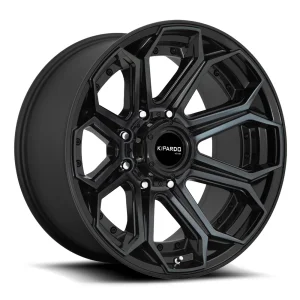
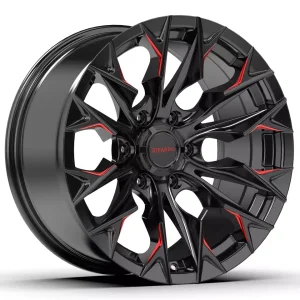
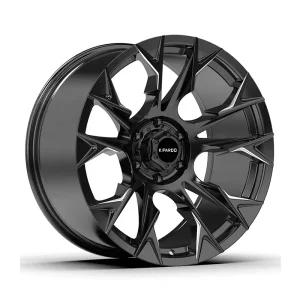
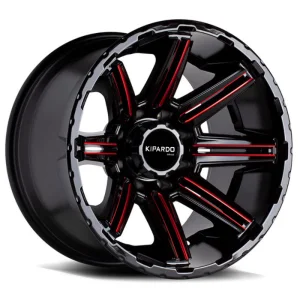
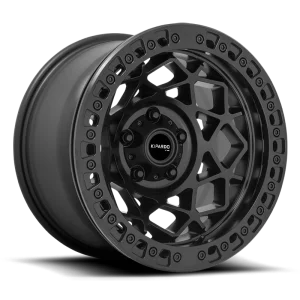
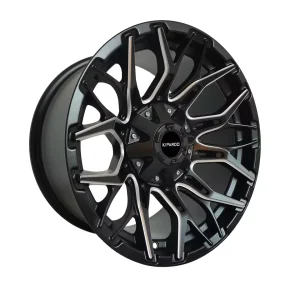
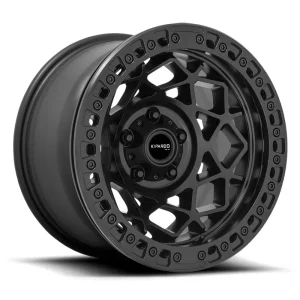
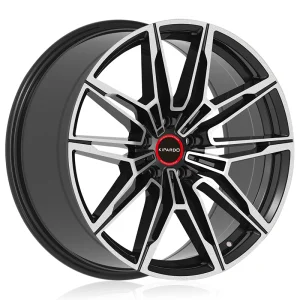
Specialized Off-Road, Commercial & SUV Cast Wheels
Comprehensive portfolio of heavy-duty cast aluminum alloy wheels engineered for rigorous Mexican road conditions, industrial work trucks, and custom aftermarket tuning.
Initiate Your Direct Factory Supply Program for Mexico
Eliminate intermediary markups, obtain verified JWL/VIA testing documentation, and configure your mixed-model container orders with direct factory dispatch to Manzanillo or Lázaro Cárdenas.