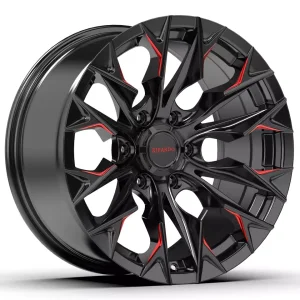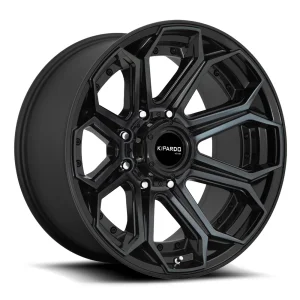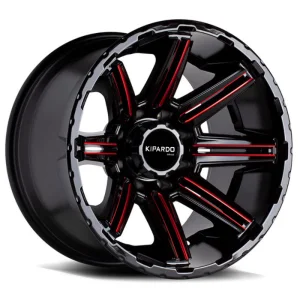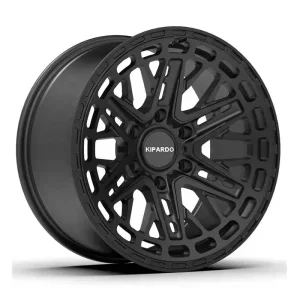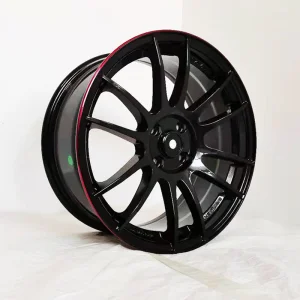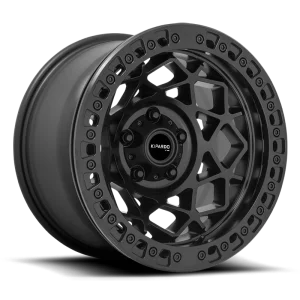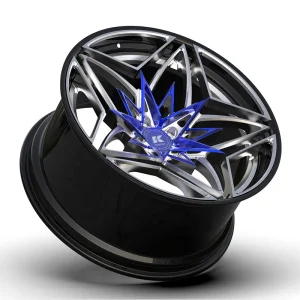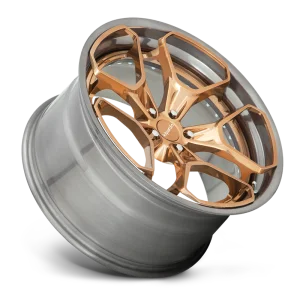
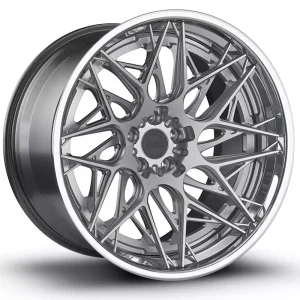
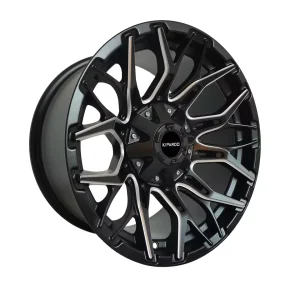
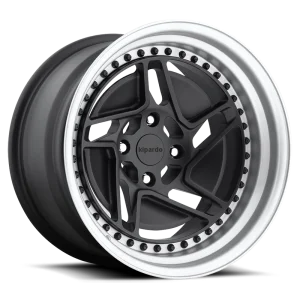
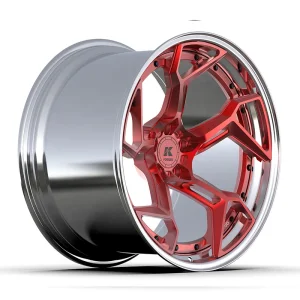
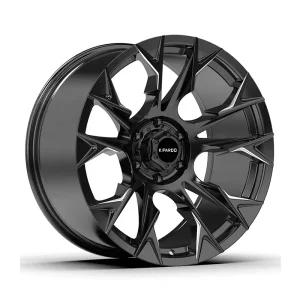
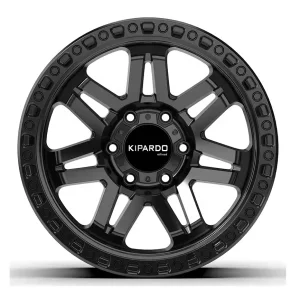
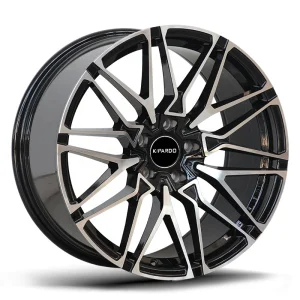
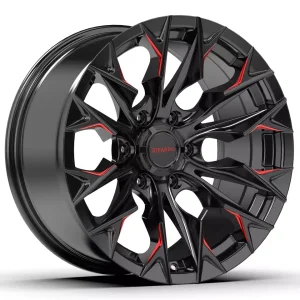
Featured Precision Engineered Forged Portfolio
Explore industry-validated designs manufactured via 10,000-ton forging presses and advanced CNC billet machining architectures.
Global Landscape: Forged Magnesium & Aluminum Wheel Dynamics
The international market for forged wheels—colloquially and historically rooted in the high-performance moniker "Mag Wheels"—is navigating a systemic transformation driven by unsprung mass optimization, commercial fleet decarbonization, and the relentless dynamics of high-torque Battery Electric Vehicles (BEVs).
Aerospace-Grade Grain Refinement
Unlike conventional gravity or low-pressure casting, modern multi-axis forged wheels use solid billet stock subjected to severe isothermal forging. This process aligns continuous grain boundaries along the load-bearing paths of the wheel spokes, eliminating microscopic gas voids and structural cleavage planes.
EV Range and Unsprung Mass Optimization
Every kilogram reduced from the rotational mass of a vehicle saves the equivalent of up to 4x that mass in static weight during angular acceleration and regenerative deceleration phases. For commercial electric platforms, moving to forged configurations extends real-world range by up to 5-8%.
Corrosion Passivation & Surface Chemistry
Historic challenges surrounding pure magnesium oxidation have been permanently resolved via advanced plasma electrolytic oxidation (PEO) and electrostatic multi-stage polymers, ensuring lifetime structural durability exceeding strict ISO 9227 neutral salt-spray benchmarks.
Technical Roadmap: Structural Metallurgy Comparison
Choosing the right baseline material balances maximum tensile yield against cyclic fatigue limits and target price points for global fleet distributions.
| Metric / Mechanical Attribute | Cast A356.2-T6 | Flow-Formed Aluminum | Forged 6061-T6 | Forged Magnesium (AZ80/ZK60) |
|---|---|---|---|---|
| Tensile Strength (Ultimate, Rm) | 220–250 MPa | 270–310 MPa | 310–350 MPa | 340–380 MPa |
| Yield Strength (Rp 0.2) | 160–185 MPa | 210–240 MPa | 275–300 MPa | 280–310 MPa |
| Elongation at Break (A5) | 3.5–5% | 6–9% | 10–14% | 12–16% |
| Specific Density | 2.68 g/cm³ | 2.68 g/cm³ | 2.70 g/cm³ | 1.80 g/cm³ (-33% vs Al) |
| Dynamic Cornering Fatigue | Standard JWL Base | 1.2x JWL Baseline | 2.0x+ Elevated Fatigue | Highest Damping Capacity |
Target Deployment: Application-Specific Solutions
From extreme desert conditions to high-torque EV road transport, our forged units meet specific regional and environmental challenges.
Heavy-Duty Off-Road & Overland Platforms
Off-road terrains demand higher impact margins. Our forged monoblock and reinforced multi-piece rims withstand severe lateral rock strikes and low-tire-pressure bead displacement, featuring beadlock-compatible profiles verified under harsh Australian Outback and North American Rubicon conditions.
Next-Gen High-Torque Electric Vehicles
Instantaneous torque delivery from dual- and quad-motor EV platforms creates rotational tire-slip against the rim bead. Our forged engineering incorporates aggressive knurled bead seats to maintain mechanical lockup under full launch control loads.
GT & Endurance Circuit Competitions
In endurance racing, brake heat dissipation is critical. Our ultra-thin spoke architectures clear oversized carbon-ceramic calipers while directing airflow through the wheel barrel to prevent brake fade during extended sessions.
B2B Enterprise Strategies: Sourcing, Private Labeling & Logistics
How international automotive brands and tier-one aftermarket distributors structure low-risk, scalable procurement with Rimax.
Custom Tooling & Rapid FEA Prototyping
From initial customer CAD sketches to finished FEA dynamic cornering simulations, our engineering office turns custom multi-piece and monoblock forged wheel tooling around within 14 working days, accelerating go-to-market cycles for seasonal releases.
Bespoke OEM Brand Identity Programs
Full private-label customization: laser-etched lip scripting, proprietary bolt patterns, custom branded hub center systems, tailored packaging with edge-drop certification, and destination-specific compliance markings (TÜV, JWL, DOT-T).
Flexible Hybrid Sourcing (FCL & LCL)
Blend multi-piece forged luxury inventory with cast or flow-formed high-velocity items in a single consolidated container. This reduces working-capital tie-up while maintaining high product availability across distribution networks.
Frequently Asked Questions: Technical & Procurement Clarifications
Clear, definitive answers to help technical buyers, fleet managers, and aftermarket program owners make informed purchasing decisions.
Expanded Commercial & Specialty Alloy Wheels
Heavy-duty commercial lines, performance street casting, and custom modular forged variants for global distribution.