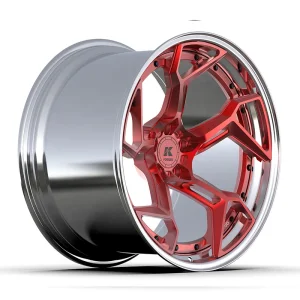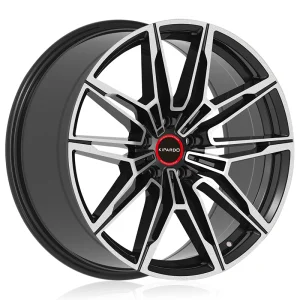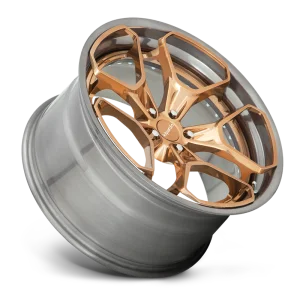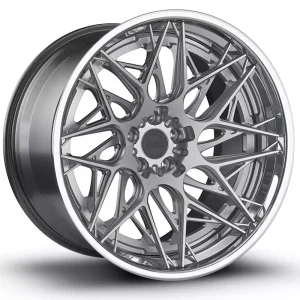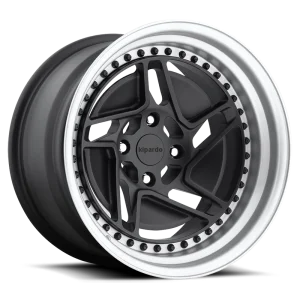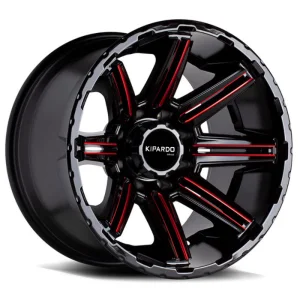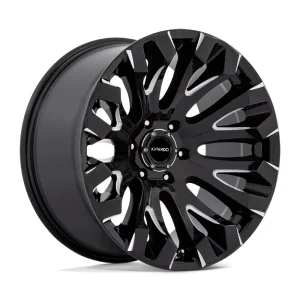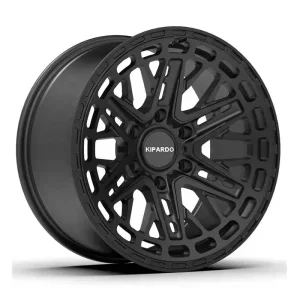
High-Spec Lightweight Concave Configurations
Explore volume-ready and bespoke concave designs tested under multi-axis fatigue and rigorous impact thresholds.
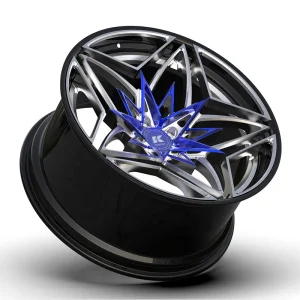
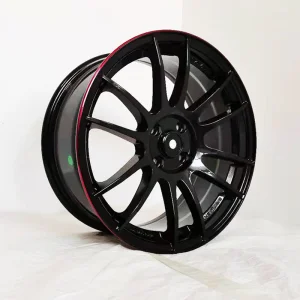
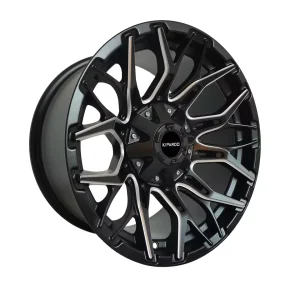
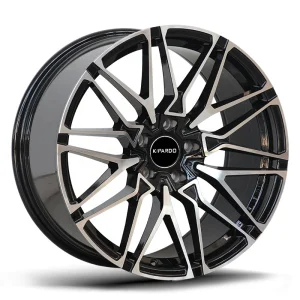
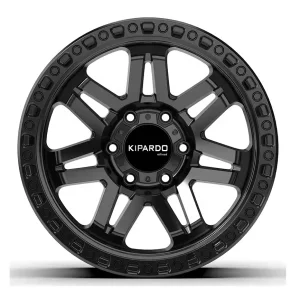
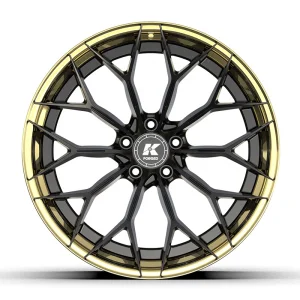
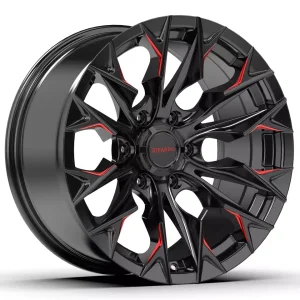
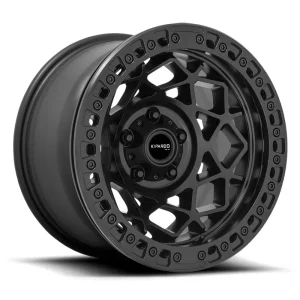
Global Commercial & Industrial Landscape of Lightweight Concave Wheels
Analyzing structural kinematics, unsprung mass dissipation, and Tier-1 supply chain transitions across the global automotive aftermarket.
Unsprung Mass Dynamics
Shaving rotational mass at the wheel perimeter directly yields a massive drop in polar moment of inertia. Lightweight concave geometries, when engineered with strict Finite Element Analysis (FEA), decrease shock rebound delay and significantly optimize transient cornering vectors for high-torque powertrains.
Tier-1 Export Economics
Traditional gravity casting cannot reconcile the deep drop-center profiles of aggressive concave styling with rigorous yield limits. Global distributors are shifting purchasing orders toward 10,000-ton hydraulic forging presses and rotary flow-forming cells to secure superior profit margins and mitigate warranty claims.
JWL & VIA Standardization
Concave architecture introduces intensified bending moments at the spoke-to-hub junction. Meeting rigorous JWL, VIA, and SAE J2530 protocols demands precise grain boundary manipulation, specialized T6 artificial aging curves, and targeted thickness transitions that eliminate localized stress risers.
Engineering Comparative: Cast vs. Flow-Formed vs. 6061-T6 Forged
Evaluate mechanical tensile parameters, fatigue longevity, and tooling capital expenditures to match downstream brand positioning.
| Engineering Parameter | A356.2 Low-Pressure Casting | Rotary Flow-Forming (Hybrid) | Bespoke 6061-T6 Monoblock Forged |
|---|---|---|---|
| Crystalline Grain Structure | Dendritic, non-directional grain | Elongated, dense radial barrel flow | Continuous compacted unidirectional grain alignment |
| Tensile Yield Strength (Rp0.2) | ~160 - 180 MPa | ~220 - 250 MPa (Barrel Zone) | > 275 - 310 MPa (Entire Section) |
| Weight Reduction Efficiency | Baseline Metric (0%) | 12% - 18% lighter vs. Casting | 25% - 35% reduction in rotational mass |
| Impact Resistance (13° / 30° Tests) | Standard compliance via thicker spokes | High elastic return on barrel rim flange | Maximum energy absorption without fracture |
| Bespoke Offset & Concavity Flex | Restricted to pre-tooled fixed steel molds | Fixed face profile; custom width variance | Infinite CNC milling paths (1mm ET increments) |
| Commercial MOQ Threshold | 60 - 100 Pieces per mold batch | 40 - 80 Pieces per production run | 4 Pieces (Full bespoke custom builds) |
Macro Industrial Verification & Quality Control Systems
Empirical manufacturing milestones backing every batch delivered from our casting and forging facilities.
Multi-Axis Dynamic Radial Fatigue
Simulating high-speed endurance across 1,000,000 uninterrupted revolution cycles under 2.5x dynamic cornering loads, guaranteeing failure-proof spoke bases under peak tracking stress.
Automated Radiographic X-Ray
100% in-line high-resolution digital radiographic screening detects microscopic sub-surface micro-porosity, crystalline shrinkage, and inclusions down to fractions of a millimeter before CNC milling operations.
Helium Leak Spectrometry
Advanced vacuum helium decay detection verifies 100% molecular airtight integrity across cast wheel rim beds and multi-piece modular forged joints, outperforming standard underwater bubble dunk protocols.
Custom Engineering Tailored to Regional Market Demands
From high-speed European autobahns to rugged American overlanding conditions and Southeast Asian track styling.
European Grand Touring & Saloons
Staggered front shallow / rear deep concave fitments engineered for high-performance German and Italian chassis. Spoke clearance is calculated via 3D CAD modeling around oversized 6-piston and 8-piston carbon-ceramic brake calipers while retaining OEM hub-centric hub bores (66.5mm / 57.1mm).
North American Heavy 4x4 & Overlanding
Reinforced back-pad engineering with PCD patterns (6x139.7, 5x150, 6x135) supporting vehicle load ratings up to 2,500 lbs (1,134 kg) per wheel. Bead-seat knurling stops tire-bead rotation during intense rock crawling and high-torque launch sequences.
Next-Gen Electric Vehicle (EV) Platforms
Deep concave aero-spoke hybrids designed to minimize aerodynamic drag coefficients while maintaining extreme structural load ratings required by heavy battery packs. Low unsprung weight directly preserves operational battery range.
Engineering & B2B Purchasing FAQs
In-depth responses resolving technical fitment, structural safety margins, and volume production timelines.
How do concave wheel profiles affect brake caliper clearance and ET offsets?
What metallurgical advantages does 6061-T6 aluminum offer over standard cast alloys?
What is the minimum order quantity (MOQ) and production turnaround for custom designs?
How does Rimax ensure paint longevity in regions with severe winters and salt exposure?
Does Rimax accommodate OEM private labeling and customized protective packaging?
Advanced Monoblock & Flow-Formed Factory Selection
Source directly from certified manufacturing lines with complete testing documentation and customized finish options.