
Engineered Monoblock & Cast Production Inventory
Immediate procurement lines and custom-machined forges manufactured according to strict metallurgical tolerance and dynamic balance parameters.
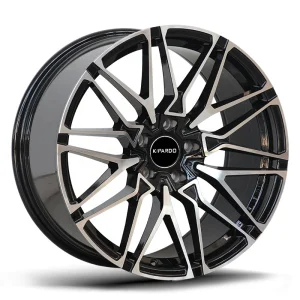
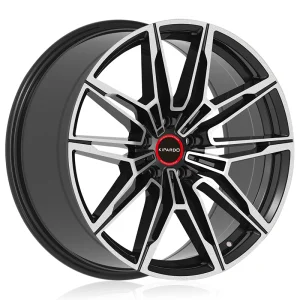
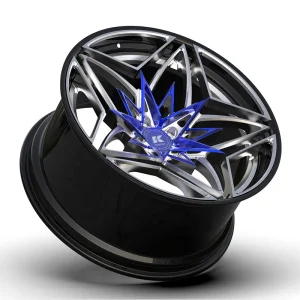
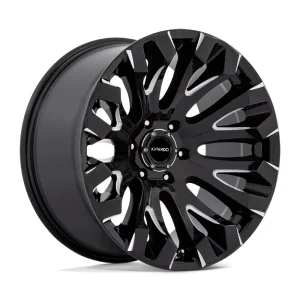
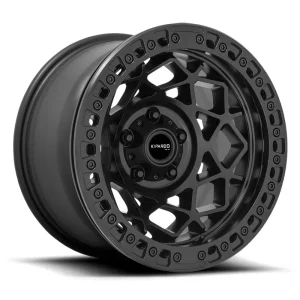
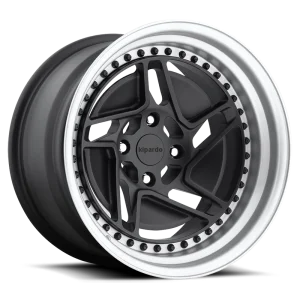
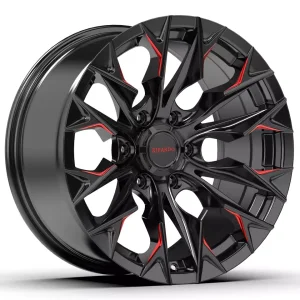
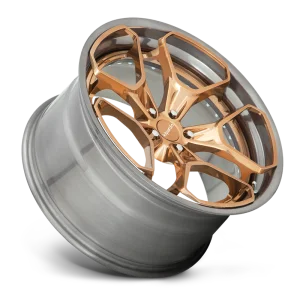
The Metallurgy of Monoblock Forging: Microstructure & Load Vectors
Why Tier-1 automotive procurement engineers prioritize 1-piece 6061-T6 monoblock forgings over multipiece and cast alternatives for high-torque and high-speed applications.
Continuous Grain Alignment
Unlike casting where molten A356.2 alloy solidifies with randomized crystalline dendrites and inevitable gas micro-porosity, forged monoblock blanks originate from extruded billets of 6061-T6 aerospace aluminum. Subjected to extreme multi-directional hydraulic forging exceeding 10,000 metric tons, the microscopic aluminum grain flow aligns unbroken along the contour of the rim barrel, flange, and spoke roots, producing exceptional yield resilience.
Rotational Inertia Elimination
Forged monoblock architecture eliminates titanium/steel assembly bolts, multi-piece sealing gaskets, and stepped-barrel overlap common to 2-piece and 3-piece modular wheels. By optimizing structural load paths with Finite Element Analysis (FEA), dead weight is carved away via high-speed 5-axis CNC machining, drastically reducing un-sprung rotational mass, rotational kinetic moment, and parasitic driveline energy losses.
Hermetic Air Integrity
Multi-piece wheels depend on elastomeric silicone seals that can degrade over thermal cycling, tire changes, or aggressive chemicals, leading to micro-deflation. Monoblock wheels are monolithic solids with zero joint interfaces. They guarantee absolute zero air-pressure leakage under punishing track temperatures, high-G cornering deformation, and severe off-road bead-torque loads.
Global Procurement Dynamics: Market Shifts & Enterprise Demand
A macroscopic look at why distributors and automakers across North America, Europe, the Middle East, and Asia-Pacific are restructuring their wheel portfolios toward custom forged monoblocks.
Electric Vehicle (EV) Weight Demands
Battery electric vehicles (BEVs) exhibit curb weights 25% to 40% heavier than their internal combustion equivalents, coupled with instantaneous peak torque at zero RPM. Heavy EVs require wheels with wheel load ratings exceeding 900 kg to 1,150 kg per corner. Monoblock forging delivers this elevated mechanical safety threshold without inflating rotational mass, directly preserving EV battery range (WLTP/EPA mileage rating).
Ultra-Luxury & Bespoke Aftermarket
Wholesalers serving prestige segments (Porsche, Lamborghini, Ferrari, Rolls-Royce, Bentley) face consumers demanding hyper-personalized offsets, concave profiles, center-lock patterns, and custom brushed/polished ceramic coats. Monoblock forging frees B2B buyers from rigid tooling mold constraints, enabling flexible small-batch custom programs down to vehicle-specific axle offsets.
Armored & Heavy-Duty Overland Fleet
Security defense contractors, civilian armored passenger vehicles (B6/B7 armoring levels), and extreme desert overland fleets demand wheels that absorb high kinetic impact without structural fractures. Forged monoblocks absorb heavy curb shockwaves without catastrophic fragmentation, maintaining run-flat tire beads under tactical and desert operating conditions.
Supply Chain Rationalization
Importers are moving away from multi-tiered fragmented supply chains where castings, machining, and surface finishes occur in dispersed subcontracted shops. Modern enterprise purchasers seek consolidated tier-1 factories offering ingot-to-boxed-product lifecycle management with full metallographic traceability and JWL/VIA audit documentation.
China Smart Factory Ecosystem: Rimax Engineering Leadership
How Shanghai Rimax Industry Co., Ltd. (operating since 2010 with the Kipardo manufacturing plant) utilizes automated 4.0 workflows to combine custom forging flexibility with industrial mass-production efficiency.
Raw Billet Sonic Verification
Every aerospace-grade 6061-T6 cylindrical aluminum billet undergoes submerged ultrasonic nondestructive testing (NDT) to verify zero internal impurities, dendritic porosity, or boundary segregation prior to entering the forging press.
10,000+ Ton Isothermal Forging
Automated robotic arms feed preheated billets into closed-die hydraulic presses exceeding 10,000 to 12,000 metric tons. Controlled isothermal deformation yields a pristine preform pancake with dense, directional crystalline alignment.
High-Speed Rotary Flow-Spinning
Forged blanks undergo dynamic mandrel spinning where high-pressure hydraulic rollers elongate and condense the outer rim barrel, calibrating precise wall thickness down to 2.8 mm while raising barrel tensile yield strength past 320 MPa.
T6 Solution & Cryogenic Quenching
Computer-monitored heat treating chambers subject the spun monoblock to 535°C solution treatment, precision-timed rapid fluid quench, and controlled 180°C artificial aging over 8 hours to achieve optimum mechanical temper hardness (Brinell HB 95+).
5-Axis High-Precision CNC Milling
Spoke geometry, lightening pockets, hub pads, and center bores are machined within enclosed German/Japanese 5-axis CNC machining cells. Spindle speeds exceeding 15,000 RPM sculpt aggressive 3D concave surfaces within micro-millimeter dimensional tolerances.
Robotic Finishing & Environmental Powder Coat
Zero-dust automated electrostatic paint lines apply zirconium nano-ceramic pre-treatments, powder primers, OEM color coats, and anti-UV diamond clears, validated by 1,000-hour CASS accelerated copper-accelerated acetic acid salt spray testing.
Engineering Matrix: Monoblock Forged vs. Alternative Wheel Technologies
A comparative engineering breakdown designed for procurement officers, product directors, and technical purchasing teams evaluating trade-offs between strength, weight, and tooling lead times.
| Evaluation Parameter | 1-Piece Forged Monoblock | Multi-Piece Forged (2/3-Piece) | Flow-Formed (Rotary Forged) | Low-Pressure Cast (LP) |
|---|---|---|---|---|
| Raw Material & Metallurgy | 6061-T6 Billet Aluminum | 6061-T6 Center + 5051/6061 Spun Barrels | A356.2 Aluminum (Cast Center/Spun Rim) | A356.2 Virgin Ingots (Liquid Mold Fill) |
| Grain Structure & Porosity | 100% Dense, Aligned, Zero Porosity | Dense Grain; Potential Fastener Interface Creep | Compressed Barrel; Porous Spoke Casting | Random Crystal Dendrites; Micro-Porosity |
| Typical Weight Differential | 25% – 32% Lighter than Cast | 15% – 22% Lighter (Hardware Adds Weight) | 10% – 15% Lighter than Standard Cast | Baseline Weight Standard (Heaviest) |
| Ultimate Tensile Strength (Rm) | ≥ 310 – 340 MPa | ≥ 290 – 320 MPa | ≥ 240 – 260 MPa (Barrel Only) | ≥ 205 – 225 MPa |
| Structural Integrity & Sealing | Single-piece monolithic; zero leak risk | Requires sealant beads & 30+ torque bolts | Single-piece monolithic structure | Single-piece monolithic structure |
| Tooling Cost & Minimum Order | Zero Tooling Mold Cost; Low MOQ (4 pcs) | Modular Tooling; Moderate MOQ (8 pcs) | High Tooling Mold Costs; MOQ 60–100 pcs | High Steel Mold Tooling ($3k–$6k); MOQ 100+ pcs |
| Design Profile Freedom | Extreme Deep Concave, CNC Milling Freedom | Stepped Lip / Deep Dish Versatility | Constrained by Cast Core Tooling Dies | Rigid Draft Angles for Mold Release |
| Target Vehicle Applications | Supercars, High-Power EVs, Track, Luxury Offroad | Stance, Custom Widebody, Show Car Builds | Mid-Tier Performance Tuning, Aftermarket | OEM Mass Production, Winter Wheels, Fleet Replacements |
Empirical Quality Validation & Global Certifications
Every monoblock forging manufactured by Rimax is subjected to destructive and non-destructive laboratory testing mirroring JWL, VIA, SAE J2530, and TÜV StVZO specifications before export clearance.
Dynamic Radial Fatigue Test
Simulates continuous high-speed cruising under loaded vehicle weight. The wheel is fitted with a tire, pressed against a rotating steel drum under 2.25x the vehicle's rated axle load, and rotated past 500,000 cycles (exceeding standard 100,000-cycle regulatory requirements) without crack propagation or bolt loosening.
Dynamic Cornering Fatigue Test
Verifies spoke-to-hub resilience under high lateral G-forces. The wheel hub is bolted to a rotating table while a rigid lever arm applies a continuous bending moment to the wheel rim face for over 100,000 continuous cycles, guaranteeing zero spoke yield failure under aggressive high-traction track cornering.
13° Lateral Impact Testing
Replicates catastrophic curb strike and pothole impacts at speed. A calibrated free-falling steel striker corresponding to vehicle curb weight drops squarely onto the tire bead and wheel flange rim at an acute 13-degree angle. The forging must absorb the kinetic strike with zero brittle fracture or abrupt pressure blowout.
Spectrographic & Coordinate Metrology
Direct-reading optical emission spectrometers continuously monitor chemical compositions of Si, Fe, Cu, Mn, Mg, Cr, and Zn within millesimal tolerances. Coordinate Measuring Machines (CMM) inspect the finished wheel profile across 128 data points to verify PCD concentricity, hub center bore diameter, and brake clearance offsets.
Localized Application Scenarios: High-Performance Wheel Architecture
From European mountain passes to Middle Eastern sand dunes and North American high-speed interstates, forged monoblocks deliver bespoke mechanical characteristics tuned for real-world driving vectors.
Motorsport & Track Day Competitions
Circuit racing demands rapid heat dissipation away from carbon-ceramic and multi-piston monoblock calipers. Rimax forged monoblock spoke geometry acts as a convective turbine blade, extracting superheated air from the brake rotor cavity while maintaining spoke stiffness under slick-tire lateral grip loads.
High-Torque Performance Sedans & GTs
Twin-turbocharged V8s and dual-motor performance EVs produce excessive launch torque that can cause standard cast wheels to slip inside the tire bead seat under aggressive standing starts. Rimax machines specialized anti-slip knurled bead seats directly into the forged rim barrel to ensure positive tire traction lock.
Heavy 4x4, Overlanding & Desert Exploration
Desert and rock-crawling expeditions require wheels that withstand air-down bead pressures (down to 12-15 PSI) while carrying heavy rooftop tents, auxiliary fuel, and winches. Kipardo offroad forges feature reinforced outer rim lips that resist rock gouging and prevent bead de-seating on boulder trails.
Bespoke OEM Replica & Restoration
Vintage supercar collections and restomod projects frequently require discontinued wheel aesthetics machined with modern large-diameter sizing to accommodate modern carbon brakes. Monoblock forging facilitates 1:1 historical aesthetic replication integrated with state-of-the-art rim drop-center safety profiles.
The B2B Factory Sourcing Protocol: How to Vet a Wheel Supplier
A five-phase checklist for wholesale importers and private-label distributors to audit engineering transparency, production controls, and logistics risk.
Phase 1: Ingot Certification & Traceability
Always demand mill test certificates (MTC) proving that raw billets are formulated from virgin 6061 aluminum rather than remelted post-consumer scrap. Impurities such as excess silicon or lead cause invisible brittle grain fractures under lateral impact loading.
Phase 2: FEA Stress Modeling & CAD Review
Prior to machine cutting, verify that the supplier's engineering department performs Finite Element Analysis (FEA) to confirm Von Mises stress distribution across spoke junctions. Ensure brake caliper profile 3D scans are cross-checked to avoid hub spacer issues.
Phase 3: Surface Pre-treatment Verification
Poor paint durability begins at the pre-treatment stage. Confirm the factory utilizes multi-stage immersion wash, de-oxidation, and eco-friendly chromate/zirconium passivation to ensure anti-corrosion bonding prior to powder priming and top clear layering.
Phase 4: Packaging & Ocean Palletizing
Export packaging must withstand heavy ocean container movement. Standard Rimax export packing includes non-woven protective face bonnets, reinforced rim edge plastic protector rings, heavy moisture-absorbing desiccants, and double-corrugated export cartons tested for drop resilience.
Phase 5: Warranty Enforcement & Legal Recourse
Protect your brand equity by partnering with established entities. Shanghai Rimax Industry Co., Ltd. backs every Kipardo forging with a formal 5-year/100,000 km structural warranty and 2-year surface finish coverage, guaranteeing replacement support on substantiated defects.
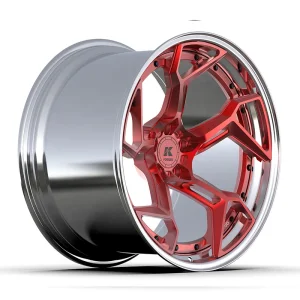
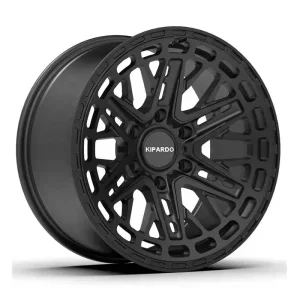
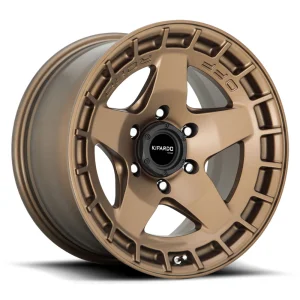
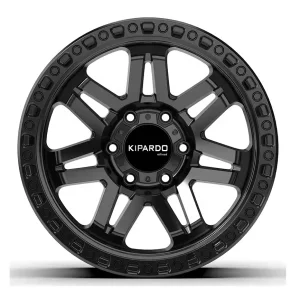
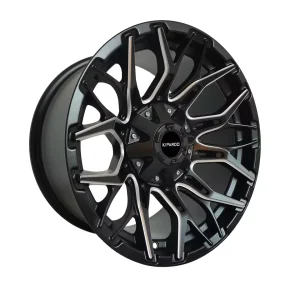
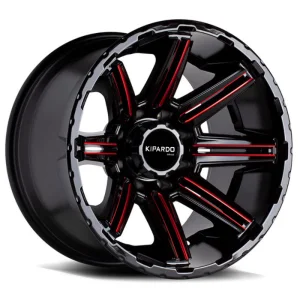
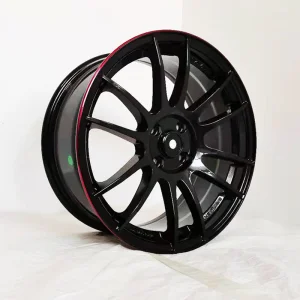
Advanced Concave Forged & Heavy-Duty Wheel Series
Browse our extended product catalog encompassing 6061-T6 concave monoblocks, high-offset 4x4 options, and specialized Japanese tuner-fitment models.

Frequently Asked Questions: Forged Monoblock Procurement
Clear answers to vital technical, financial, and logistical questions raised by international distributors, fleet buyers, and private brand founders.
What is the specific mechanical difference between 6061-T6 and cast A356.2 aluminum?
A356.2 is a silicon-aluminum alloy optimized for molten flow inside gravity and low-pressure casting dies, possessing an ultimate tensile strength of approximately 220 MPa and elongation of 3-5%. 6061-T6 (Al-Mg-Si) is an aerospace wrought alloy refined through forging and solution aging, boasting tensile strength exceeding 310-340 MPa and an elongation of 10-12%. This higher yield strength allows forged wheel spokes and barrels to be machined up to 35% thinner while maintaining superior impact absorption without brittle cracking.
What are the minimum order quantities (MOQ) and sample lead times for custom monoblocks?
Because forged monoblock wheels are sculpted via CNC milling code directly from standardized solid forged blanks rather than permanent casting molds, our factory offers extreme purchasing flexibility. Minimum order quantities for bespoke designs start as low as 4 pieces (1 vehicle set). Sample engineering, CAD/FEA simulation, and CNC milling typically require 12 to 18 working days, followed by 3 to 5 days for surface anodizing or powder coating.
Can Rimax manufacture custom offsets (ET), bolt patterns (PCD), and center bores per order?
Yes. Every set of Rimax forged monoblock rims can be individually engineered to your vehicle fitment requirements. We customize bolt patterns (4-lug, 5-lug, 6-lug, 8-lug, and center-lock), positive/negative offsets (ET -50 to +65), and center bores (direct hub-centric boring or floating lug seats) tailored to clear specific high-performance brake caliper profiles (e.g., Brembo, AP Racing, Akebono).
What testing standards and quality documentation accompany export shipments?
All Rimax/Kipardo forged wheels undergo rigorous testing according to Japanese JWL/VIA, North American SAE J2530, and ISO 3006 requirements. Destructive testing protocols include 13° lateral impact testing, dynamic radial fatigue, and rotational cornering fatigue tests. Every commercial export shipment is accompanied by complete mill test certificates, CMM dimensional inspection logs, dynamic balancing verification slips, and a 5-year structural warranty certificate.
How does Rimax support private-label branding, packaging, and custom center caps?
We provide full white-label OEM/ODM solutions. We can CNC-mill or laser-engrave your corporate brand logo onto the wheel lip, spoke, or hub pad. In addition, we manufacture custom billet aluminum or carbon fiber center caps, customized valve stems, and custom-printed double-corrugated export packaging cartons featuring your company's branding, barcodes, and part numbers.
Why choose single-piece monoblock over 2-piece or 3-piece modular forged wheels?
While 2-piece and 3-piece modular wheels offer aesthetic rim-lip depth, they introduce multiple failure points: potential air leakage through silicone seal degradation, loosening of assembly bolts under thermal stress, and increased overall rotational mass due to the assembly hardware. Forged monoblocks provide superior torsional stiffness, zero leakage risk, and the lightest possible structural weight, making them the preferred architecture for pure performance and heavy electric vehicles.
Initiate Your Custom Forged Wheel Program
Connect with our technical engineering sales desk in Kunshan, Jiangsu. We assist international wholesale distributors, tuning houses, and brand managers with rapid CAD modeling, fitment verification, and competitive volume tier quotation.