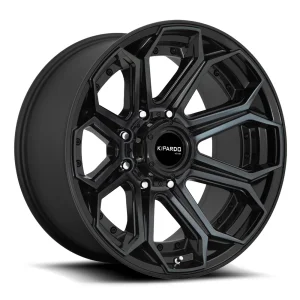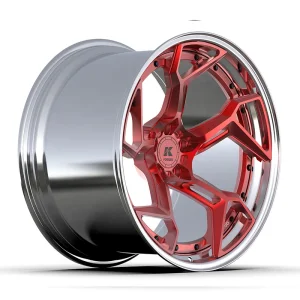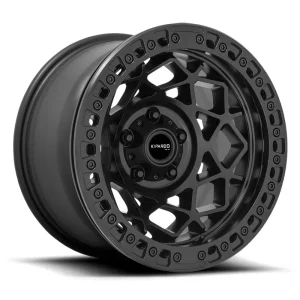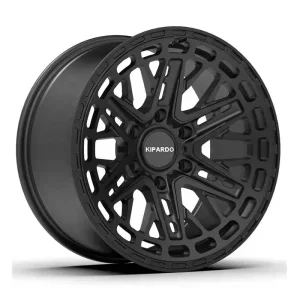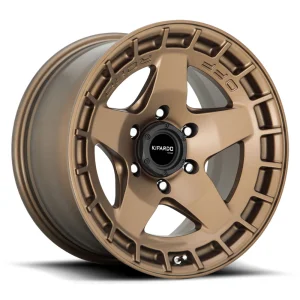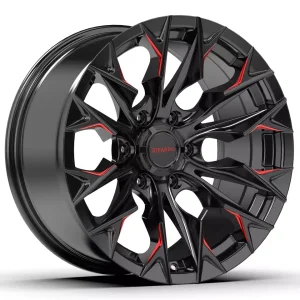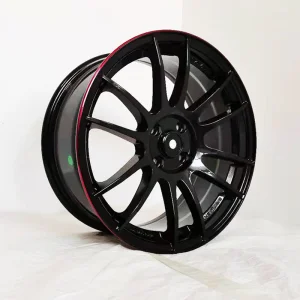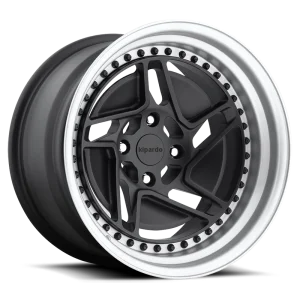
Featured 5x10⁸ & High-Performance Forged Wheel Assemblies
Precision engineered, high-tensile custom monoblock, modular 2-piece, and 3-piece forged wheels manufactured under rigorous CE, JWL, and ISO 3006 compliance standards.
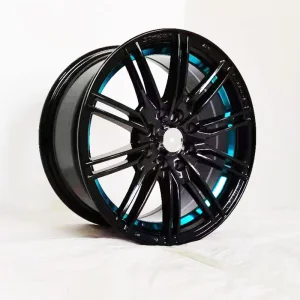
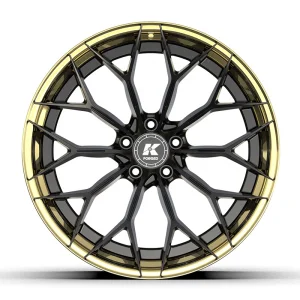
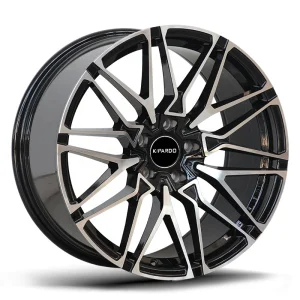
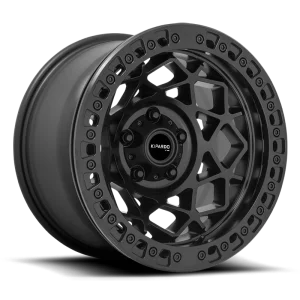
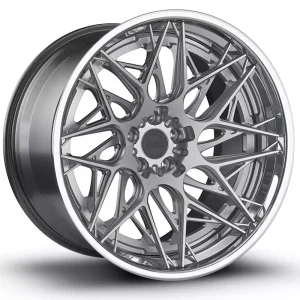
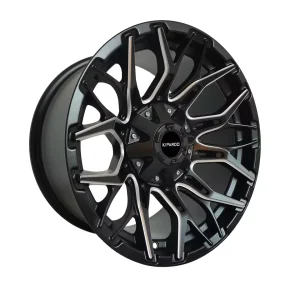
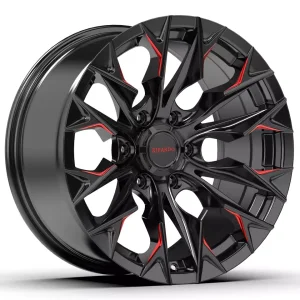
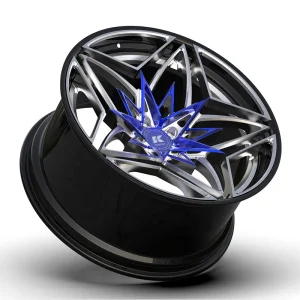
European CE Certification & ECE R124 Regulatory Architecture
Navigating the stringent engineering boundaries of high-performance aftermarket fitments and OEM tier-1 integration for the 5x10⁸ PCD mechanical geometry.
Aerospace 6061-T6 Billet
Each blank undergoes isothermal forging under 10,000-ton hydraulic pressure. The continuous, unsevered metal grain flow provides a yield strength exceeding 276 MPa and tensile capability over 310 MPa, vastly outpacing conventional cast methods.
CE / E-Mark Validation
Full conformance with the EU General Product Safety Regulation (GPSR) and ECE R124 uniform provisions. Comprehensive cornering fatigue testing at 100,000 cycles, radial endurance under 2.5x design load, and 13° acute impact rigs prevent catastrophic fracture.
Micron CNC Tolerancing
Utilizing Okuma and Haas multi-axis CNC milling centers, hub-centric spigots and 5x10⁸ pitch circle positions maintain radial and axial run-out under 0.25mm, eliminating harmonic high-speed vibrations common in substandard aftermarket conversions.
CASS Corrosion Armor
Wheels undergo a rigorous multi-stage electrostatic passivation and clear-coat cure tested past 1,000 hours in Copper-Accelerated Acetic Acid Salt Spray (CASS) chambers, ensuring finish longevity against winter de-icing chemicals across northern latitudes.
Localized Application Scenarios: The 5x10⁸ Pitch Circle Diameter
A deep dive into vehicle-specific chassis dynamics, axle weight distributions, caliper clearances, and regional requirements for the popular 5x108mm (5x4.25") bolt circle.
The 5x108mm bolt circle is one of the most mechanically demanding bolt configurations in automotive engineering. Far from being a niche aftermarket parameter, 5x10⁸ spans across European luxury, American performance, hypercars, and next-generation battery electric vehicles (BEVs). Because vehicle curb weights in these segments vary from lightweight 1,400 kg track hatchbacks to 2,600 kg dual-motor electric SUVs, the engineering requirement for forged manufacturing becomes paramount.
Volvo & Polestar SPA Platform
Standardized on 63.4mm center bores. Modern Volvo XC90, XC60, and Polestar 2/3 performance packs demand ultra-high structural load ratings (up to 920 kg per wheel corner) to handle massive regenerative torque, heavy battery pack ballast, and dynamic lateral rollover resistance.
Ford Performance & C1/CD4
Found on Focus ST/RS, Mondeo, Taurus, and European transit vans. For track applications like the Focus RS, forged wheels reduce un-sprung rotational mass by up to 4.2 kg per corner, drastically improving damper responsiveness, turn-in agility, and heat dissipation around Brembo brake calipers.
Jaguar Land Rover (JLR) Lineage
Common across Evoque, Velar, Discovery Sport, Jaguar F-Pace, and XE/XF series (63.4mm center bore). Off-road torsional flex can cause bead unseating on lesser cast designs; our 6061-T6 forged barrels feature knurled safety beads that maintain tire pressure even during low-PSI trail crawls.
Ferrari Classic & Modern Exotics
Heritage applications including Ferrari 308, 328, 348, 355, 360 Modena, and F430 utilise the 5x10⁸ PCD (67.1mm center bore). Resto-mod and track restoration projects mandate authentic visual architecture married with modern aerospace grain flow to withstand high-RPM centrifugal shear.
Metallurgical Architecture: 6061-T6 Forging vs. Gravity & Flow-Forming
Why forged 5x10⁸ aluminum alloy stands as the singular choice for safety-critical commercial programs and demanding high-performance applications.
| Mechanical & Process Metric | Aerospace Forged (6061-T6) | Rotary Flow-Formed (A356.2) | Low-Pressure Cast (A356.2-T6) |
|---|---|---|---|
| Crystalline Grain Structure | Continuous, aligned micro-flow fibers; Zero porosity | Refined radial barrel grain; Cast hub spoke core | Random dendrite distribution; Susceptible to gas voids |
| Yield Strength (Rp0.2 MPa) | 276 - 310 MPa | 180 - 210 MPa (Barrel only) | 140 - 165 MPa |
| Tensile Strength (Rm MPa) | 310 - 350 MPa | 240 - 270 MPa | 220 - 245 MPa |
| Elongation at Break (δ %) | 12% - 15% (Superior ductility prevents fracture) | 6% - 8% | 3.5% - 5.0% (Risk of brittle shatter) |
| Wheel Weight (Typical 20x9.0J) | 9.2 kg - 10.4 kg | 11.8 kg - 12.6 kg | 14.5 kg - 16.2 kg |
| CE / TÜV Impact Threshold | Passes 13° drop test at zero structural micro-cracking | Compliant within normal safety margins | Higher risk of spoke failure under severe curb strike |
| Tooling & Customization Agility | 100% CNC programmatic cutting; No hard tooling delay | Semi-flexible; Requires dedicated spinning mandrel | Requires expensive casting mold ($8k-$25k) with 45-day lead |
China Factory Supply Chain Resilience & Efficiency Advantages
Why leading global wheel distributors, private-label wheel brands, and tuning specialists entrust their production pipelines to our high-tech industrial ecosystem.
Vertical Raw Ingot Integration
Situated within China's primary Yangtze River Delta metallurgical cluster, our plant secures prime direct-pour 6061 and A356.2 molten billets, shielding international buyers from secondary scrap contamination, market volatility, and protracted billet delivery delays.
Accelerated Rapid Prototyping
By bypassing heavy steel cast mold tooling, our engineering department converts client 3D concepts or scan files into finite element analysis (FEA) models within 48 hours. First physical forged blanks undergo CNC cutting in as little as 10 working days.
Industry 4.0 Digital Twin Automation
Robotic arms manage blank heating, ultrasonic flaw detection, and tool changers across our CNC lines. Every forged rim gets an engraved 2D data-matrix QR code, cataloging billet heat lot, quenching temperature, tool path operator, and QA dimensional pass.
Scalable Low-MOQ Flexibility
Traditional wheel importers were burdened by rigid minimum container commitments (500+ pieces per SKU). Our agile forged infrastructure supports private-label runs starting from 4 to 20 units per design, slashing inventory carrying costs and capital lockup.
Global Commercial & Industrial Landscape for Alloy Wheels
An authoritative analysis of evolving consumer preferences, OEM unsprung mass targets, EV adoption barriers, and wholesale margin optimization.
The global automotive aluminum wheel market is experiencing a structural paradigm shift. Where mass-market aftermarket retail historically favored heavy cast replicas, the commercial reality of vehicle electrification and fleet decarbonization has elevated forged lightweight alloy solutions from an ultra-niche exotic indulgence to an imperative industrial component.
European Union Regulatory Drift
With Euro 7 targeting non-exhaust particulate emissions (including brake dust and microplastics from tire scrub), reducing unsprung inertial mass through forged wheels yields an immediate 8-12% decrease in brake wear during deceleration phases.
North American Custom Wheel Market
Demand for concave profiles with extreme brake clearance is growing rapidly in the American market. 5x10⁸ car owners seek European flush fitments with custom bolt-hole depths that accommodate aftermarket big-brake rotor kits without requiring universal hub spacers.
The EV Powertrain Challenge
Battery platforms add 300 to 700 kg of deadweight over ICE vehicles. Traditional cast rims often crack under simultaneous high battery load and torque spikes. Forged wheels solve this paradox by retaining high structural capacity without sacrificing EV battery efficiency.
Distributor Margin Expansion
While low-pressure cast wheels have fallen into commoditized price wars with single-digit distributor margins, custom forged programs deliver net margins of 35% to 55% for specialized tuning brands and regional wheel retail networks.
Technical Roadmap: Next-Generation Lightweighting Innovations
Pioneering hybrid materials, generative structural topology, and AI-optimized acoustic cavity management for the next decade of wheel manufacturing.
AI Generative Topology Optimization
Our R&D engineers feed chassis stress vectors into generative design algorithms that hollow out unnecessary mass in spoke webs, maintaining structural integrity under peak cornering g-forces while shedding an extra 15% in peripheral wheel weight.
Carbon-Forged Hybrid Architecture
Phase 2 of our lightweighting roadmap integrates pre-preg carbon fiber barrels mated to forged 6061-T6 aluminum center spiders with titanium fasteners, unlocking ultra-low wheel weights under 7.5 kg for premier 21-inch applications.
Acoustic Cavity Resonators
To counteract electric vehicle tire-cavity resonance frequencies (typically 200–250 Hz), inner wheel barrels are engineered with internal Helmholtz damping profiles that reduce cabin tire drone by up to 4.5 dB without added foam weight.
Sustainable Green Billet Refining
By shifting to 100% hydro-powered smelting sources in southwest China, Rimax aims to reduce the embedded carbon footprint of our forged aluminum blanks to under 4.0 kg CO2 per kg of finished wheel, fulfilling rigorous European Scope 3 supply chain criteria.
Institutional Support & Global Compliance Guarantees
De-risking foreign automotive procurement with legal certitude, multi-tiered batch warranties, and end-to-end import clearance paperwork.
5-Year / 100,000 KM Warranty
Every Kipardo and Rimax forged wheel carries a comprehensive 5-year structural warranty alongside a 2-year guarantee covering diamond-cut, anodized, brushed, and painted clear-coat finishes against peeling or atmospheric oxidation.
Pre-Cleared Export Dossiers
We supply standardized CE Declaration of Conformity documents, factory audit certificates, complete chemical spectrograph reports, mill test certificates (MTC), and full test bench records for seamless clearance through EU, UKCA, and US customs.
Hub-Centric Direct Fitments
Eliminate loose wobble and inventory complexity. All 5x10⁸ wheels can be machined to direct factory center bores (e.g., 63.4mm for Ford/Volvo, 65.1mm for PSA, 67.1mm for Ferrari) with factory lug seat bevels for standard OEM bolt retention.
Strict Private-Label NDA
Protecting our overseas clients' intellectual property is paramount. Custom forged spoke designs, proprietary brand hub caps, and unique offset/width specifications are secured by legally binding OEM non-disclosure protections.
Frequently Asked Questions for Wheel Importers & Engineers
Transparent, evidence-based answers regarding certification protocols, manufacturing cycles, material tests, and custom fitment orders.
What specific tests validate that a 5x10⁸ forged wheel satisfies CE certification standards?
Why is 6061-T6 aluminum strictly preferred over A356.2 casting for 5x10⁸ applications?
Can Rimax customize center bores (CB) and offsets (ET) for individual 5x10⁸ chassis?
What is the typical production timeline from technical drawing sign-off to export shipment?
How does Rimax prevent galvanic corrosion between the wheel hub and vehicle rotor face?
What minimum order quantities (MOQ) apply to private-label forged wheel programs?
Comprehensive Off-Road, Multi-Lug & Concave Catalog
Explore our extended industrial series: CE-certified heavy-duty 4x4 alloy wheels, concave mono-blocks, and multi-piece modular assemblies.