
Flagship Engineered Wheel Series (Part I)
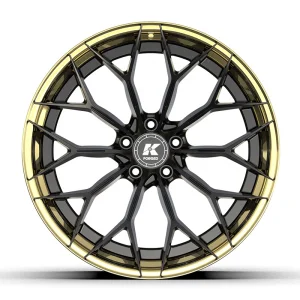
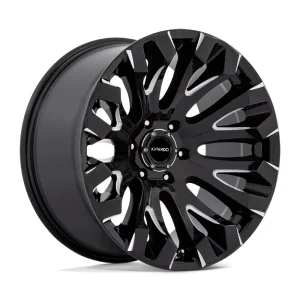
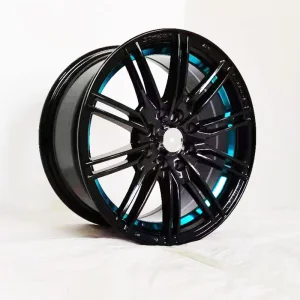
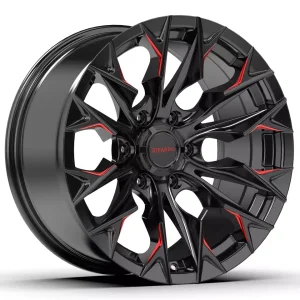
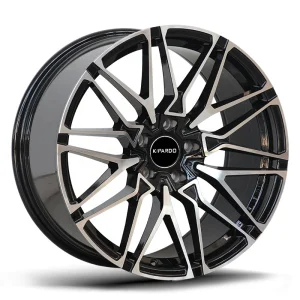
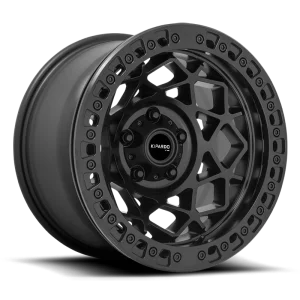
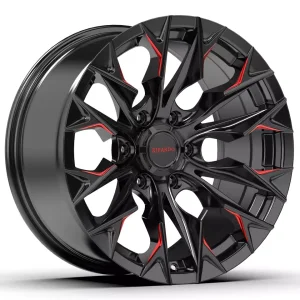
Explore our high-performance monoblock, multi-piece luxury, and reinforced off-road wheels produced with advanced metallurgy and CNC five-axis precision profiling.
Global Commercial & Industrial Landscape of Forged Wheels
The transition toward lighter, more rigid wheel architectures is accelerating worldwide, driven by automotive electrification, commercial fleet efficiency mandates, and demanding consumer performance expectations.
Electric Vehicle Dynamics & Un-Sprung Mass
Battery electric vehicles (EVs) exhibit high curb weights due to massive battery packs, placing immense cyclical stress on wheel hubs and rim flanges. Concurrently, reducing rotational un-sprung mass is crucial: every kilogram saved on a rotating wheel yields a rotational inertia advantage equivalent to saving up to 4 to 10 kg of static vehicle mass. Precision forging allows razor-thin spoke architectures capable of sustaining 950 kg to 1,200 kg wheel load ratings without structural compromise, directly expanding electric vehicle driving range by 4% to 7%.
High-Margin Aftermarket & Bespoke Luxury Demand
The global luxury automotive sector—spanning marques such as Porsche, Ferrari, Lamborghini, Rolls-Royce, and high-spec Mercedes-AMG platforms—demands tailored wheel fitments. Traditional gravity or low-pressure casting requires costly steel tooling investments ($15,000–$35,000 per mold set) and high minimum order quantities. In contrast, 6061-T6 billet forging leverages digital CNC machining, empowering bespoke tuning companies, boutique wheel brands, and OEM special vehicle operations (SVO) to order specialized sizes ranging from 18 to 30 inches with zero tooling penalty.
Strict Regulatory Compliance & Traceability
Automotive components entering major international markets face stringent scrutiny. In the European Union, the combination of CE marking for equipment safety and strict German Kraftfahrt-Bundesamt (KBA) / TÜV homologation frameworks (governed under ECE R124 and § 22 StVZO) requires verifiable raw material traceability, certified alloy grain alignment, and validated failure limits. Suppliers that provide comprehensive multi-standard testing documentation have become central pillars in global automotive supply chains.
Demystifying CE Certification & International Homologation for Forged Wheels
A rigorous engineering analysis of EU machinery directives, automotive component type-approvals, and destructive testing standards that govern global wheel road safety.
The Intersection of CE Marking & ECE R124
In international commerce, procurement specialists frequently specify CE Certification as a baseline indicator of product safety, health, and environmental compliance under European Machinery and General Product Safety directives. However, for highway passenger vehicles operating in the European Economic Area (EEA), wheels must also align with UN-ECE Regulation 124 (ECE R124) and national standards such as Germany’s ABE (Allgemeine Betriebserlaubnis) monitored by TÜV. Our manufacturing workflows are structured from the ground up to guarantee that forging blanks, CNC tooling geometry, and surface finishes satisfy both generic CE structural safety requirements and specialized type-approval benchmarks.
Finite Element Analysis (FEA) Verification
Before an aluminum billet encounters a machining spindle, every bespoke forging profile undergoes rigorous 3D non-linear Finite Element Analysis (FEA). We simulate tri-axial cyclic stress distributions, thermal dissipation curves during high-braking deceleration, and localized plastic deformation zones under dynamic radial fatigue. FEA simulations ensure that our lightweight pockets and backpad weight-saving profiles avoid critical resonance frequencies, preserving a minimum safety factor of 1.5× to 2.2× beyond specified vehicle gross axle weight ratings (GAWR).
Crucial Insight for Institutional B2B Importers:
A legitimate CE and JWL-verified automotive forged wheel is not defined merely by paper documentation. It represents an unbroken chain of quality control: from spectrometer chemical verification of each 6061 billet ingot, through ultrasonic non-destructive testing (NDT) for internal air pockets, to 100% pneumatic air-leak submersion tests and salt-spray testing exceeding 1,000 continuous hours.
| Testing Parameter | CE & ECE R124 (EU) | JWL / VIA (Japan & Asia) | SAE J2530 (North America) | Kipardo Forged Quality Control |
|---|---|---|---|---|
| Dynamic Cornering Fatigue | Simulates continuous cornering load for >1.0×10⁶ cycles without micro-fissures. | Bending moment validation between 1.0×10⁵ and 2.5×10⁵ cycles. | 1.0×10⁵ cycles at maximum calculated rated vehicle moment. | 1.5×10⁶ cycles verified; zero crack propagation detected via liquid penetrant. |
| Dynamic Radial Fatigue | Continuous rolling contact on drum at 1.5× to 2.5× nominal load for 2.0×10⁶ cycles. | 5.0×10⁵ cycles under accelerated tire inflation pressures. | 5.0×10⁵ to 1.0×10⁶ cycles according to rated tire diameter. | 2.5×10⁶ cycles benchmark with calibrated radial drum dynamometers. |
| 13° / 30° Impact Test | Striker mass dropped on rim flange to verify ductile deformation without tire blowout. | 13° striker drop simulating severe curb impact; no sudden air leakage allowed. | Drop impact testing on rim lip; structural fracture strictly prohibited. | 100% Passed; energy absorption verified with controlled ductile deflection. |
| Surface Corrosion (CASS) | 240 to 480 hours Copper Accelerated Acetic Acid Salt Spray exposure. | Corrosion testing standard JIS Z 2371; zero blistering permitted. | ASTM B117 salt spray up to 1,000 hours for OEM-grade finishes. | 1,000+ Hours CASS Verified; anti-corrosive clear electro-coat and powder primer. |
Chinese Manufacturing Efficiency: The Forging Hub Advantage
How state-of-the-art hydraulic presses, integrated domestic aluminum supply chains, and automated five-axis milling centers deliver unprecedented speed and margin advantages to global partners.
Massive 10,000-Ton Closed-Die Forging
The foundation of metallurgical superiority lies in raw pressing power. Our manufacturing partners employ 10,000-ton and 12,000-ton hydraulic forging presses that compress solid cylindrical 6061-T6 aluminum billets under extreme pressure. This closed-die multi-stage forging crushes the cast dendritic microstructure, eliminating porosity, cavities, and internal voids. The result is a continuous, unbroken grain flow along spoke and barrel contours, yielding a 300% increase in yield strength over gravity casting and a 40% enhancement over flow-forming techniques.
Automated 5-Axis CNC Machining Cells
China's industrial modernizations have established high-speed automated machining clusters that operate 24/7 with micron-level tolerances. Equipped with high-precision Fanuc and DMG MORI 5-axis CNC machining centers, our facility executes intricate 3D concave designs, complex directional multi-spoke profiles, and aggressive center bore weight relief pockets. In-line laser coordinate measuring machines (CMM) instantly inspect hub flatness, PCD pitch circle runout, and bead seat concentricity within ±0.05 mm tolerances.
Compressed Prototyping & Agile Fulfillment
Western forging houses frequently grapple with lead times extending from 16 to 24 weeks due to subcontracted billet acquisition, fragmented heat treatment facilities, and backlogged machining queues. Operating from Kunshan and Yangtze River Delta industrial ecosystems, Shanghai Rimax consolidates billet forging, T6 solution/aging ovens, automated robotic painting lines, and rapid export staging in a unified logistics corridor. Bespoke 1-off prototypes materialize in 7 days, with commercial container orders completed in 18 to 25 days.
Localized Engineering Application Scenarios
From high-torque electric powertrains and heavy armored civilian protection to desert overlanding and track motorsports, forged wheels deliver critical structural solutions.
1. High-Performance Electric Hyper-Sedans & SUVs
Platforms like Tesla Model S Plaid, Porsche Taycan Turbo GT, and Lotus Eletre generate instant torque outputs exceeding 1,000 Nm. Traditional cast rims often suffer from bead slipping, micro-deflections under high-G lateral loading, and rapid brake rotor heat entrapment. Our engineered 6061-T6 monoblock forged wheels feature knurled anti-slip bead seats that eliminate tire slipping during full-throttle launches, paired with aerodynamic spoke contours that draw hot air outward from carbon-ceramic brake assemblies.
2. Armored & Tactical Security Vehicles (B6/B7)
Armored passenger vehicles (e.g., Toyota Land Cruiser 300, Cadillac Escalade Guard) weigh between 4,200 kg and 5,500 kg. Standard wheels crack or shatter when encountering curbs or debris under evasive maneuvering. We engineer heavy-duty forged wheels certified to static wheel load ratings between 1,600 kg and 2,200 kg per wheel, integrating dedicated beadlock channels and inner run-flat tire supports designed for ballistic survivability and zero-pressure mobility.
3. Extreme 4x4 Off-Road & Overland Expeditions
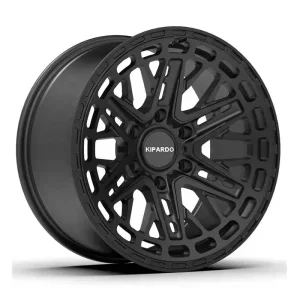
Traversing remote terrain across Australia, the American Southwest, or the Arabian Peninsula demands severe impact durability at deflated tire pressures (12–15 PSI). Our Kipardo 4x4 forged off-road wheels feature reinforced outer lips and high-clearing inner bells. Ductile 6061-T6 aluminum absorbs punishing boulder impacts by deflecting elastically rather than catastrophically cracking, safeguarding critical vehicle mobility in isolated environments.
4. Professional Circuit Racing & Track Day Builds
Motorsport teams require wheels that maximize braking response and tire contact patch consistency. With our 3-piece modular forged wheels, teams can adjust offsets, rim half widths, and backspacing per circuit track conditions. Polished forged 6061-T6 centers mated to spun aluminum barrels with high-tensile ARP aerospace hardware reduce rotational inertia, giving drivers faster throttle response, crisper turn-in, and late-braking stability.
Emerging Trends in Wheel Forging & Smart Metallurgy
The convergence of generative AI algorithmic design, hybrid carbon-alloy composites, and low-carbon green aluminum is reshaping the next decade of wheel manufacturing.
Generative Topology & AI-Driven CAD
Automotive wheel design is shifting from human aesthetic intuition to algorithmic optimization. Using generative AI topology engines, engineers input vehicle weight parameters, brake caliper clearance envelopes, and dynamic load vectors. The software iteratively removes unneeded material, resulting in organic, bionic spoke architectures that maximize rigidity-to-weight ratios. The resulting organic geometry can only be realized through 5-axis CNC machining of solid forged blanks, trimming up to 18% additional weight while maintaining identical load tolerances.
Hybrid Carbon-Fiber & Forged Assemblies
The pursuit of hypercar efficiency has given rise to hybrid multi-piece designs: a central CNC-machined 6061-T6 or 7075-T6 forged aluminum spider bolted to an autoclave-cured carbon-fiber barrel. This hybrid architecture lowers barrel weight by an astonishing 35% compared to pure aluminum while retaining the ease of custom PCD and offset machining provided by forged aluminum hubs, establishing the gold standard for high-end electric supercars.
Green Aluminum & Closed-Loop Circularity
European and American OEMs are increasingly enforcing Scope 1, 2, and 3 emission audits under new corporate sustainability directives. Traditional coal-powered aluminum smelting generates roughly 14–18 kg of CO₂ per kilogram of raw aluminum. Our partnering smelting sources are shifting to hydropower-smelted "Green Aluminum", cutting carbon emissions below 4 kg CO₂ per kg of aluminum. In addition, 100% of CNC swarf, cuttings, and trimming scrap are briquetted and recycled into verified secondary metallurgy within an unbroken chain of custody.
Global B2B Procurement Architecture & RFQ Checklist
A comprehensive technical guide for OEM procurement directors, brand founders, and regional wholesale importers looking to source forged wheel programs with zero defect rates.
1. Essential Dimensional & Brake Data (Fitment)
When issuing a Request for Quotation (RFQ), provide comprehensive 3D CAD step files or 2D dimension prints of the vehicle hub and brake caliper profile:
• PCD (Pitch Circle Diameter): e.g., 5x112, 5x120, 5x130, 6x139.7.
• Offset (ET): Millimeter distance from the wheel centerline to hub mounting pad.
• Center Bore (CB): Hub-centric bore tolerance (e.g., Ø66.5 mm, Ø72.6 mm) to guarantee zero vibrations without hub-rings.
• X-Factor Clearance: Caliper height and overhang profile to prevent spoke collisions with 6-piston or 8-piston performance brakes.
2. Surface Finishing & Environmental Protection
Forged wheels can be ordered with extensive surface treatment choices tailored to climate demands:
• Hand-Brushed & Tinted Clears: High-end artisanal directional brushing beneath translucent colored acrylic powder.
• Ceramic & PVD Mirror Polishing: Environmentally friendly Physical Vapor Deposition (PVD) eliminating toxic chrome plating.
• Anodizing: Hard-coat electrochemical oxidation for motorsport builds requiring extreme thermal durability.
• Diamond CNC Facing: Precise lathe facing generating an iridescent light-refracting face paired with contrasting gloss backings.
3. Private-Label OEM Branding & Packaging
To establish market presence, institutional buyers require complete turnkey private labeling:
• Custom Center Caps: CNC billet aluminum or carbon fiber caps featuring client-engraved logos.
• Laser Engraving: Rim lip or spoke edge laser inscription displaying load ratings, CE/JWL marks, serial numbers, and custom brand logos.
• Packaging Integrity: Double-wall export cartons (ISTA-certified), foam rim lip guards, moisture-barrier bags, and reinforced wooden pallets for secure ocean transit.
Bespoke Forged & Flow-Formed Collection (Part II)
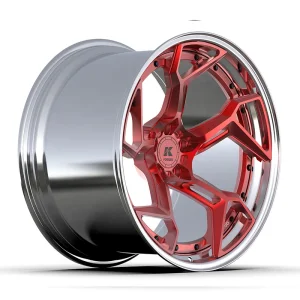
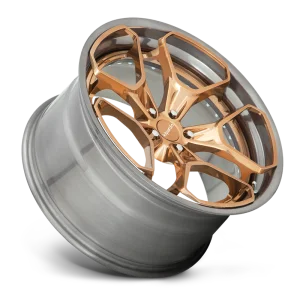
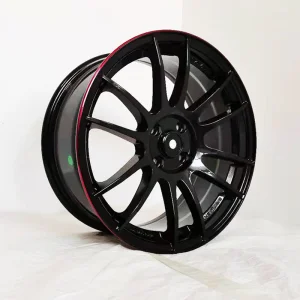
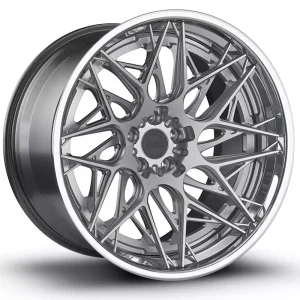
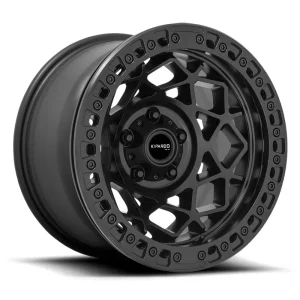
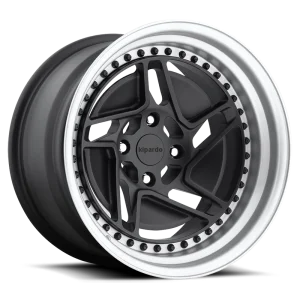
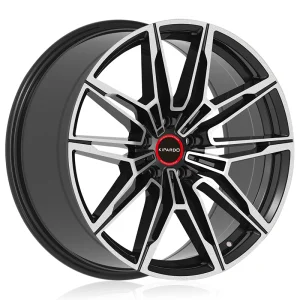
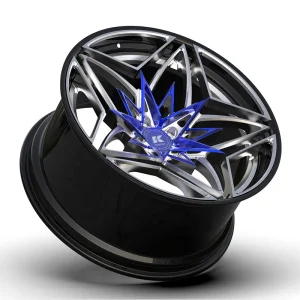
Review additional precision engineered wheels, spanning multi-piece forged assemblies, deep concave monoblocks, and specialized off-road fitments manufactured by Shanghai Rimax.
Frequently Asked Questions: B2B Sourcing & Homologation
In-depth answers addressing structural certification, minimum order quantities, manufacturing warranties, and technical metallurgical parameters.
Is Rimax a direct wheel manufacturer or an export trading intermediary?
What exact manufacturing technologies does Rimax supply across different budget tiers?
How does Rimax ensure CE Certification and compliance with European ECE R124 & TÜV regulations?
What warranty coverage is included with Kipardo and Rimax forged wheels?
What are the Minimum Order Quantities (MOQ) for custom bespoke forged wheels vs. cast series?
Can Rimax handle private labeling, custom wheel cap design, and localized fitment engineering?
Initiate Your Certified Forged Wheel Sourcing Program
Partner directly with an authoritative manufacturer capable of accelerating your design iteration, lowering unit acquisition costs, and safeguarding your brand with certified JWL/VIA and CE-compliant production. Request our full 2025 engineering catalog and technical pricing matrix today.