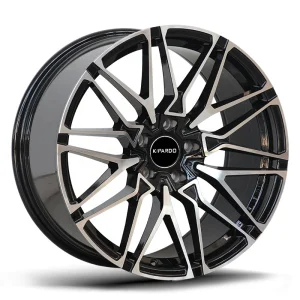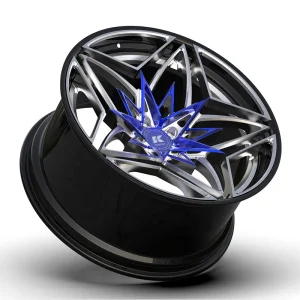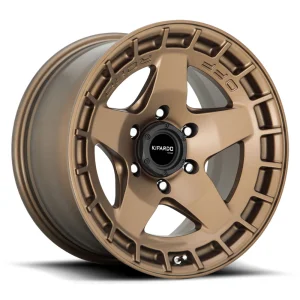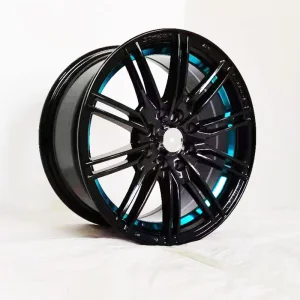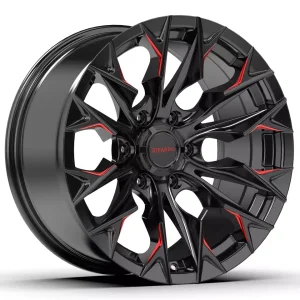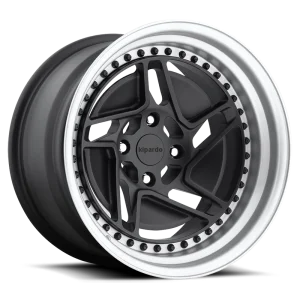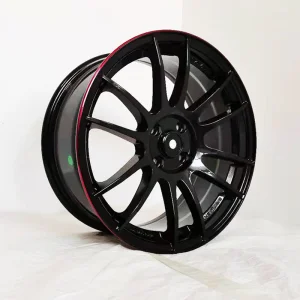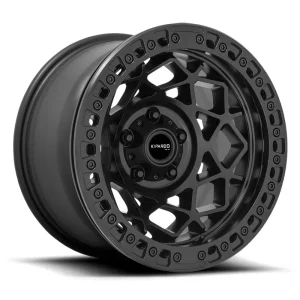
Flagship Forged & Cast Alloy Solutions
Engineered to exceed strict European automotive standards, our structural wheel platforms serve OEM assembly chains and tier-1 tuning distribution channels.
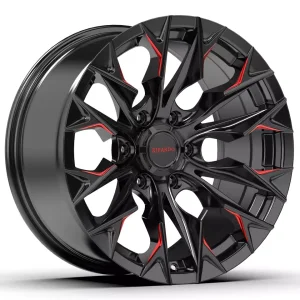
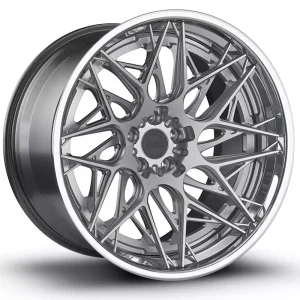
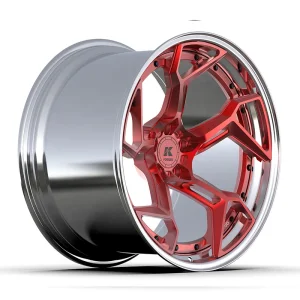
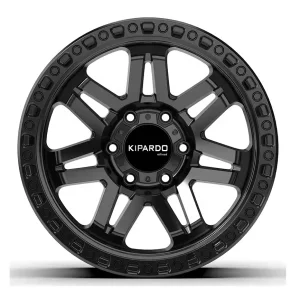
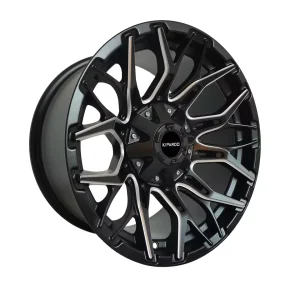
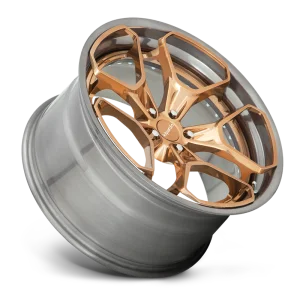
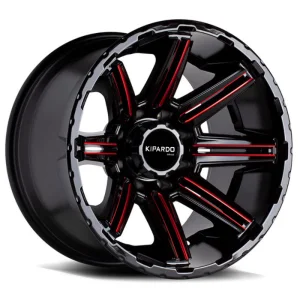
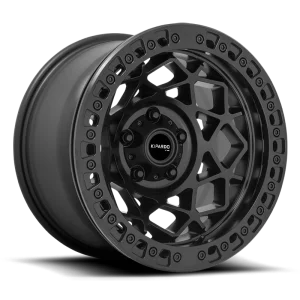
The Global Landscape of Forged Alloy Engineering
Accelerated by electric vehicle (EV) weight reduction targets and high-performance aftermarket demands, forged aluminum alloy wheels represent the technological apex of automotive running gear.
CE Marking & Structural Directives
Within the European Single Market, compliance with automotive structural directives demands uncompromised fatigue endurance. While wheels comply with UNECE Regulation 124, CE certification validates industrial equipment integrity, mechanical electromagnetic safety on smart machining lines, and structural conformity under stringent EU construction product regulations.
EV Mass Reduction Demands
Modern battery electric platforms (BEVs) face gross curb weights 25-35% higher than internal combustion counterparts. Forged aluminum wheels provide the essential solution: slashing un-sprung rotational mass by up to 30%, which directly extends regenerative battery range and reduces dynamic suspension loading.
Unified Testing Matrix
True international homologation bridges CE industrial standards with JWL, VIA, and SAE J2530 certifications. Facilities must maintain real-time bi-axial testing environments capable of simulating 100,000+ dynamic cornering cycles and high-velocity 13-degree impact thresholds without micro-fracturing.
6061-T6 Forging vs. Traditional Casting Paradigms
Grain flow alignment achieved under 10,000-ton hydraulic forging presses eliminates internal micro-porosity, optimizing mechanical tensile properties beyond any casting method.
| Performance Parameter | A356.2 Gravity / Low Pressure Cast | Rotary Flow-Formed Aluminum | Aerospace-Grade 6061-T6 Forged |
|---|---|---|---|
| Crystalline Grain Structure | Dendritic, isotropic with potential micro-porosity | Elongated, compacted grain in outer barrel | Continuous, unbroken grain flow lines oriented to load |
| Ultimate Tensile Strength (UTS) | 220 – 250 MPa | 280 – 320 MPa | 310 – 350+ MPa |
| Yield Strength (0.2% Offset) | 160 – 190 MPa | 210 – 240 MPa | 275 – 300+ MPa |
| Elongation at Break (%) | 3% – 5% | 6% – 8% | 10% – 14% (Superior Ductility) |
| Impact Resistance (13° Test) | Susceptible to brittle failure under extreme load | Moderate plastic deformation capability | High energy absorption; zero brittle fragmentation |
| Weight Reduction Efficiency | Baseline Reference (Heavy) | 10% – 15% Weight Reduction | 25% – 35% Weight Reduction |
China's Advanced Manufacturing & Cost Efficiencies
Leveraging the Yangtze River Delta and Greater Bay industrial corridors to deliver aerospace-grade metallurgy with unparalleled lead times and economic velocity.
10,000-Ton Isothermal Forging
Chinese production clusters integrate automated closed-die forging presses ranging from 8,000 to 12,000 metric tons. High-tonnage pre-forming consolidates solid 6061 billet cores, achieving uniform density that European boutique shops cannot replicate at volume.
Synchronized 5-Axis CNC Milling
High-speed dual-spindle machining centers cut cycle times by 45%. From initial facing to precision back-pocketing (weight saving pocket design), multi-axis toolpaths ensure structural runout tolerances within ≤0.2mm for exceptional high-speed road balance.
End-to-End Vertical Ecosystem
China hosts complete vertical loops within a 50km radius: raw primary aluminum smelting, specialized bar extrusion, automated T6 solution-aging furnaces, class-A automated powder-coating lines, and accredited non-destructive test facilities.
Mission-Critical Deployment Environments
Tailored load indexes and metallurgical resilience matched to distinct real-world use cases across global operating theaters.
Extreme 4x4 Off-Road & Overland
Reinforced spoke roots and internal beadlock machining prevent tire slipping during low-pressure rock crawling. Rated for 1,100 kg to 1,500 kg static load limits per corner, satisfying demanding overland expeditions and military patrol configurations.
Bespoke Ultra-Luxury & Exotics
Multi-piece modular designs (2-piece and 3-piece forged assemblies) featuring 6061-T6 forged centers paired with spun 5052 aluminum barrels. Hand-brushed surfaces, high-luster polishing, and anodized hardware engineered for low-volume, prestige applications.
Commercial Fleet & Armored Defense
Heavy-duty forged wheels engineered specifically for B6/B7 armored executive limousines and commercial transit fleets. Structural mass is strategically distributed around the bead seat and hub bore to absorb ballistic shocks and high-payload dynamic stresses.
Future Trends & Corporate Procurement Architecture
How tier-1 buyers, wholesale distributors, and brand owners navigate ESG mandates, inventory turnover, and design-to-delivery logistics.
Aero-Forged EV Dynamics
Integration of computational fluid dynamics (CFD) into forged face profiles. Directional aero-vanes and integrated carbon-fiber inserts minimize aerodynamic drag (Cd) while channeling forced air over carbon-ceramic brake assemblies.
Green Aluminum & Low-Carbon Audits
European importers increasingly mandate audited carbon footprints across the tier-2 supply chain. Utilizing hydro-powered smelting ingots reduces Scope 3 embedded carbon emissions below 4.0 kg CO2e per kg of finished aluminum alloy.
Agile Small-Batch OEM Customization
Gone are the days of mandatory 500-unit tooling commitments. Advanced flexible machining cells enable viable custom runs as low as 4 to 20 units for private-label tuning brands, maintaining rapid 15-day design-to-shipment lead times.
Transparent QA Documentation
Enterprise procurement demands end-to-end traceability: optical spectrometer alloy composition reports, Charpy impact test logs, ultrasonic subsurface flaw scans, and mill certificates directly tied to each production heat code.
Frequently Asked Technical & Sourcing Questions
Clear answers to crucial engineering, compliance, and supply chain logistics queries from global wheel importers.
What specific standards govern CE marking on forged aluminum wheels?
Why is 6061-T6 alloy preferred over 7075-T6 for automotive road wheels?
What are the exact testing parameters for JWL/VIA and CE structural certification?
Can Rimax supply custom offsets (ET), bolt patterns (PCD), and private-label packaging?
What are the production lead times for sample sets versus container-load orders?
Specialty Off-Road & Luxury Performance Fitments
From multi-piece staggered fitments to heavy-duty PCD configurations, browse additional solutions engineered for worldwide distribution.