
CE Certification Forged Concave Rims Manufacturers & Factories
White Paper Architecture: Global Engineering Standards, 10,000-Ton Forging Kinetics, and China's Advanced Supply Chain Ecosystem for Monoblock & Multi-Piece Concave Wheels.
Precision Engineering: Featured Concave & Forged Lineup
Factory-direct forged concave geometries and verified cast matrices engineered for rigorous dynamic cornering and uncompromised structural integrity.
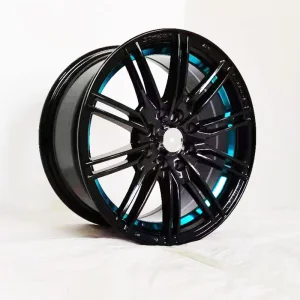
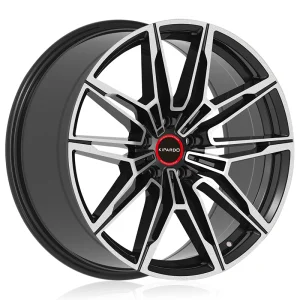
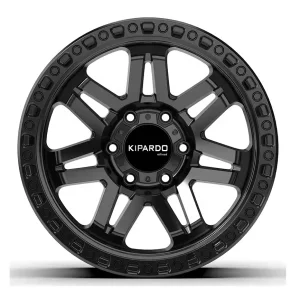
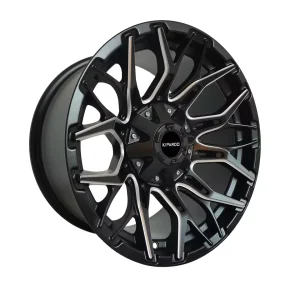
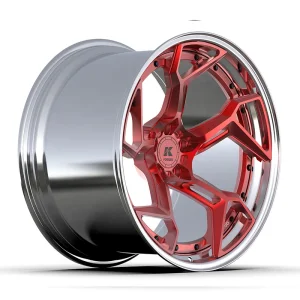
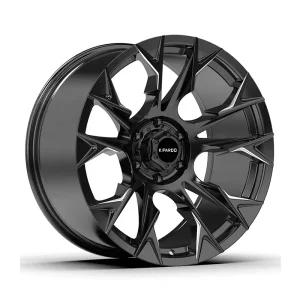
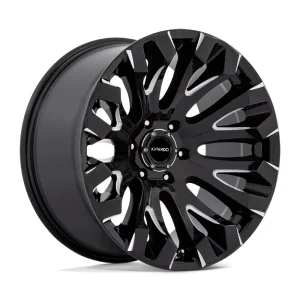
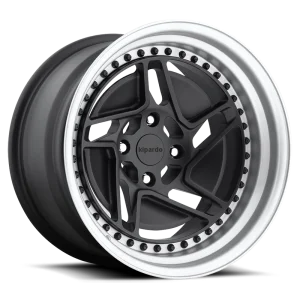
Commercial Landscape: Deep Concave Architecture & CE Regulatory Compliance
The international automotive aftermarket has transitioned drastically from standard flat-face layouts to high-offset deep concave profiles. Achieving maximum concavity while satisfying European CE and international safety standards requires a total paradigm shift in metallurgy and stress redistribution.
CE & EU Machinery Directives
Unlike standard generic components, wheel rims shipped within European economic boundaries face rigorous conformity verification. While CE certification on automotive mechanical components integrates with dynamic safety, materials assurance, and the EN 12480 / ISO 3006 framework, Kipardo guarantees that every concave profile complies thoroughly with essential health, functional, and impact protocols.
Non-Linear Finite Element Analysis
Forged concave rims suffer intense torsional forces at the transition zone between the hub mounting pad and spoke terminations. By deploying proprietary AI-assisted FEA simulations, our engineering teams identify stress concentration peaks prior to CNC profiling, redistributing structural mass to attain ultra-light net weights without sacrificing yield ratings.
B2B Capital Optimization
Global wholesale entities, tier-1 tuning studios, and regional distributors are navigating high freight rates and currency volatility. Sourcing directly from high-capacity Chinese manufacturing centers eliminates middleman markup, protects bottom-line margins with scalable volume pricing, and accelerates private-label SKU cycles.
Why China: Precision Automation & Rapid Production Scalability
The integration of automated 6061-T6 aluminum forging lines, synchronized multi-axis CNC milling, and localized raw-material infrastructure gives Chinese manufacturing centers unmatched efficiency.
Fully Integrated Metallurgy Cluster
Situated within prime industrial corridors, Rimax leverages instant access to high-purity A356.2 and 6061 aerospace-spec billets. Zero transport latency across ingot sourcing, mold casting, spinning, heat-treatment, and CNC facilities reduces our cycle lead times from months down to 14 working days for bespoke forged orders.
Multi-Axis High-Precision CNC Turning
Deep concave geometry mandates aggressive tool-clearance vectors to carve distinct multi-spoke profiles without causing thermal deflection. Our production facilities maintain state-of-the-art dual-spindle turning centers and 5-axis CNC routers that deliver sub-millimeter tolerances on bead seats, hub center-bores, and bolt pockets.
Rigid Metrology & Quality Control
Every single manufactured unit is subjected to industrial radiographic X-ray scanning, helium leak detection, dynamic balance verification, and coordinate-measuring machine (CMM) multi-point profiling. Destructive testing batches undergo radial fatigue, dynamic cornering, and rigorous 13-degree impact assessments before dispatch.
Engineering Matrix: Casting vs. Flow-Forming vs. Forged Concave
Engineers and procurement specialists must optimize the critical balance between unsprung rotating mass, grain boundary density, and cost per vehicle set.
| Evaluation Parameter | Low-Pressure Casting (LPDC) | Flow-Formed Technology (FF) | 10,000-Ton Forged Monoblock | Modular 2/3-Piece Forged |
|---|---|---|---|---|
| Raw Material | A356.2 Pure Aluminum Ingot | Pre-Cast A356.2 Blank | Aerospace Grade 6061-T6 Billet | 6061-T6 Center + 5052 Barrel Ring |
| Grain Structure | Random Crystalline Lattice | Elongated Radial Barrel Fibers | Continuous Dense Fiber Lines | Optimized Multidirectional Flow |
| Weight Reduction | Baseline standard | 10% - 15% Reduction | 25% - 35% Ultra-Lightweight | 20% - 30% Dependent on Hardware |
| Concavity Capacity | Moderate Profile Limit | Standard to Semi-Deep | Extreme Super-Deep Concave | Maximum Lip + Stepped Concave |
| Tensile Strength (Rm) | 220 - 250 MPa | 290 - 320 MPa | 350 - 390 MPa | 360 - 410 MPa |
| Typical Commercial Use | Volume OEM Replacement, Cast Retail | Performance Sedans, Track Day | Supercars, Hyper-EVs, Luxury Tuning | Widebody Stance, Bespoke Motorsport |
Global Fitment Ecosystems & Real-World Application Profiles
From European grand tourers to high-torque EV platforms and Middle Eastern sand dune rigs, concave rims require customized engineering across diverse terrains and braking systems.
High-Torque Performance Electric Vehicles
Modern performance EVs (Tesla Model S Plaid, Porsche Taycan, Lotus Eletre) impart enormous instantaneous torque onto the drive wheel hubs. Our forged concave wheels are engineered with reinforced inner rim flanges and specialized anti-slip knurling on bead seats, neutralizing tire slippage under rapid full-throttle acceleration.
High-Load Heavy Overland & 4x4 Off-Road
For large frame SUVs like Lexus LX/GX, Land Cruiser 300, and American trucks (Ford Raptor, RAM TRX), standard wheels crack under severe angular torsional loads. Our heavy-duty 6-lug concave forged lines offer load ratings of over 1,250 kg per corner, withstanding severe impacts and rocky trails with total confidence.
Large Brake Caliper Clearance (Big Brake Kits)
One major engineering hurdle of deep concave aesthetics is caliper clearance. By using our advanced 3D vehicle clearance database, our CAD engineers curate concave curvature radiuses that sweep clear of large 6-piston and 8-piston Brembo/Akebono carbon-ceramic brake packages without necessitating wheel spacers.
Strategic Procurement & 2025-2030 Wheel Sector Trends
Procurement executives are shifting from off-the-shelf catalog ordering to modular, agile supply chains that emphasize low MOQs, hybrid surface finishes, and carbon accounting.
Aero-Forging Hybrid Dynamics
The convergence of aerodynamics and deep concave styling has created the aero-forged category. Precision carbon-fiber inserts and CNC-milled air-vanes streamline turbulent wheel-well air, extending EV battery range while retaining aggressive performance aesthetics.
Low MOQ Flexible Manufacturing
Traditional suppliers demand large batch orders that tie up working capital. Shanghai Rimax offers customizable, boutique production runs with MOQs as low as 4 pieces for fully custom forged wheels, empowering brands to offer personalized finishes without dead inventory risk.
Complex Multi-Layer Finishes
Buyer demand has expanded past standard silver and black coats. Our facility features automated electrostatic powder coating, brushed-hand finishes, mirror ceramic polishing, PVD chrome, and durable candy-tinted protective topcoats that endure 1,000+ hours of continuous salt-spray testing.
Premium Off-Road & Multi-Piece Forged Collections
Discover high-spec aftermarket solutions, from rugged 6-hole off-road fitments to multi-piece modular forged wheels built for bespoke automotive builds.
-
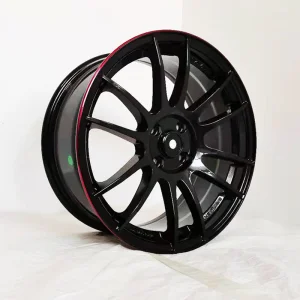
Cheap KIPARDO 15 inch 5x100 undercut red new japan design wheel Quotes, Products
-

-
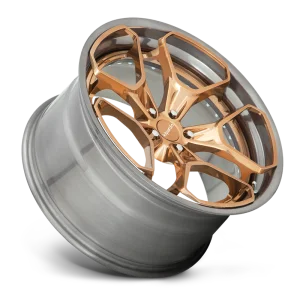
OEM Kipardo alloy wheels Forged car 3 pieces forged wheels 2 pieces,monoblock Manufacturer, Products
-
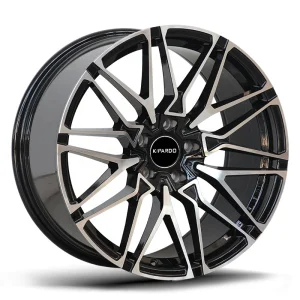
-
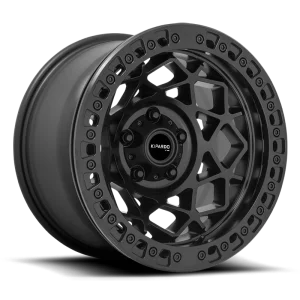
Buy KIPARDO manufacturer 6 holes 17 inch 4x4 wholesale aluminum alloy wheels rims Supplier, Quotes
-
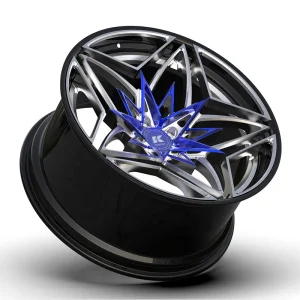
Custom Kipardo Custom 18 to 30 inch 2 Pieces forged wheels 3 Pieces forged Rims Pricelist, Exporters
-
-
Frequently Asked Questions: Technical & Sourcing Authority
Detailed answers addressing engineering validation, compliance certification, and international procurement standards for alloy wheels.