
Precision Monoblock & Extreme Multi-Piece Custom Forgings
Direct factory allocation offering turnkey PCD engineering, verified radial compliance, and optimized unsprung mass across high-performance profiles.
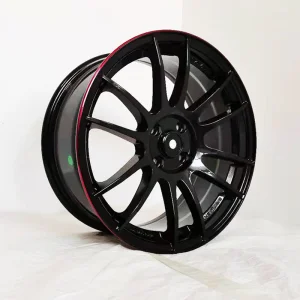
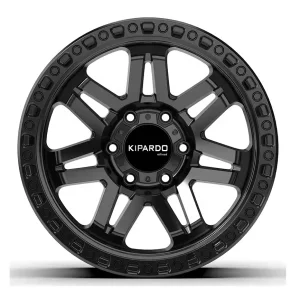
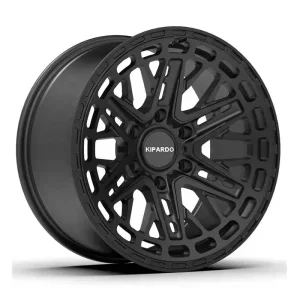
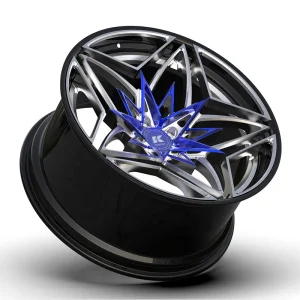
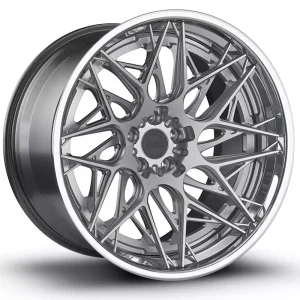
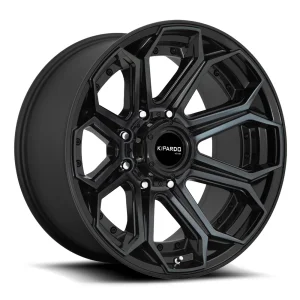
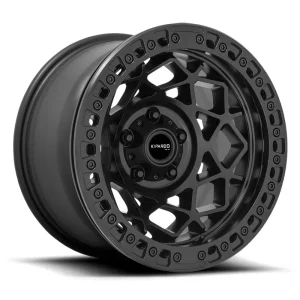
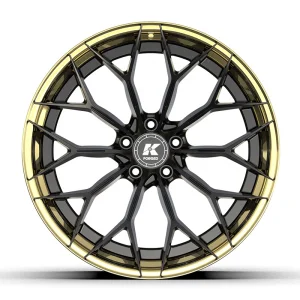
Global Commercial Status: Unlocking the Cost Paradigm of Forged Aluminum
How modern forging automation and integrated smelting corridors bridge the historical cost gap between casting volume and aerospace-grade structural integrity.
The "Cheap" Forged Wheel Paradox
Historically, aerospace-grade forged wheels carried a 300% to 500% retail price premium over traditional cast alternatives due to massive raw tooling expenses and lengthy machine-cycle times. In modern B2B fleet logistics, commercial defense, and performance distribution, the term "Cheap Forged Aluminum Wheels" does not signify substandard metallics. Instead, it denotes cost-optimized unit economics driven by multi-axis automation, high-speed closed-die friction forging, and zero-waste swarf recycling.
Aerospace 6061-T6 Grain Alignment
Unlike conventional A356.2 gravity or low-pressure casting where dendritic crystallization yields non-directional micro-porosity, 6061-T6 aerospace aluminum subjected to 10,000-ton forging presses undergoes complete grain refinement. The continuous metallic grain flows parallel to radial stress vectors across wheel spokes. This metallurgical integrity yields double the yield strength (276 MPa vs. 130 MPa) with 25% lower physical mass.
EV Range Extension & Commercial ROI
For high-mileage EV fleets, heavy-duty overlanding vehicles, and regional haulers, rotational rotational inertia directly governs watt-hour per mile metrics. By reducing unsprung peripheral mass by 3.5 to 5.2 kg per corner, forged wheels yield an observable 4–7% increase in EV operating range and reduce dynamic brake fade during long-gradient mountain descent.
Localized Operational Scenarios & Tailored Fitments
How regional duty cycles, extreme topographical profiles, and localized fleet dynamics dictate exact alloy selection and mechanical wheel offset profiles.
North American Overlanding & Heavy-Duty Towing
For full-size light-duty pickups (F-150, Silverado, Ram) and expedition rigs traversing rough backlands, wheels require extreme lateral impact resistance. Kipardo high-load forged platforms support up to 3,500 lbs (1,587 kg) per wheel while clearing massive aftermarket 6-piston brake calipers. Billet-forged 6061-T6 wheels resist bead unseating and rim cracking under severe 15-PSI trail deflection.
European High-Speed Touring & Strict TÜV Requirements
Sustained Autobahn velocities in excess of 200 km/h mandate dynamic radial run-out tolerances under 0.3mm. Forged concave monoblock designs distribute high-temperature braking loads directly across structural spoke bases, eliminating thermal degradation of wheel hub bearings during repeat deceleration cycles.
Middle Eastern High-Ambient Desert Dune Traversal
Ambient operational temperatures exceeding 50°C cause traditional cast wheels to experience rapid microstructural fatigue. Our specialized forged alloy formulations utilize precise artificial T6 aging conditions to eliminate internal thermal stresses, while high-velocity CNC milling clears sand accumulation around the center bore.
China Factory Supply Chain Resilience & Efficiency
Leveraging the Shanghai and Kunshan manufacturing clusters to deliver rapid tooling iterations, deep raw material hedging, and unmatched container loading economics.
Upstream Smelting & Energy Scale
Operating in proximity to direct smelting infrastructure allows Rimax to acquire verified prime aluminum billets without multiple remelt contamination phases. Integrated cold-chain transport of billets ensures predictable chemistry with minimal inclusions, reducing gas porosity down to imperceptible levels prior to high-pressure die forming.
Rapid CNC Tooling & Prototyping
Our Kunshan facilities operate parallel 5-axis DMG MORI CNC milling suites directly interfaced with parametric finite element analysis (FEA) software. New custom wheel profiles undergo CAD/CAM transition, spoke stress simulations, and physical machining within a rapid 14-day turnaround—compared to 8-12 weeks in Western toolmaking shops.
Deep Port Integration & Logistics Aggregation
Located near the world's highest-throughput port network in Shanghai and Ningbo, we offer integrated export processing: unified ocean booking, container pack optimization (increasing 40-foot HQ container fill by up to 18%), and streamlined export declarations with pre-cleared tariff documentation.
Comprehensive Engineering Comparison Matrix
Empirical analysis comparing standard low-pressure casting, flow-formed spin-forging, and billet 6061-T6 custom forgings.
| Performance Dimension | A356.2 Low-Pressure Cast | Rotary Flow-Formed | Billet Forged 6061-T6 |
|---|---|---|---|
| Alloy Base | A356.2 Aluminum Ingots | A356.2 / AlSi7Mg Alloy | Solid Aerospace 6061 Billet |
| Tensile Strength (Ultimate) | 220 – 250 MPa | 290 – 320 MPa | 310 – 350+ MPa |
| Yield Strength | 130 – 150 MPa | 190 – 210 MPa | 276 – 310 MPa |
| Elongation at Break | 3% – 5% | 6% – 8% | 10% – 14% |
| Weight Differential | Baseline (100%) | 10% to 15% Lighter | 20% to 30% Mass Reduction |
| Tooling & Mold Cost | High initial die tooling cost | Moderate tooling costs | Zero mold charge (Billet Machined) |
| Minimum Run Flexibility | 80–100 units / style | 60–80 units / style | Flexible small-batch (down to 4 units) |
| Primary Market Fit | Mass Aftermarket / High Volume | Performance Upgrades / Tier-2 EV | Luxury, Motorsport, High-End Offroad |
Worldwide Compliance Frameworks & Localized Support
Navigating complex international roadworthiness certifications, laboratory documentation, and warranty administration across key regions.
JWL & VIA Registration Mandates
Every Kipardo wheel configuration is engineered around Japan Light Alloy Wheel (JWL) and Vehicle Inspection Association (VIA) technical mandates. Our in-house testing labs execute non-destructive air-tightness checks, rotary bending fatigue testing exceeding 100,000 continuous cycles, and 13-degree unseating impact simulations.
US SAE J2530 & DOT Traceability
To support wholesale importers distributing within the North American automotive sector, wheels are permanently laser-engraved with batch lot serials, maximum static load ratings, manufacturing calendar stamps, and center-bore markings required by Federal Motor Vehicle Safety Standards (FMVSS).
Comprehensive Structural Warranty
Every commercial client benefits from our 5-Year / 100,000 KM factory structural warranty, supplemented by a 2-year warranty protecting against paint delamination, filiform corrosion, and chrome pitting. Direct English and Chinese customer support lines ensure issues are addressed without time-zone lag.
Technology Roadmap: 2025–2030 Light-Alloy Innovation
Forward-looking manufacturing research focused on generative AI topology, hybrid magnesium alloys, and closed-loop carbon-neutral production.
AI-Assisted Generative Spoke Topology
By implementing algorithmic stress mapping, our engineering wing designs complex spoke matrices that remove non-load-bearing mass. This generative topology achieves structurally sound profiles that are up to 12% lighter than conventional symmetrical monoblock wheels, while preserving maximum radial impact resistance.
Aero-Shield Hybrid Forged Modularity
Responding to electric vehicle demand for reduced drag coefficients, we are pioneering forged barrels integrated with snap-fit, autoclave-cured carbon fiber or lightweight composite aero-plates. This provides low rotational inertia along with aerodynamic cooling to protect EV battery and regenerative braking systems.
Closed-Loop Recycled Billet Processing
Aiming for stringent European CBAM (Carbon Border Adjustment Mechanism) compliance, our future-ready melting infrastructure integrates certified 100% renewable hydropower aluminum sourcing with immediate in-factory swarf re-extrusion, significantly cutting embedded carbon per exported wheel unit.
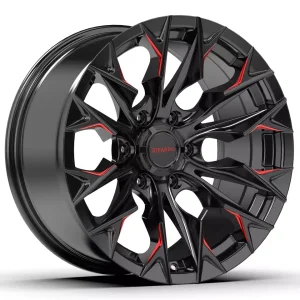
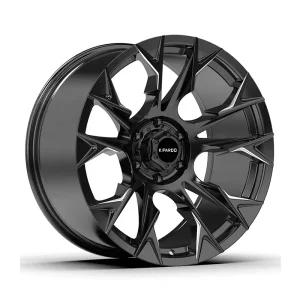
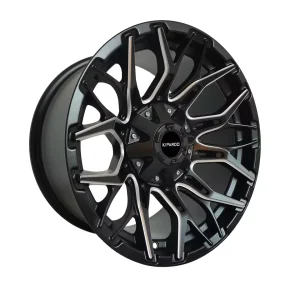
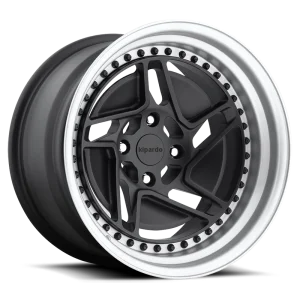
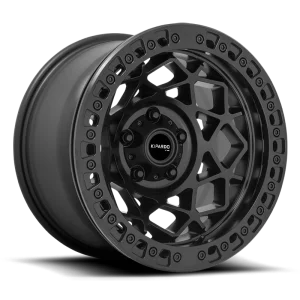
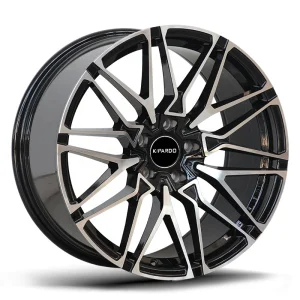
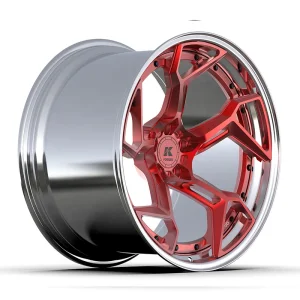
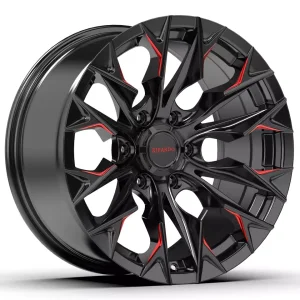
Multi-Lug Fitment Rims & Heavy-Duty Off-Road Forgings
Engineered for extreme rock-crawling, cross-country logistics, and high-performance concave aesthetic wheel profiles.
Frequently Asked Questions: Global Sourcing & Engineering
Direct answers addressing MOQ economics, structural validation, load capacities, and supply chain logistics.