
Catalog Selection Part I
High-Demand 18-Inch & Multisize Wheel Solutions
Direct-from-factory platforms spanning heavy-duty 4x4 overland, tuner monoblock concave, and multipiece custom engineering.
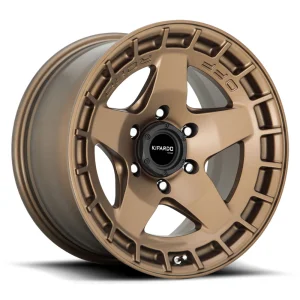
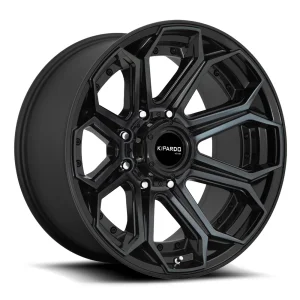
China Kipardo 17 18 Inch Aluminum Alloy Offroad Rims
Inquire Wholesale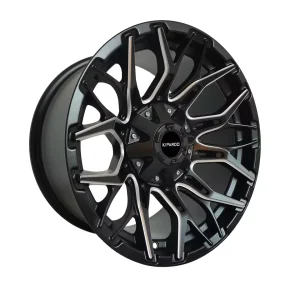
Cheap Kipardo 17-18" 5/6 Hole Custom Casting & Alloy Rims
Inquire Wholesale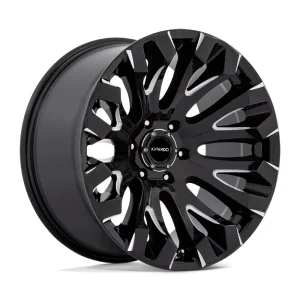
Wholesale Candy Red 4x4 PCD 6x139.7 / 5x150 Offroad Wheels
Inquire Wholesale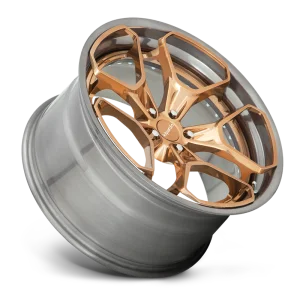
OEM Kipardo 1/2/3-Piece Monoblock & Modular Forged Rims
Inquire Wholesale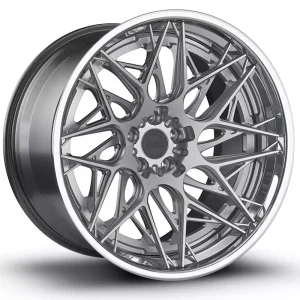
Discount Kipardo 18-24" Deep Concave 6061-T6 Forged Rims
Inquire Wholesale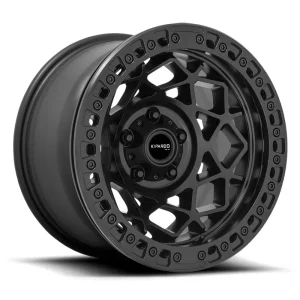
ODM Kipardo 17-20" Satin Black Cast Alloy 4x4 Offroad Rims
Inquire Wholesale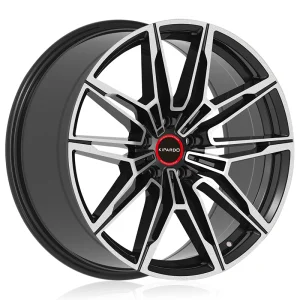
China Kipardo 18-20" Flow-Formed & Cast Alloy Offroad Wheels
Inquire Wholesale
Metallurgical Engineering
Redefining "Cheap" in 18-Inch Forged Wheels: Cost-Efficiency vs. Compromise
In global aftermarket wheel procurement, "cheap" has historically been associated with metallurgical porosity and structural liability. In contemporary advanced manufacturing, cost reduction is achieved purely through yield automation, forging force optimization, and vertical billet extrusion integration.
Aerospace 6061-T6 Billet
Every genuine forged 18-inch wheel initiates from solid extruded 6061-T6 aluminum-magnesium-silicon billet. By subjecting billets to 10,000–12,000 tons of hydraulic pressure, internal voiding is permanently crushed out, aligning the metallic crystalline grain structure along the stress vectors of the spokes.
Rotational Mass Advantage
An 18x9.0J monoblock forged wheel averages between 8.2 kg and 9.4 kg, compared to 11.5 kg to 13.8 kg for low-pressure cast equivalents. This ~25% reduction in unsprung rotational inertia delivers immediate benefits in transient steering response, braking distances, and suspension damping frequency control.
Fatigue Life & Ductility
Cast wheels exhibit brittle failure modes when exceeding yield point (elongation 4–6%). 6061-T6 forged rims offer 10–14% elongation under extreme impact. Instead of shattering over high-speed curbing or washboard trails, forged barrels deflect plastically, preserving vehicle trajectory and preventing immediate depressurization.
Engineering Matrix: 18-Inch Manufacturing Methodologies Compared
| Evaluation Parameter | A356.2 Gravity / LP Cast | Rotary Flow-Formed (Hybrid) | Monoblock 6061-T6 Forged |
|---|---|---|---|
| Billet / Ingot Density | Standard granular casting structure | Compacted outer rim, cast center spoke | Continuous directional grain flow (10,000T forge) |
| Yield Strength (Rp 0.2) | 160 – 190 MPa | 210 – 240 MPa (Barrel Only) | 275 – 310 MPa (Uniform throughout) |
| Tensile Strength (Rm) | 220 – 250 MPa | 260 – 300 MPa | 310 – 345 MPa |
| Material Elongation (A5) | 3.0% – 5.5% | 6.0% – 8.0% | 11.0% – 14.5% |
| Avg. Weight (18x8.5J) | 11.8 kg – 13.2 kg | 9.8 kg – 10.6 kg | 8.3 kg – 8.9 kg |
| Tooling & Mold Amortization | $3,500 – $6,000 per size/design | $4,500 – $8,000 per spec | $0 Tooling (Direct 5-Axis CAD/CAM Path) |
Advanced Manufacturing
China Industry 4.0: The Blueprint Behind Accessible Forged Production
Why can Tier-1 Chinese exporters deliver high-spec 18-inch forged rims at price tiers 50% below Western boutique suppliers? The competitive delta lies in automated industrial clusters, integrated smelting supply lines, and lights-out CNC machining efficiency.
Upstream Billet Smelting Integration
China accounts for over 58% of global primary aluminum processing capacity. Top wheel facilities in Jiangsu and Shandong provinces secure hot-metal alloy billets directly from domestic smelters, bypassing intermediate ingot shipping and remelting stages. This compresses virgin alloy cost variance and eliminates secondary oxidation inclusions, providing consistent density from initial billet cutting.
Lights-Out 5-Axis High-Speed Milling
Transitioning from casting to forging transforms wheel manufacturing from foundry work to CNC precision machining. Modern Chinese forging lines utilize synchronized multi-spindle 5-axis CNC work centers with automated robotic arm loading. Cycle times for an intricate 18-inch cross-spoke face have dropped from 210 minutes to under 42 minutes, drastically curtailing machine-hour overhead.
Zero-Tooling Digital Agile Manufacturing
Unlike casting, which demands steel tooling dies costing $5,000+ per SKU with 45-day lead times, 18-inch forged wheel variants operate on pure CAD/CAM programming. An importer can request a bespoke bolt pattern (e.g., 5x114.3, 5x120, or 6x139.7) and unique offset (ET15 to ET45) with batch runs as modest as 4 units, without tooling amortization surcharges.
Automated Surface Finishing Lines
Surface finishing of forged aluminum requires superior adhesion due to low porosity. Advanced plants run continuous electrostatic powder coating chambers, closed-loop diamond CNC wheel-face turning, and physical vapor deposition (PVD) chroming. This guarantees standard 720-hour neutral salt spray (ASTM B117) corrosion resistance, critical for salt-treated northern winter roads.
Market Dynamics
Why 18-Inch is the Golden Ratio for Global Aftermarket Commercialization
While 20- to 24-inch wheels serve aesthetic urban builds, 18-inch forged wheels represent the highest-margin, highest-velocity global market segment due to tire sidewall compliance, uncompromised brake clearance, and versatile cross-platform adaptability.
4x4 Overland & Work Platforms
Platforms like the Toyota Land Cruiser, Hilux, Ford Ranger, and Lexus GX demand 18-inch fitments (18x9J PCD 6x139.7). An 18-inch rim allows adequate tire sidewall volume (33" to 35" tires) for trail deflation, bead seat traction, and rock deflection while accommodating upgraded multi-piston off-road calipers.
Track Enthusiasts & Time Attack
Competitive sports platforms (BMW M-Chassis, Subaru WRX STI, VW Golf R, Toyota GR Yaris) rely on 18-inch monoblock forged wheels (18x8.5J to 18x10J) to clear 355mm–380mm rotors without adding steering resistance. The broad availability and economical replacement pricing of 18-inch semi-slick tires make this the default track dimension globally.
Commercial Fleets & Armored Vehicles
Specialty fleets require heavy-payload wheel engineering without the severe fuel consumption spikes associated with heavy steel wheels. High-load forged 18-inch wheels certified for 1,250 kg to 1,600 kg wheel loads satisfy security and defense standards while mitigating drivetrain strain on municipal and mining vehicles.
Catalog Selection Part II
Custom Multi-Lug & Tuner Forged Lineups
Engineered to order with custom offsets, finishes, and bolt patterns to fit Japanese, European, and American vehicle fitments.
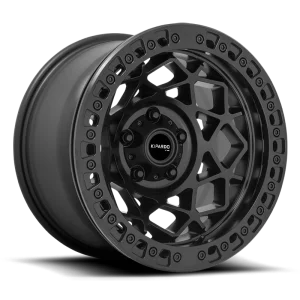
KIPARDO 6-Hole 17" Offroad Aluminum Alloy Wheels
Inquire Wholesale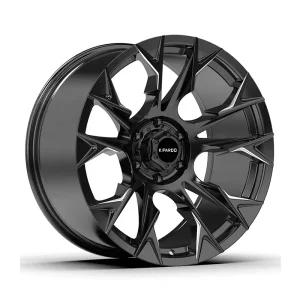
Custom Kipardo 20" 5/6 Hole Heavy-Duty Offroad Rims
Inquire Wholesale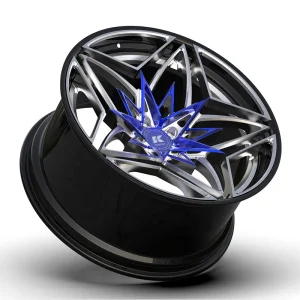
Kipardo 18-30" 2-Piece / 3-Piece Modular Forged Rims
Inquire Wholesale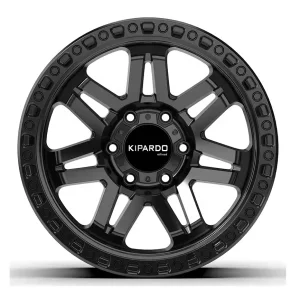
China Kipardo 17-18" 6-Hole Custom 4x4 Offroad Rims
Inquire Wholesale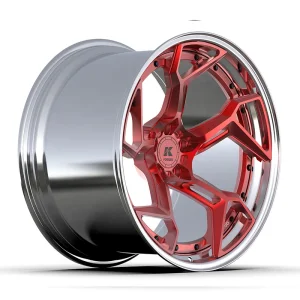
OEM Kipardo 18-22" 6061-T6 Concave Forged Tuner Rims
Inquire Wholesale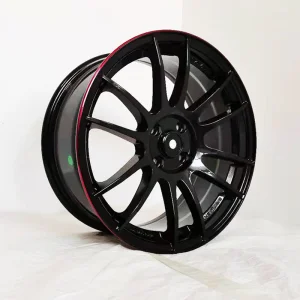
KIPARDO 15" 5x100 Undercut Red Japanese Tuner Style Wheel
Inquire Wholesale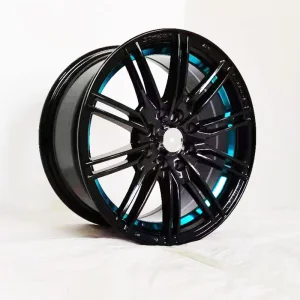
Wholesale KIPARDO 15" Gloss Black Machine-Face Rims
Inquire Wholesale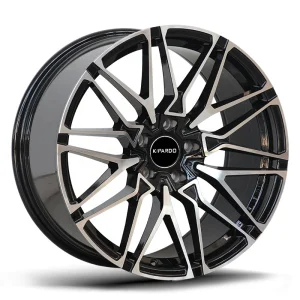
Custom Kipardo 19-22" Luxury Alloy & 4x4 Offroad Rims
Inquire Wholesale
Compliance & Quality Protocol
Global Validation Protocols: JWL, VIA, SAE J2530 & TÜV Testing
Exporting to stringent regulatory environments (United States, European Union, Australia, Japan) mandates strict compliance with destructive and non-destructive testing regimens. Every production lot is cleared against internationally certified benchmarks.
13° & 30° Dynamic Impact
Testing curb-strike survivability. A calibrated free-falling wedge strikes the tire-rim assembly at 13° (or 30° per SAE standard). Pass criteria dictate zero sudden air depressurization within 60 seconds, no visible fracture through the center hub or rim flange, and intact structural connection.
Dynamic Cornering Fatigue
Simulating extreme cornering g-forces. The hub pad is clamped while a bending moment arm applies continuous rotational cyclic stress up to 100,000 cycles. Forged 6061-T6 wheels consistently pass 2.5x the minimum required cycles without micro-fissuring or bolt torque loss.
Dynamic Radial Durability
Evaluating straight-line highway durability under 2.25x nominal vehicle axle load. Driven against a high-speed rotating drum for over 500,000 cycles. The continuous grain refinement of the forged barrel eliminates localized fatigue banding that typically triggers rim crack propagation.
B2B Procurement FAQs
Frequently Asked Questions: Sourcing 18-Inch Forged Wheels Direct
Practical commercial, engineering, and logistics intelligence for professional tire and wheel buyers.
What is the real difference between "Flow-Formed" and "Real Forged" 18-inch wheels?
Flow-formed (rotary forged) wheels begin life as a cast face (A356.2 aluminum) where only the barrel is spun and stretched over a mandrel. In contrast, genuine monoblock forged wheels are machined entirely out of a solid, 10,000-ton forged billet of aerospace-grade 6061-T6 aluminum. True forged wheels offer higher tensile strength throughout the spokes and hub, weigh roughly 15-20% less than flow-formed equivalents, and require zero mold charges for custom PCD or offset variations.
How can a factory offer cheap or low-cost forged wheels without compromising structural integrity?
Cost advantages in Chinese Tier-1 forging factories are derived from three factors: (1) upstream access to molten aluminum and direct-extruded 6061-T6 billets, (2) automated high-speed multi-axis CNC toolpaths that reduce milling time from hours to under 45 minutes, and (3) high-volume utilization rates. Unlike boutique western brands that purchase blank forgings at low volume, scaled Chinese exporters forge and machine in-house, cutting middleman markups by 40% to 60%.
What are the typical Minimum Order Quantities (MOQ) for custom private-label forged lines?
Because forged wheels are milled directly via CAM programming without hard steel tooling dies, standard MOQs for bespoke designs start as low as 4 pieces (1 car set) for custom orders, or 20–40 pieces for batch distributor runs with custom private-label branding, bespoke center caps, laser-engraved spoke logos, and customized export cartons.
How do you verify brake caliper clearance before starting CNC milling?
Our engineering team requests your target vehicle make, model, year, and brake caliper template (or OEM part number). Using 3D CAD modeling, our engineers cross-verify the X-factor (the clearance between the spoke inner wall and caliper face) to provide a minimum safety gap of 3.0mm–5.0mm, ensuring zero contact with oversize multi-piston aftermarket brake calipers prior to billet machining.
What warranties and surface finish certifications apply to imported forged wheels?
Every Kipardo forged wheel includes a standard 5-year / 100,000 km structural warranty against manufacturer defect or metal fatigue failure. Surface treatments (powder coat, clear coat, tinted lacquer, and brushed finishes) carry a 2-year warranty and are verified against ASTM B117 salt spray testing to withstand severe road salts, high brake dust, and UV exposure.