
High-Performance Forged & Cast Off-Road Rim Series
Engineered for exacting load thresholds, precision brake clearance, and JWL/VIA-verified durability across diverse luxury and off-road applications.
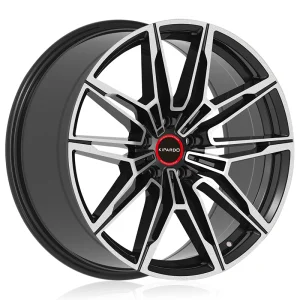
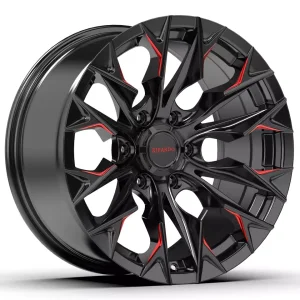
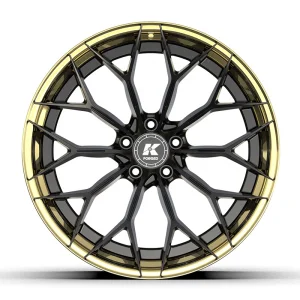
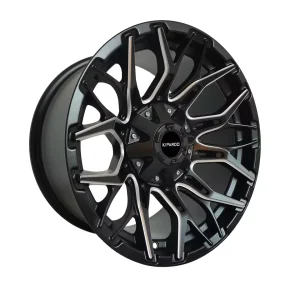
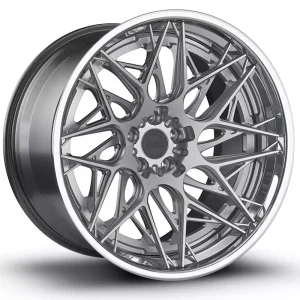
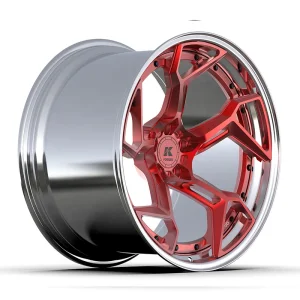
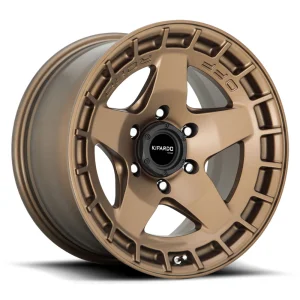
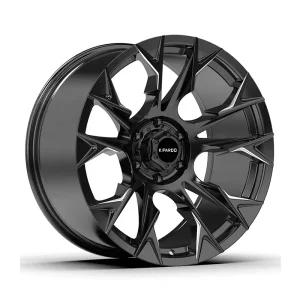
The Engineering Dynamics of 21-Inch Forged Wheel Manufacturing
A comprehensive analysis of metallurgical integrity, un-sprung mass mechanics, and structural grain refinement in 21-inch monoblock and modular wheel assemblies.
Continuous Grain Flow Alignment
Unlike casting where molten alloy cools with random dendrite formation, China's advanced 21-inch forging facilities subject solid 6061-T6 aluminum ingots to multi-directional compressive force exceeding 10,000 to 12,000 metric tons. This physical recrystallization aligns the internal crystalline lattice along the spoke contours, dramatically increasing yield strength (Rp0.2 ≥ 275 MPa) and ultimate tensile strength (UTS ≥ 310 MPa).
FEA Optimized Load-to-Weight Ratio
In 21-inch fitments, dynamic loads increase exponentially due to larger rolling radii and ultra-low tire aspect ratios (30–35 series). Utilizing advanced Finite Element Analysis (FEA), Chinese computational engineers simulate 13-degree impact vectors, cornering fatigue stress risers, and radial load cycles to machine away non-structural mass. The result is a wheel that minimizes moment of inertia without compromising wheel barrel strength.
Thermal Dispersion & Caliper Clearance
Modern luxury performance platforms and heavy electrified platforms feature massive carbon-ceramic or multi-piston steel brake discs ranging from 380mm to 420mm. 21-inch forged architecture engineered in China allows for ultra-deep inner drop centers and slim yet immensely rigid spoke geometry, optimizing convective cooling airflow across brake pads while maintaining strict OE hub tolerances.
| Performance Indicator | 21-Inch Gravity Cast | 21-Inch Low-Pressure Cast | 21-Inch Flow-Formed (Rotary) | 21-Inch 6061-T6 Forged Billet |
|---|---|---|---|---|
| Yield Strength (Rp0.2) | 120 – 140 MPa | 160 – 180 MPa | 210 – 230 MPa | 275 – 310 MPa |
| Typical 21x10.5J Weight | 18.5 – 21.0 kg | 16.5 – 18.0 kg | 14.0 – 15.2 kg | 10.8 – 12.2 kg |
| Internal Microstructure | Porous, random crystal | Moderate density | Compressed barrel grain | Zero porosity, aligned grain flow |
| Impact Resistance (13° drop) | Susceptible to brittle fracture | Standard compliance | High rim lip ductility | Maximum ductile deformation limit |
| Custom Offset / PCD Versatility | Fixed mold restricted | Fixed mold restricted | Semi-custom machining | 100% Bespoke CNC Programming |
Why Tier-1 Importers Consolidate 21-Inch Forged Production in China
Unrivaled vertical integration across billet casting, multi-axis machining centers, eco-friendly surface finishing, and direct ocean export hubs.
Mega-Scale Industrial Clusters
China's Yangtze River Delta (encompassing Jiangsu and Shanghai) and Shandong manufacturing corridors concentrate more than 65% of global wheel engineering capacity. Aluminum smelting, T6 thermal aging installations, billet extrusion, toolmaking, and diamond-cutting facilities operate within localized geographic radii, compressing raw material transit and cycle lead times from months to mere weeks.
High-Precision 5-Axis CNC Milling
Chinese forged rim producers deploy automated Haas, DMG MORI, and high-speed multi-spindle CNC milling units. These machines mill concave spoke profiles, aggressive weight-reduction pocketing, and intricate back-pad pocketing within ±0.02 mm tolerances, ensuring absolute rotational balance (dynamic imbalance ≤ 10g per plane) before the wheel ever enters manual finishing.
Advanced Surface Metrology
Surface finishing in Chinese forged operations goes far beyond wet paint. Capabilities encompass ceramic hand-polishing, multi-stage brushed transparent tinted clears (Liquid Bronze, Titanium Tint, Candy Red), PVD chrome plating, and electrostatic powder coats rigorously tested against ASTM B117 salt spray exposure for 1,500+ hours without blistering or oxidation.
Emerging Technologies Shaping the 21-Inch Forged Wheel Landscape
From electrification-driven load indexes to computational generative aesthetics and multi-piece modular evolution.
Electric Vehicle (BEV) Load Requirements
The global surge in premium electric SUVs and hyper-sedans (Porsche Taycan, Tesla Model S Plaid, Lotus Eletre, Audi e-tron GT) has transformed wheel structural requirements. With curb weights frequently surpassing 2,400 kg and instantaneous torque delivery exceeding 1,000 Nm, traditional wheels suffer from torsional flex and fatigue. China's wheel design centers are re-engineering 21-inch forged blanks with reinforced spoke-to-rim transitions, knurled bead seats to halt tire bead slippage under high-torque acceleration, and increased wheel load certifications up to 1,050 kg per corner.
Aero-Blade & Carbon Hybrid Integration
Aerodynamic efficiency directly dictates electric driving range. The next frontier in 21-inch Chinese wheel manufacturing combines precision CNC-machined forged aluminum structural spokes with modular dry-carbon fiber or aerospace-polymer aero inserts. These inserts smooth airflow across wheel wells, reducing turbulent aerodynamic drag coefficients (Cd) by up to 3.5% while sustaining the ultra-low rotational mass that only a forged backbone can deliver.
Fitment Archetypes & Vehicle Engineering Platforms
Tailored structural configurations designed specifically for high-stress operational parameters.
Ultra-Luxury Flagship Sedans
Primary Fitments: Mercedes-Maybach S-Class, Bentley Flying Spur, BMW 7-Series, Rolls-Royce Ghost.
Engineering Focus: Acoustic resonance suppression and ultra-low radial runout (≤ 0.3mm). Floating center cap assemblies engineered with micro-balanced internal counterweights remain upright during rotation, complementing polished mirror and two-tone brushed finishes.
Super-SUVs & High-Output Crossovers
Primary Fitments: Lamborghini Urus, Aston Martin DBX, Porsche Cayenne Turbo GT, BMW X5M/X6M.
Engineering Focus: Deep concave spoke profiles with aggressive hub drops that clear 10-piston front brake calipers. Reinforced rim flanges resist dynamic lateral g-forces during high-speed cornering on 21x10.5J front and 21x12J rear staggered arrangements.
Armored & Tactical Protection Vehicles
Primary Fitments: Armored Toyota Land Cruiser 300, Defender 110 VR7/VR9, Cadillac Escalade Executive Shield.
Engineering Focus: Specially forged monoblocks rated for 1,600 kg to 2,200 kg load capacity per wheel. Engineered to accommodate internal composite run-flat beadlock systems that allow emergency egress over 50 km even after total tire pressure deflation.
End-to-End Quality Validation: From CAD Geometry to Export Pallet
A zero-compromise testing workflow modeled after international JWL, VIA, SAE J2530, and TÜV industrial standards.
Digital Engineering & Computational Stress Mapping
Every custom 21-inch forged blank undergoes complete 3D digital parameterization. Structural simulations calculate high-cycle fatigue, von Mises stress zones, and brake caliper clearances prior to CNC machining, preventing costly redesigns or tooling errors.
Billet Extrusion & Multi-Directional Forging
6061 aluminum alloy cylinders undergo controlled heating to roughly 450°C before being loaded into high-tonnage hydraulic presses. 10,000 to 12,000 tons of isotropic compressive pressure shape the cylinder into a near-net shape blank, creating an unbroken crystalline matrix.
Rotary Flow-Spinning of the Wheel Barrel
The forged pre-form is mounted on specialized rotary spinning machines. Multi-roller hydraulic pressure stretches and rolls the barrel to the desired 21-inch profile and width, yielding ultra-dense outer and inner rim lips with superior structural ductility.
Solution Heat Treatment & T6 Aging
Spun rims undergo strict solution thermal cycles at 530°C followed by immediate water quenching within seconds to freeze the metallurgical grain state. Artificial aging at 175°C for 8 to 12 hours maximizes tensile elasticity and yields uniform Brinell hardness (HBW ≥ 95).
5-Axis CNC Precision Machining & Lightening Pockets
High-speed milling centers execute custom PCD patterns, center bore boring, spoke profiles, and rear weight-reduction pocketing. Toolpaths are optimized to eliminate burrs and guarantee perfect dynamic concentricity.
Destructive & Non-Destructive Lab Testing
Random production samples face dynamic cornering fatigue (100,000+ cycles), radial durability testers, and 13-degree heavy pendulum impact tests. In-line immersion testing and helium mass spectrometers confirm 100% airtight structural integrity for tubeless tires.
Global Enterprise Sourcing & OEM Private-Label Wheel Programs
How wholesale buyers, tuning brands, and automotive groups structure profitable, risk-insulated forged wheel procurement pipelines with Chinese manufacturers.
Low-MOQ Rapid Prototyping
Unlike casting lines which demand massive steel die tooling commitments ($5,000 to $12,000 per size) and hundreds of minimum order units, forged wheel manufacturing runs on digital CNC machining code. Overseas brand owners can prototype bespoke 21-inch wheel designs with MOQs as low as 1 to 4 sets, drastically shortening time-to-market for specialized tuning catalogs.
Turnkey Private-Label Ecosystem
Chinese OEM suppliers offer comprehensive white-label programs. From customized center caps with your brand's CNC-engraved emblem, color-matched branded valve stems, and personalized spoke milling to serialized quality documentation and drop-tested export cartons (double-corrugated with foam rim lip protectors), your brand ships market-ready directly from the factory floor.
Container Consolidation & Tariffs
Mature exporters manage full container load (FCL) optimization (fitting up to 450–550 units of 21-inch wheels per 40HQ container using space-saving nesting protocols) and less-than-container (LCL) consolidation. Sourcing directors benefit from DDP, CIF, and FOB terms with validated HS codes (8708.70) and certificates of origin for predictable duty clearance.
Connect with our Senior Engineering & Sourcing Team
Whether you require complete 3D FEA data validation for a new 21-inch design, custom offsets for a staggered luxury platform, or a private-label container program, our Kunshan engineering facility provides end-to-end technical stewardship.
Initiate Technical ProjectEngineering & Procurement Clarifications for Wheel Importers
In-depth insights into tolerances, testing methodologies, warranties, and technical customizations.
What makes 6061-T6 aerospace aluminum superior for 21-inch wheels compared to cast A356.2?
Can a Chinese factory engineer custom PCD, ET (offset), and center bore for bespoke applications?
What structural warranties and test certifications accompany 21-inch forged rims?
What is the difference between 1-piece Monoblock and 2-piece / 3-piece modular forged wheels?
How does unsprung weight reduction on a 21-inch wheel improve vehicle performance and EV range?
What are the typical lead times and MOQ for OEM/ODM private-label forged wheel programs?
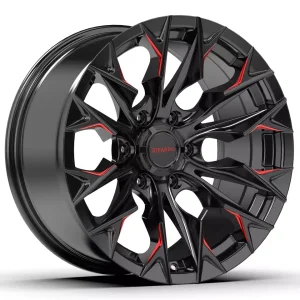
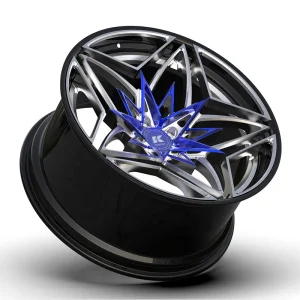
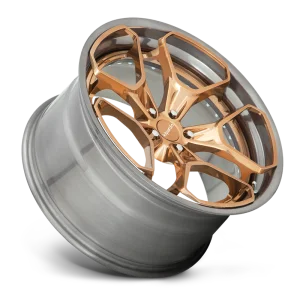
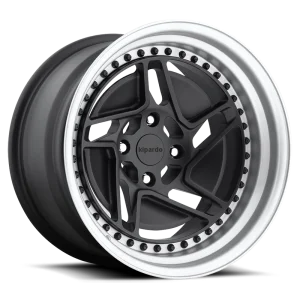
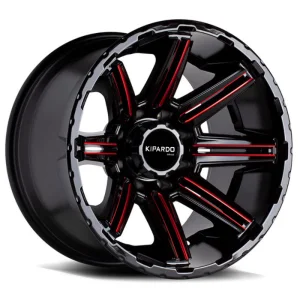
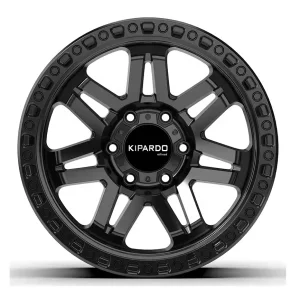
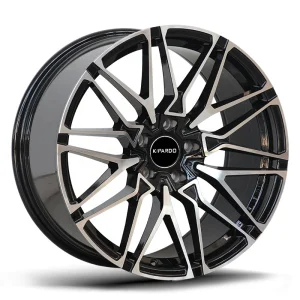
Custom Luxury Forged, Multi-Piece & High-Load Off-Road Wheels
Precision CNC-engineered 2-piece, 3-piece, and monoblock alloy designs built to withstand extreme mechanical loads.

Engineering Certainty for Your Global Wheel Enterprise
Combining precision metallurgy, dynamic computational simulation, and Tier-1 Chinese manufacturing scale.
Metallurgical Traceability
Every 21-inch wheel forged in our facility carries a laser-etched matrix tracking billet heat lot, T6 thermal chamber log, and operator identification for complete accountability across the product lifecycle.
Finish Durability
Multi-stage pretreatment followed by multi-axis robotic electrostatic powder clears ensures exceptional protection against UV oxidation, micro-abrasions, brake dust pitting, and harsh winter road de-icers.
Logistical Reliability
Strategically positioned near Shanghai and Ningbo maritime hubs, Rimax Industry ensures consistent ocean shipping schedules, automated export documentation, and smooth customs clearance for importers worldwide.