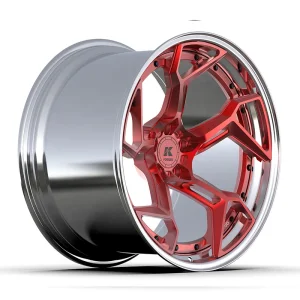
Precision Forged & Cast 5x120 Wheel Inventory
Engineered for high torsional rigidity, unsprung weight optimization, and certified load-bearing performance across luxury sedans, performance tracks, and heavy-duty 4x4 platforms.
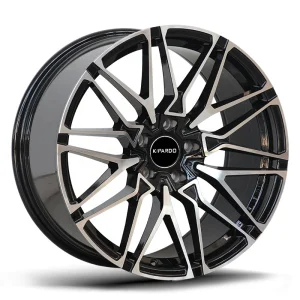
Custom Kipardo 19 20 21 22 inch factory custom wholesale luxury alloy rims aluminum 4x4 offroad wheels Exporter, Service
View Specifications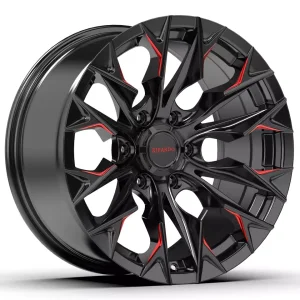
Cheap Kipardo 16 17 18 inch 6 hole custom casting car aluminum alloy rims 4x4 offroad wheels Exporters, Service
View Specifications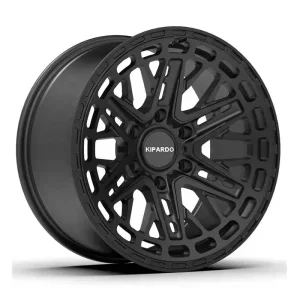
Wholesale Kipardo China factory 20 inch 5 6 hole alloy rims aluminum 4x4 offroad wheels Supplier, Factories
View Specifications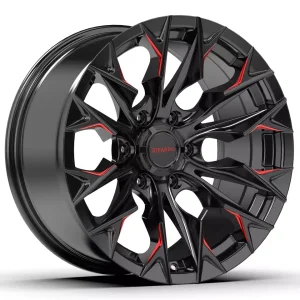
Discount Kipardo RTS 17x9 4x4 alloy car wheels with pcd 6x139.7 6x114.3 5x150 velg offroad wheels Quotes, Exporter
View Specifications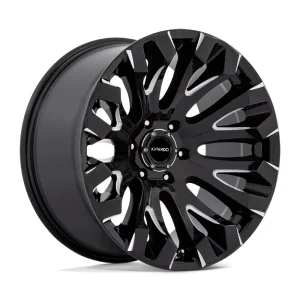
Wholesale Alloy wheels rims 20X8 20X10,4x4 rines wheels candy red 16x8 17x9 pcd 6x139.7 5x150 offroad wheels Supplier, Exporters
View Specifications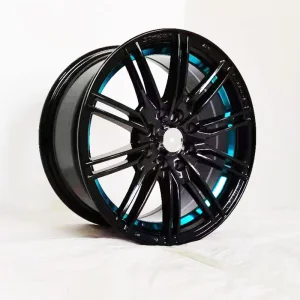
Wholesale KIPARDO 15 inch black color machine face alloy wheel rims for sale Manufacturer, Quotes
View Specifications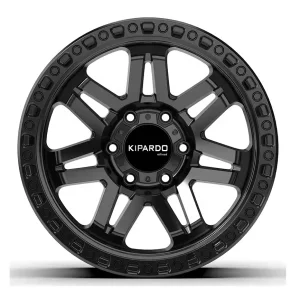
China Kipardo 17 18 inch factory wholesale 6 hole custom car aluminum alloy rims 4x4 offroad wheels Supplier, Service
View Specifications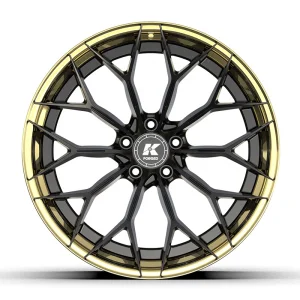
OEM Kipardo Luxury forged wheels 3 Pieces forged Rims Manufacturers, Companies
View SpecificationsThe Global Commercial Status of the 5x120 PCD Standard
Why the 5x120mm pitch circle diameter remains an evergreen, high-margin pillar for international automotive aftermarket wholesalers, tuning brands, and commercial fleet suppliers.
Historical & Modern OEM Heritage
The 5x120 PCD geometry is one of the most prolific bolt patterns in automotive history. Long considered the golden engineering standard for decades of Bavarian luxury flagships (BMW 3, 5, 7, M-Series, X5/X6), it continues to dominate premier global platforms.
Beyond traditional European touring cars, the pattern anchors high-torque applications such as the Land Rover Range Rover / Discovery lineage, the Honda Civic Type R (FK8 chassis), the Chevrolet Corvette / Camaro, and high-performance electric vehicles including early Tesla Model S and Model X architectures.
Unsprung Weight vs. EV Battery Loads
As vehicle curb weights surge past 2,400 kg due to battery pack mass in contemporary performance EVs and luxury hybrids, rotational unsprung mass becomes a critical engineering constraint. Cast wheels often struggle to deliver acceptable fatigue limits without excessive weight penalty.
China's specialized forged wheel manufacturers utilize solid 6061-T6 aluminum billets, yielding tensile strengths beyond 310 MPa. This structural advantage permits ultra-lean spoke profiles while guaranteeing wheel load ratings from 850 kg to over 1,050 kg per corner.
High Market Capitalization for Tuners
In wholesale and distributor channels across North America, Europe, the GCC, and Australasia, 5x120 forged inventory represents premium tier margin capture. Enthusiasts demand bespoke widths, extreme deep concave geometry, and custom brake caliper clearances.
By partnering directly with a tier-1 Chinese forged supplier, brand owners bypass intermediate trading layer markups, gaining access to full parametric CAD customization, FEA simulation files, and white-label private packaging.
China's Manufacturing Efficiency & Technological Superiority
How cutting-edge 10,000-ton hydraulic forging, automated 5-axis CNC workcells, and an integrated supply chain give Chinese factories an insurmountable speed-to-market advantage.
10,000-Ton Forging Press Capacity
Unlike standard cast or low-pressure setups, our partner forge facilities utilize automated 8,000 to 12,000-ton closed-die hydraulic forging presses. The intense isotropic pressure compacts the aluminum crystalline structure, aligning microscopic grain flows along the contour of the rim and spokes to eliminate internal porosity entirely.
High-Precision 5-Axis CNC Milling
Every 5x120 forged wheel blank undergoes high-speed subtractive machining on Japanese and German 5-axis CNC machining centers. This enables complex undercut spoke architecture, back-pad weight-reduction pocketing, and intricate diamond-cut faces with dimensional tolerances held to within ±0.05mm.
Agile Prototyping & 14-Day Lead Times
While European and US boutique forge shops frequently require 8 to 16 weeks of production lead time, our digitized engineering chain converts custom 3D customer concepts into photorealistic CAD renderings within 24 hours, FEA simulation within 48 hours, and physical finished sets within 14 business days.
Supply Chain Cluster Integration
Located in the heart of China’s automotive manufacturing corridors (Jiangsu, Zhejiang, and Shandong hubs), our production facilities benefit from direct raw alloy ingot sourcing, specialized robotic powder coating lines, automated PVD chrome facilities, and high-volume packaging suppliers within a 50 km radius.
Metallurgical & Structural Benchmark: Forged vs. Alternative Processes
A rigorous metallurgical comparison showing why 6061-T6 aerospace forged aluminum outperforms gravity casting, low-pressure casting, and rotary flow-forming in heavy mechanical stress tests.
| Evaluation Parameter | Monoblock Forged (6061-T6) | Modular 2-Piece / 3-Piece Forged | Flow-Formed (Rotary Spun) | Low-Pressure Cast (A356.2) |
|---|---|---|---|---|
| Raw Material Composition | Solid Aerospace Grade 6061-T6 Ingot | 6061-T6 Disc + 5052-H34 Spun Rim Barrel | A356.2 Liquid Cast Aluminum Ingot | A356.2 Liquid Primary Ingot |
| Yield Strength (Rp 0.2) | 275 – 310 MPa | 260 – 295 MPa | 180 – 220 MPa | 120 – 160 MPa |
| Tensile Ultimate Strength (Rm) | 310 – 350 MPa | 300 – 340 MPa | 240 – 280 MPa | 200 – 240 MPa |
| Elongation at Break (δ) | 12% – 16% (High ductile buffer) | 10% – 14% (Ductile rim flange) | 6% – 9% (Moderate ductility) | 3.5% – 6% (Brittle fracture risk) |
| Average Weight (19x9.5 Fitment) | 8.8 kg – 9.6 kg (-28% vs Cast) | 9.8 kg – 10.6 kg (-20% vs Cast) | 10.4 kg – 11.2 kg (-14% vs Cast) | 12.8 kg – 14.2 kg (Baseline) |
| Fatigue Resistance (Cycles) | > 1,000,000 cycles (Cornering fatigue) | > 800,000 cycles (JWL compliant) | > 500,000 cycles (Standard rating) | > 300,000 cycles (Threshold rating) |
| Bespoke Offset / Width Flexibility | Infinite (Milled directly from CAD) | High (Modular step lips / inner barrels) | Limited (Dependent on fixed tooling) | Rigid (Restricted to permanent mold) |
Precision Fitment Scenarios for 5x120 PCD Applications
A comprehensive vehicle database guide detailing center bores, hub-centric tolerances, brake caliper clearances, and aggressive concave profiles.
BMW M-Chassis & Classic Heritage
Fitment Parameters: Hub Bore 72.56mm (E46, E90/E92, F80 M3, F82 M4) & 74.1mm (E39 5-Series, X5 E70 front hubs). Aggressive staggered setups (19x9.5 ET22 front, 19x10.5 ET35 rear).
Our forged designs engineer concave spoke clearance specifically accommodating Brembo 6-piston 380mm/400mm carbon ceramic rotors without the hazardous need for slip-on wheel spacers.
Land Rover Luxury & Overlanding Off-Road
Fitment Parameters: Hub Bore 72.6mm, heavy load rating ≥ 950 kg – 1050 kg per corner. Applied on Range Rover Sport, Vogue, Discovery 4, and Defender 5x120 conversions.
Engineered with reinforced bead seats, increased back-pad thickness, and knurled anti-slip bead knurling to prevent tire slippage during sudden high-torque bursts and low-pressure rock crawling.
JDM & Domestic American Performance
Fitment Parameters: Honda Civic Type R (FK8 chassis, 64.1mm CB, high offset ET45 to ET55), Chevrolet Camaro SS/ZL1 (66.9mm or 67.1mm CB), and Holden Commodore VE/VF platforms.
Eliminating torque steer on high-output FWD and RWD vehicles requires rigorous finite element analysis to ensure maximum spoke rigidity under high lateral G-forces encountered on racing circuits.
End-to-End Forged Wheel Manufacturing Architecture
Traceable quality governance from virgin 6061 aerospace billets to coordinate measuring machine (CMM) dimensional release.
Billet Heating & 3D Forging
Aerospace-grade 6061-T6 cylindrical billets are induction heated to 480°C and forged under a multi-directional 10,000-ton hydraulic press to form a dense forged preform puck.
Flow-Spinning Barrel Expansion
The preform is spun on a high-speed German rotary spinning mandrel where hydraulic rollers hot-spin and elongate the rim barrel to specified widths (8.5J through 13.5J) with continuous crystal grain alignment.
T6 Solution & Aging Heat Treat
Wheels undergo solution heat treatment at 530°C followed by high-velocity water quenching and artificial precipitation aging at 180°C for 8 hours to achieve optimal metallurgical T6 hardness (HB 95-110).
Rough Turning Lathe Machining
High-torque CNC lathes machine the baseline outer rim geometry, wheel drop-center profile, bead seats, center bore, and rear hub mounting pad, ensuring fundamental concentric balance.
5-Axis High-Speed CNC Sculpting
Automated multi-axis CNC spindles cut the spoke aesthetics, hollow side pocketing, 5x120 PCD bolt circles, weight-relief windows, and valve stem apertures from 3D CAD vectors.
Surface Polishing & Pre-Treatment
Wheels undergo manual spoke deburring, automated vibratory ceramic tumbling, and a multi-stage non-chromate chemical immersion line ensuring 100% adhesion for downstream coatings.
Robotic Finishing & Diamond Cut
Class-100 cleanroom robotic painting applies epoxy powder primer, basecoats (gloss black, bronze, hyper silver, candy hues), precision lathe diamond cutting, and UV-stabilized clear powder coats.
Testing, Inspection & Export Packaging
Every batch completes 100% dynamic radial run-out checks (<0.25mm), helium air-leakage validation, CMM coordinate scans, and salt-spray corrosion tests before custom boxed crating.
Emerging Technological Trends in the Forged Wheel Industry
Strategic insights for B2B product directors and automotive brand portfolio managers navigating the next five years of wheel engineering.
Modular 2-Piece & 3-Piece Resurgence
While monoblock forged wheels represent the benchmark for pure track lightness, modular multi-piece wheels (forged center disc bolted to spun forged 5052-H34 aluminum lips and inner barrels via Grade 12.9 titanium or stainless fasteners) are surging in the luxury custom sector.
This allows wholesale brands to maintain an inventory of forged center blanks in 5x120 PCD and assemble custom lips from 1-inch to 6-inch step-lips on demand, reducing dead-stock risk.
Aerodynamic Ring & Carbon Fiber Hybrids
With electric vehicle range sensitivity, the aftermarket is rapidly integrating aerodynamic CFD-optimized features into forged wheels. Chinese engineering teams now co-mold lightweight forged 6061-T6 aluminum discs with detachable dry carbon-fiber aero covers.
This lowers drag coefficients (Cd) by up to 4.5% at highway speeds while providing track-ready brake heat dissipation via engineered perimeter vortex channels.
Eco-Friendly PVD & Multi-Tone Anodizing
Stricter European environmental standards (REACH) and global ESG policies have prompted a shift away from traditional toxic hexavalent electroplating chrome towards green Physical Vapor Deposition (PVD) vacuum sputtering and dual-anodized brushed clear finishes.
These advanced finishes pass 1,000-hour CASS (Copper Accelerated Acetic Acid Salt Spray) corrosion resistance tests without environmental pollution.
International Procurement Standards for 5x120 Forged Rims
Essential due diligence protocols for wholesale importers, private-label distributors, and fleet modification companies when qualifying Chinese manufacturing suppliers.
Certification & Compliance
Always verify whether the manufacturer has accredited in-house testing laboratories certified under JWL (Japan Light Alloy Wheel standard), VIA registration, TÜV Rheinland Germany guidelines, and SAE J2530 specifications for structural and cornering durability.
Metallurgical Traceability
Tier-1 Chinese suppliers provide Mill Test Certificates (MTC) with every forged production batch. These documents confirm that aluminum raw materials comply strictly with the chemical breakdown of Grade 6061 alloy (Si: 0.4-0.8%, Mg: 0.8-1.2%, Cu: 0.15-0.4%, Fe < 0.7%).
Flexible Minimum Order Quantities
While low-pressure cast wheels mandate MOQs of 60 to 100 units per mold size, leading Chinese forged wheel suppliers offer flexible MOQs: as low as 1 bespoke car set (4 pieces) for custom luxury builds, and 20 to 80 pieces for wholesale private-label product lines.
OEM Private-Label Turnkey Services
Ensure the supplier provides full brand package integration: laser-etched custom logos on inner rim barrels, personalized CNC aluminum center caps, customized branded cartons with drop-test certification, barcode labeling, and complete international export documentation.
Frequently Asked Questions (FAQ) for 5x120 Forged Rims
In-depth technical, commercial, and engineering solutions to common challenges faced by international procurement managers.
Why is 6061-T6 aluminum strictly preferred over A356.2 casting for 5x120 high-performance wheels?
6061-T6 (Aluminum-Magnesium-Silicon wrought alloy) features exceptional grain density and eliminates metallurgical porosity because it is forged from a solid billet under 10,000 tons of isotropic hydraulic pressure. A356.2 is a foundry casting alloy poured in liquid state; while cost-effective, it contains inherent micro-shrinkage. 6061-T6 provides nearly double the yield strength (275+ MPa vs. 140 MPa) and superior elongation, making it significantly more ductile and capable of absorbing severe track kerb or pothole impacts without catastrophic brittle shattering.
Can you manufacture dual-drilled PCD patterns or custom center bores for different 5x120 chassis?
Yes. Because every forged wheel is CNC-milled directly from a solid forged puck, we do not require fixed casting molds. We can machine precise vehicle-specific hub-centric center bores such as 72.56mm (BMW 3/4/5 series), 74.1mm (BMW E39 / X5), 64.1mm (Honda Civic Type R FK8), 66.9mm (Chevrolet Camaro / Cadillac CTS-V), or 72.6mm (Land Rover Range Rover). Custom hub-centric engineering eliminates the need for plastic centering rings, guaranteeing zero vibration at speeds exceeding 250 km/h.
What load ratings are achievable for heavy SUV and electric vehicle (EV) 5x120 configurations?
Standard passenger car forged wheels are engineered for load ratings between 690 kg and 750 kg per wheel. However, for full-size SUVs (Range Rover Vogue, BMW X5/X6) and high-torque electric platforms (Tesla Model S/X, BMW i4), our finite element analysis (FEA) engineers thicken the inner barrel rim drop-center and spoke roots to achieve verified load ratings from 850 kg up to 1,050 kg (2,315 lbs) per wheel, fully certified under the SAE J2530 Heavy Duty testing matrix.
What are the minimum order quantities (MOQs) and lead times for OEM private-label custom forged programs?
For custom bespoke forged wheel sets, our MOQ is just 1 car set (4 pieces), enabling boutique tuning shops and customized vehicle builders to order unique one-off designs. For global distributors seeking volume private labeling (with custom embossed brand logos, serialized wheel labels, and bespoke packaging boxes), production runs typically start at 20 to 40 pieces. Standard lead time from 3D CAD drawing approval to dispatch is 14 to 21 calendar days.
What quality validation tests are conducted on each production batch prior to shipping?
Our quality assurance laboratory conducts the full battery of international safety tests: Dynamic Radial Fatigue testing (exceeding 1.1 million revolutions under overload), Dynamic Cornering Fatigue testing with moment-arm bending stress, and 13-degree / 30-degree Impact drop tests simulating high-speed curb strikes. Additionally, all finished wheels undergo 100% Coordinate Measuring Machine (CMM) dimensional verification, dynamic balance checks, and a 240-hour neutral salt-spray test for painted and clear-coated surfaces.
What surface finishes are offered, and how do they resist harsh winter road salts?
We supply a comprehensive suite of architectural finishes: hand-brushed raw aluminum with tinted acrylic clears, high-polish mirror buffing, electro-ceramic PVD chrome, matte and gloss powder coats, and two-tone diamond-cut machine face finishes. For markets in Northern Europe and North America with aggressive winter road salts and de-icing chemicals, we utilize automotive-grade thermoset acrylic clear powders that pass 1,000-hour CASS testing without flaking or micro-filiform corrosion.
Extended Forged & Specialized Wheel Catalog
Explore additional verified custom fitments from Kipardo manufacturing lines, spanning 15-inch ultra-light track applications to 30-inch modular luxury forged builds.
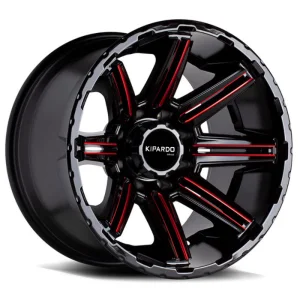
Wholesale Kipardo 17 18 inch factory customized aluminum alloy car rims offroad wheels Suppliers, Factories
View Specifications
CE Certification Kipardo 17 20 inch 6lug 6x139.7 4x4 offroad car alloy wheels rims for lexus GX460 GX470 Company, Products
View Specifications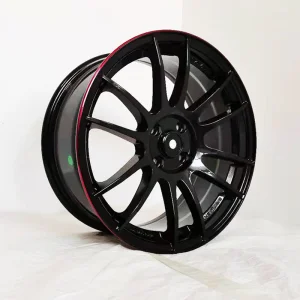
Cheap KIPARDO 15 inch 5x100 undercut red new japan design wheel Quotes, Products
View Specifications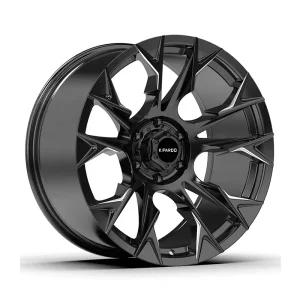
Custom Kipardo 20 inch factory wholesale 5 6 hole aluminum alloy rims 4x4 offroad wheels Supplier, Companies
View Specifications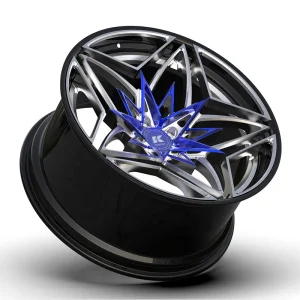
Custom Kipardo Custom 18 to 30 inch 2 Pieces forged wheels 3 Pieces forged Rims Pricelist, Exporters
View Specifications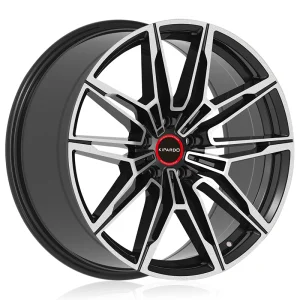
China Kipardo 18 19 20 inch factory wholesale cast alloy rims aluminum 4x4 offroad wheels Manufacturers, Suppliers
View Specifications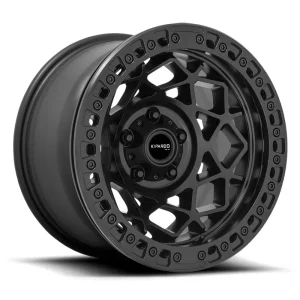
ODM Kipardo 17 20 inch factory wholesale black custom cast aluminum alloy rims 4x4 offroad wheels Manufacturer, Products
View Specifications