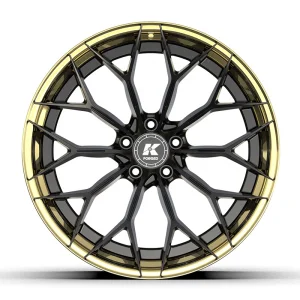
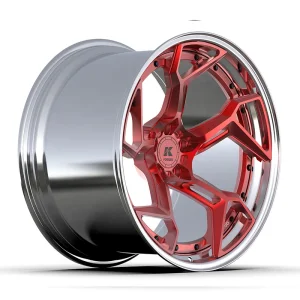
Flagship Forged & Heavy-Duty Offroad Wheel Deployments
Explore our verified lightweight forged billets, multi-piece deep concave rims, and high-load off-road configurations manufactured to exact hub-centric specifications.
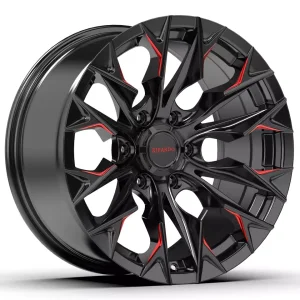
Cheap Kipardo 16 17 18 inch 6 hole custom casting car aluminum alloy rims 4x4 offroad wheels Exporters, Service
View Specifications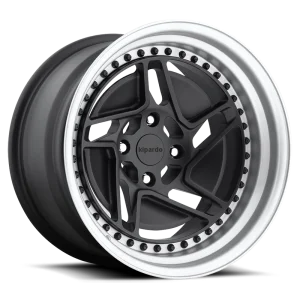
OEM Custom wholesale new design Forged car 3 pieces forged wheels Companies, Service
View Specifications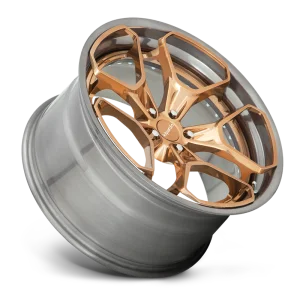
OEM Kipardo alloy wheels Forged car 3 pieces forged wheels 2 pieces,monoblock Manufacturer, Products
View Specifications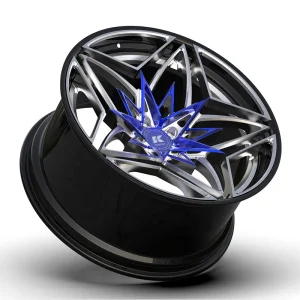
Custom Kipardo Custom 18 to 30 inch 2 Pieces forged wheels 3 Pieces forged Rims Pricelist, Exporters
View Specifications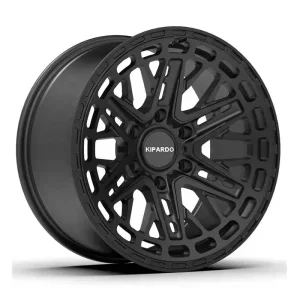
Wholesale Kipardo China factory 20 inch 5 6 hole alloy rims aluminum 4x4 offroad wheels Supplier, Factories
View Specifications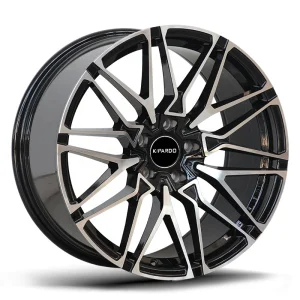
Custom Kipardo 19 20 21 22 inch factory custom wholesale luxury alloy rims aluminum 4x4 offroad wheels Exporter, Service
View Specifications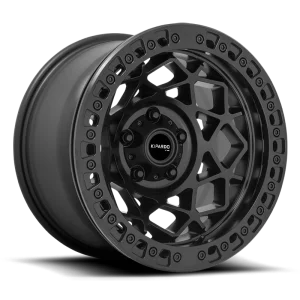
Buy KIPARDO manufacturer 6 holes 17 inch 4x4 wholesale aluminum alloy wheels rims Supplier, Quotes
View Specifications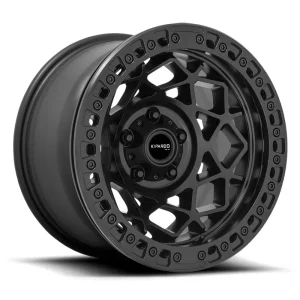
ODM Kipardo 17 20 inch factory wholesale black custom cast aluminum alloy rims 4x4 offroad wheels Manufacturer, Products
View SpecificationsThe Global Paradigm Shift: High-Tonnage Forged Aluminum Systems
As the automotive landscape transitions rapidly toward heavier battery-electric architectures and stricter efficiency mandates, custom forged aluminum wheels have shifted from high-end niche luxuries into structural necessities for commercial and passenger vehicle optimization.
Electric Vehicle Range & Unsprung Dynamics
Battery-electric vehicles (BEVs) demand extreme load ratings due to dense battery packs, yet require minimal rolling and rotational resistance to maximize range. Forged aluminum rims reduce unsprung mass by 25% to 35% compared to conventional cast wheels, yielding direct improvements in kinetic energy recuperation and extending single-charge EV mileage by up to 5-7%.
- Lower polar moment of inertia
- Optimized regenerative braking cycles
Heavy Commercial & Overlanding Rigidity
The global overlanding and commercial fleet sectors face intense structural challenges. Forged rims processed under 10,000-ton hydraulic pressure eliminate microscopic voids, hydrogen porosity, and micro-cracking common in gravity casting, ensuring absolute integrity when encountering 1,200+ kg radial loads during severe rocky terrain traverse or high-speed payload hauling.
- Zero catastrophic brittle fracture risk
- Exceptional dynamic impact absorption
Supply Chain Regionalization & Low MOQs
Unlike traditional cast wheel production requiring costly, inflexible steel tooling dies costing thousands of dollars per SKU, custom forged manufacturing uses multi-axis CAD/CAM CNC subtractive machining directly from standardized cylindrical billets. This enables agile distributors to order bespoke offsets, widths, and PCD bolt patterns with single-set or batch MOQs.
- Zero upfront mold tooling costs
- Rapid 14-day prototyping turnaround
Metallurgical Architecture: 6061-T6 vs. A356.2 Casting Alloys
Understanding the metallurgical grain structure is essential when engineering high-strength automotive wheels. Explore the fundamental structural differences between cast, flow-formed, and true forged aluminum wheels.
| Engineering Parameter | Cast Alloy (A356.2-T6) | Flow-Formed / Rotary Spun | Billet Forged (6061-T6) |
|---|---|---|---|
| Metallurgical Microstructure | Dendritic, non-directional crystalline lattice with inherent micro-voids. | Cast hub face; mechanically compressed, elongated barrel grain structure. | Continuous, dense, aligned grain flow along outer spoke paths. |
| Ultimate Tensile Strength (UTS) | 220 – 250 MPa | 270 – 310 MPa (in barrel region) | 310 – 350+ MPa (across entire wheel body) |
| Yield Strength (0.2% Offset) | 150 – 180 MPa | 200 – 240 MPa | 275 – 310 MPa |
| Elongation at Break (%) | 3.5% – 6.0% | 6.0% – 9.0% | 10.0% – 14.0% (Superior ductility prevents cracking) |
| Rotational Mass Variance | Standard Baseline (100%) | Approx. 10% – 15% Weight Reduction | 20% – 32% Weight Reduction per Wheel |
| Tooling & Mold Amortization | High mold investment ($4,000–$8,000 per size) | Moderate tooling dies ($3,500–$6,000 per size) | Zero tooling dies; pure multi-axis digital CNC milling |
| Safety Verification Benchmarks | Standard JWL / VIA road passing thresholds | JWL / VIA enhanced test cycles | Exceeds SAE J2530, ISO 3006, and TÜV severe test standards |
Continuous Grain Flow Physics
When a preheated billet of aerospace-grade 6061-T6 aluminum is compressed under a multi-stage 10,000-ton hydraulic forging press, the internal crystalline metallic lines re-align along the geometry of the spokes and outer lip. This uninterrupted grain orientation gives the wheel extraordinary fatigue resistance and allows much thinner spoke architectures without sacrificing load capacity.
Finite Element Analysis (FEA) Simulation
Every custom forged design undergo exhaustive digital dynamic stress modeling prior to chip cutting. By mapping von Mises stress fields under simulated 13-degree kerb strikes and extreme lateral cornering moments, our engineers eliminate dead metal weight from low-stress zones and reinforce high-shear areas around bolt circles and spoke roots.
State-of-the-Art Forged Wheel Production Architecture
Rimax Industry operates advanced manufacturing cells combining high-tonnage thermal forging, high-speed 5-axis CNC machining centers, and automated surface passivation.
Billet Heating & Thermal Soak
Solid 6061 cylinders are heated in computerized induction ovens to exact plasticity temperatures (450°C–480°C) to optimize molecular deformation without inducing recrystallization coarsening.
10,000-Ton Isothermal Forging
The softened billet is stamped in closed closed-die hydraulic presses. A multi-step upsetting and finishing stroke packs the grain matrix into a flawless blank profile free from internal air inclusions.
Rotary Barrel Flow-Spinning
The forged center cake is transferred to CNC flow-spinning equipment. Hardened steel rollers compress and draw the rim section horizontally over a spinning mandrel, creating a thin, ultra-dense barrel profile.
T6 Solution & Aging Heat Treat
Blanks enter liquid quenching quench tanks within 8 seconds of furnace exit, followed by artificial thermal precipitation aging at 175°C for 8–12 hours, stabilizing tensile strength to strict T6 properties.
5-Axis Simultaneous CNC Milling
High-precision German and Japanese milling spindles slice 3D concave spokes, side windows, bolt holes, center bores, and back-pad weight-reduction pockets with micrometric repeatability within ±0.02mm.
Automated Surface Finishing
Blasted ceramic micro-polishing, hand brushed directional graining, PVD anodizing, and ultra-durable electrostatic clear powder coats provide corrosion resistance exceeding 1,000 hours of ASTM B117 salt spray.
Non-Destructive Testing (NDT)
Dynamic radial balancing, coordinate measuring machine (CMM) dimensional checks, helium mass spectrometer air-leak testing, and digital real-time X-ray crack detection inspect each unit.
Export Packaging & Palletizing
Every rim is wrapped in a protective silicone edge ring, soft woven fabric dust cap, heavy-gauge cardboard box, and secured on fumigated export pallets suitable for direct international logistics.
Structural Taxonomy: Monoblock, 2-Piece, and 3-Piece Modular Forged
Selecting between solid monoblock billets and multi-piece modular assemblies requires balancing unyielding torsional stiffness, custom fitment versatility, and aesthetic depth.
1-Piece Monoblock Forged
Machined from a single solid forged 6061-T6 aluminum blank. The center spoke disc, rim outer flange, and inner barrel form one seamless, weld-free, bolt-free component. This architecture offers the lowest possible mass and maximum structural rigidity.
- Best For: Time attack racing, track-day supercars, and high-performance daily sports coupes.
- Advantage: Zero air leakage points, highest fatigue resistance, easiest cleaning and maintenance.
2-Piece Modular Forged
Consists of an individually CNC-carved forged center face bolted or continuously seam-welded to a precision spun-forged barrel cylinder. This allows distributors to adjust offset (ET) and backspacing down to the millimeter without modifying the spoke center.
- Best For: Custom staggered fitment luxury sedans, widebody GT cars, and bespoke SUV fitments.
- Advantage: Two-tone contrast finishes (e.g., brushed disc with mirror-polished deep lip).
3-Piece Modular Assembly
Engineered with three separate elements: an outer lip (outer rim half), an inner barrel (inner rim half), and a forged center disc. The three sections are precision-torqued using high-tensile titanium or grade 12.9 ARP bolts, sealed with high-elasticity chemical gaskets.
- Best For: Elite VIP stance tuning, classic vintage car restorations, and extreme wide-offset motorsports.
- Advantage: Component-level field repairability; damaged outer lips can be replaced independently.
Target Application Scenarios & Tailored Fitment Profiles
Different driving conditions impose radically distinct mechanical forces on alloy wheels. Rimax delivers tailor-made forged solutions engineered around vehicle gross axle weight ratings (GAWR) and clearance constraints.
Severe 4x4 Off-Road & Overland Expeditions
Navigating rocky trails, washboard corrugations, and low-pressure sand requires extreme bead seat retention and resistance to high-frequency impacts. Rimax forged off-road wheels feature reinforced outer lips, optional beadlock or knurled inner bead seats to prevent tire rotation under high torque, and massive 2,500 lbs to 3,650 lbs wheel load capacities tailored for heavy platforms like Toyota Land Cruiser, Jeep Gladiator, and Ford F-Series Super Duty.
Key Parameter Specs: 17x8.5 to 20x10, 5x127 / 5x150 / 6x139.7 / 8x165.1 / 8x170, ET -44 to +25.
Ultra-High Performance (UHP) Racing & Supercars
Modern sports coupes equipped with massive 400mm+ carbon-ceramic brake discs and multi-piston calipers require aggressive spoke back-milling to maximize caliper barrel clearance. Our performance forged line utilizes optimized convex/concave drop-center geometry that accelerates hot brake duct heat expulsion while maintaining absolute torsional resistance under high-G lateral cornering loads.
Key Parameter Specs: 19x9.5 to 22x12.5, Center-Lock / 5x112 / 5x114.3 / 5x120 / 5x130, Deep Concave profile.
Battery Electric Vehicles (BEV) Aerodynamics
Modern EVs require wheels that cut aerodynamic turbulence without adding rotational heft. Rimax develops directional aero-spoke forged designs with interchangeable carbon fiber or lightweight aluminum aero-inserts. These reduce highway drag coefficients (Cd) by 2–3% while providing structural rigidity that safely accommodates instant electric motor peak torque deliverable at zero RPM.
Key Parameter Specs: 19x8.5 to 22x10, 5x10⁸ / 5x114.3 / 5x120, Optimized ET30 to ET45 high-offset designs.
Armored Transport & Special Defense Vehicles
High-security tactical civilian transports (B6/B7 armoring standards) experience gross vehicle weights exceeding 4,500 kg. Standard cast alloy wheels crack under such dynamic stresses. Kipardo heavy-duty forged wheels offer reinforced rim barrels engineered to accommodate internal composite run-flat systems, ensuring continuous mobility even during severe ballistic tire deflations.
Key Parameter Specs: 18x9 to 20x9.5, Heavy-duty 6-stud and 8-stud fitments, tested to 2,000 kg dynamic radial fatigue.
Technology Roadmap: Generative AI Design & Circular Metallurgy
The next generation of forged wheel engineering is driven by algorithmic topology optimization, multi-material composite hybridisation, and closed-loop scrap recycling.
AI Generative Topology Optimization
Rather than relying solely on manual CAD sketching, our engineering team utilizes AI-driven structural algorithms. By specifying boundary load cases (SAE J2530 impact loads and cornering moments), generative algorithms eliminate every unnecessary gram of aluminum. The result is biomimetic, organic spoke networks that maximize stiffness-to-weight ratios well beyond conventional human engineering intuition.
Forged-Carbon Hybrid Architectures
To reduce rotational inertia even further, Rimax is pioneering hybrid rim structures pairing a 6061-T6 forged center disc with a continuous-filament prepreg carbon-fiber outer rim barrel. This hybrid arrangement cuts wheel weight by an additional 40% compared to cast wheels, reducing rotational moment of inertia ($I = m \cdot r^2$) drastically for elite motorsport acceleration.
Low-Carbon Recycled 6061 Billets
Sustainability is becoming a core procurement requirement for global OEMs. Rimax has implemented a closed-loop recycling initiative where clean aluminum swarf and machining chips generated during 5-axis milling are vacuum-collected, briquetted, melted under inert gas covers, and re-cast into secondary forging billets with 95% lower carbon footprint than virgin bauxite smelting.
Global Standards Compliance & Turnkey B2B Procurement
When importing alloy wheels at container scale, product compliance with international regulatory bodies is paramount. Kipardo wheels are designed and rigorously tested to ensure trouble-free customs clearance and road homologation.
Destructive & Non-Destructive Laboratory Validation
Every production batch undergoes three core destructive mechanical validations in accordance with JWL/VIA and SAE J2530 protocols:
- 1. Dynamic Radial Fatigue: The wheel is mounted against a motorized steel drum revolving under 2.25x rated vehicle wheel load for a minimum of 500,000 cycles without structural fatigue cracking or pressure loss.
- 2. Dynamic Cornering Fatigue: A rotating bending moment is applied to the wheel hub to simulate severe high-speed lateral drift and cornering forces for 100,000 continuous revolutions.
- 3. 13-Degree / 30-Degree Kerb Impact: A heavy steel striker weight free-falls onto the outer tire rim flange to simulate direct curb impact, ensuring zero catastrophic fracture or rapid tire deflation.
OEM/ODM Private-Label Sourcing Framework
We provide end-to-end support for brand owners, racing teams, and aftermarket wholesale distributors:
- Digital 3D Rendering & CMM Engineering: Send us your vehicle fitment requirements or bespoke sketch; our engineering team delivers photorealistic 3D renders, FEA stress plots, and CAD drawings within 48 hours.
- Custom Hardware & Branding: CNC-engraved custom brand logos on outer rim lips or center spoke faces, bespoke aluminum billet center caps, floating logos, and custom color-matched packaging.
- Comprehensive Warranty Protection: All Kipardo forged wheels come backed with a 5-Year / 100,000 km structural warranty and a 2-Year coating warranty covering clear coat, polish, and painted finishes.
Frequently Asked Questions: Forged Wheel Procurement
Authoritative answers on metallurgy, minimum orders, fitment engineering, and production timelines directly from our engineering team.
Why is 6061-T6 aluminum superior to cast A356.2 alloy for custom wheels?
What is the minimum order quantity (MOQ) for custom forged rims?
What is the standard production lead time from CAD approval to delivery?
Are custom offsets (ET), bolt patterns (PCD), and center bores supported?
How does Rimax ensure structural safety and regulatory compliance?
What finish and surface treatment options are available?
What warranty is included with Kipardo forged aluminum wheels?
Can you manufacture wheels for heavy armored or specialized commercial vehicles?
Wholesale & Custom Forged Aluminum Inventory
Explore our verified high-strength cast alloy, flow-formed, and fully custom 6061-T6 concave forged wheel catalog available for immediate export and distribution.
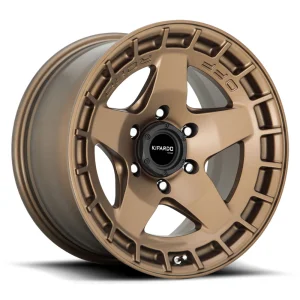
China Kipardo 17 18 inch high quality factory wholesale aluminum alloy rims 4x4 offroad wheels Manufacturer, Companies
View Specifications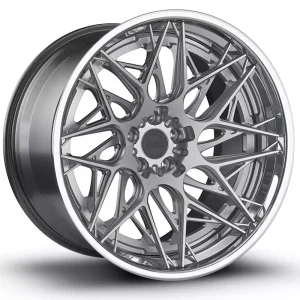
Discount Kipardo 18 inch to 24 inch fully custom 6061-T6 aluminum concave forged wheels Suppliers, Company
View Specifications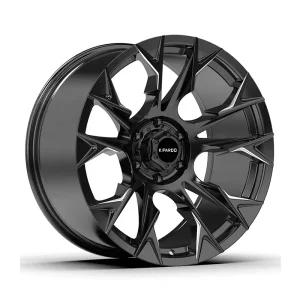
Custom Kipardo 20 inch factory wholesale 5 6 hole aluminum alloy rims 4x4 offroad wheels Supplier, Companies
View Specifications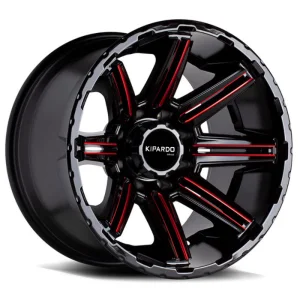
Wholesale Kipardo 17 18 inch factory customized aluminum alloy car rims offroad wheels Suppliers, Factories
View Specifications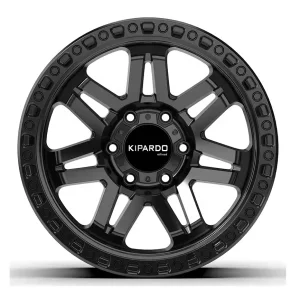
China Kipardo 17 18 inch factory wholesale 6 hole custom car aluminum alloy rims 4x4 offroad wheels Supplier, Service
View Specifications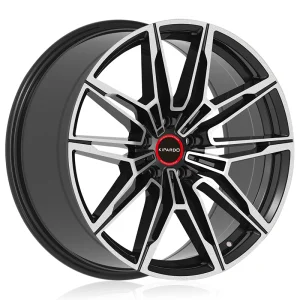
China Kipardo 18 19 20 inch factory wholesale cast alloy rims aluminum 4x4 offroad wheels Manufacturers, Suppliers
View Specifications