
High-Performance Forged & Alloy Wheels Portfolio
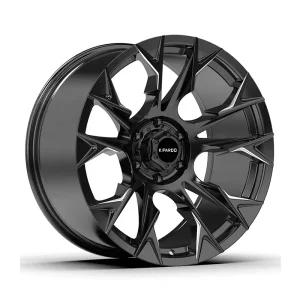
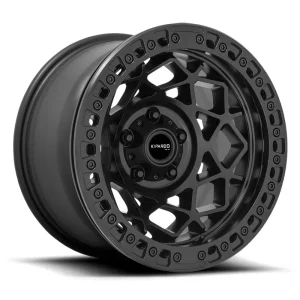
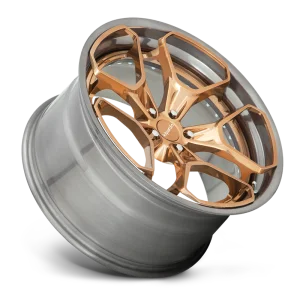
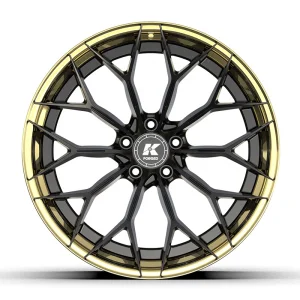
Explore immediate factory-production SKUs engineered for high tensile load capacities, custom offsets (ET), and multi-piece bolt configurations.
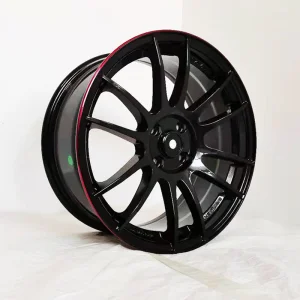
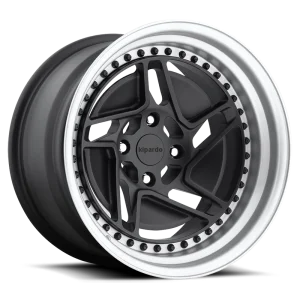
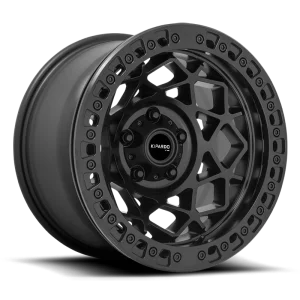
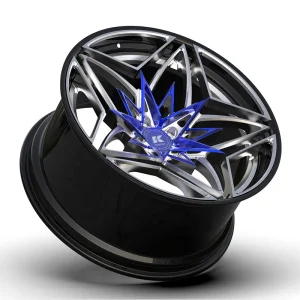
Global Enterprise Sourcing Paradigms for Carbon Forged Wheels
Analyzing the structural shifts in procurement economics, original equipment lightweighting mandates, and wholesale distribution networks across international automotive sectors.
Tier 1 & Hypercar OEM Sourcing
Original equipment manufacturers and boutique performance automakers require strict material lot traceability, customized Finite Element Analysis (FEA) topology, and mill-test compliance matching ultra-low unsprung mass targets without re-tooling bottlenecks.
Wholesale Aftermarket Margin Dynamics
Discount wholesale purchasing structures empower national tuning houses and specialized wheel distributors to capture upwards of 45% gross operating margins by consolidating low-pressure cast, flow-formed, and monoblock carbon-forged SKUs within a single supplier container matrix.
EV Powertrain Range Extension
With electric vehicle architectures placing extreme torque loads on wheels, reducing rotational moment of inertia (I = mr²) via forged carbon hybrid barrels translates directly into 4-7% increases in vehicle range and significantly reduced regenerative braking thermal fatigue.
Macro-Level Engineering Solutions: Forged Carbon vs. Conventional Metallurgy
Uncompromising structural integrity delivered through aerospace aluminum forging coupled with chopped-fiber sheet molding compounds (SMC).
The contemporary high-performance automotive landscape operates under severe contradictory demands: vehicular curb weights are swelling due to dense 800V battery architectures, while environmental mandates necessitate rapid decreases in gross energy consumption. Conventional gravity casting and low-pressure cast wheels cannot bridge this gap without adding excess material, causing excessive unsprung mass that destroys suspension damping performance.
Shanghai Rimax Industry Co., Ltd. (producing the internationally recognized Kipardo line since 2010) solves this dilemma by re-engineering the foundational metallurgy. Utilizing an integrated production continuum spanning JWL-verified low-pressure casting, spun rotary flow-forming, and closed-die 10,000-ton 6061-T6 aluminum forging, Rimax provides global distributors with discounted access to hybrid forged carbon structures that were historically limited to Formula motorsport operations.
| Performance Vector | A356.2 Low-Pressure Cast | Rotary Flow-Formed | Monoblock 6061-T6 Forged | Carbon Fiber Forged Hybrid |
|---|---|---|---|---|
| Yield Strength (Rp 0.2) | 160 - 185 MPa | 220 - 250 MPa | 290 - 325 MPa | 380 - 450 MPa (Composite Ring) |
| Tensile Strength (Rm) | 220 - 240 MPa | 280 - 310 MPa | 350 - 390 MPa | 520 - 680 MPa |
| Unsprung Mass (20x10J) | 13.8 - 15.5 kg | 10.8 - 12.2 kg | 8.9 - 9.8 kg | 6.8 - 7.6 kg |
| Rotational Inertia | High (Baseline) | 12% Reduction | 24% Reduction | 36% Reduction |
| Wholesale Cost Profile | Economic Wholesale | Competitive Value | Mid-Tier B2B | Elite Tuning Premium |
| Target Fitment | Volume Replica & OEM | Performance Aftermarket | Track, Motorsport & Luxury | Exotic Hypercar & Flagship EV |
Forged carbon differs fundamentally from standard woven carbon fiber pre-preg cloth. Instead of laying continuous strands by hand—a process prone to intra-laminar voids and expensive labor hours—forged carbon uses short, chopped carbon-fiber strands (typically 50,000 filaments per bundle) suspended in a high-viscosity vinyl ester or epoxy resin matrix. This compound is injected into hardened steel negative dies and pressurized up to 1,500 PSI under thermal cure conditions. The resulting isotropic composite provides omnidirectional structural strength without the catastrophic shear plane vulnerabilities common to traditional directional weaves.
2025–2030 Technical Roadmap: Advanced Materials & Smart Wheel Nodes
A systematic framework detailing the convergence of artificial intelligence, circular zero-waste metallurgy, and integrated sensor nodes.
Generative Topology AI
Phase 1 deploys algorithmic FEA stress-distribution modeling. Spoke roots and hub centers are iteratively hollowed using cloud-computed load vectors, removing 12% non-critical mass while maintaining strict 890 kg off-road load ratings.
Hot Isostatic Pressing
Phase 2 implements HIP gas-densification chambers post-forging. Exposure to 100 MPa argon pressure at 480°C eliminates microscopic hydrogen voids within the aluminum lattice, driving fatigue lifecycle cycles above 1,200,000 revolutions.
Active Sensor Telemetry
Phase 3 integrates vulcanized passive RFID and piezoelectric strain micro-gauges directly inside the carbon-composite drop center, reporting rim temperature, micro-crack deformation, and localized impact loads straight to CAN-bus telemetry.
Closed-Loop Recycled Billet
Phase 4 commits to 100% internal reclamation of aerospace 6061-T6 CNC shavings and depolymerized carbon towpregs, driving down virgin ingot raw-material costs and providing European OEM customers with complete CBAM carbon-border tax compliance.
Global Commercial Footprint & Industrial Supply Chain Mastery
Operational strategies for scaling export programs across North America, the European Union, Australia, and Middle Eastern luxury corridors.
North American Distribution
Dominance in high-offset 4x4 pickup, off-road (6x139.7, 5x150), and staggered wide-body configurations (20x10J to 24x12J). Seamless integration with US DOT standards, SAE J2530 testing parameters, and duty-efficient Section 301 supply chain routes originating from our Kunshan facilities.
European Union & ECE Markets
Strict homologation alignment with German TÜV Rheinland requirements and ECE R124 road verification protocols. Engineering emphasis centered on concave monoblock designs with precision brake caliper clearance for AMG, M-Performance, and Porsche GT platforms.
GCC & Middle East Luxury Corridors
High-thermal resilience finishing, double-dark tinted clear coats, and diamond-cut CNC treatments resistant to 50°C asphalt radiant heat and desert abrasive dust. Rapid prototyping cycles for custom one-off 3-piece VIP vehicle builds.
Localized Support, Zero-Defect Testing & Compliance Assurance
Stringent verification benchmarks ensuring every Kipardo wheel survives aggressive radial impact and chemical exposure test benches.
13° / 30° Impact Dynamic Test
Simulating severe curb contact and high-speed pothole strike. Striker masses up to 1,000 kg are dropped on the outer rim flange. Wheels must exhibit zero sudden pressure loss and zero circumferential fracturing along the bead seat.
Dynamic Cornering Fatigue
Continuous bending moment loads applied directly to the mounting face for over 100,000 revolutions at 1.5x maximum rated axle capacity, confirming spoke-to-rim root endurance without micro-structural slip.
CASS Salt-Spray Chamber
Coating integrity validated under 1,000 hours of continuous Copper-Accelerated Acetic Acid Salt Spray exposure (ASTM B368), verifying zero filiform corrosion under clear finishes or diamond-cut polished channels.
5Y / 100K Warranty Guarantee
Every wheel backed by Shanghai Rimax Industry's structural warranty covering 5 years or 100,000 km of service, accompanied by a dedicated 2-year warranty protecting paint, anodized, and chrome finishes.
Frequently Asked Questions: Carbon Forged Wheel Wholesale & Manufacturing
Detailed technical answers for procurement directors, product managers, and wholesale distribution buyers.
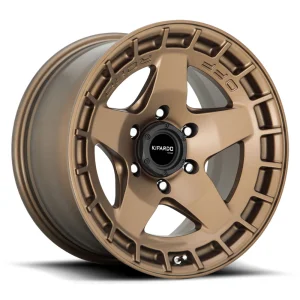
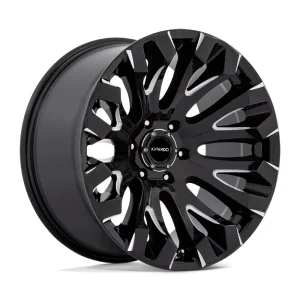
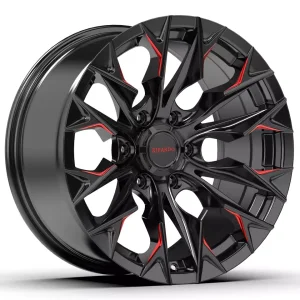
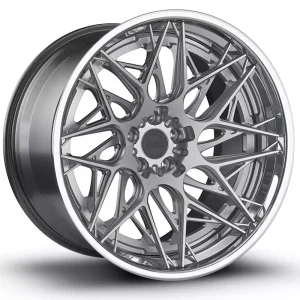
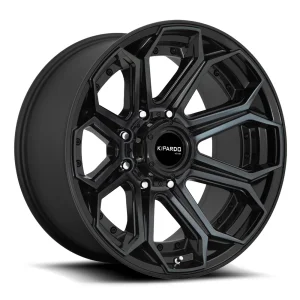
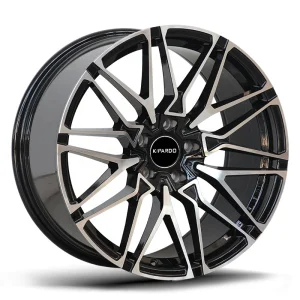
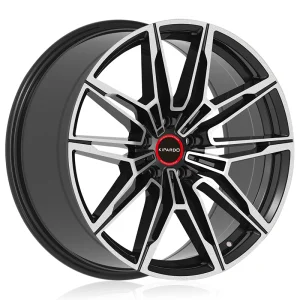
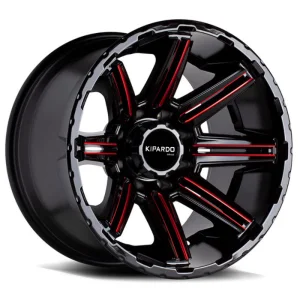
Extended B2B Production Line: Monoblock & 4x4 Off-Road
Heavy-duty reinforced bead seats, extreme concave profiles, and high-load off-road wheel assemblies available for contract manufacturing.
Scale Your Wheel Program with Rimax Industry
Request comprehensive CAD engineering drawings, fitment matrices, and discounted container quotation tiers directly from our engineering team.