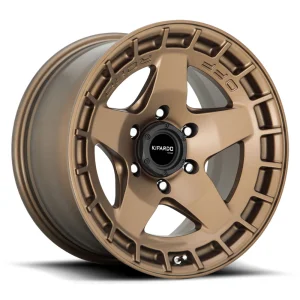
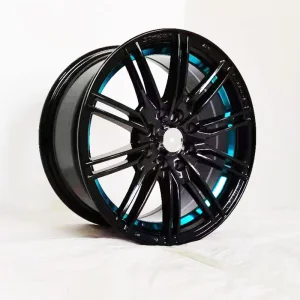
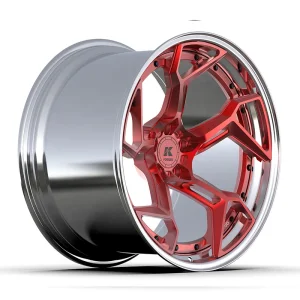
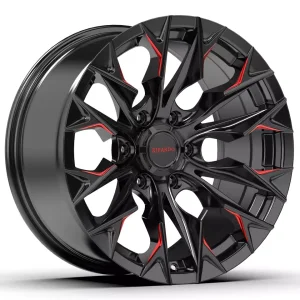
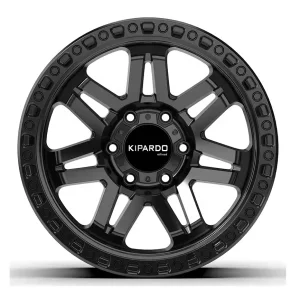
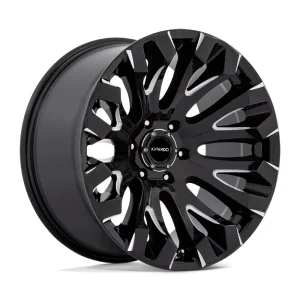
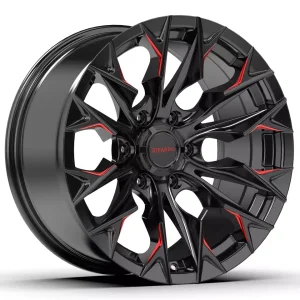
High-Performance Custom 22" Forged Wheel Formats
Direct line access to precision-machined monoblock, 2-piece, and 3-piece custom forged rims engineered to withstand high static load limits and dynamic cornering fatigue.
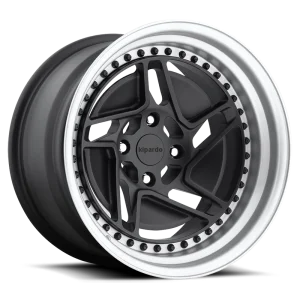
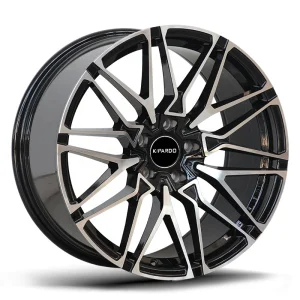
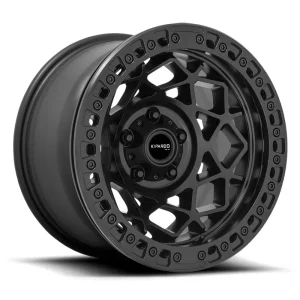
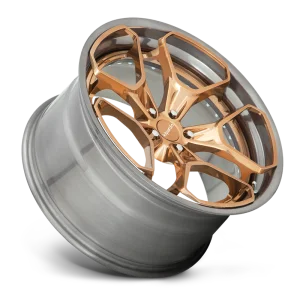
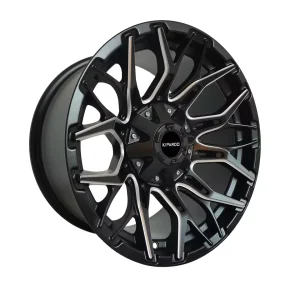
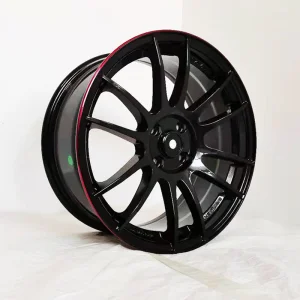
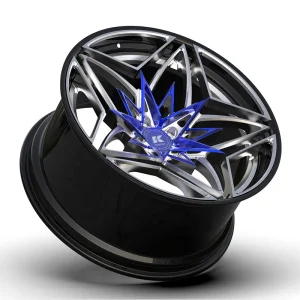
The Paradigm Shift in 22-Inch Forged Wheel Manufacturing
Why Tier-1 automotive distributors and elite commercial fleets are shifting from conventional cast and flow-formed variants toward specialized aerospace-grade 6061-T6 forged architectures.
Mitigating Unsprung Mass at Scale
As OEM vehicle platforms transition to electrification, wheel circumferences of 22 inches have become standard for luxury SUVs and performance EVs. However, a 22-inch low-pressure cast wheel can easily exceed 18.5 kg, creating significant unsprung rotational inertia that degrades damper response and battery range. Precision 6061-T6 forging allows barrel profiles to thin down to under 2.8 mm while maintaining yield strength above 276 MPa, dropping total mass to 11.8–13.2 kg per corner.
Handling Instantaneous Electric Torque
Modern dual- and tri-motor platforms deliver upwards of 1,000 Nm of instantaneous torque directly through the wheel hub. Standard alloy wheels risk micro-slippage against the tire bead seat and accelerated spoke root fatigue. Rimax forged 22-inch designs incorporate knurled anti-slip bead seats and multi-axis CNC spoke transitions designed via continuous finite element analysis (FEA) to endure severe rotational shear.
Structural Grain Flow Integrity
Unlike casting where liquid aluminum crystallizes with random dendrite orientations and microscopic porosity, our 10,000-ton closed-die forging process aligns the aluminum alloy grain flow radially along the curvature of the wheel disc and rim. This contiguous molecular grain path yields fracture toughness and fatigue resistance up to 300% superior to gravity or low-pressure cast alternatives.
Advanced Manufacturing Resilience & Process Precision
Combining automated hydraulic billet forging lines with high-speed multi-axis CNC profiling to deliver flawless repeatability for enterprise private-label programs.
Multi-Stage Hydraulic Die Forging
Solid cylindrical 6061 billets are induction heated to strictly regulated plastic deformation zones (420°C–460°C). The initial press run pancakes the billet, followed by secondary and tertiary closed-die stampings under 10,000 tons of force, creating near-net shape blanks that eliminate interior voids and directional mechanical weakness.
Robotic 5-Axis CNC Milling
Post-forged blanks undergo precision rotary flow-forming to spin-expand the outer barrel width to exact 22-inch wheel profiles. Computer-controlled 5-axis vertical machining centers mill the spoke windows, caliper relief pockets, weight-saving back-pad lightening pockets, and center bore diameters to geometric tolerances within ±0.03 mm.
Automated Quality Verification
Every serialized production unit is routed through high-resolution helium air-leak testing, dynamic radial runout balancing, ultrasonic internal crack detection, and coordinate measuring machines (CMM). Metallurgical sample testing ensures strict conformance to SAE J2530, JWL-P, and ISO 3006 destructive criteria.
Engineering Information Gain: Comparative Metallurgical Matrix
When engineering 22-inch wheel assemblies, physical elongation and yield thresholds determine real-world survivability across low-profile tire impacts. The table below delineates the precise technical divergence between standard cast, flow-formed, and our specialized 6061-T6 forged manufacturing paths.
| Performance Characteristic | Standard Gravity / LP Casting | Rotary Flow-Formed (Hybrid) | Rimax Aerospace 6061-T6 Forged |
|---|---|---|---|
| Base Alloy Composition | A356.2 (Aluminum-Silicon-Magnesium) | A356.2 Virgin Alloy Core | 6061 Aerospace Billet (Al-Mg-Si-Cu) |
| Tensile Strength (Ultimate) | 220 – 250 MPa | 260 – 290 MPa | 310 – 340 MPa |
| Yield Strength (Rp 0.2) | 140 – 160 MPa | 190 – 210 MPa | 276 – 310 MPa |
| Elongation at Break (%) | 3% – 5% (Brittle Failure Profile) | 6% – 9% | 12% – 16% (Ductile Deformation) |
| Typical 22x10J Bare Weight | 18.2 – 21.0 kg | 14.8 – 16.5 kg | 11.5 – 12.8 kg |
| Radial Fatigue Resistance | Baseline Test Benchmark (100k Revs) | 1.8x Industry Baseline | > 3.0x Baseline (> 1,000,000 Revs) |
| Custom Offset (ET) Flexibility | Fixed tooling mold required ($$$) | Fixed face; restricted offset variation | Fully programmable per wheel (1mm steps) |
Localized Application Scenarios for 22" Forged Sets
Targeted solutions engineered for enterprise distributors, bespoke vehicle upfitters, and government armored transit configurations.
Full-Size Luxury & Executive SUVs
Tailored for high Gross Axle Weight Ratings (GAWR) on platforms like the Cadillac Escalade, Range Rover SV, Mercedes-Maybach GLS, and BMW X7. Machined with reinforced back-pad architecture supporting single-wheel load capacities exceeding 1,050 kg while maintaining clearance for 410 mm–440 mm carbon ceramic braking systems.
Next-Gen Electric Pickups & Commercial Vans
Specifically matched for instant dynamic torque delivery on GMC Hummer EV, Rivian R1T, Ford F-150 Lightning, and Tesla Cybertruck. Incorporates specialized knurled rim bead-seats to eliminate rotational tire creep under full-throttle regenerative load transitions and steep launch acceleration.
VPAM VR7 / VR9 Armored Executive Fleet
Heavy transport applications requiring total vehicle curb weights exceeding 4,800 kg. Our forged 22-inch monoblock wheels are stress-tested to 1,500 kg per corner, integrating custom mechanical run-flat inner support rings to ensure directional control during sudden tire deflation scenarios.
Enterprise Procurement Framework: How to Optimize Your 22" Forged RFQ
Procuring custom forged wheels at commercial container scale demands accurate initial parameter definition. When requesting quotes, enterprise sourcing teams must supply: (1) Platform Fitment Array (Bolt Pattern/PCD, Center Bore, Offset clearance spectrum), (2) Required Load Rating Target (e.g., standard passenger 750 kg vs heavy-duty EV/commercial 1,150 kg), (3) Surface Finishing Palette (full brushed, high-polish, anodized, tinted clear, diamond-cut face), and (4) Private-Label Requirements (custom billet center cap engraving, serialized packaging cartons, valve stem branding).
Frequently Answered Technical Questions
Essential purchasing and metallurgical considerations answered by our chief wheel design and certification engineers.
Why choose 6061-T6 forged aluminum over flow-formed alternatives for 22-inch diameters?
What is the standard production lead time for custom enterprise 22-inch forged wheel orders?
How does Rimax ensure structural compliance with JWL, VIA, and SAE J2530 standards?
Can 22-inch forged wheels be engineered to clear oversized aftermarket or OEM carbon-ceramic brakes?
What surface finishes and protective treatments are available for harsh winter/saline environments?
What are the Minimum Order Quantities (MOQ) for custom private-label forged wheel programs?
High-Spec Off-Road, Racing Concave & Cast Series
Explore heavy-duty 4x4 options, reinforced multi-lug patterns, and specialized finishes designed for extreme terrain and commercial distribution networks.