
High-Precision Aftermarket Alloy Rims: Program Phase I
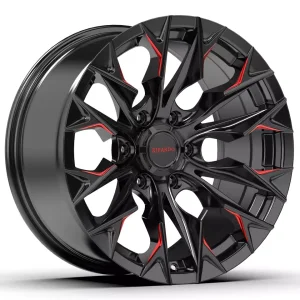
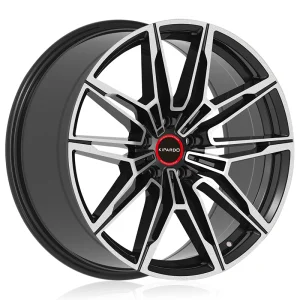
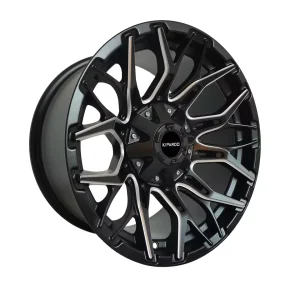
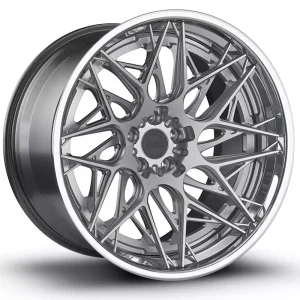
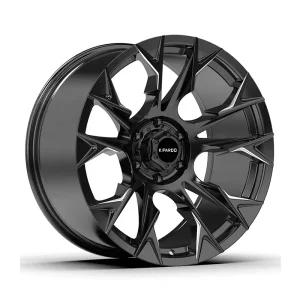
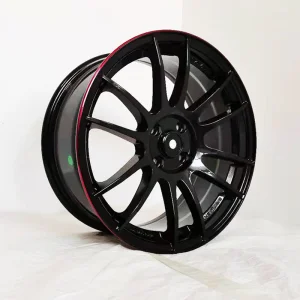
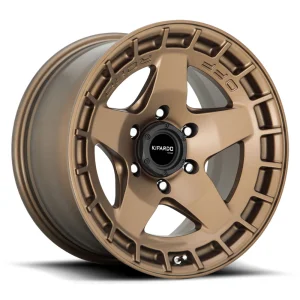
Direct wholesale inventory featuring JWL/VIA compliant low-pressure casting, flow-forming, and heavy-duty 4x4 engineering fitments available for commercial container dispatch.
Structural Shifts in the Global Aftermarket Alloy Wheel Industry
Analyzing key technical disruptions, powertrain evolutions, and regulatory benchmarks steering tier-1 aftermarket procurement through 2030.
Electric Vehicle (EV) Axle-Load Adaptations
The proliferation of battery electric vehicles (BEVs) has fundamentally shifted load-rating specifications. Increased curb weight from chassis battery packs, combined with instantaneous torque delivery, requires wheels to feature higher radial load capacities (often exceeding 950 kg per corner) while demanding aerodynamically optimized spoke profiles to suppress turbulent drag.
Flow-Forming as the New Volume Standard
Traditional gravity casting is rapidly becoming obsolete for mid-to-high performance tiers. Industrial procurement is pivoting toward Rotary Flow-Forming. By hydraulically rolling the rim barrel under controlled heat, grain structures align closely with forged properties, shedding 12–18% unsprung mass while preserving cost competitiveness for retail programs.
Strict Regional Homologation Pressures
Global regulatory compliance has intensified. Sourcing strategies must navigate strict regional testing: TÜV StVZO certification in Europe, rigorous JWL/VIA impact protocols in Japan and APAC, and SAE J2530 specifications across North America. Non-compliant wheels risk border seizures, container rejections, and substantial brand liability.
Macro Supply Chain Solutions for Tier-1 Distributors & Importers
Bridging Chinese manufacturing capacity with localized distributor requirements through engineered quality gates, SKU optimization, and turnkey private-label programs.
Consolidated Mixed-SKU Containers
Alleviate stockholding risks by mixing cast, flow-formed, and forged specifications within single 40ft HQ shipping containers. Distributors achieve inventory velocity without overcommitting capital across monolithic SKU runs.
Custom Tooling & Mold Amortization
Accelerate proprietary wheel programs with our in-house CAD tooling and rapid aluminum mold prototyping. Development costs amortize over scaled purchase orders, safeguarding original proprietary designs with strict exclusivity agreements.
Turnkey Private-Label Ecosystem
Complete OEM brand engineering encompassing branded center caps, tailored rim lip laser engravings, bespoke retail carton packaging with multi-lingual barcodes, and certified pallet stabilization ready for automated 3PL warehouses.
Raw Ingot Price Hedging Models
Mitigate volatile A356.2 aluminum ingot spot price fluctuations. We provide enterprise procurement contracts with quarterly index-linked indexing and fixed hedging corridors to maintain predictable retail pricing tiers.
Process Metallurgy: Low-Pressure Cast vs. Flow-Formed vs. Forged
A technical guide for fleet managers, tuning brands, and wholesale purchasers evaluating weight reduction, mechanical yield strength, and commercial viability.
| Evaluation Parameter | Low-Pressure Cast (LPDC) | Flow-Formed (Rotary Spun) | Aerospace Forged (6061-T6) |
|---|---|---|---|
| Base Material Alloy | Primary Virgin A356.2 Aluminum | A356.2 Alloy with Flowed Barrel | Billet Forged Aircraft 6061-T6 Alloy |
| Grain Density & Microstructure | Uniform casting with gas porosity controls | Highly elongated, dense radial grain along rim | Continuous directional grain flow; zero porosity |
| Tensile & Yield Strength | Tensile: ≥220 MPa | Yield: ≥150 MPa | Tensile: ≥290 MPa | Yield: ≥215 MPa | Tensile: ≥310 MPa | Yield: ≥275 MPa |
| Weight Differential Ratio | Baseline Standard | 12% to 18% Lighter | 22% to 32% Lighter |
| Rotational Inertia Reduction | Standard Dynamic Profile | Enhanced Braking & Throttle Response | Peak Kinetic & Suspension Optimization |
| MOQ & Tooling Entry Cost | Moderate mold cost; MOQ 60–100 pcs/size | Shared tooling; MOQ 80–120 pcs/size | Zero mold cost; CNC direct; MOQ 4 pcs custom |
| Target Commercial Segment | High-volume retail SKUs, OE replicas, 4x4 offroad | Performance street tuning, EV range optimization | Supercars, custom concave styling, armored fleets |
Engineering Compliance & Destructive Laboratory Testing
Stringent multi-stage non-destructive examination and dynamic destructive stress testing backing Shanghai Rimax's 5-Year / 100,000 KM structural guarantee.
Dynamic Radial & Cornering Fatigue
Testing beyond statutory minimums. Wheels are subjected to continuous rotational stress under constant bending moment simulating rigorous cornering over 100,000 cycles, and heavy radial load testing ensuring spokes and bead seats withstand aggressive road impacts without crack propagation.
13° & 30° Dynamic Drop Impact
Simulating high-speed curb and pothole strikes. Striker masses calibrated to maximum axle loads drop directly on the rim flange at specified angles. Under strict JWL/SAE criteria, the assembly must prevent sudden air loss, structural fracture, or catastrophic center displacement.
CASS Corrosion & Helium Leakage
Every batch undergoes 100% inline pressurized helium leakage testing to guarantee molecular airtightness. Surface coatings are submitted to 720-hour copper-accelerated acetic acid salt spray (CASS) chambers, guaranteeing resistance against winter de-icing salts and humid climates.
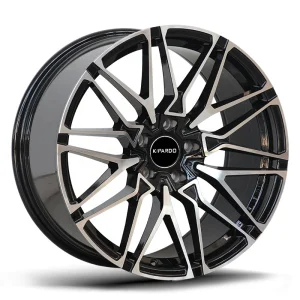
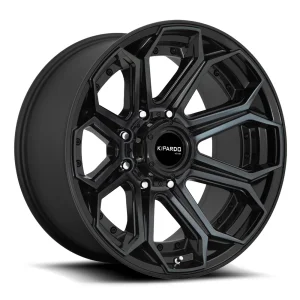
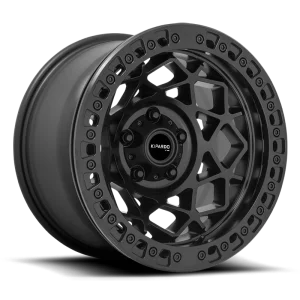
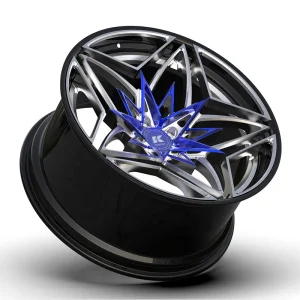
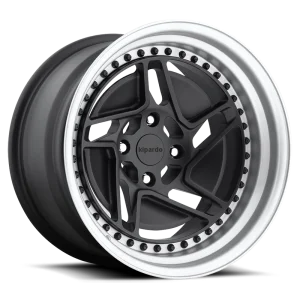
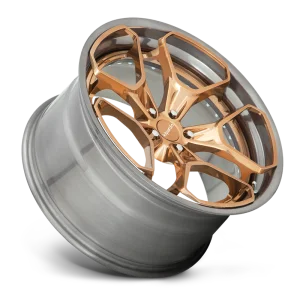
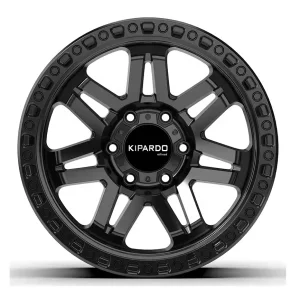
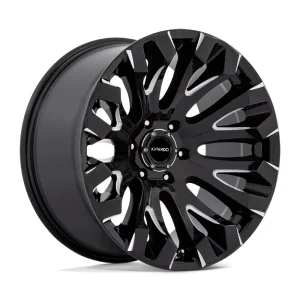
Specialty Engineering: Monoblock, Multi-Piece & Heavy-Duty 4x4
Premium architectural configurations engineered for specialized luxury platforms, multi-piece tuning programs, and extreme commercial off-road applications.
Engineering the Next Decade of Aftermarket Alloy Architecture
Strategic technological initiatives integrating artificial intelligence, low-carbon circular metallurgy, and multi-material hybrid assemblies.
AI-Assisted Generative Spoke Topology
Deploying finite element generative algorithms to simulate stress nodes across thousands of virtual curb strikes and load cycles. We eliminate structural material in non-critical zones, delivering intricate, ultra-thin spoke architectures while boosting structural load resistance.
Green Aluminum & Low-Carbon Billets
Addressing EU CBAM regulations and global corporate ESG mandates. We are transitioning our melting and foundry facilities toward certified secondary circular aluminum and hydro-powered smelting ingots, targeting a 50% reduction in embedded carbon per rim by 2027.
Hybrid Carbon-Aluminum Composites
Targeting the highest echelons of competitive motorsport and exotic tuning programs. Next-generation production roadmaps combine forged 6061-T6 aluminum center spiders with resin-transfer molded (RTM) carbon fiber barrels, providing ultra-light rotational dynamics.
Commercial Inquiries for Enterprise Alloy Wheel Importers
Key information regarding MOQ structures, certification frameworks, tooling amortizations, and OEM fitment verifications.
What defines an authoritative aftermarket alloy wheel quote for wholesale importers?
How does Rimax ensure fitment precision across diverse global vehicle models?
What minimum order quantities (MOQ) and lead times apply to custom wholesale programs?
What structural and cosmetic finish warranties protect distributors?
Can Rimax handle specialized off-road 4x4 wheel engineering?
Formulate Your Next Wheel Program Today
Access our comprehensive 2025–2026 engineered wheel catalog, complete fitment databases, finish swatches, and container pricing schedules with our international sales team.