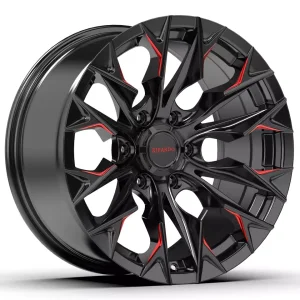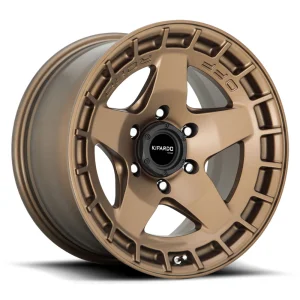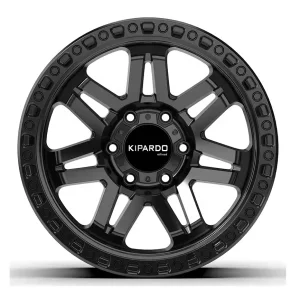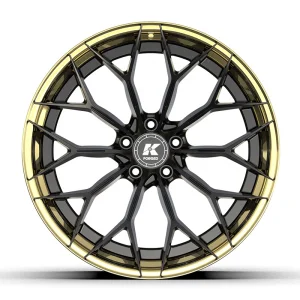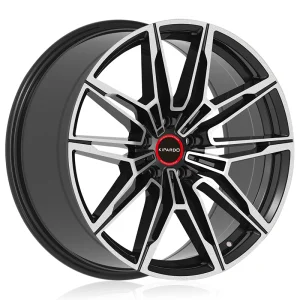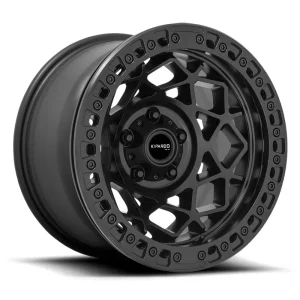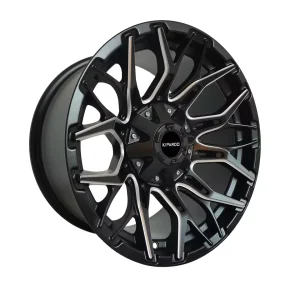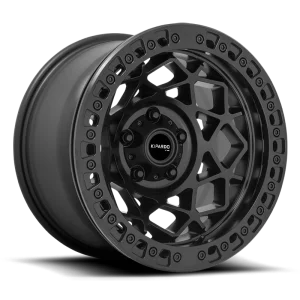
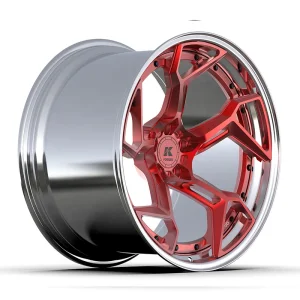
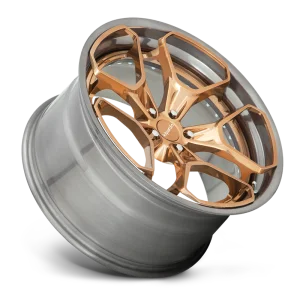
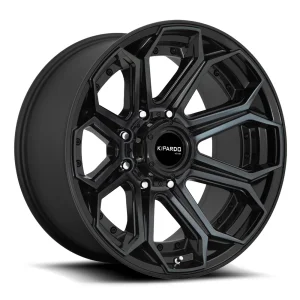
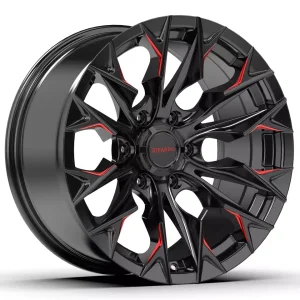
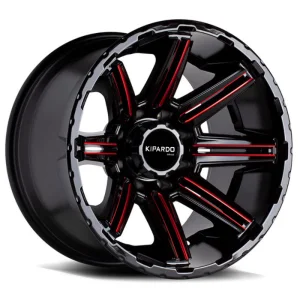
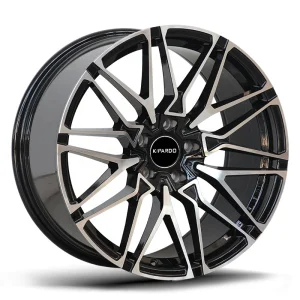
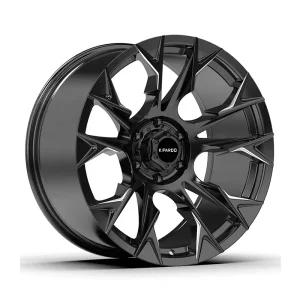
Featured 20-Inch Forged & Performance Series
Engineered for high un-sprung mass reduction, ultra-high dynamic cornering resistance, and tailored bolt pattern compatibility across global performance platforms.
Global Automotive Commercial Dynamics: Why 20-Inch Forged Metallurgy Dominates
As modern vehicle architectures transition toward higher curb weights—driven by heavy EV battery packs, active suspension systems, and performance hybrid powertrains—the global wheel industry faces unprecedented structural challenges. Standard cast aluminum alloys can no longer support extreme static axle weights without introducing prohibitive rotational inertia.
Unsprung Mass & EV Range Optimization
20-inch wheels serve as the golden ratio for large luxury sedans, electric SUVs, and high-performance cross-overs. Forging under 10,000+ tons of pressure creates a dense metallurgical grain structure, enabling spoke thinning that decreases un-sprung rotational mass by up to 25-30% compared to cast alternatives, directly extending battery range and steering feedback.
High-Dynamic Cornering Fatigue Strength
Modern internal combustion platforms delivering upwards of 600 hp require wheel wheels that dissipate instantaneous torque without elastic deformation. Monoblock 6061-T6 forgings provide yield strengths surpassing 275 MPa, effectively preventing micro-cracking during sustained radial loading and aggressive track cornering.
B2B Supply Chain Risk Mitigation
Tier-1 distributors and boutique tuning labels require agile production models. Monoblock billet machining completely bypasses expensive permanent tooling and mold manufacturing cycles, enabling importers to introduce custom bolt circles (PCD), bespoke center bore diameters, and target offsets within short 14-day production windows.
Engineering Matrix: 20-Inch Monoblock Forging vs. Cast & Flow-Formed Tech
Understanding true mechanical boundaries ensures that procurement officers match the right structural profile with fleet use cases, customer liability expectations, and road safety protocols.
| Evaluation Parameter | Monoblock Forged (6061-T6) | Rotary Flow-Formed | Low-Pressure Cast (A356.2) |
|---|---|---|---|
| Base Material Ingot | Solid Aerospace Billet 6061 Al-Mg-Si | Liquid A356.2 + Spun Aluminum Barrel | Molten High-Grade A356.2 Alloy |
| Tensile Yield Strength | ≥ 275 - 310 MPa | ≈ 200 - 240 MPa (Barrel Only) | ≈ 160 - 190 MPa |
| 20-Inch Weight Profile | 9.8 kg – 11.2 kg (Ultra-Light) | 11.5 kg – 13.0 kg (Mid-Tier) | 13.8 kg – 16.5 kg (Standard) |
| Internal Grain Porosity | Continuous directional matrix (Zero void) | Compacted rim barrel; standard spoke voids | Susceptible to microscopic hydrogen porosity |
| Impact Resistance (13° ISO/SAE) | High plastic deformation before cracking | Moderate rim deflection resiliency | Prone to spoke-root shear failure under heavy shock |
| Tooling & Mold Lead Time | Zero Days (Pure CNC Programming) | 45–60 Days for Cast Mold Matrix | 40–55 Days Tooling Investment |
Localized Compliance & Global Regulatory Standards
Operating as a true tier-1 international supplier requires deep compliance across North American, European, and Asian statutory safety directives. We eliminate cross-border friction through comprehensive certification pipelines.
TÜV Austria & Kraftfahrt-Bundesamt (KBA)
We provide complete material traceability certificates, dynamic cornering endurance stress analysis, and bending fatigue validation conforming to German StVZO requirements for homologation across the European Union.
SAE J2530 Aftermarket Standards (USA)
Engineered to exceed North American Society of Automotive Engineers radial fatigue (1.1 million cycles) and 13-degree side impact criteria, protecting distributors against product liability exposure in high-litigation markets.
JWL / VIA Registry & Verification (Japan)
Every batch of 20-inch forgings is registered and cross-verified via strict Vehicle Inspection Association benchmarks, confirming rim bead retention and air retention during catastrophic deceleration trials.
Targeted Regional & Segment Applications
Our 20-inch forged configurations are purposefully architected for distinct regional road ecosystems, extreme weather conditions, and performance profiles.
Luxury EV Platforms (Tesla, Porsche, Lucid)
Aerodynamic face cuts combined with high load-rating hub pads engineered to withstand instantaneous 1,000+ Nm torque shocks. Low drag coefficients decrease battery watt-hour drain on highway transit.
Heavy-Duty 4x4 & Overlanding (GCC & North America)
Reinforced rim flanges with mechanical knurling to eliminate tire slippage at low bead pressures during desert dune climbing or jagged rocky terrain traversal. Rated for 1,200 kg+ wheel loads.
Nordic & Alpine Winter Environments
Advanced double-electrostatic powder clear coatings designed to resist magnesium chloride salt corrosion, stone pitting, and thermal cycling between -40°C and operational brake rotor heat.
Rimax Engineering Roadmap: 2025–2030
Maintaining an authoritative edge requires continuous investments into advanced material science, topology optimization, and closed-loop manufacturing ecosystems.
Phase 1: AI Generative Topology Optimization
Deploying finite element analysis (FEA) algorithmic modeling to shed micro-grams of material from zero-stress spoke zones. Maximizes structural stiffness while reducing rotating mass by an additional 7%.
Phase 2: Carbon-Composite Hybrid Barrel Mating
Integrating 6061-T6 forged centers with high-modulus dry carbon fiber outer rim barrels for track and hypercar sectors, decreasing total wheel mass under the 8.0 kg threshold in 20-inch footprints.
Phase 3: Circular Low-Carbon Forged Alloys
Adopting 100% green-hydroelectric-smelted aluminum billet feedstock with verified European CBAM carbon footprint passports, assisting global brands in reaching carbon neutrality milestones.
Frequently Asked Sourcing & Engineering Questions
Clear insights covering manufacturing tolerances, private-label parameters, logistics, and material warranties.
What makes 6061-T6 forged wheels superior to flow-formed wheels in 20-inch sizes?
Can Rimax support completely bespoke offsets, bolt patterns (PCD), and custom center bores?
What quality control validations are executed prior to container dispatch?
What warranties apply to private-label and wholesale production batches?
What is the minimum order quantity (MOQ) and production turnaround for forged programs?
Complete Forged & Offroad Alloy Portfolio
Discover the full spectrum of our engineering capabilities—from high-strength multi-piece forged assemblies to heavy-duty off-road alloy solutions.