
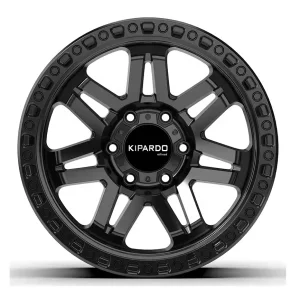
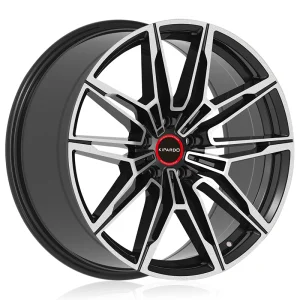
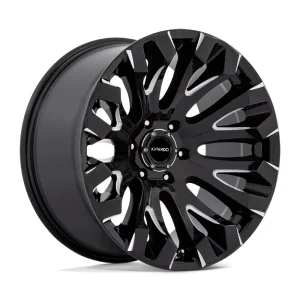
Primary Aftermarket & 4x4 Off-Road Product Series
Engineered for structural rigidity, severe load limits, and exact bolt-on compatibility across luxury SUVs, performance pickup platforms, and light trucks.

The Global Shift Toward High-Performance Forged Wheel Engineering
Analyzing structural kinematics, EV unspring weight dynamics, and metallurgical consolidation reshaping tier-one wheel procurement programs globally.
The global automotive aftermarket is witnessing an irreversible pivot toward fully forged aluminum wheel architectures. For decades, conventional low-pressure casting served as the cornerstone for aftermarket alloy replacements. However, rapid automotive electrification (EV), rising curb weights of premium luxury platforms, and the explosive expansion of extreme off-road overland expeditions have made conventional cast structures increasingly sub-optimal for high-torque applications.
Technical Reality: An EV or modern heavy-duty pickup demands up to 35% higher rotational fatigue life and dynamic cornering resilience than internal combustion sedans of the past decade. Forged 6061-T6 alloys answer this engineering threshold by eliminating micro-porosity and maximizing metallurgical grain boundary alignment along stress trajectories.
Forging subjects high-density aerospace-grade 6061 aluminum alloy billets to 10,000 to 12,000 tons of extreme hydraulic force. This severe mechanical compression restructures the dendritic crystalline arrangement into an unbroken, linear grain matrix aligned perfectly with wheel spoke geometry. Consequently, a monoblock forged wheel achieves up to a 25% to 32% weight reduction compared to a low-pressure cast equivalent while simultaneously displaying an increase in ultimate tensile strength exceeding 310 MPa.
Polar Moment of Inertia
Reducing unsprung rotating mass at the vehicle perimeter substantially lowers the polar moment of inertia. This directly improves acceleration, sharpens steering turn-in response, and mitigates brake fade under severe deceleration loads.
EV Range Optimization
Modern electric vehicles equipped with heavy battery packs require ultra-light forged wheels to optimize per-kilowatt range. The high load-to-weight ratio allows slender spoke profiles that maximize aerodynamic airflow and brake heat dissipation.
Finite Element Analysis (FEA)
Every custom offset (ET), PCD pattern, and center bore geometry is pre-tested in digital stress chambers. FEA simulations reveal radial load dispersion points, ensuring compliance with JWL, VIA, and SAE J2530 testing norms.
China Industry 4.0: Supply Chain Resilience & Production Efficiency
How automated CNC machining clusters, digital metallurgy tracking, and integrated surface finishing lines create decisive competitive margins for global wheel importers.
In the contemporary B2B automotive trade, competitive positioning depends heavily on factory automation depth, dimensional consistency, and supply chain agility. China's wheel industrial clusters—anchored by pioneers like Shanghai Rimax Industry Co., Ltd. (operating the JWL-verified Kipardo manufacturing infrastructure)—have evolved far beyond low-cost labor paradigms into highly connected, AI-integrated Industry 4.0 manufacturing facilities.
Complete Vertical In-House Integration
Unlike regional wheel machine shops that purchase outsourced, unverified forged blanks, tier-one Chinese manufacturing plants handle the full metallurgical spectrum internally: raw aluminum alloy smelting, ultrasonic de-slagging, degasification, direct hydraulic billet extrusion, multi-stage T6 thermal quenching, high-speed 5-axis CNC multi-tool cutting, and automated powder-coating/clear-coating cleanrooms.
This closed-loop manufacturing architecture yields three critical operational advantages for overseas enterprise buyers:
Full Ingot Heat Traceability
Every single manufactured wheel is stamped with a discrete tracking serial number linked to its original raw aluminum melt batch, spectrometry analysis records, and CMM dimensional inspection logs.
Aggressive Rapid Prototyping
Distributors can submit digital CAD or 3D scan data and receive fully validated 3D digital FEA reports within 48 hours, with physical forged sample prototypes delivered to the test bench within 14 business days.
Scalable Low-MOQ Flexibility
By using flexible multi-axis CNC tooling paths rather than permanent high-tonnage casting steel dies, custom forged programs can launch with small batch MOQs (as low as 4-8 pieces per custom fitment specification).
Material Science: Cast vs. Flow-Formed vs. Forged Wheels
A data-backed technical comparison designed for procurement directors, product engineers, and distribution category managers.
| Performance Criteria | Low-Pressure Cast Wheel | Flow-Formed (Rotary Spun) | 6061-T6 Monoblock Forged | Modular Multi-Piece Forged |
|---|---|---|---|---|
| Base Raw Material | A356.2 (Al-Si7Mg0.3) Ingot | A356.2 Modified / T6 Heat | Aerospace 6061-T6 Billet | Forged 6061-T6 Center + 6061 Rim |
| Manufacturing Process | Bottom-up molten filling in steel mold | Cast center + heated roller rim spinning | 10,000T die forging + full 5-axis CNC | CNC center bolted to spun forged lips |
| Tensile Strength (MPa) | 220 – 240 MPa | 260 – 290 MPa | 310 – 345 MPa | 310 – 340 MPa |
| Yield Strength (MPa) | 150 – 170 MPa | 190 – 220 MPa | 275 – 300 MPa | 275 – 295 MPa |
| Elongation at Break (%) | 3.5% – 5.0% | 6.0% – 8.5% | 10.0% – 14.0% | 11.0% – 14.5% |
| Weight Differential | Baseline (100%) | Approx. 10% – 15% Lighter | 25% – 32% Lighter | 18% – 25% Lighter |
| Tooling & Mold Capex | High ($3,500 – $6,000 per mold) | Moderate ($4,000 – $7,000 per mold) | Zero (CNC Code Driven) | Zero (CNC Code Driven) |
| Ideal B2B Market Segment | High-volume wholesale retail & OEM replicas | Enthusiast street & lightweight track | Supercar, luxury SUV, bespoke retail | Stance tuning, widebody, show builds |
*All test metrics verified under standardized ASTM E8 tensile and SAE J2530 radial/cornering fatigue benchmark test environments.
Aftermarket Forged Wheels Wholesale Pricelist Matrix
Transparent benchmark export price ranges (FOB Ningbo / Shanghai Port) categorized by diameter, construction architecture, and order volume tiers.
Commercial pricing for aftermarket forged wheels depends on several key engineering variables: the raw weight of the forged aluminum blank, the CNC machine cycle time (determined by spoke complexity, back-pad pocketing, and deep concave geometries), and surface finish procedures (such as multi-stage hand brushing, polished lips, transparent candy clear coats, or full chrome plating). Below is the factory benchmark export pricing model for volume purchasing:
| Wheel Size & Construction | Standard Finishes (FOB) | Custom Brushed / Polished (FOB) | MOQ Requirement | Production Lead Time |
|---|---|---|---|---|
| 17" - 18" Monoblock Forged 1-Piece | $145 – $175 / pc | $165 – $195 / pc | 4 Pieces (Sample) / 20 Pcs (Batch) | 12 – 15 Business Days |
| 19" - 20" Monoblock Forged 1-Piece | $185 – $225 / pc | $210 – $255 / pc | 4 Pieces (Sample) / 20 Pcs (Batch) | 14 – 18 Business Days |
| 21" - 22" Monoblock Forged 1-Piece | $245 – $295 / pc | $275 – $330 / pc | 4 Pieces (Sample) / 20 Pcs (Batch) | 15 – 20 Business Days |
| 23" - 24" Monoblock Forged 1-Piece | $330 – $410 / pc | $370 – $450 / pc | 4 Pieces (Sample) / 16 Pcs (Batch) | 18 – 22 Business Days |
| 19" - 21" Modular 2-Piece (Forged Lip) | $320 – $380 / pc | $355 – $420 / pc | 4 Pieces (Sample) / 16 Pcs (Batch) | 20 – 25 Business Days |
| 20" - 22" Modular 3-Piece (Bespoke Hardware) | $430 – $520 / pc | $480 – $580 / pc | 4 Pieces (Sample) / 12 Pcs (Batch) | 25 – 30 Business Days |
| 17" - 20" True Beadlock Forged Off-Road | $260 – $340 / pc | $295 – $380 / pc | 4 Pieces (Sample) / 20 Pcs (Batch) | 18 – 22 Business Days |
B2B Commercial Procurement Advisory: Full-container orders (20ft GP = approx. 320–380 forged wheels; 40ft HQ = approx. 700–850 forged wheels) qualify for volume price tier reductions of 8% to 15%. This includes complimentary private-label center cap laser etching, custom carton design, and individualized pallet packaging.
Global Aftermarket Dynamics: Regional Commercial Requirements
Examining fitment profiles, certification mandates, and purchasing habits across major international markets.
North America (US & Canada)
Strong consumer preference for deep-lip 20" to 24" fitments for full-size pickups (Ford F-150, Chevrolet Silverado, RAM 1500) and large SUVs. Load ratings must reach a minimum of 2,200 to 2,500 lbs (1,000–1,134 kg) per corner to support towing and heavy off-road use, all verified against SAE J2530 standards.
Western & Central Europe
Focuses on precise OE-plus fitments for performance marques (Porsche, BMW M, Audi RS, Mercedes-AMG). Crucial requirements include strict brake caliper clearance, certified structural compliance aligning with TÜV guidelines, and optimized wheel aerodynamics for electric sedans.
Middle East & GCC Region
Demands high thermal tolerance and superior durability for desert dune running. Strong market for 17" to 20" high-strength forged off-road wheels for Toyota Land Cruiser (LC300), Nissan Patrol (Y62), and Lexus LX600, paired with mirror-polished, high-gloss gold, and candy-finish show builds.
Specialized Commercial & Industrial Application Scenarios
How tailored forged wheel engineering resolves specific operational challenges across high-performance environments.
Motorsport & Track Day Endurance
Monoblock forged wheels feature knurled bead seats to completely eliminate tire slippage during high-G acceleration and hard braking. Spokes are scalloped via 3D back-milling to maximize heat shedding away from multi-piston carbon-ceramic brake systems.
Overland Expedition & Severe 4x4 Trail Crawling
Designed with reinforced outer rim lips to withstand harsh rock strikes and curb gouging at low tire pressures. Available with true forged beadlock rings that mechanical clamp tire beads, preventing tire debeading in sand or mud.
Commercial Armored & Executive Security Transport
Armored SUVs (such as B6/B7 ballistic rated Suburban, Land Cruiser, and Patrol conversions) run gross vehicle weights over 4.5 tons. Custom heavy-duty forged wheels deliver verified static load capacities of 1,500 kg to 1,800 kg per corner with direct run-flat system integration.
Luxury Electric Fleet Modernization
High-end ride-share and executive EV fleets use flow-formed and forged alloy wheels to offset heavy battery payloads. This lower rotational inertia helps protect suspension bushings and control arms from premature shock wear over high annual mileages.
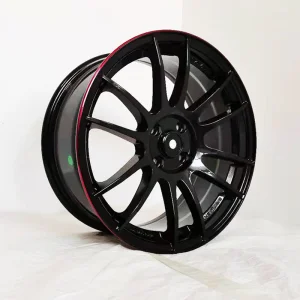
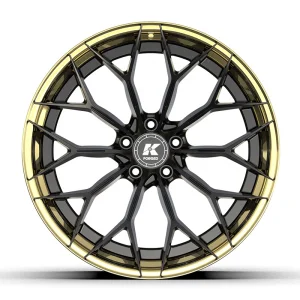
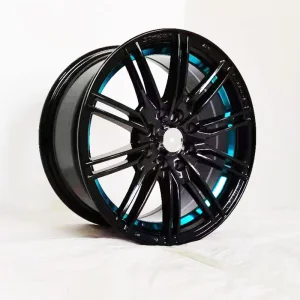
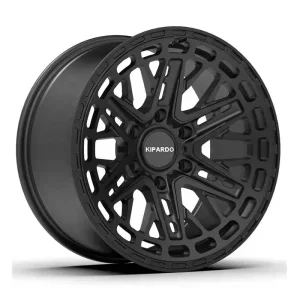
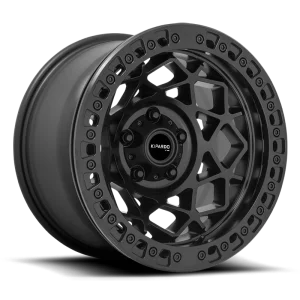
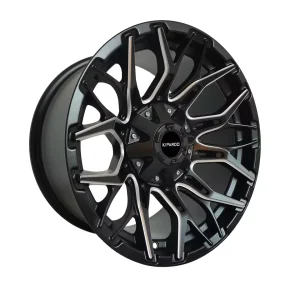
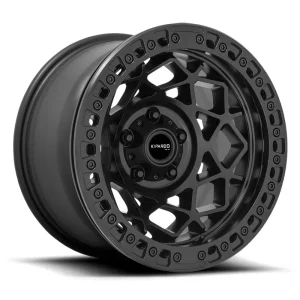
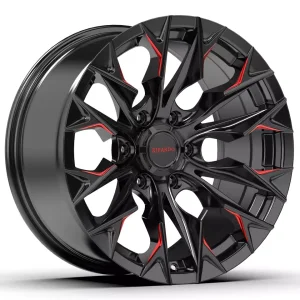
Specialized & High-Demand Wheel Inventory Selection
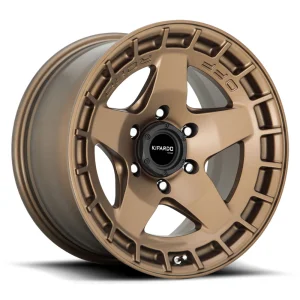
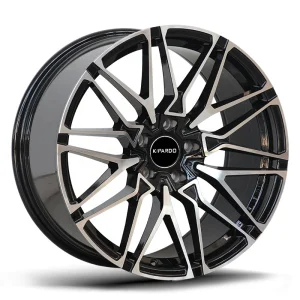
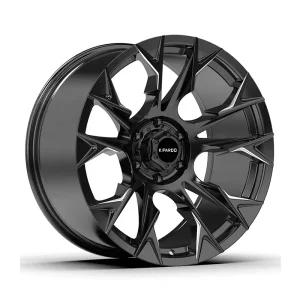
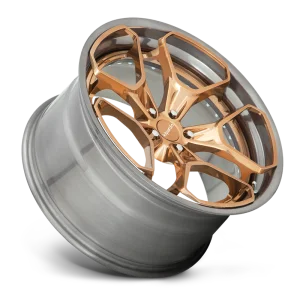
Explore luxury multi-piece forged assemblies, precision-machined sports wheels, and reinforced off-road options ready for export delivery.
Enterprise Sourcing: Frequently Asked Questions
Direct technical answers regarding factory testing protocols, minimum order thresholds, customization workflows, and export logistics.