
Precision-Engineered Aftermarket Rim Series
Immediate wholesale procurement availability across 15-inch to 22-inch fitments. Manufactured with virgin A356.2 aluminum, optimized through FEA stress testing, and verified under JWL/VIA protocols.
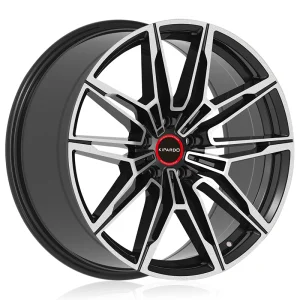
China Kipardo 18 19 20 inch factory wholesale cast alloy rims aluminum 4x4 offroad wheels Manufacturers, Suppliers
View Product Specs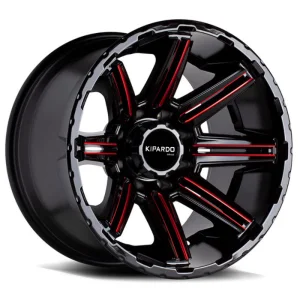
Wholesale Kipardo 17 18 inch factory customized aluminum alloy car rims offroad wheels Suppliers, Factories
View Product Specs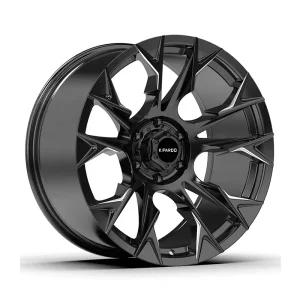
Custom Kipardo 20 inch factory wholesale 5 6 hole aluminum alloy rims 4x4 offroad wheels Supplier, Companies
View Product Specs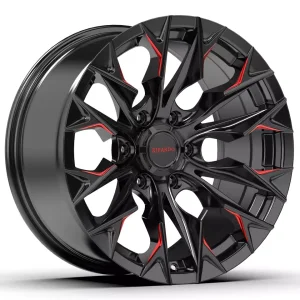
Cheap Kipardo 16 17 18 inch 6 hole custom casting car aluminum alloy rims 4x4 offroad wheels Exporters, Service
View Product Specs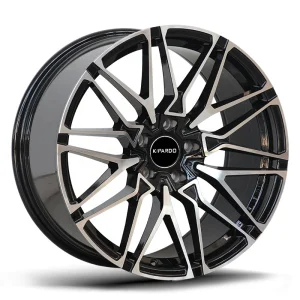
Custom Kipardo 19 20 21 22 inch factory custom wholesale luxury alloy rims aluminum 4x4 offroad wheels Exporter, Service
View Product Specs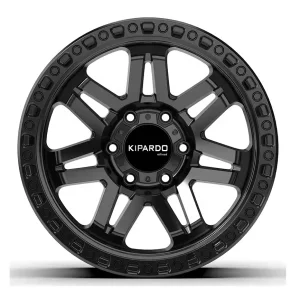
China Kipardo 17 18 inch factory wholesale 6 hole custom car aluminum alloy rims 4x4 offroad wheels Supplier, Service
View Product Specs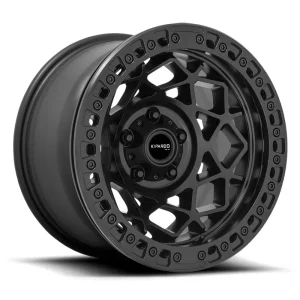
ODM Kipardo 17 20 inch factory wholesale black custom cast aluminum alloy rims 4x4 offroad wheels Manufacturer, Products
View Product Specs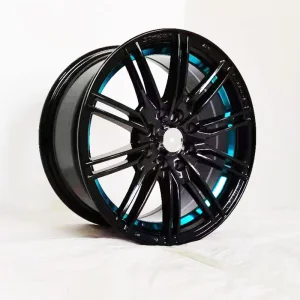
Wholesale KIPARDO 15 inch black color machine face alloy wheel rims for sale Manufacturer, Quotes
View Product SpecsThe Structural Evolution of the Aftermarket Rim Industry
Global Macro Trade Trajectory
The global automotive aftermarket wheel sector has transitioned from a purely aesthetic accessory segment to an essential performance and powertrain optimization market valued in excess of $15.4 billion. Rapid expansion across North America, the European Union, Australia, and the GCC region is catalyzed by increased light-truck fleet usage, overlanding recreational culture, and the transition toward electric propulsion platforms.
Modern commercial purchasers prioritize certified structural integrity over superficial styling. Stringent regional homologation mandates—such as German TÜV, Japanese JWL/VIA, and US SAE J2530—demand rigorous process control and raw material accountability from Tier-1 manufacturing facilities in China.
Raw Material Metallurgical Purity
Structural reliability begins with virgin primary A356.2 aluminum ingot feedstock. Inferior suppliers frequently utilize recycled secondary automotive scrap containing unrefined iron and silicon inclusions, which directly compromises fatigue elongation and creates brittle microscopic slip planes under cyclic impact.
Our casting facilities employ automated rotary inert-gas degasification with ceramic foam filtration (CFF) systems. This strictly restricts hydrogen content below 0.12 mL/100g Al, virtually eliminating the sub-surface gas porosity responsible for bead-seat leakage and catastrophic spoke shear in extreme operational conditions.
Electric Vehicle (EV) Unsprung Mass Demands
The global transition to battery electric platforms (BEVs) has rewritten mechanical engineering parameters for aftermarket rims. EVs generate instantaneous torque up to 1,000+ Nm, carry massive curb weights due to low-slung traction battery packs, and demand exceptionally low acoustic cabin resonances.
Consequently, wheels must exhibit heightened load ratings exceeding 950–1,150 kg per corner while maintaining aggressive weight savings. Lowering unsprung rotational inertia improves kinetic regenerative braking efficiency by up to 4.2% while directly preserving battery travel range per kilowatt-hour.
Casting vs. Flow-Forming vs. Monoblock Forging
Comprehensive metallurgical breakdown of structural wheel fabrication methods. Select the optimal manufacturing technology based on load demands, rotational inertia constraints, and commercial program targets.
| Engineering Parameter | Low-Pressure Casting (LPDC) | Rotary Flow-Forming (Hybrid) | Aerospace Forged (6061-T6) |
|---|---|---|---|
| Primary Ingot Chemistry | A356.2 (Al-Si7Mg0.3) Primary Alloy | A356.2 Flow-Formed Grade Alloy | 6061 Aerospace Billet (Al-Mg-Si-Cu) |
| Manufacturing Methodology | Molten metal driven upward via 0.6–1.0 bar pressure into preheated steel die | Cast preform center; barrel heated and hydraulically cold-spun over a mandrel | Solid billet subjected to 10,000-ton closed-die hydraulic forge; 5-axis CNC cut |
| Microstructural Grain Pattern | Uniform, isotropic dendritic crystalline matrix with minor boundary segregation | Highly elongated, aligned laminar grain structure along barrel hoop direction | Ultra-dense, compressed continuous flow lines eliminating microscopic voids |
| Tensile Strength (Rm) | 230 – 260 MPa (Post-T6 Aging) | 310 – 340 MPa (Barrel Zone) | 380 – 420 MPa (Yield: ≥ 310 MPa) |
| Mass vs. Equivalent Cast Base | Baseline Weight Benchmark (100%) | 12% to 18% Weight Reduction | 25% to 32% Maximum Lightweighting |
| Impact Absorption Energy | High elastic dampening; optimal for daily road shock absorption | Enhanced hoop elongation preventing rim rim fracture under deep potholes | Extreme ductility and structural retention under motorsport crash loads |
| Optimal Commercial Application | High-volume retail aftermarket, OE replacement, mass wholesale distribution | High-performance track day programs, heavy electric sedans, upscale SUVs | Supercars, multi-piece custom projects, tactical armored vehicles, professional racing |
LPDC Low-Pressure Die Casting
By forcing molten alloy upward through a central stalk into the mold cavity under tightly regulated low air pressure (0.6–1.0 bar), low-pressure casting virtually eliminates turbulence and oxide inclusion common to gravity casting.
- Cycle Stabilization: Automatic Die Cooling
- Porosity Risk: Extremely Low (<0.05%)
- Economic Fitment: High-Volume Tooling Runs
FLOW Rotary Flow-Forming
Utilizing high-speed hydraulic forming rollers under intense localized temperatures (300°C–350°C), the cast barrel is progressively extruded over an exact tooling mandrel. This process alters the aluminum grain structure, mirroring forged hoop strength.
- Barrel Thickness: Reduced by 35%
- Hoop Yield Strength: Increased by 28%
- Unsprung Mass: Significant Savings
FORGE Precision Monoblock Forging
Forged from solid 6061 aerospace-grade cylindrical billets, these blanks undergo multi-stage hydraulic stamping under 10,000 tons of continuous downward pressure. The raw forgings are then precision sculpted on high-speed multi-axis CNC machining stations.
- Billet Hardness: Brinell HB ≥ 95
- Structural Porosity: Absolute 0% Core Voids
- Bespoke Engineering: Direct Mill-to-Order
Targeted Architectural Use-Cases & Duty Cycles
Severe 4x4 & Overlanding
Engineered with reinforced outer rim flanges, thick back-pad knurling to avoid high-torque tire slipping at single-digit air pressures, and immense radial load capabilities exceeding 1,250 kg per corner. Built to conquer rock crawls, corrugated desert washes, and deep overlanding washboard tracks.
Electric Vehicle Platforms
Aero-optimized surfaces developed through computational fluid dynamics (CFD) to smooth wheel-well turbulence. High inner-barrel clearance is standard to accommodate regenerative electric braking assemblies, paired with reinforced spoke roots to handle heavy instantaneous EV torque.
Motorsport & Street Tuning
Focused on aggressive offset calibrations, multi-piston big-brake kit (BBK) clearance, and minimized rotational moments of inertia. Utilizing deep concave profiles, flow-formed or forged monoblock construction delivers crisp steering feedback and superior cornering responsiveness.
OEM-Direct Replacement
Hub-centric configurations calibrated exactly to original vehicle hub bores, eliminating the need for aftermarket centering rings. Factory-matched lug bolt seat countersinks allow seamless use of original hardware while offering refreshed visual appeal and OE-grade corrosion resistance.
Standard Compliance: Beyond JWL, VIA & SAE J2530
At Shanghai Rimax Industry Co., Ltd. (Kipardo), every alloy wheel undergoes a comprehensive six-stage qualification battery before cleared for packaging and global containerized loading.
Dynamic Rotary Cornering Fatigue
Simulates maximum lateral g-force cornering loads over continuous operational duty cycles. A bending moment load is exerted through an extended rigid shaft clamped to the wheel center, continuously rotated for 100,000 cycles without evidence of crack propagation or bolt torque loss.
- Test Standard: JWL / SAE J2530
- Test Cycles: > 100,000 Revs
- Evaluation: Fluorescent Dye Penetrant
13-Degree & 30-Degree Impact Tests
Verifies structural energy dissipation when striking a severe curb or deep roadway obstacle at velocity. A calibrated free-falling steel striker strikes the tire/wheel rim assembly directly on the outer bead flange. Structural fracture or sudden tire air pressure deflation results in immediate failure.
- Drop Weight: Matched to Max Axle Mass
- Air Loss: 0 PSI Drop within 60s
- Structural Integrity: Zero Severance Fractures
1,000-Hour CASS & Salt Spray
Protects pristine aesthetics against harsh calcium chloride road salts, sub-zero slush, and coastal marine salinity. Multi-coat finishing schedules (powder primer, base color, acrylic clear coat) are subjected to continuous Copper-Accelerated Acetic Acid-Salt Spray (CASS) chambers.
- Chamber Duration: 1,000+ Continuous Hours
- Blistering Standard: ASTM D714 Rating 10
- Finish Warranty: 2-Year Environmental Guarantee
Strategic Supply Chain & Procurement Architecture
FEA Topology Optimization
CAD fitment generation matched with vehicle brake profile data. Finite Element Analysis (FEA) simulates peak dynamic stress points, eliminating superfluous material and reinforcing critical spoke transition radii.
Rapid Tooling & Mold Lifecycle
Precision CNC steel tooling fabricated in-house within 25–30 days. Tooling pathways feature integrated liquid cooling channels to ensure repeatable, isotropic solidification across 100,000+ casting strokes.
Private-Label Packaging Integration
Custom heavy-duty double-corrugated exported carton containers designed to survive multi-modal transit. Branded alloy center caps, valve stems, installation hardware, and scannable GS1 barcodes integrated at factory level.
Containerized Intermodal Logistics
Optimal container stuffing algorithms to maximize 20GP and 40HQ payload capacities. Experienced export documentation handling custom declarations, mill test certificates, and JWL registration archives.
Technological Roadmap: 2025–2030 Aftermarket Engineering
Continuous R&D investment driving metallurgy forward: carbon-hybrid barrel development, AI generative topology design, and green closed-loop aluminum recycling.
Carbon-Aluminum Hybrid Wheels
Next-generation performance builds combine forged 6061-T6 aluminum center spiders with multi-axial carbon fiber composite outer rim barrels. This hybrid architecture reduces overall wheel assembly mass by an astonishing 40% compared to cast equivalents, virtually transforming suspension response and hypercar track dynamics.
Generative AI Topology Synthesis
By leveraging proprietary algorithmic stress simulations under generative AI computing modules, wheel engineers can distribute aluminum mass along internal load paths with biological efficiency. This removes redundant structural material while increasing torsional rigidity under extreme lateral drift and high-downforce cornering.
Circular Low-Carbon Green Aluminum
Responding to European Corporate Sustainability Due Diligence Directives (CSDDD), our smelting supply chain is integrating certified zero-emission hydroelectric and solar primary aluminum smelting. This achieves a carbon footprint below 4.0 kg CO2 per kg of aluminum, fulfilling environmental supply chain standards for European partners.
Frequently Asked Technical Questions
In-depth engineering and logistical clarification designed for professional importers, distributors, automotive brand managers, and aftermarket retail executives.
What exact metallurgical distinctions separate Low-Pressure Casting (LPDC) from standard gravity casting?
How does Shanghai Rimax Industry Co., Ltd. (Kipardo) verify and certify its wheel quality?
What are the minimum order quantities (MOQ) and production lead times for custom tooling programs?
What specific warranty protection is provided on Kipardo wheels?
Can Rimax engineer bespoke offsets (ET), PCD bolt patterns, and custom center bores?
Expanded Aftermarket Rim Engineering Collection
Featuring multi-piece forged assemblies, concave 6061-T6 monoblock aerospace wheels, and heavy-duty 4x4 utility configurations ready for immediate containerized deployment.
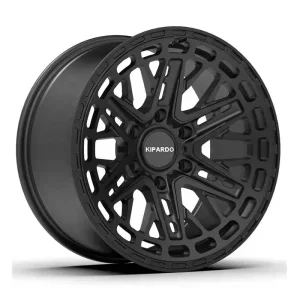
Wholesale Kipardo China factory 20 inch 5 6 hole alloy rims aluminum 4x4 offroad wheels Supplier, Factories
View Product Specs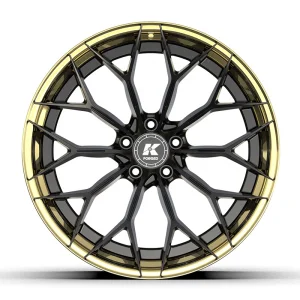
OEM Kipardo Luxury forged wheels 3 Pieces forged Rims Manufacturers, Companies
View Product Specs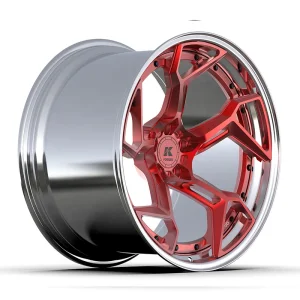
OEM Kipardo Custom 18 19 20 21 22 inch 6061-T6 aluminum concave forged wheels Suppliers, Exporter
View Product Specs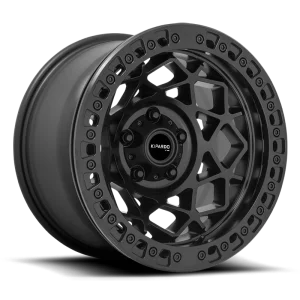
Buy KIPARDO manufacturer 6 holes 17 inch 4x4 wholesale aluminum alloy wheels rims Supplier, Quotes
View Product Specs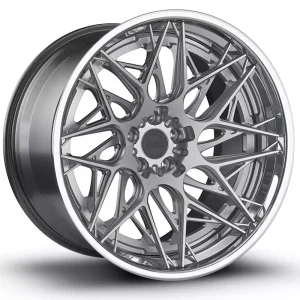
Discount Kipardo 18 inch to 24 inch fully custom 6061-T6 aluminum concave forged wheels Suppliers, Company
View Product Specs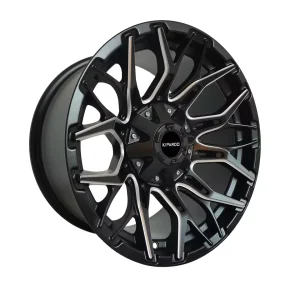
Cheap Kipardo 17 18 inch 5 6 hole factory custom casting car aluminum alloy rims 4x4 off road wheels Exporter, Product
View Product Specs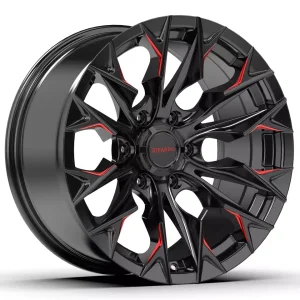
Discount Kipardo RTS 17x9 4x4 alloy car wheels with pcd 6x139.7 6x114.3 5x150 velg offroad wheels Quotes, Exporter
View Product Specs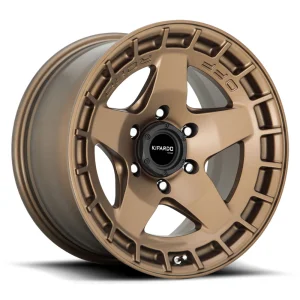
China Kipardo 17 18 inch high quality factory wholesale aluminum alloy rims 4x4 offroad wheels Manufacturer, Companies
View Product SpecsAbout Shanghai Rimax Industry Co., Ltd.
Direct manufacturer-to-distributor engineering partnerships since 2010. Eliminate trading middlemen, secure certified casting production capacity, and build lasting aftermarket wheel programs.
Manufacturing Headquarters
Strategically situated in Huaqiao Town, Kunshan, Jiangsu Province, our direct proximity to major transport nodes and Shanghai deep-water container ports provides unmatched supply chain resilience and container shipping turnaround.
- Address: Huijin Mansion, Kunshan, Jiangsu, China
- Established: Year 2010
Global Engineering Desk
Our sales engineering department handles technical drawing reviews, FEA simulations, fitment inquiries, and private-label requests. Importers receive full bilingual documentation and direct communications with wheel engineers.
- Direct Email: [email protected]
- Telephone: +86 21 3732 0095
Accelerated Communication
Instant consultation is accessible for regional distributors requiring rapid quote turnaround, stock inventory audits, or bespoke forged project evaluations. Reach our live product specialists immediately via WhatsApp.
- Direct WhatsApp: +86 166 2515 2414
- Service Support: English & Chinese 24/7