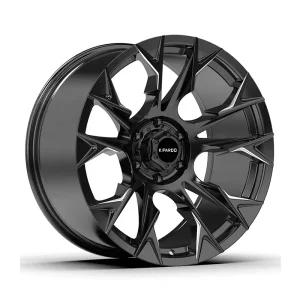
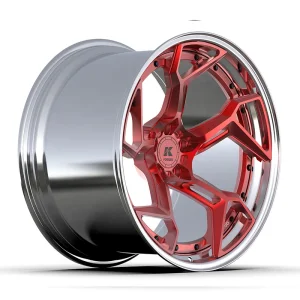
Direct Factory Precision Selection
Featured Engineering Catalog: Engineered Formations
Explore our top-tier catalog of forged, flow formed, and engineered custom aluminum wheels verified through JWL/VIA test benches and manufactured for global export.
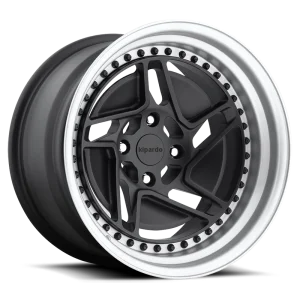
OEM Custom wholesale new design Forged car 3 pieces forged wheels Companies, Service
View Wheel Specs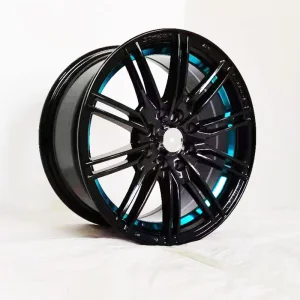
Wholesale KIPARDO 15 inch black color machine face alloy wheel rims for sale Manufacturer, Quotes
View Wheel Specs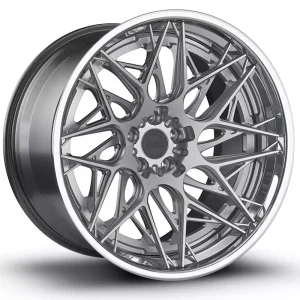
Discount Kipardo 18 inch to 24 inch fully custom 6061-T6 aluminum concave forged wheels Suppliers, Company
View Wheel Specs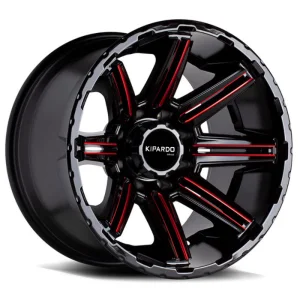
Wholesale Kipardo 17 18 inch factory customized aluminum alloy car rims offroad wheels Suppliers, Factories
View Wheel Specs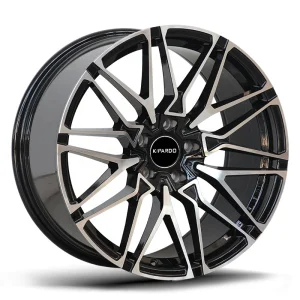
Custom Kipardo 19 20 21 22 inch factory custom wholesale luxury alloy rims aluminum 4x4 offroad wheels Exporter, Service
View Wheel Specs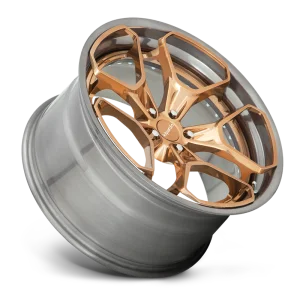
OEM Kipardo alloy wheels Forged car 3 pieces forged wheels 2 pieces,monoblock Manufacturer, Products
View Wheel Specs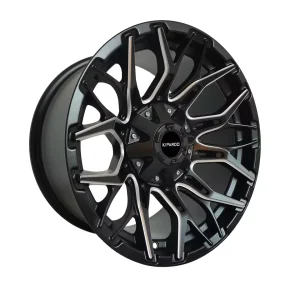
Cheap Kipardo 17 18 inch 5 6 hole factory custom casting car aluminum alloy rims 4x4 off road wheels Exporter, Product
View Wheel Specs
Technical Whitepaper: Metallurgical Transformation
The Mechanics of Flow Forming: Microstructural Densification
Evaluating the crystalline shift between conventional gravity/low-pressure casting and cold/hot rotary extrusion, providing B2B buyers with uncompromising tensile strength and reduced rotational inertia.
-15%~-25%
Unsprung Rim Weight
+32%↑
Tensile Yield Strength
+40%↑
Elongation / Ductility
100%
Rotary Grain Alignment
Executive Engineering Summary: Flow forming (also designated as Flow Forged, Rotary Forged, or Spun Rim technology) utilizes specialized hydraulic rollers exerting over 10 to 15 tons of localized pressure onto the barrel of a cast aluminum preform while rotating at precise thermal states (typically 300°C–380°C). This severe plastic deformation compresses the dendritic microstructure of virgin A356.2 aluminum, aligning the molecular grain direction parallel to the rim profile. The resulting wheel barrel exhibits mechanical properties indistinguishable from full 6061-T6 billet forging at a fraction of the manufacturing cycle cost.
| Performance Parameter | Standard Low-Pressure Cast | High-Precision Flow Formed | Full Monoblock Forged (6061-T6) |
|---|---|---|---|
| Microcrystalline Grain Structure | Random dendritic dispersion; minor gas microporosity risk | Linear, continuous flow-aligned grain boundaries | Dense directional grain forging matrix |
| Barrel Tensile Strength (Rm) | 220 – 240 MPa | 295 – 330 MPa | 310 – 350 MPa |
| Yield Strength (Rp 0.2) | 150 – 170 MPa | 230 – 260 MPa | 240 – 280 MPa |
| Elongation at Break (A5) | 4.0% – 6.0% | 9.0% – 13.5% (High Impact Cushion) | 10.0% – 14.0% |
| Barrel Wall Thickness (Nominal) | 4.8 mm – 5.5 mm | 2.8 mm – 3.4 mm (Optimized Geometry) | 2.5 mm – 3.0 mm |
| Cost Efficiency for Mass Volume | Highest cost efficiency; volume baseline | Optimal performance-to-cost ratio for premium markets | High tooling and cycle investment |
Industrial Upstream Integration
China Factory Supply Chain: Scale, Velocity & Ingot Purity
How Shanghai Rimax Industry Co., Ltd. capitalizes on China's premier metallurgical ecosystem in Jiangsu to deliver scalable, reliable, and cost-controlled alloy wheel programs to international distributors.
Primary Smelting & Degassing
We source prime electrolyzed A356.2 aluminum alloy directly from verified state smelters. Utilizing advanced rotary argon-fluxing degassing technology, hydrogen content is verified below 0.10 cm³/100g Al, ensuring zero internal micro-cavitation prior to flow forming extrusion.
Multi-Spindle Flow Forming
Our automated CNC 3-roller spinning centers utilize synchronized feed rates and digital pyrometry tracking. By maintaining exact temperature ranges, our lines achieve cycle times under 90 seconds per wheel while upholding dimensional runouts within tighter tolerances than OEM tolerances.
Comprehensive Cluster Efficiency
Located in Kunshan, Jiangsu, our facility resides in the heart of the Yangtze River Delta industrial belt. From dedicated mold-tooling design houses and specialized chemical powder coating suppliers to deep-water container berths at Shanghai Port, logistics friction is systematically minimized.
Global Enterprise Procurement
B2B Sourcing Requirements: From Blueprint to Container Logistics
A clear roadmap for international tier-one distributors, performance brands, and wholesale networks requiring tailored offset matrices, load ratings, and custom-branded wheel lines.
Flexible Tooling Amortization
OEM and private-label design programs benefit from amortized mold tooling packages. With custom steel mold turnaround times within 35 to 45 days, our engineering team rapid-prototypes proprietary spoke designs with built-in brake clearance profiles for carbon-ceramic systems.
MOQ & Staggered Container Loading
We recognize inventory balancing needs for regional distributors. Kipardo accommodates combined FCL (Full Container Load) shipments combining diverse PCD fitments (5x112, 5x114.3, 5x120, 6x139.7), stepped offsets (ET), and multi-width configurations (front 19x8.5J / rear 19x10J).
Full Private-Label Packaging
Turnkey export execution: customized double-corrugated drop-tested cartons, custom high-density edge protectors, branded shower caps, embossed aluminum center caps, and barcode-integrated logistics palletizing for automated distribution centers.
Global Regulatory Homologation
Compliance & Structural Verification: JWL, VIA, SAE & TÜV
Safety-critical automotive components demand documented testing. Every Kipardo wheel geometry is pre-validated through Finite Element Analysis (FEA) and validated via physical destructive test apparatus.
Dynamic Radial Fatigue
Testing barrel durability under high-speed radial loads. The wheel is fitted with a tire and driven against a rotating drum under 2.2x maximum vehicle load for over 500,000 to 1,000,000 cycles without structural fatigue or air-loss.
Dynamic Cornering Fatigue
Simulating intense lateral turning G-forces. The hub pad is clamped while a bending moment arm subjects the hub pad and spoke junctions to over 100,000 bending cycles according to SAE J2530 and ISO 3006 protocols.
13° Dynamic Impact Test
Assessing curb strike and pothole impact resistance. A calibrated free-falling striker drops directly onto the outer rim flange. Flow formed rims show ductile deformation rather than catastrophic brittle fracturing.
CASS Salt Spray (1,000h)
Engineered for northern salt-treated highways and coastal climates. Multi-layer coatings (zinc phosphate pretreat, electro-deposition primer, automotive urethane color, clear powder coat) endure rigorous corrosion tests.
Versatile Field Deployments
Market-Specific Applications: Where Flow Forming Excels
From electric vehicle efficiency programs to severe-duty overlanding and endurance racing, our custom wheel specifications adapt to regional driving demands and commercial fleets.
Next-Gen Electric Vehicles (EVs)
Heavy battery payloads demand high axle load ratings (up to 950 kg – 1050 kg per corner), while instant electric motor torque causes tire bead slipping. Our EV-targeted flow formed wheels integrate knurled bead seats to prevent tire slippage and preserve aerodynamic efficiency.
Track & Pro-Am Time Attack
Every kilogram shaved off the outer rim barrel yields a fourfold improvement in effective vehicle acceleration and braking distance due to reduced polar moment of inertia. Flow formed wheels provide competition drivers with rapid steering response and enhanced brake duct cooling.
Overland, 4x4 & Pickup Fleets
Off-road environments impose sharp shock loads when airing down tires across rocks, sand dunes, and washboard trails. Flow formed barrels resist bead cracking and edge flaking far better than standard cast wheels under extreme deflation.
Automotive Horizon 2026-2030
Technological Megatrends: The Future of Alloy Wheels
Forward-looking analysis of wheel manufacturing trends, sustainability directives, and structural innovations reshaping international aftermarket and tier-1 procurement.
Hybrid Aero-Blade Flow Forming
The global rise of high-efficiency SUVs and long-range luxury sedans has made aerodynamic drag (Cd) a primary engineering criterion. Future wheel tooling incorporates flow formed barrels bonded to ultralight carbon-composite or polycarbonate snap-in aerodynamic blades, achieving turbulence reduction across highway cruise cycles.
Large Diameters with Lightweight Profiles
OEM wheel arches continue expanding, making 21-inch, 22-inch, and 23-inch diameters the benchmark for modern crossover platforms. Using traditional casting makes these sizes excessively heavy (16-19 kg per wheel). High-tonnage flow forming maintains wheel mass below 11.5-13.0 kg, preserving suspension ride dynamics.
Green Aluminum & Low-Carbon Footprint
With cross-border carbon border adjustment mechanisms (CBAM) taking hold in the EU and North America, Shanghai Rimax integrates certified low-carbon recycled aluminum scraps and solar-powered smelting systems, reducing embodied emissions per wheel to satisfy institutional OEM supply guidelines.
Comprehensive B2B Procurement Intelligence
Frequently Asked Questions: Flow Formed Wheels
In-depth technical answers addressing metallurgy, tooling lead times, homologation processes, and container shipping policies for automotive distributors.
What is the structural difference between flow formed and regular cast rims?
In traditional low-pressure casting, molten aluminum solidifies statically in the mold, resulting in a random crystalline grain structure throughout the spokes and barrel. Flow forming takes a specially cast preform and applies high hydraulic pressure through rotating mandrels and rollers, elongating and compressing the barrel metal. This creates a dense, work-hardened, forged-like grain orientation that increases barrel tensile strength by over 30% while reducing barrel wall thickness.
How does flow forming benefit dynamic vehicle performance?
Because flow forming removes 1.5 kg to 3.0 kg of mass specifically from the outermost perimeter (the barrel), it produces an exponential reduction in rotational inertia ($I = m \cdot r^2$). Vehicles equipped with flow formed wheels exhibit sharper throttle response, shorter stopping distances, cooler braking setups, and less wear on suspension damping systems.
Can Shanghai Rimax manufacture customized designs and offsets (ET)?
Yes. We specialize in both OEM and ODM partnerships. Our in-house engineering studio develops CAD/CAM 3D models with FEA stress simulation. Molds can be tailored with variable offset pads, enabling PCD drillings from 4x98 up to 8x180, custom back-spacing, center bores adapted for hub-centric fitment, and custom brake caliper relief profiles.
What testing verifications and certifications back your wheel lines?
Our Kipardo casting and flow forming facility is JWL and VIA verified. Production batches undergo 100% radiographic X-ray inspection for porosity, dynamic cornering fatigue testing, radial roll drum testing, 13-degree dynamic drop impact testing, spectrometer melt chemistry verification, helium air-leak tests, and salt spray surface testing.
What is the standard production cycle and lead time for export orders?
For established tooling catalog items, standard batch production takes between 30 and 45 days. If new mold tooling development is commissioned, design finalization, FEA approval, and mold cutting require 35 to 45 days, followed by 10 to 15 days for first-article test samples and JWL certification before mass serial production.
What warranty policy is provided to international wheel distributors?
Every Kipardo alloy wheel manufactured and exported by Shanghai Rimax Industry Co., Ltd. is accompanied by a 5-year / 100,000-kilometer structural integrity warranty and a 2-year warranty protecting against peeling, blistering, or corrosion on all factory-applied painted, polished, and machined finishes.
Complete Wholesale Range
Heavy-Duty, Cast & Multispoke: Global Export Series
Broaden your distribution inventory with our comprehensive off-road, replica, Japanese tuning, and concave alloy rims built under rigorous quality controls.
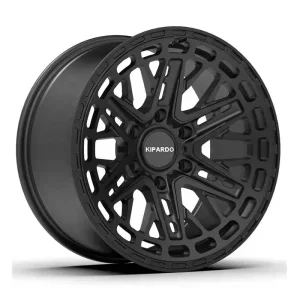
Wholesale Kipardo China factory 20 inch 5 6 hole alloy rims aluminum 4x4 offroad wheels Supplier, Factories
View Wheel Specs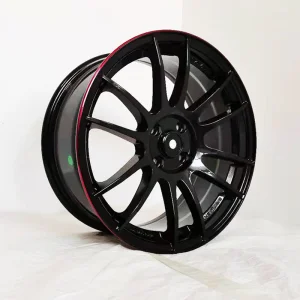
Cheap KIPARDO 15 inch 5x100 undercut red new japan design wheel Quotes, Products
View Wheel Specs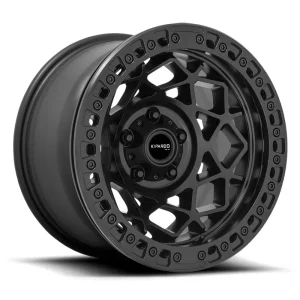
ODM Kipardo 17 20 inch factory wholesale black custom cast aluminum alloy rims 4x4 offroad wheels Manufacturer, Products
View Wheel Specs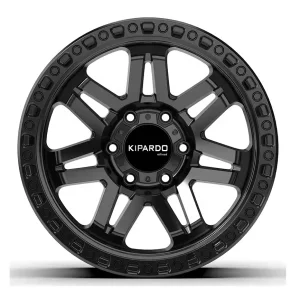
China Kipardo 17 18 inch factory wholesale 6 hole custom car aluminum alloy rims 4x4 offroad wheels Supplier, Service
View Wheel Specs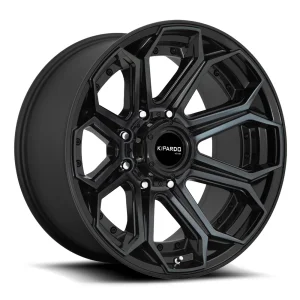
CE Certification Kipardo 17 20 inch 6lug 6x139.7 4x4 offroad car alloy wheels rims for lexus GX460 GX470 Company, Products
View Wheel Specs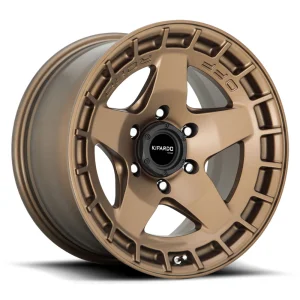
China Kipardo 17 18 inch high quality factory wholesale aluminum alloy rims 4x4 offroad wheels Manufacturer, Companies
View Wheel Specs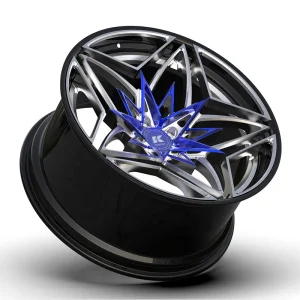
Custom Kipardo Custom 18 to 30 inch 2 Pieces forged wheels 3 Pieces forged Rims Pricelist, Exporters
View Wheel Specs