
Industrial Brushed Forged Wheel Portfolio (Part I)
Explore precision-machined monolithic and modular forged alloy wheel systems, engineered to extreme impact and cornering fatigue tolerances under global homologation standards.
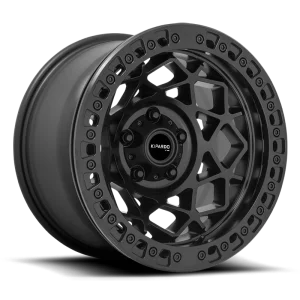
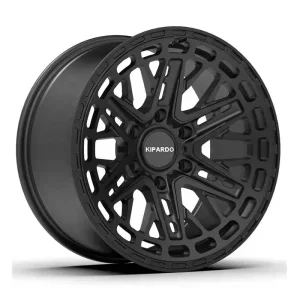
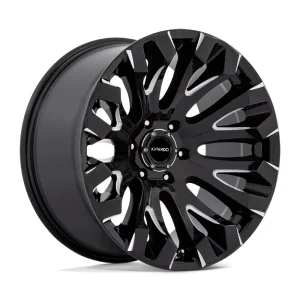
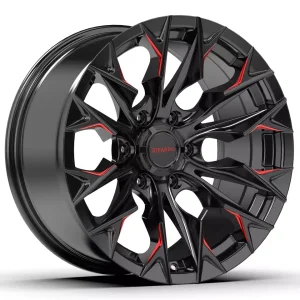
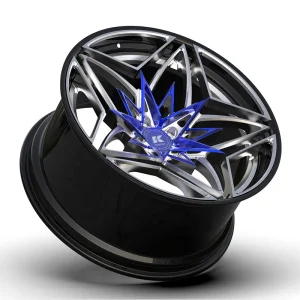
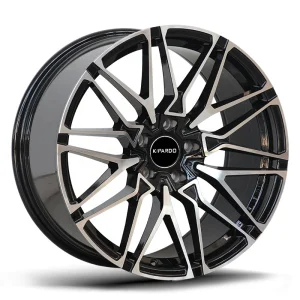
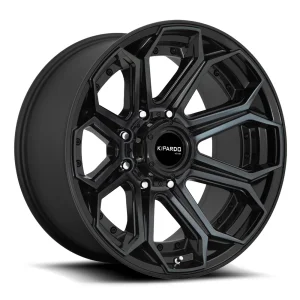
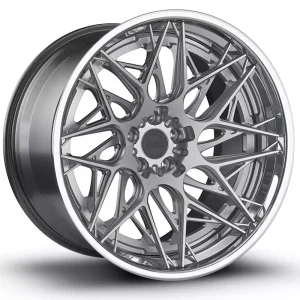
Industry Landscape & Metallurgy of Brushed Forged Wheels
A rigorous metallurgical comparison of continuous deformation matrixing, tensile grain alignment, and hand-crafted surface grain orientation.
Continuous Grain Structural Integrity
Unlike cast wheels subjected to thermal contraction porosity, forged wheels begin as solid cylindrical billets of 6061-T6 aluminum alloy. Subjected to 10,000 tons of extreme hydraulic forging pressure, the molecular grain boundaries are compressed and aligned along the wheel's load lines, boosting ultimate tensile strength past 310 MPa and yield strength past 275 MPa.
Hand-Crafted Linear Brushed Texturing
The characteristic satin luster of brushed forged rims requires meticulous abrasive graining. Specialized technicians apply high-precision non-woven abrasive pads along radial spokes or concentric rim lips under continuous rotary control. This produces microscopically uniform directional brush lines that cannot be replicated by automated diamond-turning cutters.
Dual-Stage Protective Clear-Coat Sealing
To preserve exposed aluminum micro-grooves from galvanic corrosion, brake dust oxidation, and chemical pitting, our brushed wheels receive electrostatic clear powder priming cured in inert ovens, followed by an ultra-thin acrylic or tinted transparent topcoat that exceeds 1,000 hours in CASS (Copper Accelerated Salt Spray) tests without filiform blistering.
Global Enterprise Procurement & Sourcing Solutions
Solving inventory holding costs, fitment complexity, and homologation barriers for automotive tier-1 distributors, brand owners, and fleet customizers.
Flexible Minimum Order Quantities (MOQ)
While standard mass casting demands batch commitments of 100+ units per mold, our CNC-driven forged wheel division supports precision low-volume custom runs down to individual vehicle sets (4-5 wheels). This enables distributors to fulfill high-margin, bespoke orders without locking working capital in warehouse excess.
Fully Customized Mechanical Geometry
Avoid inventory duplication across vehicle generations. Our engineering team calculates and carves unique PCD bolt patterns, exact hub-centric center bores (CB), and millimeter-perfect offsets (ET) tailored for staggered applications, aggressive body kits, and big brake kit (BBK) clearance envelopes.
Full-Spectrum Private Label Ecosystem
Scale your brand equity effortlessly. Rimax and Kipardo provide turnkey OEM and ODM packaging, including laser-engraved wheel lips, bespoke center cap badges with bespoke knurling, branded anti-scratch protective edge rings, and drop-tested double-wall export boxes custom-printed with your company branding.
Manufacturing Verification & Technical Roadmap
A zero-defect verification pathway combining aerospace destructive analysis, non-destructive testing, and future-forward alloy architectures.
FEA Structural Simulation
Every custom wheel geometry passes through Finite Element Analysis (FEA) to detect stress concentrations along the spoke roots and hub interface before CNC cutting begins.
High-Speed 5-Axis Milling
High-precision spindle 5-axis CNC machining centers sculpt complex concave spoke backbones, weight-saving back-pocket lightening wells, and precise bead lock perimeters.
Multi-Axis JWL Verification
Physical validation via 13-degree impact dynamic drop testing, dynamic cornering fatigue exceeding 100,000 cycles, and radial endurance running under continuous heavy overloads.
CMM Metrology & Balance
Every brushed forged wheel is checked on automated Coordinate Measuring Machines (CMM) for run-out and balance within ±0.15mm tolerances prior to ultrasonic cleaning and packaging.
Industrial Brushed Forged Wheel Portfolio (Part II)
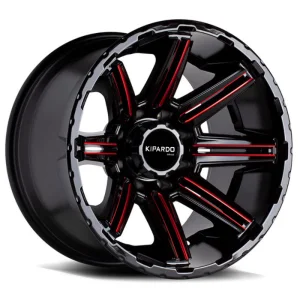
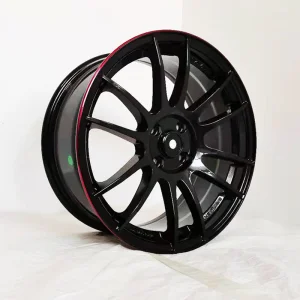
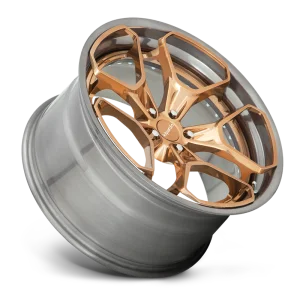
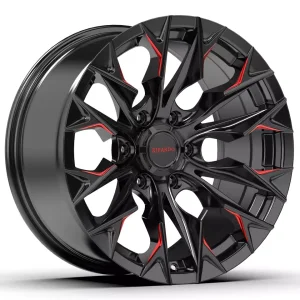
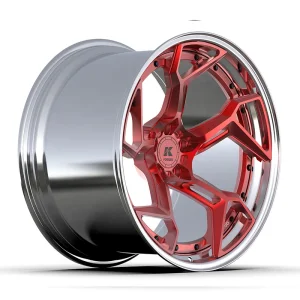
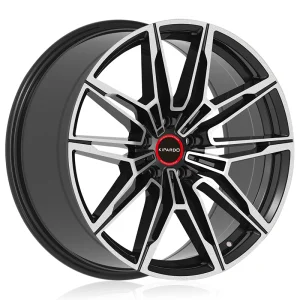
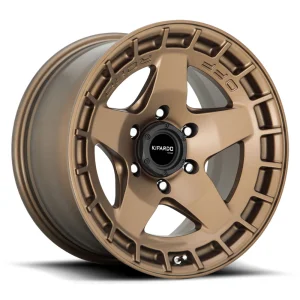
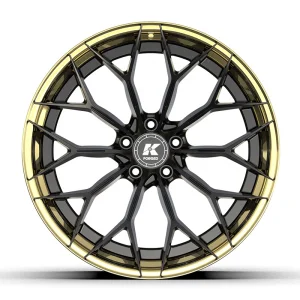
Specialized lightweight performance rims, heavy-duty bead-retaining off-road models, and tailored multipiece luxury forged architectures.
Frequently Asked Questions: Technical & Sourcing Specifications
In-depth responses covering mechanical tolerances, finish maintenance, homologation documentation, and production scheduling.
What metallurgical advantages do 6061-T6 forged wheels have over flow-formed wheels?
Flow-formed wheels utilize a cast aluminum center hub and face paired with a rotary-stretched barrel. In contrast, 6061-T6 forged monoblock wheels are formed entirely from an aerospace billet under 10,000 tons of isotropic mechanical pressure. This eliminates microscopic casting voids entirely, yielding up to 30% greater tensile strength and structural fatigue resistance under heavy track or off-road conditions.
How does hand-brushing impact the balance and radial run-out of the wheel?
Hand-brushing is strictly an abrasive micro-finishing treatment that removes less than 0.02 mm of material from non-critical aerodynamic and aesthetic spoke surfaces. All bearing surfaces, mounting hub flanges, and bead seats are fully CNC-machined to final dimensions following the brushing and clear-coat cure cycle, keeping dynamic radial and lateral run-out within tight ≤0.15 mm tolerances.
What protective finishes are applied to prevent corrosion on brushed surfaces?
Raw brushed aluminum is highly prone to oxidation if left exposed. Our factory coats all brushed wheels with an automated electrostatic powder primer followed by a thermally baked thermoset acrylic clear-coat (available in gloss, satin, matte, tinted black, or custom bronze). This ensures compliance with standard 1,000-hour neutral salt-spray exposure requirements without spider-web corrosion.
What is the standard production lead time for bespoke forged wheel orders?
For custom forged programs, 3D CAD modeling, FEA verification, and customer sign-off typically require 3 to 5 business days. Once engineering drawings are approved, billet precision forging, CNC machining, manual linear brushing, clear-coat finishing, and JWL/VIA quality inspection require 15 to 22 business days prior to export palletizing.