
Engineered Billet & Heavy-Duty Forged Wheels
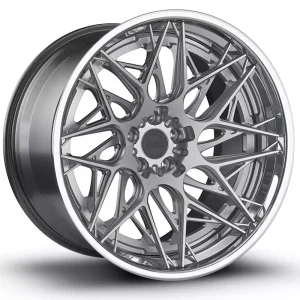
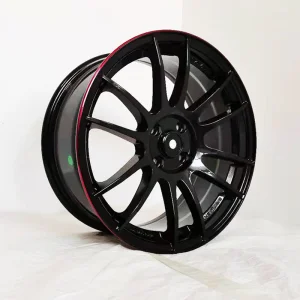
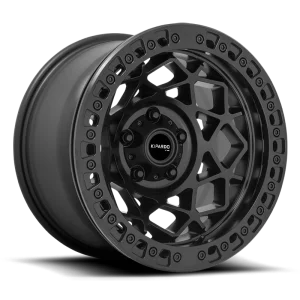
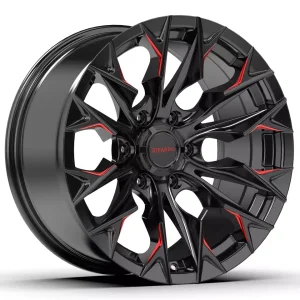
Explore our precision-crafted wheel lineup featuring custom offsets, ultra-deep concavity, bespoke modular assemblies, and extreme-load 4x4 off-road architectures built for global Tier-1 distribution.
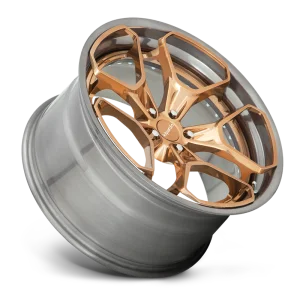
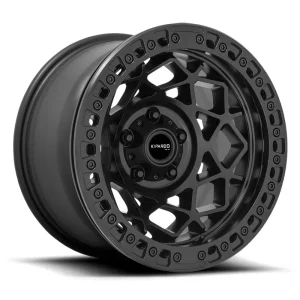
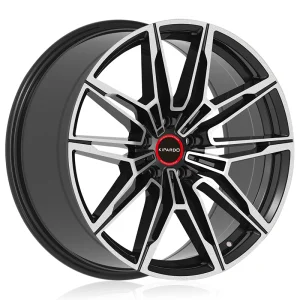
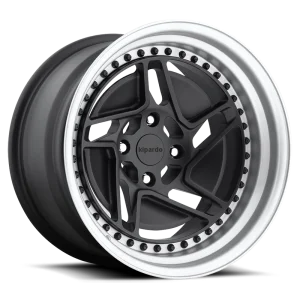
The Engineering Paradigm: Why Forged 6061-T6 Dominates High-Stress Applications
An authoritative metallurgical analysis comparing cast crystalline dendrites, rotary flow-formed displacement, and 10,000-ton grain-aligned aerospace aluminum forgings.
In modern automotive dynamics, rotational un-sprung mass constitutes the single most consequential variable governing suspension compliance, braking efficiency, angular acceleration, and directional feedback. While conventional low-pressure die-cast wheels utilize molten aluminum alloy (primarily A356.2) poured into steel dies under mild pneumatic pressures, the resulting solid state unavoidably retains microscopic dendritic solidification structures, gas micro-porosity, and stochastic intermetallic segregation. Under cyclic radial fatigue or harsh curb shock, these microscopic discontinuities operate as stress-concentration nodes, requiring casting designers to thicken the spoke roots, rim barrel, and center bore, inevitably penalizing rotational inertia.
By contrast, Shanghai Rimax Industry Co., Ltd. (established in 2010, featuring our JWL-verified Kipardo manufacturing operations in Kunshan, Jiangsu) redefines structural integrity through solid-state extreme thermo-mechanical transformation. The forged wheel production protocol begins with solid cylindrical billets of aerospace-certified 6061 aluminum alloy (Al-Mg-Si series). Subjected to high-temperature continuous induction pre-heating and crushed within multi-axis closed dies under hydraulic pressures reaching 10,000 metric tons, the metallurgical grain boundary structure is plastically distorted and forced into uninterrupted radial continuity along the natural stress trajectories of the spoke contours and rim flange.
| Material & Mechanical Property | Standard Low-Pressure Cast (A356.2-T6) | Rotary Flow-Formed (Barrel Spun) | Aerospace Forged Monoblock (6061-T6) |
|---|---|---|---|
| Ultimate Tensile Strength (UTS) | 220 – 240 MPa | 260 – 285 MPa (barrel only) | 310 – 340 MPa (integral wheel) |
| Yield Strength (Rp 0.2) | 140 – 160 MPa | 190 – 220 MPa | 276 – 310 MPa |
| Elongation at Fracture (A5 %) | 3.5% – 5.0% (brittle threshold) | 6.0% – 8.5% | 12.0% – 16.0% (ductile failure mode) |
| Internal Microstructure | Cast dendritic grain with micro-porosity | Elongated grain in barrel, cast center | Continuous, unbroken forged flow lines |
| Rotational Mass Reduction | Baseline Reference (0%) | 10% – 15% Reduction | 25% – 32% Net Weight Reduction |
| Failure Mechanism Under 13° Impact | Sudden brittle fracture / catastrophic spoke snap | Localized barrel bend / spoke shear | Plastic deformation without structural detachment |
Bespoke Architectural Engineering for Diverse Terrains
Forged wheels cannot adopt a one-size-fits-all ideology. We customize load ratings, brake pocket profiles, thermal clearance, and surface barrier chemistry to conquer regional environmental stressors.
North American 4x4 & Heavy-Duty Towing
Designed to withstand extreme curb impact and tongue loads. Our 17-inch to 24-inch Kipardo forged off-road series delivers reinforced hub pad thicknesses, rated for wheel loads exceeding 3,500 lbs (1,588 kg) per corner for Ford F-Series, RAM 2500, Chevrolet Silverado, and Jeep Wrangler platforms.
High-Torque EV & Hybrid Powertrains
Instantaneous motor torque (up to 1,200 Nm) and substantial curb weights in platforms like Tesla Model S Plaid, Porsche Taycan, and Lucid Air induce severe rotational shear. Our knurled bead-seat machining prevents tire slip under launch, while aerodynamically sculpted spokes reduce drag coefficients by 0.015 Cd.
European Autobahn & Nürburgring Circuit
Sustained speeds above 280 km/h demand zero radial and axial runout (<0.25 mm) coupled with maximum thermal evacuation away from carbon-ceramic brake rotors. We incorporate concave back-pad pocketing to expand convective airflow across the brake calibers without compromising spoke tensile strength.
Middle East Extreme Desert Overlanding
In environments encountering +55°C ambient temperatures, deep sand flotation, and sharp rock obstacles across the Arabian Peninsula, our forged rims feature deep bead retention flanges, ultra-deep concavity, and specialized UV-hardened thermoset acrylic clearcoats that resist sand-abrasion pitting.
China Supply Chain Resilience: The Kunshan Precision Cluster
How Shanghai Rimax Industry leverages vertical engineering synergy, automated 5-axis DMG MORI CNC milling cells, and uncompromised lean batching to outperform Western lead times.
A persistent vulnerability within the global automotive aftermarket is supply-chain friction: extended tool-making latency, unpredictable raw material price swings, and inadequate QA continuity. Operating from our manufacturing base in Kunshan, Jiangsu, alongside our primary corporate nexus in Shanghai, Rimax Industry resolves these bottlenecks through vertical industrial synthesis.
Our localized supply ecosystem guarantees access to primary 99.9% purity aluminum smelters, certified metallurgical master-alloy inoculants (titanium-boron grain refiners), and localized multi-axis tooling fabricators within a 50-kilometer industrial radius. While conventional European or North American forged wheel brands face 10 to 18-week lead times for custom bespoke fitments, Rimax's digitized ERP/MES infrastructure achieves complete structural FEA simulation, tooling generation, precision 5-axis CNC roughing and finish carving, hand polishing, and electrostatic powder coating in under 20 business days for full container loads or low-volume private brand programs.
Furthermore, every individual Kipardo wheel blank carries a laser-engraved 2D Data Matrix code, enabling instant retrieval of billet metallurgical heat treat lots, ultrasonic non-destructive testing (NDT) logs, and T6 quenching bath temp profiles spanning over a decade of archive records.
Technological Roadmap: Generative AI, Hybrid Barrels & Net-Zero Alloys
Exploring the architectural frontiers of forged wheel design through 2035: where machine learning meets high-stress metallurgy.
Algorithmic Generative Topology Optimization
Integrating AI neural networks with finite-element stress vectors. Instead of manual 3D drafting, algorithms iteratively remove non-load-bearing aluminum from spoke interiors and hub junctions. The result: hyper-organic, bio-mimetic wheel architectures offering 18% higher torsional rigidity with zero dead weight.
Carbon-Composite Hybrid Forged Assemblies
Developing proprietary two-piece wheels coupling a 6061-T6 forged center disc with a full dry-carbon fiber autoclaved outer rim barrel. Fastened with grade-5 aerospace titanium hardware, this hybrid architecture decreases polar moment of inertia by 40% compared to standard cast rims.
Closed-Loop Sustainable Circular Alloys
Transitioning upstream billet production to 100% hydropower-smelted low-carbon primary aluminum, integrated with clean internal CNC chip recycling loops. We target a reduction in embedded cradle-to-gate carbon emissions down to 3.8 kg CO2e per kg of forged wheel by 2027.
Engineered to Surpass JWL, VIA, SAE J2530 & TÜV Protocols
Independent importers face severe liability risks without legitimate testing credentials. Rimax eliminates compliance friction through relentless multi-standard structural validation.
In international commerce, regulatory homologation forms the bedrock of distribution legality and consumer safety. A forged wheel intended for the German market must comply with strict TÜV StVZO §22/§21 fatigue criteria, while Japanese road safety mandates the dual certification of JWL (Japan Light Alloy Wheel Standard) and independent laboratory registration with the VIA (Vehicle Inspection Association of Japan). In the United States, adherence to SAE J2530 (Aftermarket Wheels - Performance Requirements) and DOT registration is non-negotiable.
Dynamic Cornering Fatigue
Simulates extreme cornering g-forces. A continuous bending moment is applied through the wheel hub for over 100,000 to 250,000 cycles. Kipardo forged wheels consistently exceed required cycle baselines by over 180% without trace micro-fissures.
Dynamic Radial Fatigue
Evaluates wheel rim behavior under persistent vertical vehicle loading. A driven steel drum subjects the wheel/tire assembly to 2.25x rated design loads for 1,000,000 continuous revolutions without spoke or rim flange yield failure.
13° & 90° Lateral Impact Tests
Replicates sudden highway pothole strikes or curb collisions. A calibrated steel striker drops from specified elevations onto the outer rim flange. Wheels must maintain total structural coherence and air pressure with zero instantaneous pressure drop.
1,000-Hour CASS Salt-Spray
Finish longevity testing. Hand-brushed, high-polish, anodized, and multi-tone powder coated wheels are placed in acidified salt-spray chambers to guarantee zero surface corrosion, filiform degradation, or clearcoat peeling under harsh winter de-icing chemicals.
Custom Engineering: From CAD Concept to Private-Label Pallet
Empowering wheel brands, wholesale tire distributors, and high-performance tuning companies with full engineering autonomy and seamless export packaging.
1. Bespoke Fitment Calculation
We calibrate custom PCD (3x112 to 8x180), wheel offsets (ET -50 to +65), and center bores (CB 54.1 to 130mm). 3D caliper profiling scans guarantee clearance for massive Brembo, Akebono, and AP Racing 6-piston and 8-piston braking systems.
2. Architectural Configuration
Choose between ultra-stiff Monoblock (1-piece) designs for track motorsport or multi-piece modular architectures (2-piece welded/bolted, 3-piece classic stepped/reverse lips) featuring hidden or exposed ARP high-tensile hardware.
3. Surface Artistry & Texturing
Comprehensive finish portfolio: high-luster hand polishing, directional mechanical brush textures, transparent candy tinted clearcoats (candy red, bronze, smoke black), dynamic dual-color diamond-cut CNC facings, and tough matte military coatings.
4. Global Export Crating & Docs
Custom branded center caps, CNC rim-edge logo milling, heavy-duty drop-tested carton enclosures, soft velvet protective bonnet covers, moisture barrier desiccant packs, and full sea/air freight documentation (Form E, CO, JWL lab reports).
Frequently Answered Questions for Commercial Importers
In-depth insights into minimum order quantities, manufacturing tolerances, warranty policies, and export logistics for global wheel distributors.
What is the exact metallurgical difference between Kipardo forged wheels and standard cast rims?
What are your Minimum Order Quantities (MOQ) for custom bespoke forged programs?
Which international testing certifications and compliance standards do your wheels meet?
How does Shanghai Rimax handle private-label branding, packaging, and custom cap logos?
What is your typical production turnaround and export lead time?
What warranty coverage is included with Kipardo wheels?
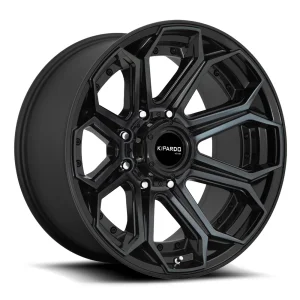
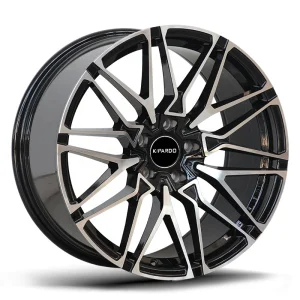
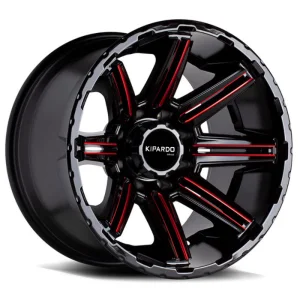
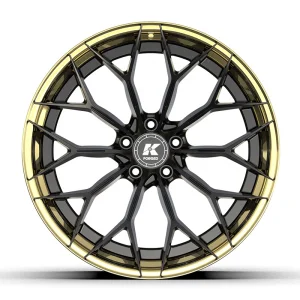
Luxury Concave, Modular Multi-Piece & Heavy-Load Fitments
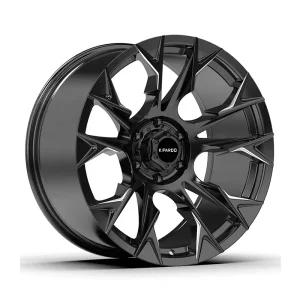
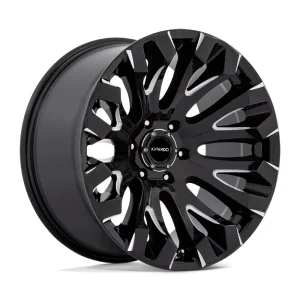
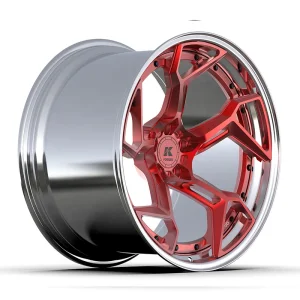
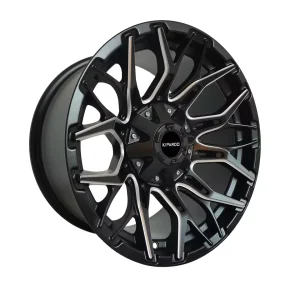
Explore our full-spectrum collection spanning 17-inch to 24-inch custom wheel models engineered for luxury executive sedans, track supercars, and full-size off-road SUVs.
Initiate Your Custom Forged Wheel Program Today
Whether establishing a private forged label, replenishing container inventory for regional wholesale distribution, or engineering track-specific offsets for racing applications, Shanghai Rimax Industry Co., Ltd. delivers aerospace precision backed by full JWL/VIA verification.