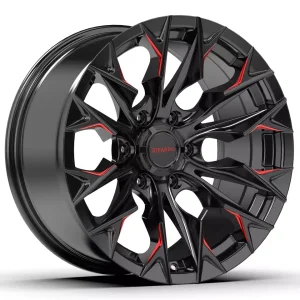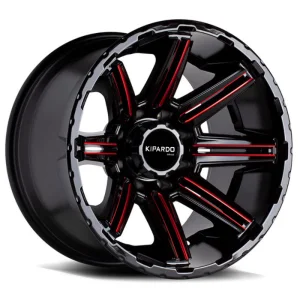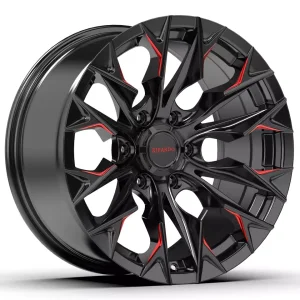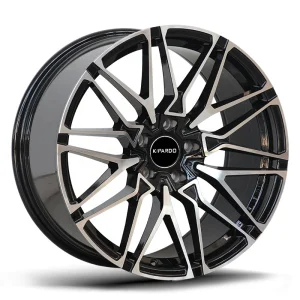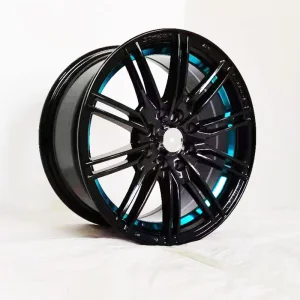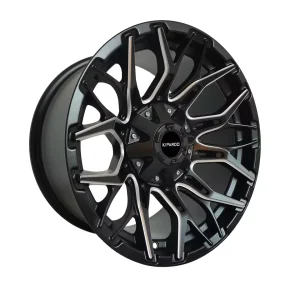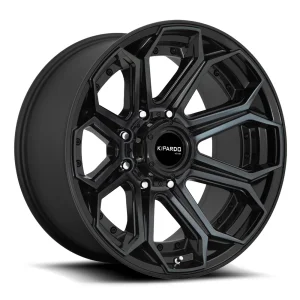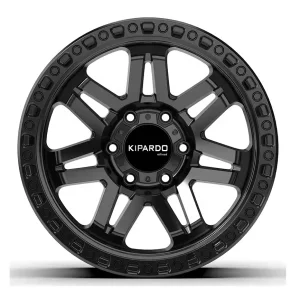
Engineered Cast & Forged Alloys for Aftermarket Programs
Explore prime export-grade SKUs fabricated to exact PCD, offset (ET), and center bore configurations with complete structural warranties.
Industrial Macro Trends: The Aftermarket Alloy Landscape
The global automotive aftermarket alloy wheel industry has transitioned from cosmetic restyling to strict structural engineering, driven by platform consolidation, heavier EV curb weights, and tight distributor margins.
Market Capitalization & Growth
The worldwide automotive wheel market is projected to exceed USD 21.5 billion by 2030, registering a compound annual growth rate (CAGR) of over 5.8%. Within this macro segment, the premium aftermarket and customized OEM segment accounts for the fastest growth vector. Tier-1 wholesale importers and dealership accessory divisions require higher rotational rigidity, precision dynamic balancing, and lower defect scrap rates to protect bottom-line warranty margins across international channels.
The EV Mass Paradox
The transition toward battery electric vehicles (BEVs) and extended-range plug-ins introduces unprecedented structural stress on wheel assemblies. Battery pack weight profiles elevate average vehicle curb weights by 20% to 35%, simultaneously unleashing instantaneous electric torque loads on the hub face. Consequently, modern aftermarket alloy manufacturers must engineer minimum static load ratings between 850 kg and 1,050 kg per corner without introducing rotational unsprung mass that diminishes battery range.
Stricter Global Compliance
Regulatory authorities across leading import markets—including Germany's TÜV KBA certification, Japan's JWL/VIA association, the United States SAE J2530 protocols, and the Gulf Cooperation Council's GSO regulations—have heightened mechanical testing mandates. Exporters can no longer rely on aesthetic surface parity; true market viability demands full batch metallographic traceability, verified radial fatigue cycles, and destructive cornering resistance certifications.
Comparative Matrix: Casting vs. Flow-Forming vs. Forging
A deep-dive technical engineering comparison for product managers and commercial buyers seeking the optimum balance of weight, tensile strength, fatigue resistance, and unit production cost.
| Evaluation Parameter | Low-Pressure Cast (LPDC) | Flow-Formed / Rotary Spun | 6061-T6 Monoblock Forged | Multi-Piece Modular Forged |
|---|---|---|---|---|
| Primary Alloy Base | A356.2 Virgin Aluminum Ingot | A356.2 or AlSi7Mg0.3 (Strontium Modified) | Aerospace Billet 6061-T6 (Al-Mg-Si) | Forged 6061-T6 Center + 5052/6061 Barrels |
| Tensile Strength (UTS) | 220 – 260 MPa | 290 – 340 MPa (Barrel Region) | 310 – 380 MPa (Omni-Directional) | 330 – 390 MPa (Individual Components) |
| Yield Strength (YS) | 160 – 190 MPa | 220 – 260 MPa | 275 – 310 MPa | 280 – 315 MPa |
| Elongation at Break (δ) | 4% – 7% | 8% – 12% | 12% – 16% | 11% – 15% |
| Grain Structure Matrix | Uniform Dendritic Cast Matrix | Compacted Radial Grain Alignment | Continuous Dense Fiber Flow | High-Density Mechanical Fastener Joinery |
| Weight Reduction Factor | Baseline Reference (0%) | -12% to -18% lighter than cast | -25% to -35% lighter than cast | -18% to -28% lighter (Bespoke Widths) |
| Tooling & Mold CAPEX | High Initial Steel Mold Cost | Medium-High (Cast Face Mold + Mandrel) | Zero Tooling Mold (100% CNC Mill Program) | Zero Tooling Mold (Modular Interchange) |
| Optimal Application Scenario | High-Volume Wholesale, OE Replica, OEM | Mid-Tier Tuner, Track Day, Light Off-Road | Ultra-Luxury, Supercar, Track-Spec Builds | Stance, Custom Widebody, Heavy Off-Road |
Process 01 Low-Pressure Casting
Molten A356.2 alloy is introduced upward into a precision-machined steel die cavity under regulated gas pressure (0.6 to 1.2 bar). This bottom-up laminar filling method minimizes atmospheric air entrapment, eliminates micro-void oxidation, and delivers dense spoke root integrity. Following hydraulic extraction, wheels undergo mandatory T6 solution heat treatment (535°C water quench followed by 155°C artificial aging) to solidify precipitate hardening.
Process 02 Flow-Forming Technology
Beginning with a specialized low-pressure preform casting, the inner rim profile is mounted upon a high-speed rotating mandrel heated to 300°C–350°C. Hydraulic rollers compress and spin-draw the barrel material outward along the axial axis. This cold-work/warm-flow plasticity rearranges the crystalline aluminum microstructure, delivering mechanical tensile characteristics closely mirroring those of aircraft-grade forged alloy at high unit throughput.
Process 03 10,000-Ton Forged Billet
Starting from solid cylindrical 6061 aerospace billets, raw aluminum is subjected to extreme multi-stage closed-die hydraulic forging pressures exceeding 10,000 metric tons. The resulting near-net blank features continuous, uninterrupted metallurgical grain flow lines that match the geometry of the structural spokes. Every wheel is finished on multi-axis CNC machines with surgical run-out tolerances under ±0.25 mm.
The 8-Stage Manufacturing & Validation Architecture
From raw molten alloy ingots to secured multi-layer export pallets, each Rimax / Kipardo wheel passes through an uncompromised chain of traceable industrial operations.
Ingot Degassing
High-purity A356.2 primary aluminum is melted in reverberatory furnaces and treated with rotary nitrogen-argon degassing injectors to reduce dissolved hydrogen below 0.12 cm³/100g Al.
Precision Casting
Low-pressure computer-automated casting with multi-zone ceramic cooling dies ensures directional solidification from rim outer lip toward the center riser hub, avoiding shrink voids.
100% X-Ray Inspection
Every structural casting unit passes through inline high-energy real-time radiographic X-ray chambers to detect subsurface inclusions, gas porosity, or spoke micro-cracks before downstream finishing.
Continuous T6 Heat
Automated conveyorized furnace lines ensure precise quench tank immersion under 4 seconds, establishing yield stress and fatigue life thresholds required for commercial road safety.
5-Axis CNC Mill
High-speed dual-spindle machining centers lathe the center bore, pitch circle diameter (PCD) bolt holes, brake caliper clearance radii, and drop center bead seats to within ±0.03 mm.
Multi-Stage Coating
Automated 12-stage non-chrome passivation pre-treatment followed by electrostatic powder primer, automated robotic color base coat, and UV-resistant high-gloss acrylic clear finishes.
Destructive Testing
Batch samples are placed into our on-site physical laboratory for dynamic radial endurance, rotating bending fatigue, 13° and 30° lateral impact drops, and 1,000-hour CASS salt spray testing.
Palletized Export
Reinforced export cartons featuring woven moisture barriers, foam edge guards, branded center caps, and reinforced corner beads secured on heat-treated ISPM-15 wooden pallets.
Localized Application Scenarios: Tailored for Global Markets
Automotive aftermarket requirements differ drastically across continents. Rimax adapts metallurgical alloys, load configurations, and offset envelopes to regional environments.
North American 4x4 & Overlanding
High-torque pickup platforms (Ford F-150, Chevy Silverado, RAM 1500) demand heavy load capacities (2,200 lbs to 3,600 lbs). Rimax delivers specialized 17-inch to 20-inch cast and flow-formed off-road wheels with reinforced inner rim flanges to absorb boulder impact deflections, knurled bead seats to prevent tire slip during low-psi rock crawling, and wide negative offsets (-12 to -44) designed for wide suspension articulation.
European High-Speed Autobahn Compliance
Operating within stringent ECE-R124 and German TÜV frameworks, wheels engineered for European roads require zero-poke OE hub-centric centering, direct bolt-hole lug seat tapers (60° conical or spherical ball-seat), and strict compliance with high-speed brake cooling airflow specifications. Focus is placed on lighter flow-formed geometries for luxury sedans and premium sportwagons to minimize high-speed unsprung gyroscopic wobble.
GCC & Middle East Thermal Resistance
Desert conditions subject wheel sets to ambient road temperatures exceeding 55°C, abrasive silica sand abrasion, and high thermal brake soak during aggressive dune bashing. Rimax utilizes proprietary high-temperature heat-cured electrostatic powder coats, anti-corrosive acrylic layers, and forged 6061-T6 monoblock architectures that resist thermal warping under extreme braking cycles found on Nissan Patrol and Toyota Land Cruiser builds.
Asia-Pacific Urban Micro-Car & Tuners
From narrow urban fitments in Japan (K-cars and compact platforms with 4x100 bolt patterns) to high-offset street racing applications in Southeast Asia, our portfolio provides 15-inch to 17-inch ultra-lightweight undercut and diamond-cut colorway options. Precision mass production lowers shipping weight while maintaining high cornering fatigue thresholds on broken inner-city pavement and elevated roadway bridges.
Technology Roadmap: The Next Decade of Wheel Engineering
How advanced AI algorithmic design, low-carbon circular metallurgy, and multi-material hybrid architectures are shaping Rimax's 2025–2035 manufacturing vision.
AI Generative Spoke Topology
We are deploying automated generative finite element analysis (FEA) software algorithms to iteratively remove dead weight material in low-stress spoke valleys while reinforcing high-tension load paths connecting the hub to the inner rim. This computational structural design paradigm reduces overall wheel weight by 8% to 14% without compromising cornering stiffness, helping wholesale distributors launch wheels that optimize both aerodynamic drag coefficients and brake heat evacuation.
Decarbonized Circular Metallurgy
To assist international brand partners in meeting EU Corporate Sustainability Due Diligence Directives (CSDDD), Rimax is scaling the procurement of certified low-carbon primary aluminum smelted with renewable hydroelectric energy. Combined with in-house closed-loop recycling systems that melt clean CNC turnings and scrap flashings with negligible slag oxidation, we are targeting a carbon footprint reduction from 12 kg CO2e/kg Al to below 4.0 kg CO2e/kg Al across our cast and forged production lines.
Composite Hybrid Architectures
The next frontier in ultra-high performance wheels merges 6061-T6 forged aluminum centers with pre-impregnated dry carbon fiber outer rim barrels. By mechanical fastening using aerospace titanium bolts, this hybrid architecture combines the custom aesthetic flexibility of CNC forged metal with the vibration damping and rotational inertia reduction of autoclave carbon fiber composites, slashing wheel assembly weights down to the 7.0 kg to 8.5 kg range for track-oriented vehicles.
Macro Supply Chain & OEM/ODM Turnkey Programs
Navigating ocean freight logistics, import tariffs, and private-label packaging with transparent manufacturing controls and inventory strategies.
Private-Label Brand Development
We provide end-to-end proprietary branding programs for national retail franchises and private distributor labels. This includes custom 3D wheel styling, engineering tooling molds, branded alloy die-stamped emblems, CNC engraved center caps, precision color-coded rim decals, and customized five-ply double-wall export outer boxes featuring individual serialized barcode labeling for inventory tracking.
Global Shipping & Tariff Mitigation
International wheel procurement requires precise regulatory handling. Our export operations team manages complete bill of lading (B/L) logistics, certified certificates of origin, Harmonized System (HS) code classification (8708.70), and required port-of-entry compliance test documentation. Flexible consolidation schedules balance Full Container Loads (20GP / 40HQ FCL) and Less than Container Loads (LCL) to protect inventory capital turnover.
Rapid Prototyping & Mold CAD/CAM
Accelerate your seasonal time-to-market. Our design team transforms 2D aesthetic concept sketches into production-ready 3D CAD models within 72 hours. Structural finite element analysis (FEA) simulations identify stress concentrations across spoke junctions before cutting hardened steel casting dies or programming CNC billet toolpaths, slashing mold iteration lead times from months to weeks.
Frequently Asked Questions: Engineering & Procurement
Clear, definitive answers to the most critical technical, metallurgical, testing, and commercial trade questions asked by international alloy wheel buyers.
Shanghai Rimax Industry Co., Ltd. was established in 2010 as an integrated manufacturer and exporter of automotive alloy wheels. Our Kipardo casting facility is JWL-verified and operates high-precision low-pressure casting lines, flow-forming equipment, and dedicated CNC machining facilities. Importers, brand owners, and wholesale tier-1 buyers engage directly with our on-site metallurgical engineering and export logistics divisions.
Every wheel series undergoes mandatory testing adhering to global JWL, VIA, and SAE J2530 specifications. This includes 100% inline X-ray fluoroscopic scanning, helium air-leak testing, dynamic radial fatigue endurance tests (evaluating rotating durability under load over 500,000 cycles), dynamic cornering bending fatigue tests, and 13-degree lateral impact drop tests. In addition, finished surface coatings are subjected to CASS salt spray testing for corrosion resistance.
For low-pressure cast wheels requiring existing tooling, standard production MOQs are typically 60 to 80 units per design and PCD specification. For newly engineered proprietary cast molds, production batch minimums are 200 to 300 pieces. Flow-formed wheels maintain similar MOQ parameters. In contrast, 6061-T6 forged wheels require zero mold tooling and feature an MOQ of just 4 pieces (1 vehicle set), providing high flexibility for luxury and bespoke custom applications.
Every wheel manufactured under our direct quality control carries an industry-leading 5-Year / 100,000-kilometer structural warranty guaranteeing against metallurgical fractures, spoke fatigue cracking, or structural deformation under verified road operation. Furthermore, all electrostatically applied painted surfaces, diamond-cut machined faces, clear lacquers, and chrome finishes carry an unconditional 2-year warranty against peeling, blistering, or corrosion.
Yes. We specialize in ODM (Original Design Manufacturing) programs. Our engineering center works with STEP, IGES, and SolidWorks CAD files provided under mutual Non-Disclosure Agreements (NDAs). We perform full finite element analysis (FEA) to confirm load rating compliance, manufacture the CNC tooling molds, and supply exclusive rights for specific geographical markets along with fully branded custom packaging.
Our manufacturing line uses automated multi-axis CNC lathes and milling machines that turn hub clamping pads, drop centers, and outer bead seats in a single chucking setup. This eliminates cumulative fixture tolerances, maintaining radial and lateral run-out within 0.3 mm on cast wheels (and within 0.15 mm on forged wheels). Dynamic balancing tests ensure that maximum residual unbalance stays well below the 30-gram threshold.
Featured Commercial & Off-Road Alloy Programs
Explore additional high-demand 4x4, off-road, and high-performance aftermarket wheel fitments available for global container orders and regional distribution contracts.