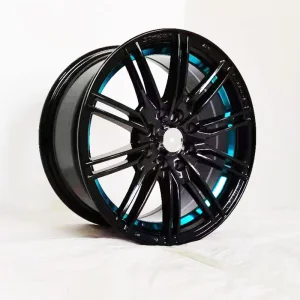
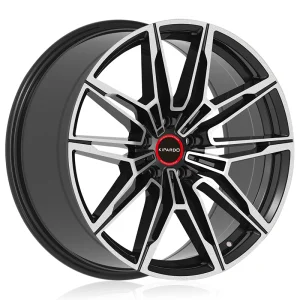
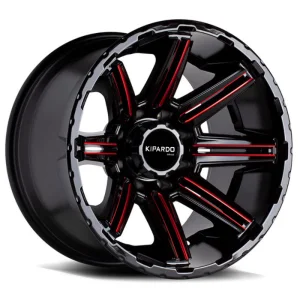
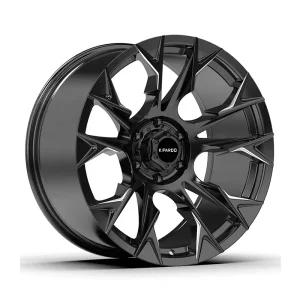
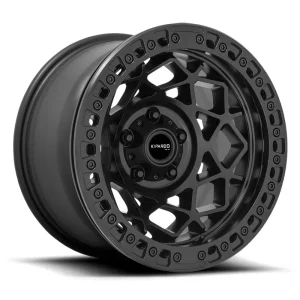
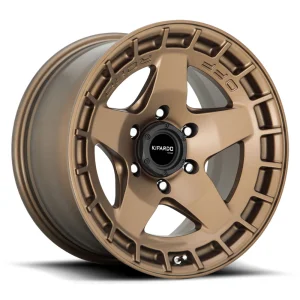
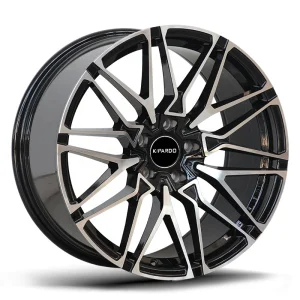
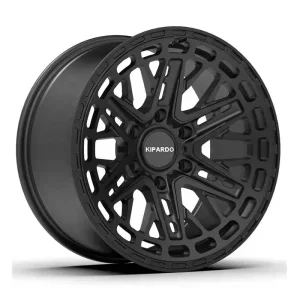
Precision-Engineered Commercial & Luxury Truck Wheels
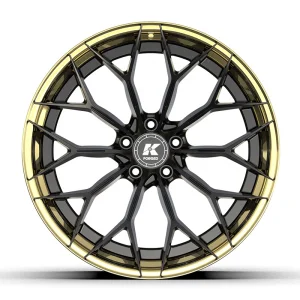
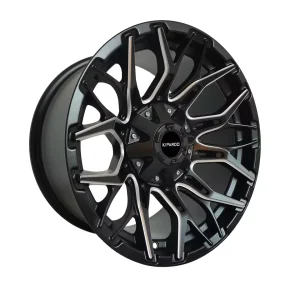
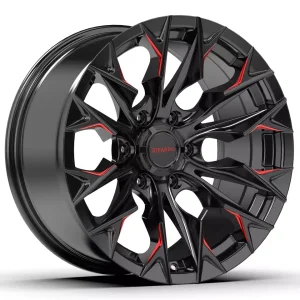
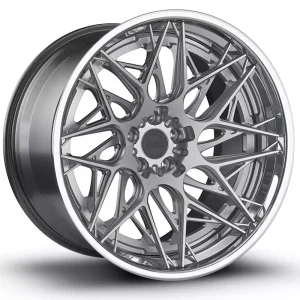
Explore our core catalog of JWL-verified cast, monoblock, multi-piece, and high-tensile 4x4 forged wheel assemblies engineered for structural resilience and OEM fitment stability.

Global Commercial Status & Industrial Shifts
The commercial transport sector is experiencing an irreversible pivot away from fabricated pressed steel wheels toward solid forged aluminum alloy wheels. Understanding the macroeconomic drivers allows fleet managers and distributors to unlock unmatched operating dividends.
Total Cost of Ownership (TCO) Transformation
For Class 8 heavy-duty tractor-trailers operating across North American and European corridors, tare weight directly impacts payload revenue. Converting an 18-wheel combination from standard steel rims (approx. 43 kg each) to 6061-T6 forged aluminum wheels (approx. 22 kg each) trims nearly 380 kilograms of dead un-sprung mass.
This structural mass deficit increases revenue per freight haul while diminishing fuel burn rates by 2.5% to 4.2% across steady-state highway transit duty cycles.
- Payload capacity boosted by up to 500 kg per tandem rig
- Elimination of cyclic abrasive blast and repainting expenditures
Thermal Management & Braking Longevity
Aluminum provides more than triple the thermal conductivity of iron alloys (205 W/m·K versus 50 W/m·K). In high-frequency deceleration environments—such as urban delivery fleets, mining haul routes, and mountainous alpine downgrades—brake rotor temperatures frequently exceed 600°C.
Forged alloy acts as an expansive heat sink, dissipating thermal accumulation away from friction pads, calipers, and wheel hub bearings, extending brake friction lining lifespans by up to 35%.
- Significant mitigation of brake fade during emergency stopping
- Minimized heat transfer to tire beads, cutting blowout risks
Tire Casing Preservation & True Rotation
Standard stamped and seam-welded steel wheels exhibit significant radial and lateral run-out tolerances (often ranging up to 1.5mm to 2.0mm out-of-the-box). Forged aluminum blanks, finished through high-speed CNC precision turning, keep radial and lateral run-out strictly below 0.38mm.
This rotational symmetry eliminates vibration harmonics, minimizes erratic tread wear patterns, and preserves tire carcass integrity for multiple retread cycles.
- Up to 15% improvement in original steer tire usable mileage
- Protection of front-end suspension bushings and tie rods
Macro Industry Trends: Electrification & Smart Mobility
From battery-electric commercial platforms requiring hyper-dense load ratings to connected telematics integrations, the commercial wheel has transitioned from a passive commodity into an active engineering component.
Electric Class 6-8 Platforms
Heavy commercial EVs (BEVs and FCEVs) carry massive battery packs located between chassis rails, dramatically escalating gross axle weights. Forged wheels deliver the requisite 4,500+ kg load ratings without increasing unsprung wheel weight, directly extending EV range per kilowatt-hour.
Aerodynamic Flow Contouring
Modern long-haul transport design prioritizes drag reduction. Advanced forged profiles integrate subtle outer aero disc curvature and targeted low-turbulence perimeter apertures, decreasing wheel-well aerodynamic vortex drag by up to 1.8% at highway cruising velocities.
Low-Carbon Circular Metallurgy
Regulatory bodies mandate stringent ESG lifecycle reporting (Scope 1, 2, and 3 emissions). Rimax uses certified hydro-powered primary aluminum smelters coupled with in-house clean chip briquetting, ensuring up to 75% lower embodied carbon per wheel assembly compared to standard coal-smelted wheels.
Integrated RFID & TPMS Hubs
Fleet digital transformation requires traceable hardware. Modern ODM wheels feature precision-milled recesses within the internal drop center to accept vulcanized or mechanically clamped high-pressure TPMS modules and passive RFID asset-tracking microchips for automated depot inventory audit.
Localized Application Scenarios: Tailored Engineering
Wheels perform within harsh localized geography and operating conditions. Rimax customizes alloy chemistry, hub thickness, and surface passivation to match specific global operational environments.
North American Interstate Long-Haul
Characterized by continuous 70 mph cruise velocity across varied terrain, heavy de-icing calcium chloride exposure during winter, and stringent Department of Transportation (DOT) compliance standards.
- Preferred Size: 22.5" x 8.25" and 24.5" x 8.25"
- Engineering Focus: Hub-piloted 10-hole x 285.75mm PCD, micro-mirror polished outer face, chemical seal against road salts.
- Outcome: Flawless cosmetic durability paired with verified fuel economy improvements.
Australian Mining & Triple-Road Trains
Extreme operating conditions characterized by 150+ metric ton GCM road-train trains crossing unsealed outback trails with high ambient temperatures exceeding 48°C and severe dynamic impact shock loads.
- Preferred Size: 22.5" x 8.25" (Heavy Duty 26mm Disc Pad Thickness)
- Engineering Focus: Maximum 4,500 kg single load capacity, reinforced bead seat corners, high-ductility metallurgy.
- Outcome: Prevention of catastrophic rim flange fracture when traversing severe corrugations.
European Urban Distribution & Transit
Frequent high-torque curb contact, tight roundabout side-wall scuffing, continuous brake friction cycling, and strict axle weight regulations enforced across metropolitan transit jurisdictions.
- Preferred Size: 17.5" x 6.75" and 19.5" x 7.50" Low-Floor Bus
- Engineering Focus: Heavy duty protective rim flange lip, specialized anti-galling steel inserts, ventilated spoke configuration.
- Outcome: Exceptional resistance to curbside shear and extended urban brake lining longevity.
Metallurgical Architecture: Forged 6061-T6 vs Cast Alloys
Under intense metallurgical analysis, the structural superiority of forged aluminum over standard low-pressure casting and cold-rolled commercial steel is indisputable.
| Mechanical / Structural Property | High-Pressure Forged 6061-T6 | Low-Pressure Cast A356-T6 | Cold-Rolled Carbon Steel |
|---|---|---|---|
| Internal Microstructure | Continuous Aligned Grain 100% Dense | Dendritic Crystalline (Susceptible to Porosity) | Fibrous Rolling Texture (Weld HAZ Seam Weakness) |
| Tensile Strength (Ultimate Rm) | ≥ 310 - 340 MPa | ≥ 220 - 250 MPa | ≥ 370 - 410 MPa |
| Yield Strength (Rp 0.2) | ≥ 275 - 290 MPa | ≥ 160 - 180 MPa | ≥ 230 - 260 MPa |
| Elongation at Break (A5) | 12% - 14% (High Ductility) | 5% - 7% (Brittle Fracturing) | 20% - 25% (Heavy Plastic Yield) |
| Wheel Assembly Weight (22.5x8.25) | 21.5 kg - 22.8 kg | Not Feasible for Heavy Class 8 Duty | 41.5 kg - 44.0 kg |
| Dynamic Radial Fatigue Life | > 2,000,000 Cycles (Over 2x SAE Benchmark) | Meets Baseline JWL (500,000 Cycles) | 700,000 Cycles (Fatigue Cracking at Vent Holes) |
| Corrosion Resistance Mechanism | Natural Al2O3 Passivation + Anodizing / Clearcoat | Powder Coating Dependent | Sacrificial Paint / Rapid Oxide Flaking |
The Rimax ODM Engineering Roadmap: Ingot to Container
Our fully audited production lines transform raw aerospace-grade billets into precision-machined heavy-duty assemblies through automated and monitored processes.
Billet Slicing & Ultrasonic Audit
Cast logs of aerospace-spec 6061 alloy undergo continuous immersion ultrasonic testing to eliminate microscopic inclusions, followed by robotic saw cutting to precise volumetric cylinder lengths.
10,000-Ton Closed-Die Forging
Induction-preheated slugs (480°C) are subjected to three progressive forging hits in multi-stage hydraulic presses up to 10,000 tons, reorienting the grain boundary structure along the exact load axes of the final rim profile.
Flow-Spinning Barrel Forming
The dense forged preform is loaded onto dedicated computer-controlled spinning mandrels where hydraulic rollers cold-flow the outer barrel to finished width, creating uniform rim thickness and cold-work hardness.
T6 Solution & Artificial Aging
Wheels enter computer-controlled vertical furnaces for solution heat treatment at 530°C, followed by high-velocity deionized water quenching and controlled precipitation age-hardening at 175°C for 8 hours.
Dual-Spindle CNC Machining
Ultra-rigid Japanese CNC turning and milling centers machine the wheel hub mounting pad, bolt circles, center bore, and custom spoke profiles in a single clamping setup to maintain tight concentricity.
Automated Surface Passivation
Components undergo multi-stage ultrasonic chemical degreasing, electro-polishing or multi-axis robotic mechanical ball-burnishing, followed by aerospace-grade zirconium conversion coating.
Destructive & Non-Destructive QA
Every production heat-lot undergoes coordinate measuring machine (CMM) dimensional checks, eddy-current crack detection, radial and cornering dynamic fatigue testing, and pressurized helium air-leak tests.
Custom OEM Barcoding & Dispatch
Finished assemblies receive laser-etched traceability matrix codes, protective edge rims, vapor-corrosion-inhibitor packaging, and custom-branded palletizing ready for global intermodal export.
Macro Fleet Solutions & Tier-1 OEM Partnerships
Providing scalable engineering integration for national freight operators, specialized vehicle coachbuilders, and global aftermarket distributors.
Private Label & Proprietary Tooling
For international rim distributors seeking distinct catalog identity, we engineer proprietary forged blank dies with customer-specific spoke architecture, integrated branding, and protected territorial distribution rights.
- Rapid 3D prototyping and finite element analysis (FEA) validation
- Exclusive regional distributor protections based on volume commitments
Direct Container Consolidation (FCL/LCL)
Maximize landed margin control through optimized direct factory container stuffing. Rimax engineers stack matrices that accommodate up to 1,050 commercial 22.5" wheels per 40-foot High-Cube maritime container.
- Palletized or loose bulk packaging with heavy anti-chafing separators
- Complete customs documentation: Mill Test Reports, COC, Form E
5-Year / 100,000 km Structural Warranty
Every Kipardo commercial wheel manufactured within our certified production lines is backed by our comprehensive structural warranty. We stand behind our metallurgy with zero tolerance for rim separation or structural cracking.
- Documented batch traceability tied directly to raw ingot chemistry
- 2-year warranty on specialized mirror polish, brushed, and anodized finishes
Frequently Asked Commercial & Technical Questions
Everything procurement engineers and fleet operations need to evaluate forged versus cast wheel sourcing, lead times, and metallurgical qualifications.
What is the definitive structural difference between cast and forged truck wheels?
Cast wheels are produced by pouring molten aluminum alloy into a steel mold under low pressure. While cost-effective, casting inherently leaves micro-porosity and random dendritic crystal orientations that are more vulnerable to sudden brittle fracture under extreme shock loading. In contrast, forged wheels are created from solid billets of 6061 aerospace-grade alloy subjected to 10,000 tons of hydraulic pressure. This process compresses the aluminum matrix, aligns grain lines with the wheel's contour, and yields a 100% dense component that is up to 300% more resistant to fatigue cracking and impact deformation.
What typical minimum order quantities (MOQ) apply to ODM custom truck wheel orders?
For established standard commercial tooling (such as 22.5" x 8.25" hub-piloted 10-hole fitments), our typical production run MOQ is 60 units (which accommodates single-axle replacements or small fleet conversions). For complete custom private-label design programs requiring dedicated billet dies and CNC surface programs, our MOQ begins at 200 units, with initial sample validation wheels provided within 25 working days from complete CAD approval.
How do forged aluminum wheels impact tire life and maintenance costs?
Because Rimax forged aluminum wheels are precision CNC-machined from single-piece forgings, both radial and lateral run-out tolerances are maintained within fractions of a millimeter (sub-0.38mm), compared to up to 2.0mm on standard stamped steel wheels. This tight concentricity reduces rotational vibration and wheel hop, eliminating irregular cupping and heel-and-toe tire wear. Fleet maintenance audits verify that steer-axle tire tread life extends by 12% to 18%, while total tire carcass retreadability increases substantially.
What specific internationally recognized certifications do your forged wheels carry?
Our manufacturing facility operates under the IATF 16949 automotive quality management system. Kipardo commercial truck wheels are independently tested and certified according to the Japanese JWL-T standard (for truck and bus commercial vehicles), VIA requirements, and the American SAE J2530 and SAE J267 heavy-duty truck wheel standards. We perform 13-degree dynamic impact testing, 90-degree radial fatigue testing past 2 million continuous cycles, and cornering moment fatigue assessments on every production lot.
Can you manufacture dual-wheel offset configurations for heavy rear tandem axles?
Yes. We engineer both single steer wheels, super-single wide-base wheels (such as 22.5" x 14.00" or 22.5" x 11.75"), and matched dual-wheel configurations with standard commercial offsets (e.g., 146mm, 168mm). The inner wheel and outer wheel mating surfaces are precision-machined to ensure uniform bolt preload across standard dual-wheel stud clamping systems without causing stud fatigue or flange distortion.
Extended Lineup: Heavy-Duty & Custom Commercial Series
High-volume wholesale alloy options, bespoke concave profiles, and high-load 4x4 pickup platforms engineered for export fleets and specialized distributors.