
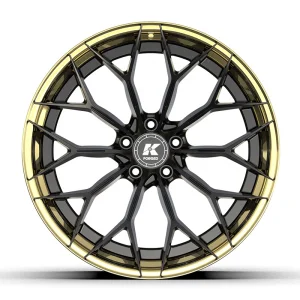
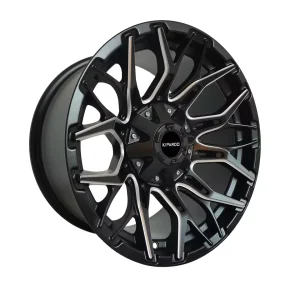
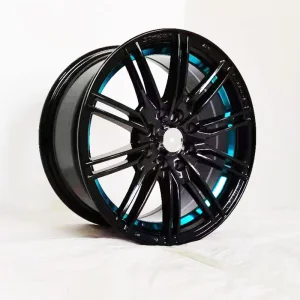
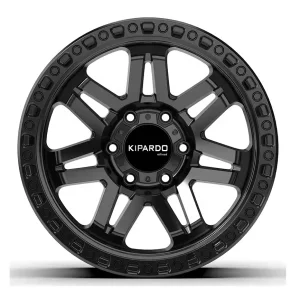
Primary Engineering Line: Advanced 5x120 & Custom Forged Rims
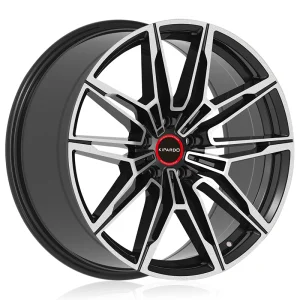
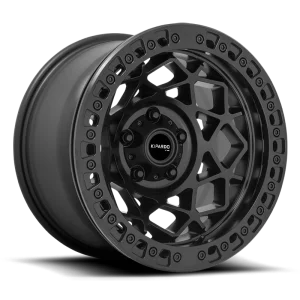
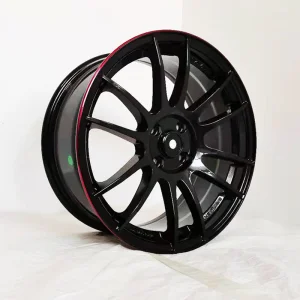
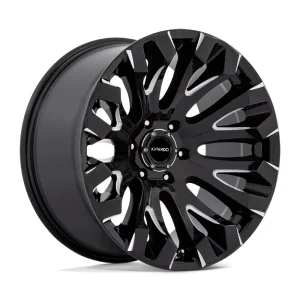
Explore initial core series produced under rigorous low-pressure casting and precision multi-axis CNC forged manufacturing methodologies.
Global Landscape: The Strategic Position of 5x120 PCD Forged Wheels
A technical and macroeconomic analysis of pitch circle diameter engineering, unsprung rotational mass management, and performance fleet electrification.
Historical Dominance & Cross-Platform Legacy
The 5x120 pitch circle diameter (PCD) represents one of the most historically significant hub bolt patterns in performance automotive engineering. Originally standardized across multi-generational BMW chassis (E-series, F-series), it remains critical for the Honda Civic Type R (FK2, FK8), Tesla Model S/X platforms, Chevrolet Corvette C8, Holden/GM platforms, and select Land Rover architectures. Sourcing high-strength forged variations has become crucial for distributors supporting both performance restorations and contemporary track upgrades.
Electric Vehicle Dynamic Torque Stress
Modern high-torque electric vehicles (EVs) operating on the 5x120 footprint demand load ratings exceeding traditional internal combustion engine (ICE) benchmarks. The instantaneous torque delivery (often exceeding 1,000 Nm at zero RPM) combined with heavier battery curbs pushes standard cast wheels past their elastic fatigue limits. Monoblock 6061-T6 forged construction guarantees structural integrity, preventing spoke deflection, bead slip, and fatigue cracking over sustained micro-impact lifecycles.
Unsprung Mass Reduction & Gyroscopic Metrics
A reduction in unsprung mass delivers an exponential gain in mechanical grip and damper response. In comparative track telematics, transitioning a 5x120 fitment vehicle from cast alloy (13.5 kg/wheel) to monoblock forged (9.2 kg/wheel) yields an uncompromised 31.8% rotational inertia decrease. This enhances steering feedback, lowers transient braking distance by up to 4.2%, and extends damper service life by mitigating repetitive high-velocity bump damping spikes.
Forging Engineering vs. Conventional Cast Wheel Architectures
A granular mechanical comparison outlining why 6061-T6 aerospace aluminum billet forging under 10,000-ton hydraulic pressure outperforms low-pressure and gravity casting systems.
| Performance Dimension | Monoblock 6061-T6 Forged | Modular 2/3-Piece Forged | Rotary Flow-Formed | Low-Pressure Cast (A356.2) |
|---|---|---|---|---|
| Grain Structure | Continuous directional grain flow | Directional forged center + spun barrel | Directional barrel, cast center | Random dendritic crystalline |
| Tensile Strength (Rm) | ≥ 310 - 340 MPa | ≥ 310 MPa (Face) / ≥ 290 MPa (Rim) | ≥ 240 - 270 MPa (Barrel) | ≥ 200 - 230 MPa |
| Yield Strength (Rp0.2) | ≥ 275 MPa | ≥ 270 MPa | ≥ 180 - 210 MPa | ≥ 150 - 170 MPa |
| Elongation at Break (A5) | 12% - 15% (Superior ductility) | 10% - 14% | 8% - 11% | 3% - 6% (Risk of brittle fracture) |
| Fatigue Bending Cycles | > 250,000 cycles (JWL standard +250%) | > 200,000 cycles | > 150,000 cycles | 100,000 cycles baseline |
| Impact Resistance (13° / 30°) | Elastic deformation without structural crack | Localized rimlip absorption, modular fix | Moderate rimlip deformation | Prone to radial fracture propagation |
| Weight Optimization | Maximized via backpad/spoke pocketing | Flexible stagger offset & width | Intermediate (10-15% lighter than cast) | Heavy to maintain safety margin |
Specialized 5x120 Fitment Ecosystems & Real-World Use Cases
Strategic deployment profiles across international motorsport leagues, track-day tuning programs, and luxury overlanding applications.
European Grand Tourers & M-Division Circuit Builds
For vehicles such as the BMW M3 (E46, E90/92), M5 (F10), and Z4 GT3, the 5x120 wheel architecture must accommodate high-camber chassis alignment and large 6-piston brake caliper packages (up to 400mm rotors). Rimax engineers customized inner barrel clearance and bespoke positive/negative offsets (ET15 to ET35) that balance scrub radius and eliminate brake caliper interference while facilitating maximum aerodynamic cooling airflow.
Front-Wheel Drive Track Specialists (FK2 / FK8 Type R)
The transition of Honda's Civic Type R to a 5x120 hub bolt pattern revolutionized FWD hot-hatch track performance. However, aggressive torque steer and scrub radius sensitivity require high offset tolerances (+50mm to +60mm). Our precision-machined 6061-T6 forgings allow extreme structural pocketing along the hub pad, shaving up to 4.5 kg per corner over standard factory cast wheels, which drastically improves turn-in apex agility.
High-Payload Overlanding & Executive SUV Fleets
Heavy SUVs like the Land Rover Discovery 3/4, Range Rover Sport, and commercial transport vans running 5x120 patterns face intense shock loadings during off-road excursions or armored operations. Our 4x4 high-load forged wheel programs offer guaranteed static load ratings from 950 kg up to 1,250 kg per corner. Reinforced bead seats prevent tire rotation slip at low pressures, while deep flange profiles resist severe rock impacts.
Enterprise Turnkey Solutions for Importers, Wholesalers & Tier-1 OEMs
A comprehensive framework delivering product differentiation, full regulatory approval, and supply chain reliability for brand owners.
Global Certification & Testing Auditing
Every custom OEM forging program undergoes full dynamic testing in our accredited testing lab. We cross-verify via JWL (Japan Light Alloy Wheel standard), VIA verification, SAE J2530 specifications, and German TÜV radial cornering fatigue requirements. Importers receive fully documented PPAP (Production Part Approval Process) packages, comprehensive finite element analysis (FEA) thermal and mechanical strain models, and salt-spray corrosion chamber documentation.
Bespoke Private-Label Customization Architecture
From initial industrial sketches to 3D parametric CAD modeling in Siemens NX or SolidWorks, our engineering team collaborates directly with brand managers. We provide customizable hub center bore dimensions (e.g., 72.56mm BMW, 64.1mm Honda, 70.3mm GM, or 74.1mm hub-centric bores), tailored lug seats (conical 60° or ball radius R13/R14), proprietary billet center caps, knurled anti-slip bead seats, and specialized dual-tone ceramic clear finishes.
Supply Chain Resilience & Lean Manufacturing
Mitigate geopolitical supply volatility with our integrated raw ingot procurement, automated forge lines, and in-house multi-axis CNC machines. We provide scalable batch flexibility for wholesale distributors—supporting mixed-container procurement (FCL), bespoke high-margin limited runs (from 4 pieces per tailored fitment), and just-in-time delivery systems with short lead times from design freeze to pallet export.
Technology Roadmap (2025–2030): Next-Gen Wheel Engineering
Pioneering advancements across generative lightweighting, hybrid composite-metal bonding, and automated industrial lifecycle analytics.
AI Generative Topology Optimization
Integrating neural-network structural algorithms to simulate stress maps under racing loads. This eliminates dead material in non-load bearing zones, reducing wheel mass by an additional 8% without compromising torsional stiffness.
Forged Center / Carbon Hybrid Barrels
Industrializing two-piece assemblies featuring a forged 6061-T6 center disc bolted to a dry pre-preg carbon-fiber barrel. This delivers an unmatched strength-to-weight profile specifically aimed at exotic and hyper-EV platforms.
Integrated RFID & Stress Telemetry Hubs
Embedding high-temperature passive micro-sensors within the wheel rim backpad to record thermal dissipation, lug-nut clamping torque shifts, and structural impact history directly to vehicle fleet diagnostic interfaces.
Closed-Loop Recycled Billet Metallurgy
Implementing 100% closed-loop aerospace aluminum sorting and smelting with green hydrogen energy. This slashes embedded carbon footprint by 78% while guaranteeing certified yield purity identical to virgin ore.
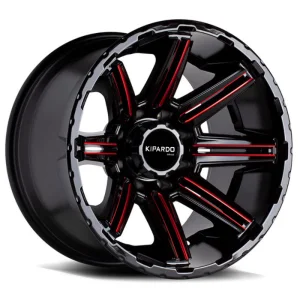
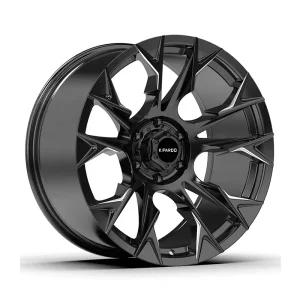
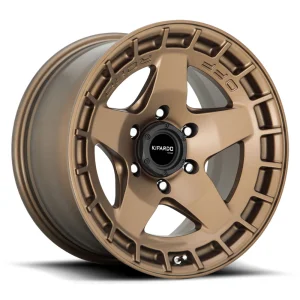
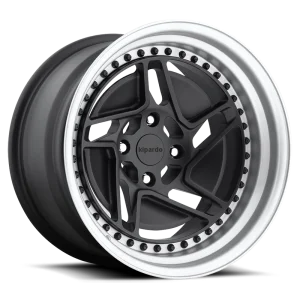
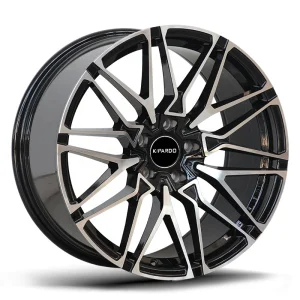
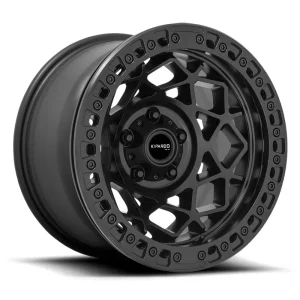
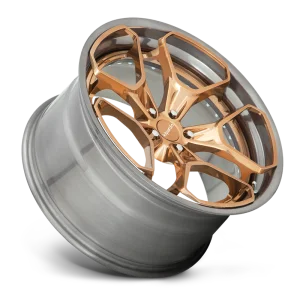
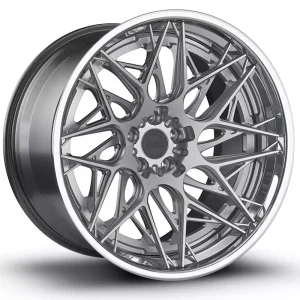
Enterprise Manufacturing Showcase: Cast, Flow-Formed & Bespoke Forged Wheels
Complete product range engineered for heavy-duty commercial, aggressive street, and luxury fitment segments.
Frequently Answered Questions for Commercial Importers & Engineers
Authoritative technical clarifications addressing alloy selection, minimum order quantities, bespoke fitments, and dynamic testing protocols.