
Featured 6-Spoke Engineering & Custom Forged Rims
Precision-engineered forged aluminum architectures tailored for OEM, 4x4 offroad overlanding, and commercial fleet procurement.
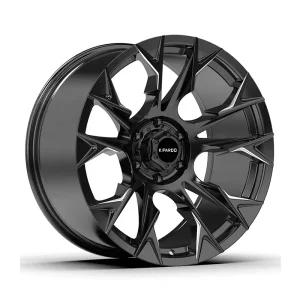
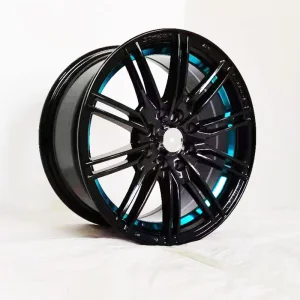
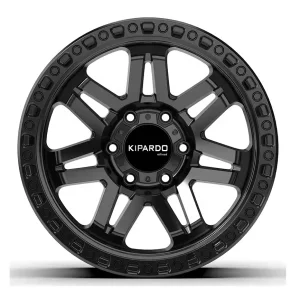
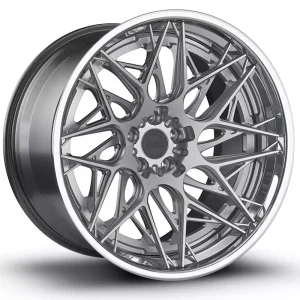
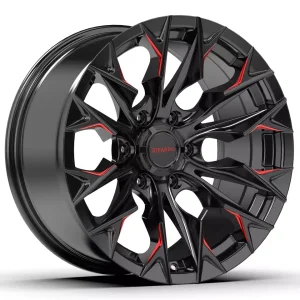
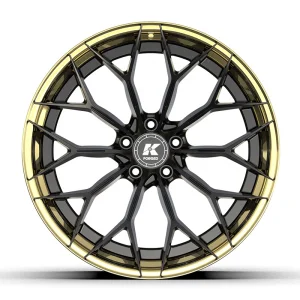
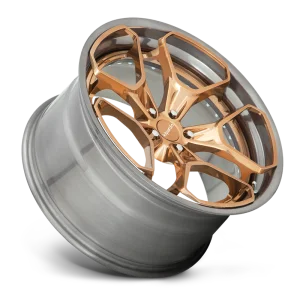
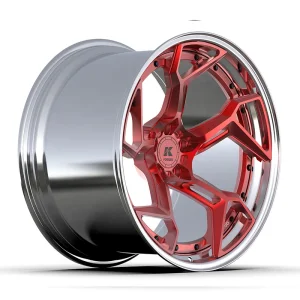
The Mechanical Supremacy of the 6-Spoke Geometric Layout
In the realm of automotive structural kinetics, wheel design is not merely aesthetic—it is a critical calculation of rotational inertia, dynamic shear vectors, and thermal equilibrium.
Hexagonal Symmetrical Load Distribution
The 6-spoke topology generates a 60-degree radial offset between load-bearing beams. This creates an optimal equilibrium during high-impact cyclical fatigue tests, specifically neutralizing peak localized Von Mises stresses that typically plague odd-numbered spoke architectures under lateral cornering shear.
Torsional Rigidity vs. Unsprung Mass
By utilizing multi-directional forging processes with 10,000 tons of hydraulic pressure, the grain structure of 6061-T6 aluminum flows unbroken from hub pad to rim flange. The 6-spoke framework allows minimal cross-sectional thickness while maintaining a structural yield strength surpassing 276 MPa.
Bernoulli Caliper Heat Dissipation
Sustained high-speed braking in armored commercial chassis or endurance motorsport generates rotor temperatures exceeding 700°C. The open 6-window configuration creates a negative pressure vortex (Venturi effect) that evacuates trapped kinetic heat, minimizing thermal brake fade and bead degradation.
Strategic Sourcing for B2B Importers, Fleet OEMs & Tuning Conglomerates
Navigating complex global supply chains requires an intricate understanding of Total Cost of Ownership (TCO), material purity, and the compliance requirements of Tier-1 supply chains.
Total Cost of Ownership (TCO)
While forged alloy tooling represents a higher initial capital expenditure than gravity or low-pressure casting, the structural weight reduction translates directly into reduced powertrain strain, extended suspension busing longevity, and improved battery range for commercial electric platforms.
Supply Chain Volatility Hedging
Global aluminum billet indexes (LME) require automated supply contract adjustments. Rimax utilizes proprietary direct-from-smelter raw ingot procurement, locking in high-purity aluminum supply lines and guaranteeing steady baseline pricing across multi-year OEM volume commitments.
Military & Armored Fleet Specs
Specialized security vehicles, tactical transporters, and cash-in-transit convoys demand load ratings exceeding 1,200 kg per wheel under CEN B6/B7 ballistic armor standards. The 6-spoke monoblock forged variant serves as the global standard for high-payload survival architectures.
Private Label & Co-Engineering
Complete OEM/ODM white-label manufacturing protocols: from CAD modeling, hub-centric optimization, proprietary custom PCD machining (including 6x139.7, 6x114.3, 5x150, 5x127), to branded center caps, anti-counterfeiting laser engraving, and custom protective packaging.
Manufacturing Physics: 10,000-Ton Forging vs. Cast Alternatives
A detailed look at the physical transformations occurring within the aluminum matrix during high-tonnage thermal compression.
| Evaluation Parameter | Conventional Gravity / Low-Pressure Cast | Flow-Forming (Rotary Spun) | OEM Monoblock 6-Spoke Forged (6061-T6) |
|---|---|---|---|
| Crystalline Grain Structure | Dendritic, random, prone to micro-porosity | Elongated in barrel, cast in central hub | Dense, continuous, aligned along spoke stress lines |
| Yield Strength (Rp 0.2) | ~ 160 – 190 MPa | ~ 220 – 240 MPa (Barrel Only) | ≥ 276 – 310 MPa (Entire Monoblock Matrix) |
| Ultimate Tensile Strength | ~ 230 – 250 MPa | ~ 280 – 300 MPa | ≥ 310 – 350 MPa |
| Elongation to Failure (A5) | 3% – 5% (Brittle failure risk) | 6% – 8% | ≥ 10% – 14% (Ductile energy absorption) |
| Rotational Mass Variance | Baseline (Heaviest configuration) | 12% – 15% Reduction | 25% – 32% Reduction in mass |
| Impact Resistance (13° / 90°) | High crack propagation risk | Moderate fracture toughness | Plastic deformation without catastrophic fracturing |
T6 Artificial Aging Kinetics
Following initial closed-die high-pressure forging, blanks undergo rigorous solution heat treatment at 530°C, high-velocity water quenching to freeze the solid state, and controlled precipitation hardening (artificial aging) at 175°C for 8 to 12 hours. This produces Mg2Si crystalline phases that maximize hardness (HB ≥ 95).
5-Axis High-Speed CNC Milling
Computer-controlled 5-axis high-speed milling machines read parametric CAD geometries to mill precise spoke hollows, back-pad weight-relief pockets, and bead-seat knurling. This ensures dynamic balance runout under ≤ 0.25 mm and radial runout under ≤ 0.30 mm, eliminating vehicle harmonic vibrations.
Surface Passivation & Powder Deposition
Prior to finishing, every wheel undergoes a 7-stage automated chemical immersion: degreasing, alkaline wash, deoxidizing, and zirconium-based conversion passivation. This lays an electrochemical foundation capable of withstanding over 1,000 hours of continuous CASS (Copper Accelerated Acetic Acid Salt Spray) testing.
Technical Roadmap: The Next Era of Light-Alloy Kinetics
As automotive architectures migrate rapidly toward electric skateboards, commercial autonomous delivery fleets, and alternative fuels, wheel systems must evolve beyond passive rotating mass.
Hybrid Forged Carbon Spoke Integrations
The convergence of forged 6061-T6 aluminum hubs with high-pressure resin transfer molded (HP-RTM) carbon fiber outer barrels. This architecture slashes rotational moment of inertia by an additional 35% compared to monolithic forged alloys, directly enhancing battery thermal management through reduced stop-and-go energy waste.
Smart Wheel IoT Telemetry Integration
Embedding micro-piezoelectric strain sensors and passive RFID chips directly inside the inner rim drop-center. These communicate real-time cyclic fatigue loads, micro-crack frequency shifts, and lug nut torque decay wirelessly to the vehicle's electronic control unit (ECU) for predictive maintenance in heavy-duty commercial fleets.
EV High Gross Axle Weight Ratings (GAWR)
Battery pack weight has forced vehicle curb weights to historic highs. The traditional passenger wheel rating (690 kg) is no longer sufficient. Our engineering pipeline has raised the minimum baseline load threshold for 6-spoke EV forged architectures to 950–1,150 kg, accommodating dual-motor instantaneous torque shocks exceeding 1,000 Nm.
Global Commercial Ecosystem & Regional Demands
Wheel procurement dynamics vary drastically across global trade corridors, dictated by terrain, infrastructure, localized homologation mandates, and consumer preferences.
North America (US & CA)
Dominated by Class 2b/Class 3 pickup platforms (Ford F-Series, GM Silverado, Ram) and overlanding 4x4s. Focus centers heavily on deep concave profiles, 6x139.7 / 8x165.1 PCD setups, high load capabilities (1,000+ kg), and compliance with SAE J2530 aftermarket homologation standards.
European Union (ECE/TÜV)
High emphasis on sustained high-speed autobahn thermal resistance, aerodynamic efficiency, and zero tolerance for lateral runout. Sourcing is strictly governed by German TÜV Kraftfahrt-Bundesamt (KBA) requirements and ECE R124 structural compliance certificates.
Middle East & GCC
Extreme thermal environments with ambient summer road temperatures exceeding 60°C. High demand for large-diameter (20–24 inch) monoblock forged wheels fitted to full-size SUVs (Nissan Patrol, Toyota Land Cruiser 300) requiring superior bead retention under soft-sand low-PSI conditions.
Asia-Pacific & Australia
Australia's extreme outback conditions dictate heavy adherence to ADR (Australian Design Rules) 88/00 and AS1638 standards. In Southeast Asia, light commercial pickups (Hilux, D-Max) dominate, requiring cost-efficient forged setups balancing raw load strength with competitive container rates.
Compliance Infrastructure: Destructive & Non-Destructive Protocols
Every Rimax OEM 6-spoke forged design is subjected to full-spectrum validation protocols simulating hundreds of thousands of kilometers under punishing conditions.
Rotary Bending Cornering
Simulating the maximum continuous cornering moments a vehicle can generate. The wheel hub is securely clamped while a bending moment is exerted on the hub shaft through 100,000 to 250,000 cycles, verifying zero micro-cracking across spoke roots.
Dynamic Radial Fatigue
Testing the radial endurance of the rim barrel and bead seats. The wheel is fitted with a tire and driven against a rotating drum under a radial load 2.25 times the vehicle’s maximum static gross axle weight for 500,000 to 1,000,000 continuous revolutions.
13-Degree Lateral Impact
In compliance with JWL, VIA, and SAE J2530, a calibrated free-falling wedge weight strikes the outer rim flange at a 13-degree angle. This reproduces catastrophic curb strikes, ensuring no sudden tire deflation, rim fracture, or complete spoke separation.
Non-Destructive Testing (NDT)
Prior to CNC surface cutting, 100% of forged raw billets undergo real-time ultrasonic and multi-angle digital X-ray inspection. This guarantees zero subterranean internal gas fissures, inclusions, or crystalline grain boundary dislocations.
Specialty 4x4, Cast & Multi-Piece Forged Solutions
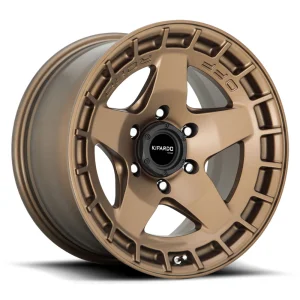
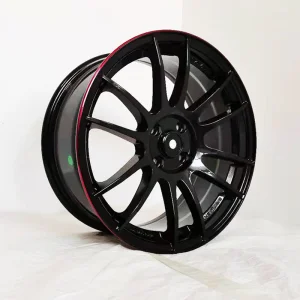
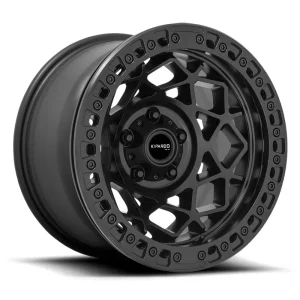
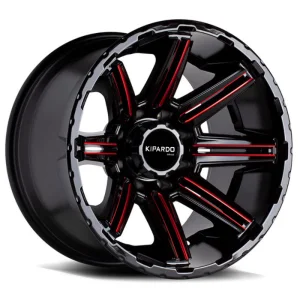
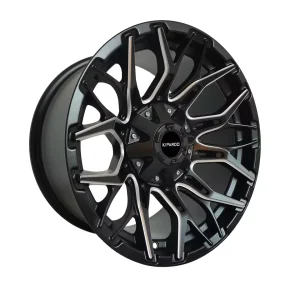
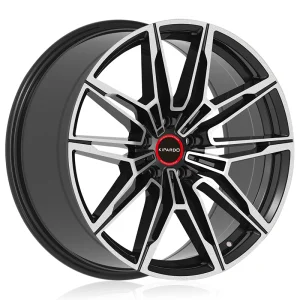
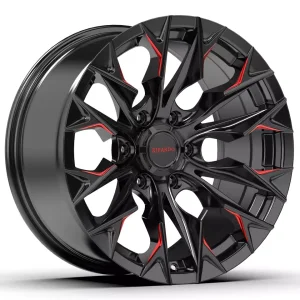
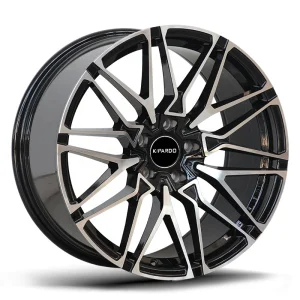
Explore our full manufacturing scope spanning 15-inch passenger rims up to 24-inch custom forged concave assemblies ready for private-label shipping.
Frequently Asked Engineering & Sourcing Questions
In-depth answers addressing metallurgical tolerances, private labeling parameters, quality certifications, and lead times.