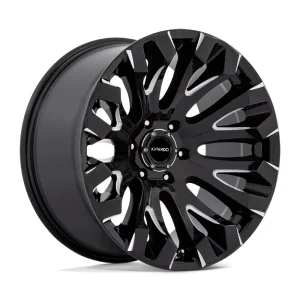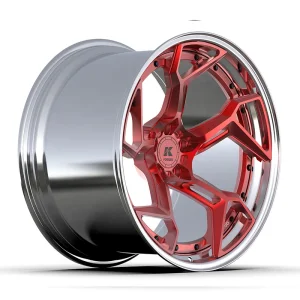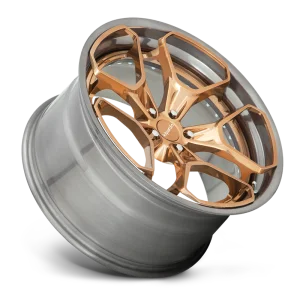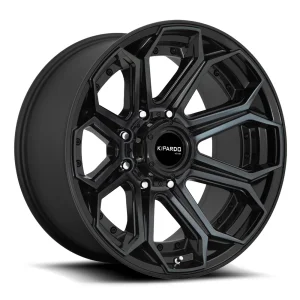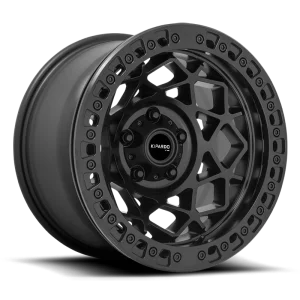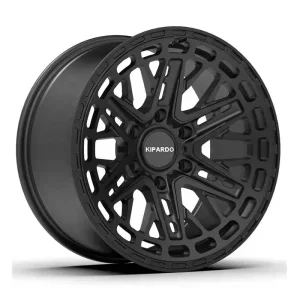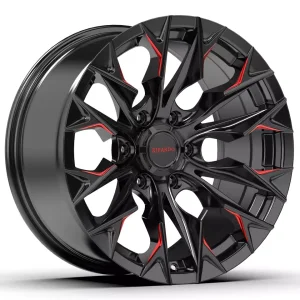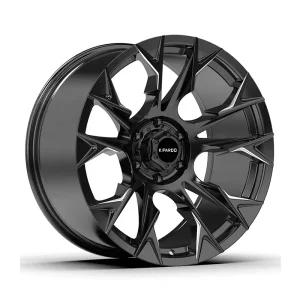
Engineered Precision: Premier Brushed & Forged Assemblies
Explore 8 precision-engineered alloy wheels meeting JWL, VIA, and SAE J2530 specifications, featuring directional rotary grain brushing, multi-piece titanium hardware, and custom offsets.
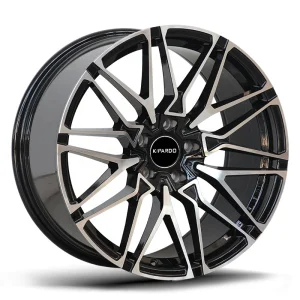
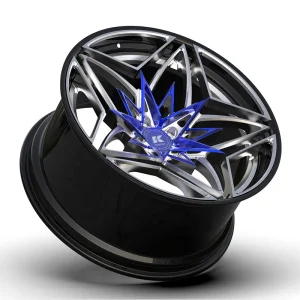
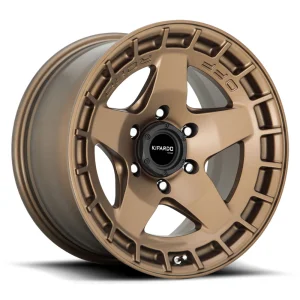
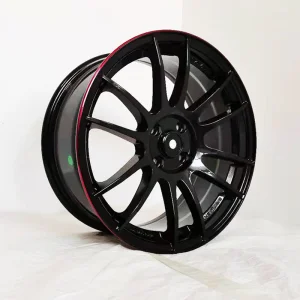
Global Commercial & Industrial Landscape of Brushed Alloy Wheels
The international automotive alloy wheel industry is undergoing a structural transition toward tactile, high-definition finishes. Brushed aluminum finishes offer significant functional benefits and brand differentiation over traditional painted or mirror-polished surfaces.
Expanding Market Valuations
The global automotive aluminum wheel market is projected to surpass USD 28.5 billion by 2030, registering a consistent 5.8% CAGR. Within this aggregate volume, premium architectural surface treatments—led by mechanical directional brushing—command an average price premium of 22% to 35% compared to monolithic silver paint coatings.
Global original equipment manufacturers (OEMs) and high-volume tuning brands deploy brushed finishes to convey structural authenticity, elevating vehicle exterior design language across luxury E-segment and premium crossover categories.
Aesthetic & Functional Differentiation
Brushed finishes (often designated as scotch-brite, hairline, or directional wire-drawn texturing) eliminate the plastic feel associated with heavy electrostatic powder paints. By mechanically etching microscopic, parallel striations directly onto raw A356.2 or 6061-T6 aluminum alloys, light refraction is scattered in a controlled radial halo.
Functionally, brushed textures minimize the visible appearance of light brake-dust accumulation and microscopic stone impingements during regular highway cycles, significantly lowering warranty claims regarding cosmetic clear-coat distress.
Stringent OEM Clear Coat Barrier Demands
Unlike raw mirror polishing, brushed alloy wheel surfaces feature engineered micro-grooves that increase surface area by up to 240%. This topography demands advanced silane adhesion promoters and zero-inclusion electrocoat polymers to seal the substrate against atmospheric oxygen and salt intrusion.
Global wheel distributors require full adherence to CASS (Copper-Accelerated Acetic Acid-Salt Spray) testing protocols up to 720 hours to prevent filiform corrosion along mechanical grain peaks under varied environmental conditions.
Chinese Manufacturing Efficiency & Supply Chain Integration
Shanghai Rimax Industry Co., Ltd. and its Kipardo manufacturing facilities deliver world-class brushed alloy wheels. Our operations combine vertical raw material control, multi-axis robotic machining, and automated finishing lines to maximize quality and efficiency.
Vertical Smelting & Purity
We source primary electrolytic A356.2 aluminum ingots directly from regional smelters. Utilizing automated rotary degassing and titanium-boron grain refinement, our molten pool maintains dissolved hydrogen levels below 0.11 cm³/100g, preventing subsurface micro-porosity from breaking through onto critical brushed face surfaces.
CNC Rotary Machine Brushing
Our workshop pairs dual-spindle CNC machining centers with custom non-woven synthetic conditioning drums. Programmed with proprietary tool-pressure feedback loops, our machines produce uniform brushed grain depth within ±0.03 mm tolerances across complex 3D convex spoke contours, outperforming manual bench operations.
Class-100 Cleanroom Powder Lines
A critical failure point in brushed alloy wheel manufacturing is particle entrapment under the transparent topcoat. Our continuous horizontal conveyor lines run through Class-100 pressurized HEPA chambers, applying thermoset acrylic clear powders and liquid tint clears without lint, air bubbles, or orange peel defects.
Container Optimization & Rapid Tooling
With an active tooling inventory exceeding 4,000 casting and forging dies, our Kunshan design and engineering headquarters rapidly prototypes new custom forged brushed programs in under 18 business days. Cast programs achieve full PPAP Part Submission Warrant release within 45 days, cutting market entry lead times in half.
Localized Engineering Fitment & Application Scenarios
Brushed alloy wheel applications must be tailored to vehicle architectures, drivetrain torque parameters, and regional environmental challenges. Discover our specialized configurations for major automotive sectors.
Luxury Sedans & GT Touring
Fitment Parameters: 19" to 22", 5x112, 5x120, 5x130 PCD configurations. Offsets calculated for flush-fender aesthetics without requiring fender rolling.
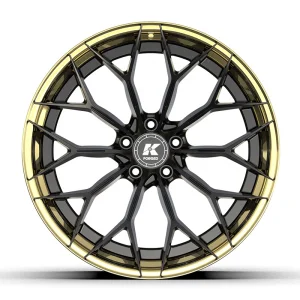
Aesthetic Finish: Hand-brushed radial face paired with tinted smoke clear (black diamond brush) or translucent champagne gold powder, complementing executive sedans, coupes, and luxury station wagons.
Full-Size Pickups & 4x4 Off-Road
Fitment Parameters: 17" to 20", 6x139.7, 5x150, 6x135 PCDs. Engineered to exceed 2,500 lbs (1,134 kg) wheel load limits for heavy trail conditions.
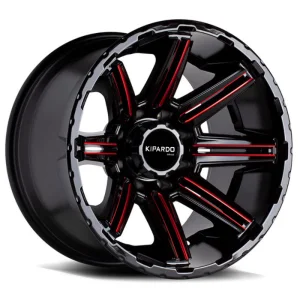
Aesthetic Finish: Heavy directional brush accents paired with satin bronze, dark matte grey, or gloss black beadlock simulation lips. UV-stabilized polyurethane coats resist off-road mud and sand abrasion.
Electric Vehicles (BEV) & Hybrids
Fitment Parameters: 18" to 21", high positive offsets (ET 40–50mm) optimized for aerodynamic airflow drag reduction and low rolling resistance.
Aesthetic Finish: Brushed outer directional aero-inserts paired with low-gloss backing paints. Low structural weight reduces unsprung mass, supporting battery range efficiency.
Motorsport & Aftermarket Stance
Fitment Parameters: 2-Piece and 3-Piece modular assemblies with 6061-T6 forged brushed centers and spun 5052-H34 polished or brushed aluminum outers.
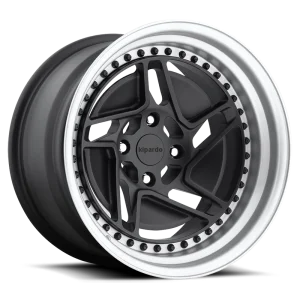
Aesthetic Finish: Mirror-polished stepped lips combined with fine wire-brushed spokes and anodized ARP grade 10.9 titanium fastening hardware for bespoke track builds.
Engineering Matrix: Metallurgy, Tooling & Surface Integrity
Choosing the right wheel architecture directly influences mechanical tensile strength, unsprung mass distribution, and clear-coat adhesion durability. Review our engineering specifications across casting, flow forming, and aerospace forging technologies.
| Evaluation Parameter | Low-Pressure Cast Brushed | Rotary Flow-Formed Brushed | 6061-T6 Monoblock Forged | 3-Piece Modular Forged |
|---|---|---|---|---|
| Base Alloy Substrate | A356.2 Virgin Primary Ingots | A356.2 + Flow-Drawn Barrel | 6061-T6 Aerospace Billet | 6061-T6 Center + 5052 Barrels |
| Yield Strength (Rp 0.2) | 165 – 185 MPa | 210 – 240 MPa (Barrel) | 275 – 310 MPa (Uniform) | 280 MPa Center / 215 MPa Rim |
| Tensile Strength (Rm) | 230 – 260 MPa | 290 – 320 MPa | 320 – 350 MPa | 330 MPa Center / 260 MPa Rim |
| Brushing Tooling Interface | Rotary Non-Woven Synthetic Drum | High-RPM Automated Scotch Wheels | Directional Multi-Axis CNC Tool | Segmented Hand-Grain + Lathe Line |
| Surface Roughness (Ra) | 0.8 – 1.4 µm (Standard Grain) | 0.6 – 1.2 µm (Refined Hairline) | 0.4 – 0.9 µm (Precision Linear) | 0.3 – 0.8 µm (Show-Car Bespoke) |
| CASS Salt Spray (ASTM B368) | Exceeds 480 Hours | Exceeds 480 Hours | Exceeds 720 Hours | Exceeds 720 Hours |
| Structural Warranty (Years) | 5-Year / 100,000 km | 5-Year / 100,000 km | Lifetime Structural | 5-Year Modular Seal |
The 8-Stage Precision Brushing & Sealing Protocol
Every Kipardo brushed wheel follows a validated 8-step mechanical and chemical pathway to eliminate porosity, guarantee radial alignment, and protect underlying textures against oxidation.
Structural Pre-Machining
Initial multi-axis CNC turning machines the wheel profile, establishing the hub bore, lug seats, and spoke envelope within ±0.05 mm tolerances.
Surface Planing & Deburring
High-precision single-point diamond cutters plane the target brushed surfaces, removing casting skins and tool chatter marks.
Mechanical Grain Brushing
Automated rotary non-woven conditioning media applies controlled linear or circular micro-grooving under water-soluble coolant baths.
Ultrasonic Degreasing
Multi-stage immersion in ultrasonic alkaline and deionized rinse tanks removes metal fines, residual oils, and ambient dust particles.
Nanotech Zirconium Seal
Eco-friendly hexavalent-chromium-free zirconium pre-treatment deposits an invisible conversion layer to optimize adhesion for clear-coat polymers.
Translucent Tint / Clear Coat
Electrostatic application of acrylic powder primer and tinted liquid clears (Black Smoke, Bronze, Gold) preserves grain visibility under light.
Thermal Infrared Curing
Controlled multi-zone convection and IR baking cross-links polymers at 180°C to 200°C, producing high surface hardness (≥2H pencil test).
CMM, Radial & Runout QA
Final coordinate-measuring machine (CMM) and digital run-out sensors confirm lateral and radial eccentricity remain under 0.30 mm.
Emerging Trends in Wheel Engineering & Surface Chemistry
Discover four technological advancements shaping next-generation OEM brushed alloy wheel development, from aerodynamic integration to sustainable alloy recycling.
Directional Dual-Tone Ceramic Clears
The market is adopting inorganic ceramic polysilazane nano-coatings over conventional polyurethanes. These ultra-thin layers (5–12 µm) offer 9H hardness, resisting brake iron burns without dulling subtle brushed striations.
Aerodynamic Carbon-Composite Blades
To maximize electric vehicle range, our R&D center integrates dry carbon fiber and lightweight nylon aero-blades into brushed wheel spoke cavities, lowering the drag coefficient (Cd) by 0.012 without sacrificing luxury appearance.
Closed-Loop Recycled Green Alloys
Global brands are prioritizing decarbonized supply chains. Rimax now offers certified low-carbon wheels smelted with hydro-powered electricity and up to 60% post-industrial aluminum recycling, reducing embodied carbon to below 4.0 kg CO₂/kg Al.
Laser Profilometry & AI Defect Inspection
Our Kunshan facilities utilize laser scatter profilometers integrated with machine-vision algorithms. This setup inspects brushed surfaces at 1,000 scans per second, instantly catching micro-chatter, inconsistent brush density, or stray gouges before painting.
Global Corporate Procurement: Requirements & Best Practices
Navigating overseas wheel procurement demands precision across technical fitment specifications, regulatory compliance, and packaging reliability. Here is how Rimax supports international purchasing teams.
Comprehensive Validation Documentation
Overseas importers often encounter regulatory hurdles when importing aftermarket wheels. Shanghai Rimax provides complete documentation packages, including certified JWL/VIA test reports covering dynamic radial fatigue, dynamic cornering fatigue, and 13-degree impact tests.
We supply full PPAP documentation, raw material mill certificates, spectrometer alloy chemical analyses, and salt spray test logs with every container shipment.
Transit Protection for Brushed Finishes
Brushed clear coats require specialized transit protection against pressure rub-marks and moisture entrapment during trans-oceanic shipping. We protect each wheel using non-abrasive soft shower caps, reinforced rim flange edge rings, desiccants, and moisture-barrier bags.
Export cartons utilize heavy-duty double-wall corrugated construction, stacked on heat-treated ISPM-15 compliant pallets wrapped in multi-layer stretch film.
Private-Label Branding & Low MOQs
For emerging wheel brands and regional tuning specialists, high minimum order quantities pose cash-flow hurdles. Rimax offers flexible tiered MOQ options starting at 60–80 pieces per cast design/fitment, and only 4 pieces for custom forged 6061-T6 orders.
Our graphics engineering team supports full private-label programs, supplying branded billet center caps, color-matched packaging, rim lip laser etching, and custom installation manuals.
Frequently Asked Questions: Technical & Sourcing Logistics
Find clear answers to key questions about metallurgy, custom machining, quality certifications, and volume production timelines.
What is the technical difference between brushed, diamond-cut, and polished alloy wheels?
How does Shanghai Rimax prevent filiform corrosion on brushed aluminum surfaces?
What are the typical sample and bulk production lead times for custom brushed wheels?
Can Rimax customize center caps, PCD patterns, and offsets for existing wheel models?
What structural and cosmetic warranties apply to Kipardo brushed wheel programs?
High-Performance Alloy Portfolio: Off-Road, Forged & Stance
Discover our specialized high-load, dual-drilled, and multi-piece alloy wheels engineered for global commercial distributors and aftermarket retailers.