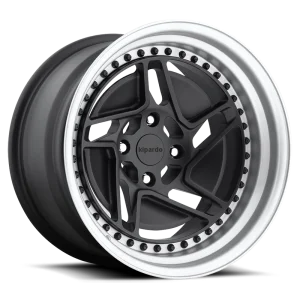
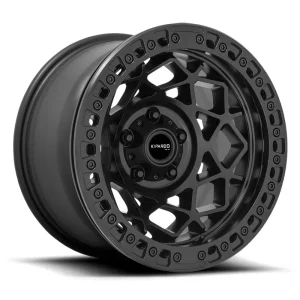
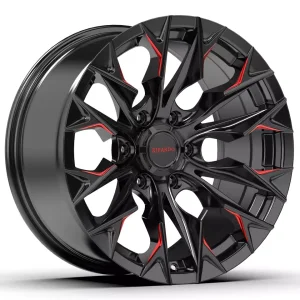
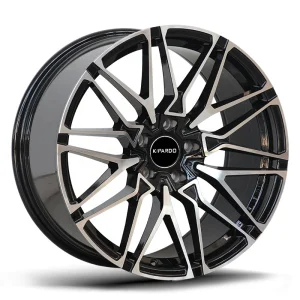
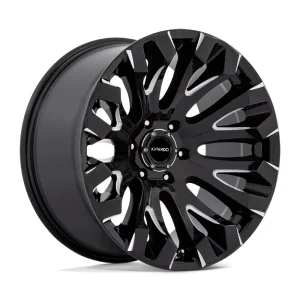
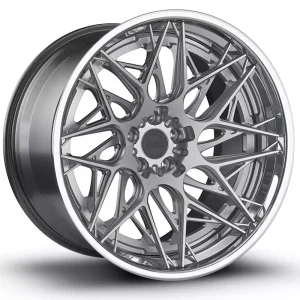
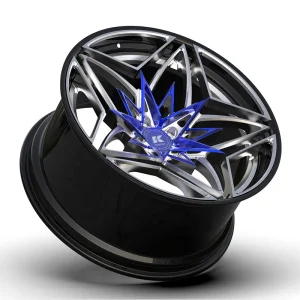
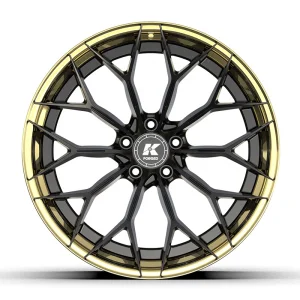
Featured High-Performance Wheel Alignments
Engineered for high axle load distribution, uncompromising rotational balance, and mirror-grade chrome finishes across off-road, luxury, and track platforms.
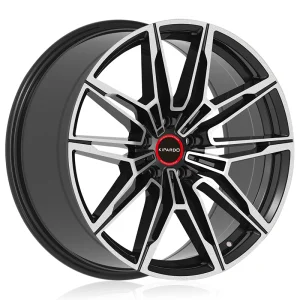
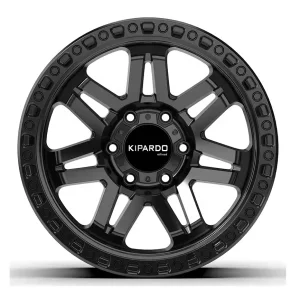
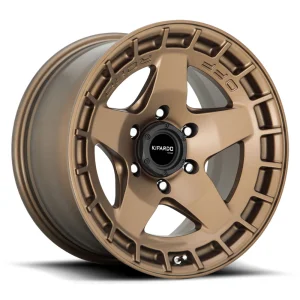
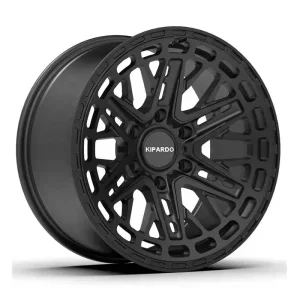
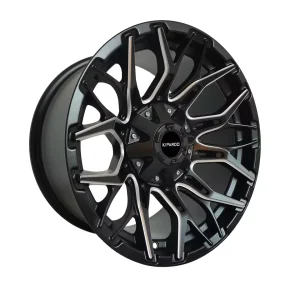
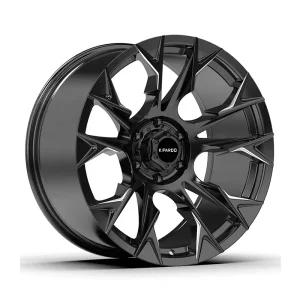
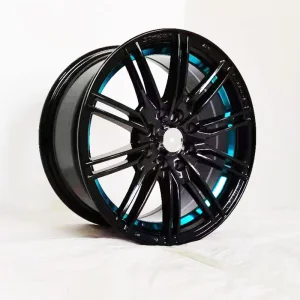

Global Procurement Intelligence: The Paradigm Shift to Chrome Forged Tech
Tier-1 automotive brands and global distributors are shifting procurement protocols from standard cast processes to aerospace-grade 6061-T6 forged architectures, driven by unsprung mass reduction and environmental-resistant chrome plating.
Total Cost of Ownership (TCO)
Commercial wheel operations demand extended longevity. Forged grain compacting eliminates interior micro-cavities, preventing crack propagation and yielding a 300% lifespan increment over gravity or standard low-pressure cast products.
EV Range & Unsprung Dynamic
As electric platforms escalate curb weights via battery assemblies, wheel load ratings must scale without ballooning mass. Precision CNC wheel profiles preserve rotational inertia, contributing to up to 4.5% electric drive-range expansion.
Harsh Environment Metallization
Traditional chrome finishes degrade under marine salt spray or magnesium deicers. Our micro-cracked hexavalent and trivalent multi-layer electroplating bonds atomically with forged aluminum substrates, mitigating flaking and pitting.
Engineering Precision: The Chrome Forging Lifecycle
From aerospace-grade 6061 round billet induction heating to sub-micron multi-axis automated milling, every stage is monitored under zero-defect statistical process control.
Isothermal Closed-Die Forging
Subjected to high tonnage multi-directional presses, aluminum grain boundaries align seamlessly along the spoke contours, securing high yield and tensile strength.
Precision T6 Solution & Aging
Controlled quenching and artificial aging induce uniform precipitation hardening, elevating mechanical hardness past 95 Brinell (HB) while mitigating residual stress.
Automated 5-Axis Milling
Milling machines sculpt weight-saving pocketing and intricate design contours down to ±0.02mm dynamic balance tolerance, eradicating runout flutter at high speeds.
Triple-Plate Chrome Complex
Comprising an initial ductile copper base, semi-bright corrosion-blocking nickel, high-sulfur bright nickel, and hard chromium deposition for reflective optical luster.
Technical Matrix: Comparative Wheel Manufacturing Technologies
A rigorous empirical comparison between cast, flow-formed, and forged methodologies to guide B2B distributors in inventory capitalization and load mapping.
| Evaluation Parameter | Cast Wheel System | Flow-Formed Wheel | OEM Chrome Forged Wheel |
|---|---|---|---|
| Primary Material Grade | A356.2 Ingot Alloy (Melting & Degassing) | A356.2 Liquid Cast w/ Spun Barrel | Aerospace Billet 6061-T6 (Extruded Bar) |
| Manufacturing Process | Low-Pressure Die Casting | Rotary barrel spinning & pressure-rolled | 10,000-Ton Forged closed-die + 5-Axis CNC |
| Structural Density / Porosity | Inter-dendritic pores subject to X-ray sorting | Compacted barrel rim; standard cast face | Zero internal porosity; continuous grain alignment |
| Weight Differential Ratio | Baseline Reference (100%) | 10% – 15% Weight Savings | 20% – 30% Weight Reduction (Lowest Inertia) |
| Yield Strength (Rp 0.2) | ~140 - 180 MPa | ~180 - 220 MPa (Barrel Only) | ≥ 275 - 310 MPa (Uniform Structure) |
| Ultimate Tensile Strength | ~220 - 250 MPa | ~250 - 280 MPa | ≥ 320 - 350 MPa |
| Chrome Plating Reliability | Moderate; risk of micro-pitting pinholes | Acceptable; requires thick copper underlay | Flawless mirror finish; thermal expansion match |
| Primary Target Applications | Volume wholesale, OEM replacement, aftermarket | Enthusiast platforms, lightweight racing | Luxury supercars, armored SUVs, bespoke off-road |
Technology Roadmap: Next-Generation Wheel Engineering (2025–2030)
Continuous investment in advanced material science, closed-loop sustainable plating, and cyber-physical CNC testing ensures uninterrupted competitiveness.
Eco-Friendly PVD Thin-Film Chrome
Pioneering vacuum Physical Vapor Deposition (PVD) to replace toxic hexavalent chrome lines, cutting hazardous wastewater generation by 98% while achieving comparable mirror reflectivity and superior chip resistance.
Forged Aluminum-Magnesium Hybrid Blanks
Integrating rare-earth magnesium additions into 6000-series billet metallurgy, driving yield thresholds beyond 340 MPa and shaving an additional 12% off rotating rim weight for heavy battery electric architectures.
Generative Structural Topology Optimization
Automated cloud-finite element analysis (FEA) applies stress vectors from simulated Nürburgring and King of the Hammers profiles, removing non-structural billet volume to construct razor-thin, load-optimized spokes.
Automotive Compliance & Localized Supply Assurance
Our Kunshan manufacturing hub coordinates directly with worldwide port destinations, securing immediate homologation, customs readiness, and local port clearance.
JWL / VIA Verified
13° impact test, dynamic cornering and radial fatigue tested per Ministry of Land, Infrastructure & Transport.
ECE R124 / TÜV
Full European compliance testing protocols covering corrosion aging, chemical exposure, and bead retention.
SAE J2530 Standard
US aftermarket performance validation ensuring rotational load compliance across heavy light-truck ratings.
IATF 16949 / ISO 9001
Automotive quality management system governing end-to-end trace documentation from molten billet to export.
Frequently Asked Questions (FAQ) for OEM Buyers & Importers
In-depth responses covering wheel metallurgy, chrome layer maintenance, custom offset parameters, and international B2B logistical delivery.
What makes forged chrome wheels structurally superior to conventional cast chrome wheels?
How does Kipardo handle salt-spray resistance and corrosion on chrome finishes?
What is the minimum order quantity (MOQ) and lead time for bespoke OEM wheel designs?
Can Rimax support custom PCD, offset (ET), center bore, and high load ratings for off-road/EV applications?
What warranty policies and structural guarantees are provided on exported wheel sets?
Engineered Bespoke Forged & Multi-Piece Assemblies
Explore customized deep concave profiles, 2-piece and 3-piece modular forged barrels, and high-load off-road wheel sets ready for global distribution.