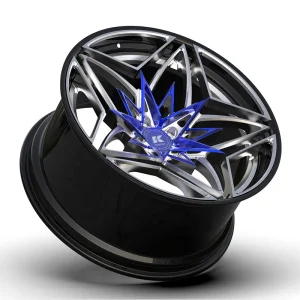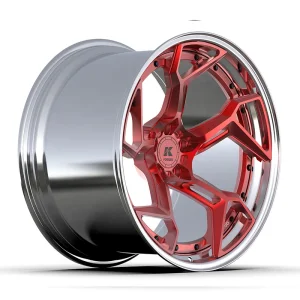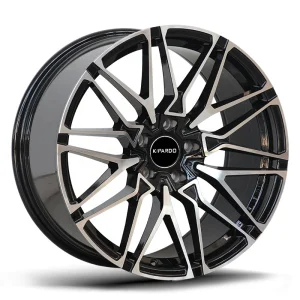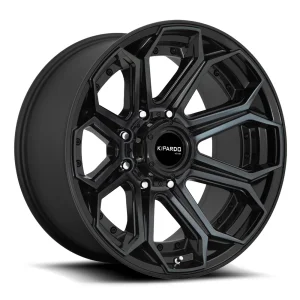
Primary Off-Road Architecture: Cast, Flow-Formed & Forged Rims
Explore our export-ready heavy-duty fitments engineered for 4x4 pickups, overlanding rigs, and desert trucks. Built to resist rim-lip deflection and structural impact across extreme terrain.
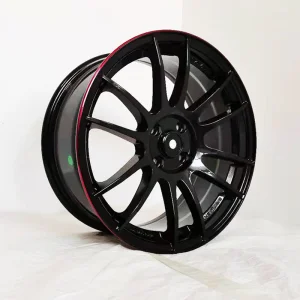
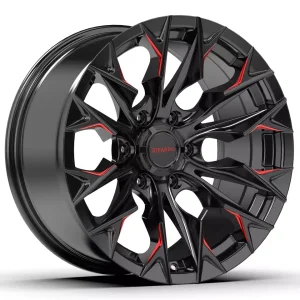
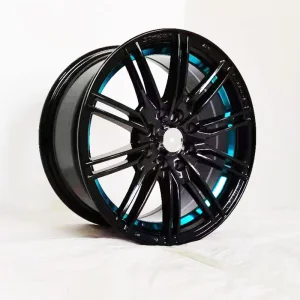
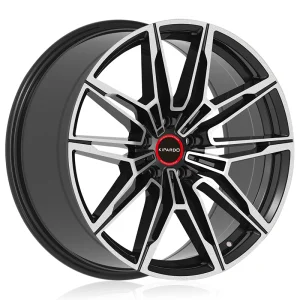
Global Commercial Dynamics of Forged Off-Road Wheels
As off-road vehicle gross vehicle weight ratings (GVWR) surge with electrification, overland conversions, and extreme tire fitments (35" to 40"+), conventional gravity and low-pressure cast wheels increasingly face catastrophic rim-lip fractures. Global aftermarket brands and OE performance sub-divisions are actively migrating toward aerospace-grade 6061-T6 forged aluminum architectures.
North American Light-Truck Expansion
The North American overland and desert-racing sectors represent the largest consumer base for custom forged off-road wheels. High demand for fitments supporting Ford F-150 Raptor, RAM TRX, Jeep Wrangler Rubicon, and Chevrolet Silverado 2500HD requires minimum wheel load ratings between 2,500 lbs and 3,650 lbs (1,134 kg to 1,655 kg) to withstand washboard resonance and heavy rock impact.
Australian & Middle East Harsh Conditions
In the Australian Outback (Toyota Land Cruiser 70/300 Series, Nissan Patrol Y61/Y62) and the Gulf Cooperation Council (GCC) dune basins, high heat cycles and severe corrugations demand wheels with continuous continuous grain structure. Forged 6061-T6 wheels prevent heat soak fatigue and bead unseating at low tire running pressures (down to 10-12 PSI).
The Heavy EV 4x4 Paradigm Shift
The advent of electric all-terrain platforms such as the Rivian R1T, GMC Hummer EV, and Cybertruck has dramatically elevated unsprung load stresses. Vehicles exceeding 7,000 lbs curb weight with instant peak torque (1,000+ Nm) cause rotary slip on inferior wheels. Forged monoblocks with engineered knurled bead seats are mandatory to eliminate tire-to-rim slippage under aggressive acceleration.
Why Forged 6061-T6 Aluminum Outperforms Cast Alloys
Understanding the microstructural mechanics separates professional OEM purchasers from retail buyers. Rimax and Kipardo forge wheels through closed-die hydraulic presses that realign the aluminum crystal lattice along load-bearing vectors, eliminating microporosity and voids inherent in liquid casting.
| Mechanical Property | A356.2 Gravity Cast | A356.2 Low-Pressure Cast | Flow-Formed (Rotary Forged) | True Forged 6061-T6 Billet |
|---|---|---|---|---|
| Tensile Strength (Ultimate, Rm) | 220 - 240 MPa | 260 - 280 MPa | 310 - 330 MPa (Barrel) | 360 - 380 MPa (Omnidirectional) |
| Yield Strength (Rp 0.2) | 160 - 180 MPa | 190 - 210 MPa | 230 - 250 MPa | 310 - 325 MPa |
| Elongation at Break (A5) | 2 - 4% | 5 - 7% | 8 - 11% | 12 - 16% (Ductile Shock Absorption) |
| Grain Structure Integrity | Random dendritic crystals, gas voids | Dense dendritic, low porosity | Elongated flow lines in rim barrel | Continuous directional forged grain flow |
| Failure Mode Under Dynamic Shock | Brittle fracture / Spoke crack | Sudden shearing / Chunking | Deflection at rim lip | Elastic deformation before plastic bend |
| Typical Weight (17x9 Off-Road) | 13.8 - 15.5 kg (30 - 34 lbs) | 12.5 - 13.8 kg (27 - 30 lbs) | 11.0 - 12.0 kg (24 - 26 lbs) | 8.8 - 10.2 kg (19 - 22 lbs) |
Closed-Loop CNC Forging & Validation Protocol
Every Kipardo forged wheel manufactured at our Jiangsu and Zhejiang facilities undergoes an 8-stage industrial progression under ISO 9001 and IATF 16949 certified process controls.
Billet Homogenization
Solid aerospace-grade 6061 cylinders are heated to 480°C in atmospheric induction furnaces to dissolve secondary phases and uniformize grain chemistry.
10,000-Ton Forging
Closed-die multi-stage hydraulic stamping forces the billet into a near-net blank, establishing directional grain lines along spoke and rim intersections.
Spin-Forming Barrel
Dual-roller hot spin forming draws the barrel cylinder to specified widths and offsets, consolidating wall density while minimizing unsprung mass.
T6 Thermal Tempering
Solution heat treatment at 535°C followed by high-velocity deionized water quench and artificial aging at 175°C yields optimal tensile and yield matrix.
5-Axis High-Speed CNC
High-precision 5-axis machining centers carve the spoke profiles, beadlock bolt pockets, hub bores, and PCD patterns within ±0.05mm geometric tolerances.
Non-Destructive Testing
100% dye penetrant and ultrasonic resonance tests ensure zero sub-surface fissures or inclusions before surface preparation commences.
Automated Finishing
Electrostatic powder primers, UV-cured color coats, precision brushed textures, or multi-step mirror polishing sealed with fluoropolymer clears.
CMM & Dynamic Run-Out
Coordinate Measuring Machine (CMM) radial and axial run-out checks are held within <0.3mm, verified against dynamic cornering test standards.
Chinese Manufacturing Hubs: The Rimax Ecosystem Advantage
Founded in 2010 in Kunshan, Jiangsu, Shanghai Rimax Industry Co., Ltd. leverages the Yangtze River Delta's integrated automotive industrial cluster. By co-locating raw aluminum refining, tooling fabrication, 10,000-ton forging lines, and robotic finishing cells within a 150km logistics radius, we solve the core procurement bottlenecks that cripple Western boutique forge houses.
Rapid Prototyping to Mass Batching
While European or North American custom forge houses quote 12 to 20 weeks for bespoke tooling and sample verification, Rimax executes 3D CAD modeling, FEA stress simulation, billet tooling cut, and prototype machining in under 25 business days. Full container production cycles average 35-45 days.
Tiered Technology Scalability
Rimax provides an integrated tiered sourcing model: low-pressure casting for entry-level volume retail, flow-forming for mid-tier enthusiasts, and monoblock/multi-piece 6061-T6 forging for premier racing and luxury programs. This eliminates the need for importers to manage multiple suppliers across distinct price points.
Stringent Export Quality Governance
Our Kipardo testing facilities operate in strict compliance with the Japan Light Alloy Automotive Wheel (JWL) standard, Vehicle Inspection Association (VIA) procedures, and SAE J2530 aftermarket regulations. In-house test rigs include 90-degree and 13-degree impact test apparatus, radial fatigue dynamometers, and 1,000-hour CASS salt-spray chambers.
Real-World Deployment: Engineered for Extreme Terrains
Wheel failure during remote expeditions is a safety hazard. We design bespoke forged wheels engineered for specific regional terrains, vehicle weight distributions, and off-camber torsional loads.
Desert High-Speed Trophy & Baja Racing
High-speed desert traversal creates relentless high-frequency harmonic vibrations and brutal g-out ditch impacts. Forged 6061-T6 monoblocks feature thicker inner barrel flanges and reinforced spoke junctions that absorb 3g to 5g dynamic impacts without cracking. The integrated knurled bead seat prevents tire de-beading during high-deflection steering inputs.
Ultra-Low Pressure Technical Rock Crawling
In boulder crawling and sandstone ledges (e.g., Moab, Rubicon Trail), tire pressures are dropped below 8-10 PSI to maximize tread contact patch. Rimax engineers genuine forged beadlock variants featuring Grade 8 cadmium-plated hardware that clamps the tire bead mechanically against the outer forged lip, rendering de-beading physically impossible on vertical slickrock angles.
Heavy Overland Expedition Rigging
Overland-built pickups and full-size SUVs (Toyota Tundra, LC 300, Nissan Patrol) typically run near or slightly above maximum gross axle weight ratings (GAWR) due to rooftop tents, auxiliary fuel tanks, steel bumpers, and winches. Our forged 4x4 line provides load ratings up to 1,600 kg (3,527 lbs) per wheel, ensuring zero spoke fatigue failure over trans-continental expeditions.
Tactical & Armored Defense Vehicles
Specialized upfitters building B6/B7 armored civilian transports (e.g., armored Suburban, LC 200/300, Mercedes G-Class) require wheels that support curb weights exceeding 4,500 kg while sustaining run-flat insert assemblies. Rimax engineers forged tactical blanks capable of accommodating internal Hutchinson run-flat systems with sustained 1,800 kg per corner load ratings.
Next-Gen Engineering: Trends Shaping Forged Wheels
The forged wheel sector is transforming through generative computational mechanics, hybrid metallurgical processes, and sustainable smelting technologies. Brands adopting these innovations early will capture expanding market share in high-margin enthusiast and commercial sectors.
AI Topology Optimization & Generative Design
By defining boundary constraints, braking caliper clearances, and multidirectional impact loads in algorithm-driven CAD engines, we generate organic, bone-like internal spoke structures. Generative forged wheels reduce rotational unsprung weight by up to 18% compared to standard CNC geometries while increasing torsional rigidity under extreme lateral rock twisting.
Dual-Block & Modular Beadlock Integration
Traditional single-piece beadlock wheels are not street-legal (DOT compliant) in jurisdictions such as the USA, Canada, and Australia. Rimax is advancing dual-mode engineering: hybrid street-legal forged wheels featuring interchangeable protective rock-rash rings that convert into true mechanical beadlock clamps for dedicated trail use via modular outer lip geometries.
Low-Carbon Hydro-Powered Smelting
With corporate European and American fleet buyers prioritizing ESG compliance and Scope 3 carbon metrics, Kipardo utilizes primary 6061 ingots refined with certified renewable hydroelectric energy. This slashes the cradle-to-gate carbon footprint from 12.8 kg CO2e per kg of aluminum to less than 4.0 kg CO2e, easing import tariff compliance in regulated markets.
Enterprise Sourcing Manual: OEM & Private-Label Workflows
Procuring custom forged wheels requires transparent engineering alignment. Rimax establishes a streamlined, risk-mitigated procurement pipeline providing institutional buyers with full engineering documentation from finite element simulation through final export packing.
1. Data Sourcing & Clearance Verification
Clients supply vehicle platform targets (PCD, Center Bore, required offset range, brake caliper clearance profile, and target tire dimensions). Rimax engineers execute a 3D digital brake scan overlay to ensure positive clearance on heavy-duty multi-piston aftermarket calipers (e.g., Brembo, Baer, Wilwood, Alcon).
2. FEA Stress & Fatigue Simulation
Prior to cutting physical billet, high-stress zones are identified using ANSYS Finite Element Analysis. Simulated radial forces, dynamic cornering moments, and 13-degree edge drop impacts are performed digitally to verify that peak Von Mises stresses remain well below the yield threshold of 6061-T6 alloy.
3. Private-Label Branding & Packaging
We deliver turn-key retail-ready programs. This includes CNC billet-engraved center caps with your brand insignia, bespoke color-matched carton packaging, barcode labeling, QR code warranty cards, and reinforced edge protectors designed to survive trans-oceanic LCL or FCL freight without cosmetic rub.
4. Quality Audit & Documentation Pack
Each container shipment is accompanied by a documented Quality Audit Dossier: raw material metallurgical mill certs (chemical composition analysis), CMM dimensional verification reports, X-ray non-porosity certificates, dynamic cornering run logs, and 5-year structural warranty declarations.
Engineering White Paper Frequently Asked Questions
Direct metallurgical and logistics answers to the most frequent inquiries from international procurement directors, wheel brands, and commercial upfitters.
What is the practical structural difference between 1-piece Monoblock and Multi-Piece Forged Off-Road Wheels?
A monoblock forged wheel is CNC-machined from a single solid 6061-T6 forged blank. It offers maximum torsional rigidity, the lightest unladen mass, and zero air-leak pathways, making it ideal for severe rock crawling and high-speed desert racing. Multi-piece forged wheels (2-piece or 3-piece) combine a forged center disc bolted or welded to an inner and outer spun barrel. Multi-piece constructions provide infinite customization of extreme widths (up to 14" wide) and negative offsets (-44mm to -76mm) for lifted mega-truck platforms, allowing individual component replacement if a single outer rim lip sustains trail damage.
How does Rimax ensure that custom forged wheels clear oversized off-road brake calipers?
We require either the client's vehicle model year with factory brake codes or an engineering DXF/PDF profile of the aftermarket caliper assembly. Our design studio imports these boundaries into our 3D CAD system and generates an adaptive wheel profile maintaining a minimum 3.0mm dynamic safety clearance between the spoke back-cut and caliper body, alongside a minimum 4.0mm radial clearance across the inner barrel drop center.
What are the specific JWL and SAE J2530 testing cycles Rimax runs for off-road load ratings?
Rimax validates off-road wheels under elevated test parameters. The Dynamic Cornering Fatigue test applies a bending moment to the wheel hub over 100,000 cycles at 1.5x to 2.0x designated load. Dynamic Radial Fatigue rolls the wheel with a weighted tire over a drum at 500,000+ cycles. The 13-degree Impact Test drops a calibrated striker onto the outer rim flange to verify that the wheel absorbs the impact through ductile deflection without crack initiation, sudden pressure loss, or spoke fracture.
What surface finishes provide the highest corrosion resistance in severe winter road-salt or desert alkali environments?
For vehicles exposed to heavy winter de-icing magnesium chloride salts or coastal alkali sand, we recommend full multi-stage powder coating (epoxy anti-corrosion primer + polyester color coat + fluoropolymer clear coat). Polished or bare-metal brushed surfaces must be protected with our proprietary thermo-cured acrylic clear powder. Our electrostatically applied powder systems exceed 1,000 hours in CASS (Copper-Accelerated Acetic Acid Salt Spray) testing with zero filiform corrosion along edge radii.
What is the Minimum Order Quantity (MOQ) and production turnaround for custom forged off-road wheels?
Because forged wheels are machined individually on multi-axis CNC centers without the need for fixed steel casting molds, we support exceptionally flexible minimums: bespoke custom sets can be ordered in batches as small as 4 to 8 pieces for niche builders. For private-label wholesale programs, our cost-effective volume batches start at 40 pieces (mixable across staggered widths or finishes). Lead time from digital CAD sign-off to export container loading ranges from 25 to 40 days.
Can Kipardo manufacture true beadlock wheels with street-legal safety certifications?
True mechanical beadlock wheels (where an exterior ring clamps the outer tire bead) do not conform to DOT FMVSS No. 120 or SAE J2530 street requirements in specific Western countries because bolt torque relaxation over highway heat cycles poses a maintenance hazard. Kipardo solves this by offering dual solutions: fully certified simulated beadlock designs (featuring cosmetic rock rash rings with internal safety bead humps) for road compliance, and heavy-duty true forged mechanical beadlocks exclusively engineered for closed-course trophy truck, desert racing, and rock crawl competitions.
Bespoke Forged & Commercial Aluminum Rim Specifications
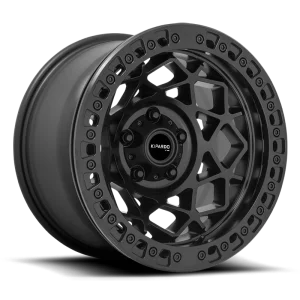
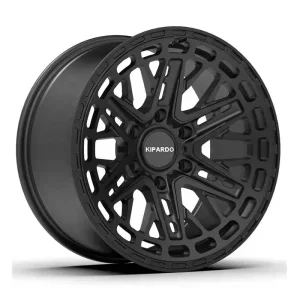
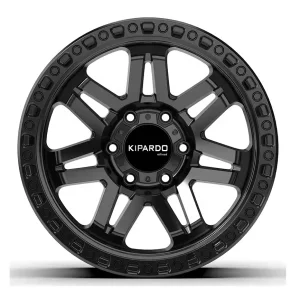
Explore the remainder of our engineered product lineup. All models feature customizable bolt patterns, backspacing, center hub bores, and premium finish treatments to suit global commercial programs.