
High-Performance Flow Formed & Cast Product Lineup
Explore precision-manufactured aluminum alloy rims optimized for commercial distributors, high-volume retail programs, and extreme off-road demands.
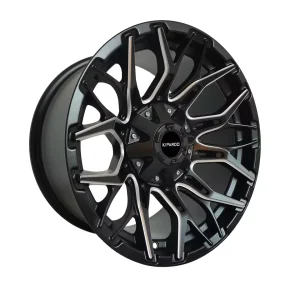
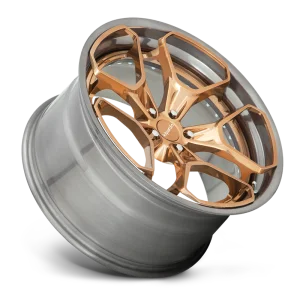
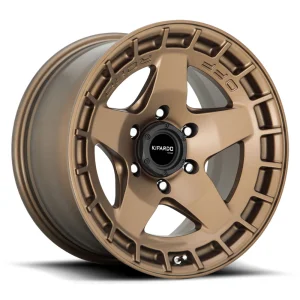
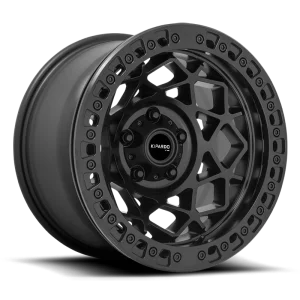
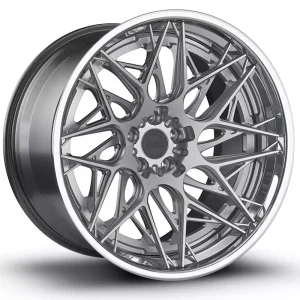
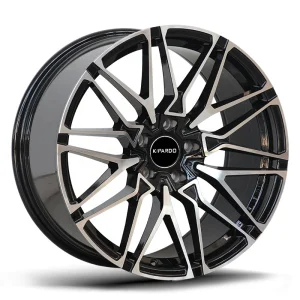
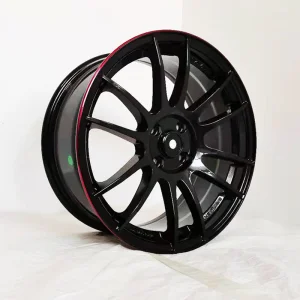
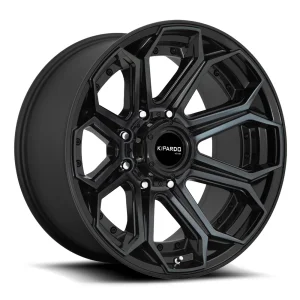
Global Sourcing Demands & Automotive Supply Chain Transformation
Flow forming technology (also recognized as rotary forging or flow forging) has evolved from a niche performance tuning application into an indispensable macro solution for global tier-1 brand distributors and electric vehicle platforms.
Mitigating Total Landed Costs
Global wheel distributors face high maritime freight rates and tightening margin pressures. Flow formed rims reduce overall structural mass by 15% to 20% compared to conventional gravity or low-pressure cast units, lowering container deadweight, increasing pack density, and slashing secondary fuel penalties across transit networks.
Electric Vehicle (EV) Transition Demands
EV platforms introduce severe battery curb weights requiring disproportionately high wheel load ratings (exceeding 900kg to 1050kg per corner). Flow forming condenses the aluminum rim barrel's grain structure, satisfying stringent load capacity thresholds while offsetting heavy battery packs to preserve EPA/WLTP range targets.
SKU Rationalization & Fitment Scalability
Brand principals require agile product platforms. Through precision CNC wheel face profile adaptation and modular flow roll barrel adjustments, export partners can order diverse offsets (ET), pitch circle diameters (PCD), and custom backspacings with significantly lower tooling amortization overhead than multi-piece forged assemblies.
Manufacturing Technology Benchmarking & Metallurgical Superiority
A granular side-by-side technical evaluation contrasting conventional gravity casting, low-pressure casting, flow forming, and full monoblock billet forging for global enterprise purchasers.
| Evaluation Parameter | Standard Gravity Casting | Low-Pressure Casting (LP) | Flow Forming Rotary Tech | 6061-T6 Billet Forged |
|---|---|---|---|---|
| Primary Ingot Alloy | A356 Generic Recycled | Primary Pure A356.2 Alloy | Virgin A356.2 + Sr Modification | Aerospace Grade 6061-T6 Billet |
| Microstructural Grain Structure | Coarse dendritic, random porosity | Uniform crystalline lattice | Elongated, dense, forged-grade flow lines | Hyper-dense multi-directional grain lines |
| Barrel Tensile Strength | 160 – 190 MPa | 220 – 250 MPa | 300 – 330 MPa | 350 – 380 MPa |
| Yield Strength | 90 – 120 MPa | 140 – 170 MPa | 210 – 245 MPa | 280 – 310 MPa |
| Rotational Mass Reduction | 0% (Baseline Reference) | -5% to -8% | -15% to -22% vs Gravity | -25% to -32% vs Gravity |
| Tooling & Mold Amortization | Very Low | Moderate | Balanced Low-to-Mid amort. | Zero mold (Extensive CNC runtime) |
| Economic Viability for Volume OEM | Strictly budget aftermarket | Mainstream factory standard | Optimal tier-1 price-to-weight sweet spot | Bespoke, high-end racing & luxury only |
End-to-End Validation: From Ingot Degassing to JWL / VIA Destruction Protocols
Shanghai Rimax Industry Co., Ltd. deploys an exhaustive quality gate mechanism across every production phase at the Kipardo casting and flow-forming plants to guarantee zero-defect field reliability.
1. Rotary Flow Forming Phase
Cast preforms are mounted onto high-speed rotary mandrels. Hydraulic precision rollers apply over 10 tons of continuous multi-axial radial pressure at 300°C–350°C, mechanically compressing the barrel section to create forged-grade grain alignment.
2. Automated T6 Heat Induction
Continuous solution heat treatment at 535°C followed by high-speed water quenching and 6-stage artificial aging at 155°C. This molecular treatment aligns the silicon precipitates, achieving optimal elongation and ductility balance.
3. Digital Real-Time Radiography
100% of finished rims pass through automated multi-angle X-ray fluoroscopy booths. Proprietary AI image recognition algorithms immediately flag micro-voids, cold shut lines, or internal oxide inclusions around high-stress spoke fillets.
4. Destructive Rig Testing
Batch lots are subjected to rigorous 13° and 90° dynamic impact drop testing, dynamic radial fatigue endurance tests running beyond 1,000,000 cycles, and 720-hour accelerated CASS/neutral salt spray surface corrosion validation.
Localized Export Support & International Compliance Assurance
Decades of worldwide shipment logistics enable Rimax to seamlessly manage strict regional certifications, documentation, and customized supply-chain requirements for every major target territory.
North American Regulatory Rigor
Full conformance with SAE J2530 and US DOT marking guidelines. We assist importers with complete customs classification under Harmonized Tariff codes, providing Certificate of Conformity dossiers and customized drop-ship barcode labelling directly to continental 3PL facilities.
European ECE R124 & TÜV Compatibility
Engineering geometric clearances that comply with stringent German KBA, TÜV Gutachten, and UNECE R124 homological standards. Spoke architectures account for enlarged OEM brake caliper envelopes (Brembo, Akebono) common on continental sport sedans and luxury SUVs.
Turnkey Private-Label Ecosystem
From custom embossed rim lips and CNC central cap emblems to dual-layered water-repellent retail packaging, rim edge foam buffers, and multi-lingual consumer guarantee cards, Rimax delivers fully finished branding solutions ready for showroom shelves.
Commercial Off-Road & Luxury Bespoke Alloy Offerings
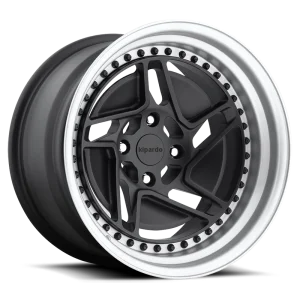
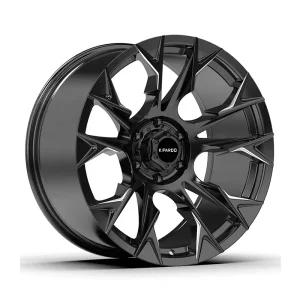
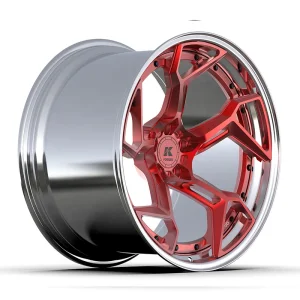
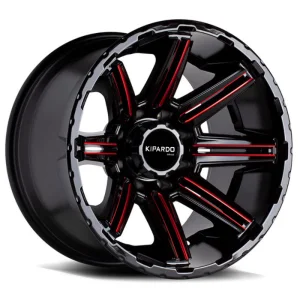
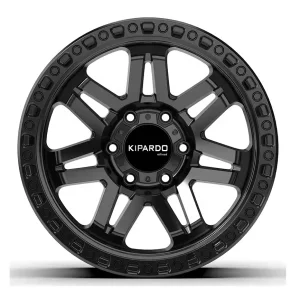
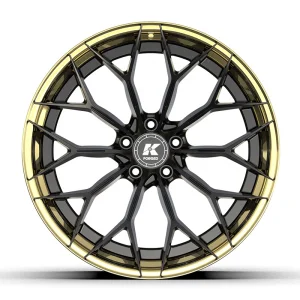
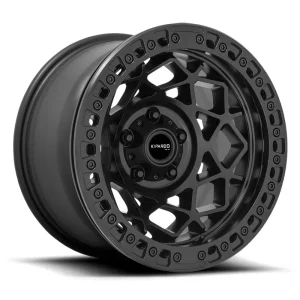
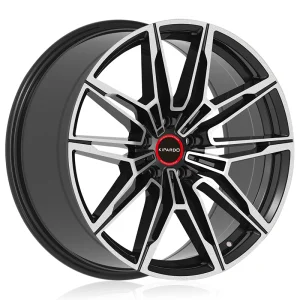
Review additional commercial series models spanning high-load 6-lug truck layouts, luxury staggered fitments, and customizable 6061-T6 forged designs.
Future Technology Roadmap & Sustainable Metallurgy
How Shanghai Rimax Industry Co., Ltd. is pioneering next-generation lightweight manufacturing to meet low-carbon directives and hyper-efficient mobility demands through 2030.
Circular Low-Carbon Ingot Smelting
Adopting hydropower-smelted green aluminum ingots and zero-waste scrap recycling loops within our melting foundry, achieving up to a 60% reduction in embedded lifecycle CO2 emissions per exported rim to support EU Carbon Border Adjustment Mechanism (CBAM) compliancy.
AI-Assisted Topology Optimization
Integrating generative structural design into initial wheel CAD workflows. Finite Element Analysis (FEA) software simulates spoke stress distribution under severe dynamic cornering, shaving grams from non-load bearing areas without compromising static or dynamic safety factors.
Hybrid Aero-Flow Barrel Architectures
Developing integrated lightweight composite inserts and aerodynamically active flow-formed wheel configurations. These reduce rotational drag coefficient (CdA) by 2-4% on luxury highway cruisers while providing enhanced forced-air dissipation for heavy friction-braking cycles.
Frequently Asked Questions: Global Sourcing & Technical Capabilities
Authoritative guidance on order thresholds, factory verifications, custom tooling development, and warranty protection directly from Rimax engineering management.