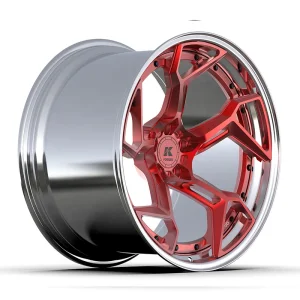
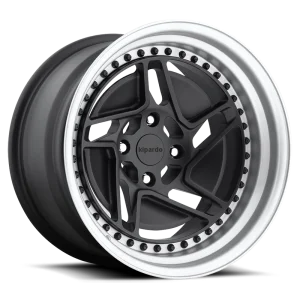
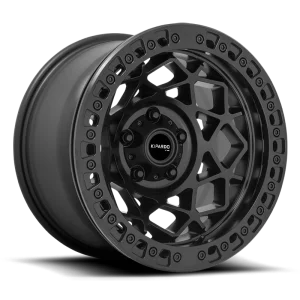
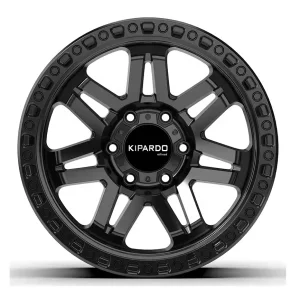
Direct-Factory Cast & 4x4 Off-Road Product Line
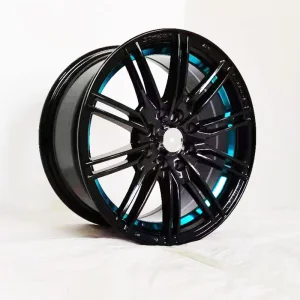
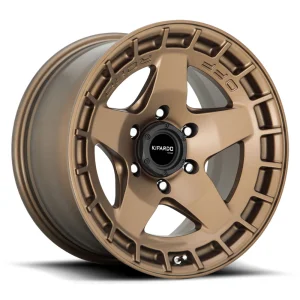
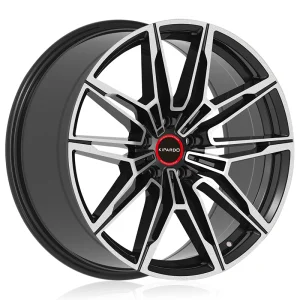
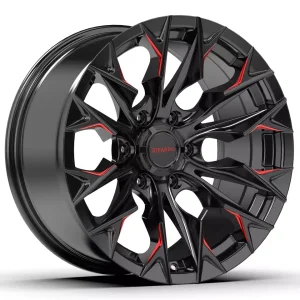
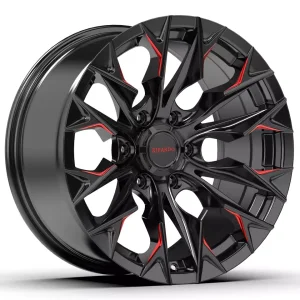
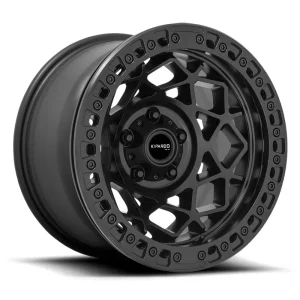
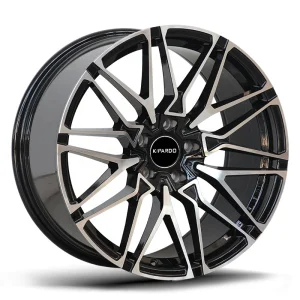
JWL/VIA-compliant low-pressure cast and heavy-duty 4x4 offroad wheels available for wholesale volume procurement and custom OEM private branding.
The Global Commercial & Industrial Landscape of Aluminum Rims
The automotive wheel rim ecosystem is navigating a tectonic paradigm shift driven by fleet electrification, strict curb-weight directives, and high mechanical fatigue demands.
Tier-1 Quality Standardization
Global original aluminum rim manufacturing has transitioned from generic cast metalworking into an ultra-precise metallurgical discipline. International distributors demand total compliance with stringent crash-energy mitigation protocols, including JWL (Japan Light Alloy Wheel standard), VIA verification, SAE J2530 aftermarket standards, and ISO 3006 cornering endurance criteria.
Manufacturing Specialization Hubs
China continues to command over 60% of worldwide aluminum alloy rim exports, anchoring production in centralized industrial clusters like Kunshan (Jiangsu) and Ningbo. Advanced facilities combine automated melting basins, robotic pouring arms, automated heat-treatment ovens, and 5-axis simultaneous CNC machining bays to provide unrivaled scalability and unit economics.
Electric Vehicle (EV) Synergies
The rapid rise of Battery Electric Vehicles (BEVs) has transformed wheel rim load vectors. BEVs carry significantly higher curb weights and instantaneous stall torque outputs. Factories now produce high load-index wheel architectures engineered with aerodynamically optimized spoke faces to systematically decrease drag coefficients and maximize battery driving range.
Technological Evolution: From Gravity Pouring to Hybrid Forming
Modern automotive engineering balances unsprung rotating mass reduction against destructive impact shock absorption across challenging operational surfaces.
Low-Pressure Die Casting (LPDC)
LPDC represents the industry bedrock for high-volume OE and aftermarket production. By forcing molten A356.2 aluminum upward into hardened steel dies under precisely pressurized inert gas, hydrogen micro-porosity and internal gas entrapment are minimized. The resulting casting exhibits consistent density, excellent radial balance, and predictable ductile elongation.
Rotary Flow-Forming Technology
Bridging the cost-to-performance delta between casting and forging, flow-forming (rim-rolling) applies intense hydraulic roller pressure and thermal energy to the spun wheel barrel. This cold-works the aluminum matrix, elongating grain structures along hoop-stress vectors to yield up to 15% mass reduction with fatigue resistance nearing billet forgings.
Aerospace 6061-T6 Billet Forging
For elite motorsport, exotic supercars, and high-margin bespoke tuning, 10,000-ton hydraulic forging presses consolidate solid billets of aerospace 6061 alloy. The zero-porosity internal architecture eliminates grain cleavage planes. Multi-piece modular assemblies (2-piece and 3-piece bolted/welded designs) provide infinite customization across wheel widths, step-lips, and negative offsets.
| Manufacturing Discipline | Material Specification | Tensile Strength (MPa) | Yield Strength (MPa) | Mass Differential | Optimal Commercial Use-Case |
|---|---|---|---|---|---|
| Low-Pressure Casting (LPDC) | A356.2 Alloy + T6 Solution | 220 – 250 MPa | 150 – 180 MPa | Baseline Reference | High-Volume Wholesale, Fleet Replacements & OE Replica Programs |
| Flow-Formed / Spun Rim | A356.2 Modified / T6 Aged | 270 – 310 MPa | 210 – 240 MPa | -10% to -15% | Performance Sedans, Track Day Enthusiasts, Range-Extended EVs |
| Monoblock Forged | 6061-T6 Aerospace Billet | 310 – 350 MPa | 275 – 300 MPa | -20% to -30% | Supercars, Armored Heavy Passenger Chassis, Precision Tuning |
| Multi-Piece Modular Forged | 6061-T6 Centers + 5051 Barrels | 320 – 360 MPa | 280 – 310 MPa | -18% to -25% | Custom Staggered Fitments, Concave Show Builds, Race Divisions |
Localized Application Scenarios: Engineered Fitments
Operating requirements vary drastically depending on local terrain, climatic humidity, corrosive road agents, and vehicle duty cycles.
North American & Australian Overlanding (4x4 Off-Road)
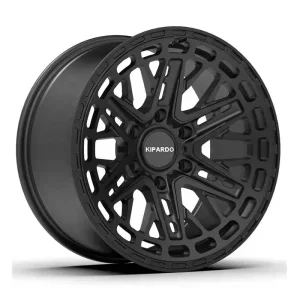
Traversing rugged outback tracks, boulder fields, and heavy towing scenarios demands wheels with specialized engineering. Our Kipardo 4x4 series incorporates reinforced spoke knuckles, ultra-thick bead seats, and rated wheel payload limits reaching up to 1,250 kg per corner. Bolt patterns focus heavily on 6x139.7, 5x150, and 6x114.3 fitments compatible with Toyota Land Cruisers, Hilux, Ford Ranger, and F-150 platforms.
European Autobahn & Cold-Weather Saline Corridors
Sustained high-velocity Autobahn transit requires strict run-out tolerances (radial and lateral run-out within < 0.30 mm) to eliminate high-frequency harmonics and chassis vibration. Nordic and Alpine winter conditions demand salt-spray endurance. Rimax employs automated multi-stage pre-treatment lines, electrostatic powder priming, and thick polyurethane clear coats that routinely exceed 1,000+ hours in ASTM B117 salt fog chambers without blister defects.
Middle Eastern High-Ambient Desert Operations
Operating in environments where asphalt surface temperatures reach 70°C demands structural integrity that resists thermal fatigue and degradation. High brake friction heat transfer can affect inferior aluminum compositions. Our controlled T6 solution and artificial aging cycles yield an unyielding crystalline structure that prevents rim barrel distortion under extreme thermal loads.
Macro Solutions: Eliminating Risk for Overseas Importers
Direct factory sourcing requires robust safeguards covering tariff optimization, tooling longevity, and supply chain continuity.
Dedicated Tooling & Mold Exclusivity
Protecting design exclusivity is essential for maintaining strong regional margins. Rimax works with tier-one brand distributors under strict Bilateral Non-Disclosure Agreements (NDAs). Custom cast mold toolings (hardened H13 steel cores) and proprietary forged 3D CAD step-files remain protected, with guaranteed market territory exclusivity per SKU.
Supply Chain Buffer & Consolidation
Managing inventory carrying costs while preventing stockouts requires smart container packing strategies. Rimax provides mixed-model container packing across 15-inch to 24-inch lines, combining volume cast SKUs with premium forged custom wheels. Dedicated warehousing buffers near Shanghai and Ningbo ports ensure seamless logistics for both FCL and LCL shipments.
Turnkey Private Label Packaging
Elevate consumer brand recognition with tailored retail packaging. Rimax manufactures reinforced double-wall corrugated shipping boxes engineered for drop-test resilience. We deliver precision CNC laser-etched custom center caps, matching protective cloth covers, rim flange edge protectors, and localized regulatory barcode labeling tailored for your downstream fulfillment centers.
Technical Roadmap: The Next Generation of Wheel Engineering
Our R&D pipeline integrates sustainable raw materials, advanced composite bonding, and data-driven generative structural optimization.
Closed-Loop Recycled Green Aluminum
In response to international Corporate Average Fuel Economy (CAFE) and EU CBAM carbon border tax regulations, Rimax is shifting primary foundry smelters toward certified low-carbon recycled alloys. Utilizing clean hydro-electric power for molten recycling achieves a 65% reduction in embodied carbon dioxide (CO2e) per kilogram of manufactured rim wheel compared to traditional coal-smelted virgin bauxite ingots.
AI Generative Topology Optimization
By leveraging cloud FEA (Finite Element Analysis) and AI topology engines, wheel spoke patterns are engineered along active stress lines. Material is removed from non-structural load zones and redistributed to critical fatigue areas like inner rim flanges and spoke roots. This engineering yields an organic, ultra-light structural framework engineered for rapid cornering stability.
Carbon-Fiber Barrel Hybrid Assemblies
For high-performance applications, Rimax's advanced engineering team pairs 6061-T6 forged aluminum alloy centers with high-modulus dry carbon fiber rim barrels using titanium fasteners. This hybrid architecture delivers up to 40% reduction in moment of inertia (rotational gyroscopic resistance), resulting in faster brake response, sharper turn-in grip, and enhanced acceleration dynamics.
Frequently Asked Questions for Wheel Importers
Clear answers to technical, commercial, and testing inquiries direct from our manufacturing and quality assurance engineering leadership.
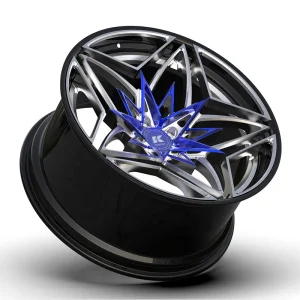
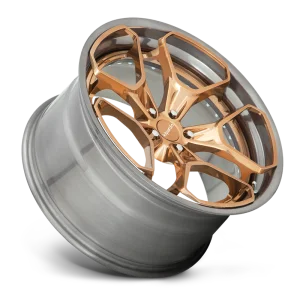
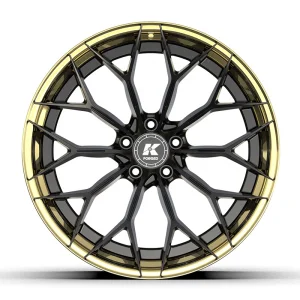
Custom Billet Forged & Multi-Piece Performance Wheels
Premium monoblock, 2-piece, and 3-piece modular forged solutions engineered for high-performance exotics, luxury SUVs, and bespoke tuning applications.