
Featured Radial & Multi-Piece Forged Collections
Verified JWL/VIA performance configurations engineered for luxury platforms, performance tuning programs, and extreme 4x4 overland environments.
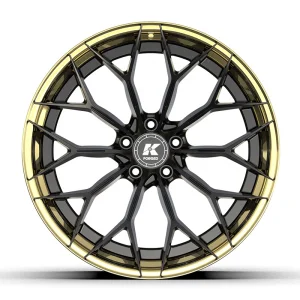
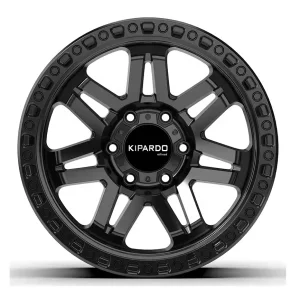
China Kipardo 17 18 inch factory wholesale 6 hole custom car aluminum alloy rims 4x4 offroad wheels Supplier, Service
View Specifications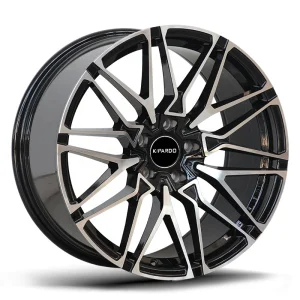
Custom Kipardo 19 20 21 22 inch factory custom wholesale luxury alloy rims aluminum 4x4 offroad wheels Exporter, Service
View Specifications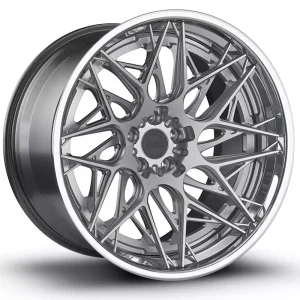
Discount Kipardo 18 inch to 24 inch fully custom 6061-T6 aluminum concave forged wheels Suppliers, Company
View Specifications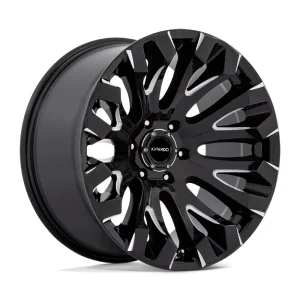
Wholesale Alloy wheels rims 20X8 20X10,4x4 rines wheels candy red 16x8 17x9 pcd 6x139.7 5x150 offroad wheels Supplier, Exporters
View Specifications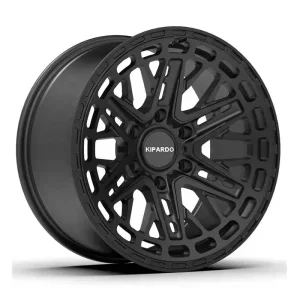
Wholesale Kipardo China factory 20 inch 5 6 hole alloy rims aluminum 4x4 offroad wheels Supplier, Factories
View Specifications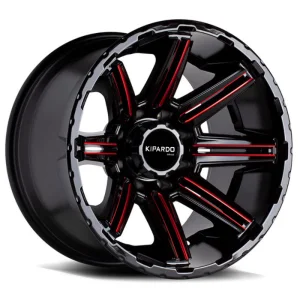
Wholesale Kipardo 17 18 inch factory customized aluminum alloy car rims offroad wheels Suppliers, Factories
View Specifications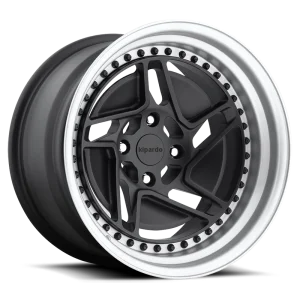
OEM Custom wholesale new design Forged car 3 pieces forged wheels Companies, Service
View SpecificationsMicrostructural Grain Alignment & Radial Flow Dynamics
The fundamental differentiator of radial forged wheel technology lies in the systematic elimination of crystalline voids and dendritic shrinkage through thermal-mechanical elongation.
In modern automotive engineering, wheel assemblies constitute unsprung rotational mass, exerting an outsized influence on chassis dynamics, dampening response rates, kinetic energy consumption, and high-frequency harmonic vibration. Shanghai Rimax Industry Co., Ltd., leveraging its proprietary Kipardo manufacturing architecture, has pioneered advanced radial forging techniques that converge the structural integrity of aerospace-grade forged monoblocks with the dimensional economics and design flexibility of casting.
During the radial forging process (frequently categorized as rotary flow-forming or flow-forged engineering), a specially cast or precured A356.2 or 6061-T6 aluminum blank is clamped over an internal mandrel rotating at high velocity. Hydraulic rollers exert multi-axis compressive pressures exceeding 120 bar directly against the wheel rim barrel. Under elevated thermal parameters (380°C to 440°C), the metallurgical grain structure is plastically displaced and elongated along a continuous longitudinal axis. This mechanical realignment eliminates the porous micro-cavities typical of traditional low-pressure or gravity casting, yielding an ultra-dense molecular matrix capable of withstanding extreme tangential shear stresses.
| Evaluation Parameter | Standard Gravity / LPDC | Radial Forged (Flow Formed) | Billet Monoblock Forged |
|---|---|---|---|
| Tensile Strength (Rm) | 220 – 250 MPa | 310 – 350 MPa Optimal Balance | 380 – 420 MPa |
| Yield Strength (Rp 0.2) | 140 – 170 MPa | 240 – 280 MPa | 290 – 340 MPa |
| Elongation at Break (A5) | 3% – 5% (Brittle Risk) | 8% – 12% (Ductile) | 12% – 15% (Maximum Ductility) |
| Unsprung Weight Penalty | Baseline (Heaviest) | 15% to 22% Reduction | 25% to 32% Reduction |
| Impact Resistance (13° Test) | Prone to micro-fracturing | Elastic deformation absorption | Maximum energy absorption |
| Tooling Cost & Unit Economics | Lowest unit cost; high tooling | Moderate tooling; high ROI | Zero mold charge; high machining time |
Industrial Shift: Why Global Fleets & Importers Migrate to Radial Forged
Electrification, aggressive torque spikes, and rising carbon taxation have transformed wheel procurement from an aesthetic choice into a strict weight-to-payload compliance equation.
The EV Unsprung Mass Mandate
With modern BEVs (Battery Electric Vehicles) weighing up to 30% more than ICE counterparts due to lithium packs, suspension components endure severe cyclic loading. Radial forged wheels provide the imperative payload rating (up to 1,050 kg per corner) without penalizing battery kilowatt-hour efficiency, mitigating EPA range depletion.
Overland & Commercial Fleet Demands
In the commercial utility and heavy off-road sectors, cast wheels face severe wheel rim cracking along bead seats when operated under deflated conditions. Kipardo radial forged wheels introduce ductile rim flanges that deform elastically during rock impacts, avoiding catastrophic bead-loss or sudden pressure deflation in remote environments.
Supply Chain De-risking & Total Cost
Brand distributors in North America, Western Europe, and Australasia are consolidating fragmented cast vendors into integrated tier-1 radial forged manufacturers. Standardizing on JWL/VIA and TÜV-certified platforms reduces warranty claims by up to 88% and lowers ocean freight costs per unit by optimizing packaging volume and wheel net mass.
Localized Application Scenarios Across Global Markets
How Rimax engineers fitments, offsets, coatings, and load profiles to withstand hyper-specific geographical and operational extremes.
North American Light Truck & Desert Duty
Engineered for high-payload platforms such as the Ford F-Series, Chevrolet Silverado, and RAM 1500/2500. Fitted with 6x139.7 and 5x150 hub-centric bores, reinforced inner rim lips, and deep negative offsets (-12mm to -44mm). These wheels resist high-speed washboard trail shocks in the American Southwest and handle aggressive tow ratings up to 14,000 lbs GVWR.
European Autobahn & Track Touring
Designed for high-speed sustained thermal equilibrium on German Autobahns and closed-circuit environments. Low brake-clearance barrels accommodate 380mm to 420mm carbon-ceramic multi-piston calipers. Radial forging keeps rotational inertia low, ensuring rapid directional change and compliance with stringent German TÜV KBA homologation parameters.
GCC Middle Eastern Hyper-Heat & Dune Slicing
Developed for Nissan Patrol and Toyota Land Cruiser LC300 overlanding through empty quarters and extreme ambient temperatures reaching 52°C. Thermal-stabilized powder coatings prevent clearcoat peeling, while knurled bead seats prevent tire slippage during aggressive low-PSI dune cresting.
Australasian Mining & Outback Corrugation
Tailored to Toyota Hilux, Land Cruiser 79 Series, and Ford Ranger commercial mining fleets. Wheels undergo extended 2,500-hour copper-accelerated acetic acid salt spray (CASS) testing to resist caustic red-dirt salinity and unsealed corrugated roads across Western Australia and Queensland.
Urban Commercial EV Fleet Fleets
Engineered for high-utilization last-mile delivery vans and EV transport fleets requiring repeatable curb-impact resilience. Rim profiles are optimized for regenerative braking airflow, dissipating thermal soak from frequent stops while shielding suspension linkages from urban road hazards.
Bespoke Luxury Stance & Concave Tuning
Tailored for exotic sports cars and luxury grand tourers requiring extreme concave design profiles (up to 95mm profile drop). Multi-piece modular forged barrels combined with radial forged centers deliver custom backspacing, polished stepping lips, and titanium hardware configurations with zero structural compromise.
Supply Chain Resilience & Kunshan Smart-Manufacturing Efficiency
Strategic infrastructure located in Jiangsu’s Yangtze River Delta automotive cluster gives Rimax unmatched raw material velocity, precision toolmaking, and export readiness.
Upstream Ingot Purity & Direct Smelting
Rimax sources prime virgin electrolytic A356.2 and 6061 aerospace billets directly from certified domestic smelters. In-house rotary degassing with argon-nitrogen gas mixtures reduces hydrogen content to below 0.10 cm³/100g Al, drastically suppressing porosity before mold cavity injection.
5-Axis CNC Precision & Rapid Tooling
Equipped with multi-axis automated CNC milling, lathe turning centers, and precision diamond-cutting machinery. New bespoke wheel designs can complete 3D FEA topological optimization, mold fabrication, and prototype T6 heat treatment in 28 days, cutting Western development lead-times in half.
Port Proximity & Agile Freight Logistics
Located directly adjacent to Shanghai Port and Ningbo-Zhoushan maritime logistics corridors. Containerized freight is cleared through digital customs documentation and loaded within 48 hours of final QC clearance, ensuring stable sail schedules and minimized demurrage risk for global distributors.
Technology Roadmap: Next-Generation Wheel Engineering (2025–2030)
Pioneering advancements in AI-driven structural generative design, hybrid material compositions, and zero-carbon closed-loop lifecycle engineering.
AI-Generative Finite Element Analysis
Transitioning spoke geometry development from empirical drafts to cloud-based neural networks that simulate millions of dynamic cornering and 13° impact vectors. Material is eliminated from low-stress nodes and added only to high-stress junctions, trimming an extra 8% of unnecessary mass while increasing fatigue thresholds.
Carbon-Aluminum Hybrid Radial Forging
Integrating high-modulus dry carbon composite outer barrels with radial forged 6061-T6 aluminum center webs. Secured via blind aero-riveting, this hybrid construction reduces total rotational mass by 40% compared to cast equivalents, offering the pinnacle in motorsport and hypercar handling performance.
Circular Metallurgy & Green Smelting
Deploying closed-loop scrap recycling channels that return 100% of CNC swarf directly to electric induction furnaces. Utilizing 100% renewable solar and hydro-powered smelting arrays drastically lowers the Scope 1 and Scope 2 carbon footprint per shipped container, supporting EU CBAM sustainability compliance.
Localized Support & International Compliance Assurance
Full traceability and testing protocols that comply with all global automotive regulatory frameworks.
JWL & VIA Test Compliance
All Rimax production runs undergo mandatory Japanese Light Alloy Wheel standard verification. This includes dynamic radial endurance tests exceeding 500,000 cycles, rotational bending moment tests to 100,000 cycles, and 13° striker drop impact tests to ensure no sudden air pressure dissipation occurs.
SAE J2530 & DOT Registration
For North American aftermarket and fleet accounts, wheel molds and production lots conform to SAE J2530 aftermarket standards. Radial and lateral runouts are kept within 0.3mm, with backspacing, load marking, and factory ID clearly cast or engraved for smooth DOT and customs audits.
Private-Label OEM Branding Kits
Comprehensive localization support for international brand builders: customized logo embossing on rim lips, CNC engraved spoke graphics, bespoke anodized billet center caps, branded color packaging, barcoded master cartons, and complete palletizing tailored to automated warehouse distribution centers.
High-Load Off-Road & Custom Commercial Cast/Forged Alloys
Advanced 15-inch to 24-inch fitments built with high-pressure casting and precision rotary engineering for global distribution programs.
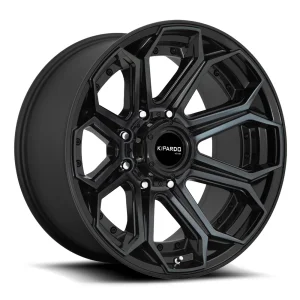
CE Certification Kipardo 17 20 inch 6lug 6x139.7 4x4 offroad car alloy wheels rims for lexus GX460 GX470 Company, Products
View Specifications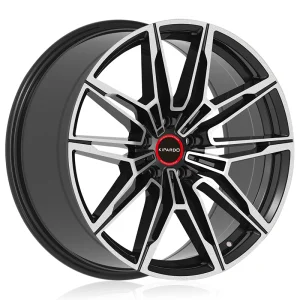
China Kipardo 18 19 20 inch factory wholesale cast alloy rims aluminum 4x4 offroad wheels Manufacturers, Suppliers
View Specifications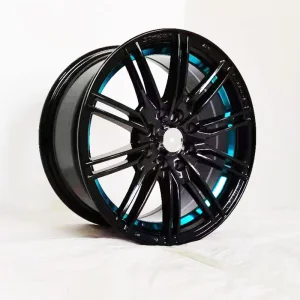
Wholesale KIPARDO 15 inch black color machine face alloy wheel rims for sale Manufacturer, Quotes
View Specifications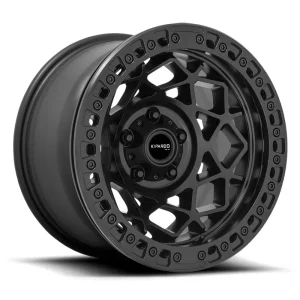
ODM Kipardo 17 20 inch factory wholesale black custom cast aluminum alloy rims 4x4 offroad wheels Manufacturer, Products
View Specifications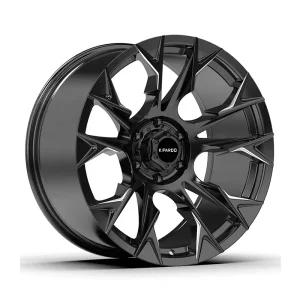
Custom Kipardo 20 inch factory wholesale 5 6 hole aluminum alloy rims 4x4 offroad wheels Supplier, Companies
View Specifications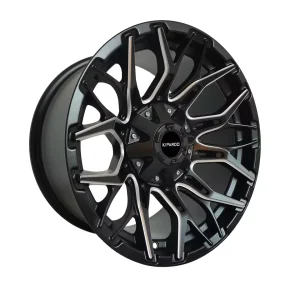
Cheap Kipardo 17 18 inch 5 6 hole factory custom casting car aluminum alloy rims 4x4 off road wheels Exporter, Product
View Specifications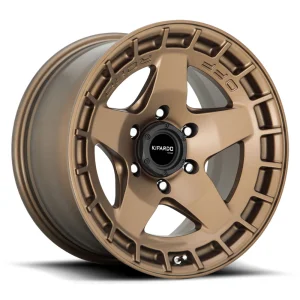
China Kipardo 17 18 inch high quality factory wholesale aluminum alloy rims 4x4 offroad wheels Manufacturer, Companies
View Specifications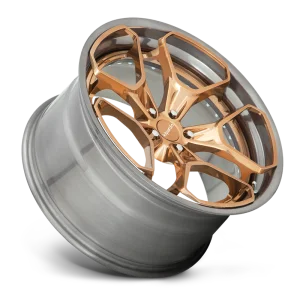
OEM Kipardo alloy wheels Forged car 3 pieces forged wheels 2 pieces,monoblock Manufacturer, Products
View SpecificationsB2B Technical & Sourcing Inquiries (FAQ)
Clear, engineering-grounded answers to assist commercial buyers, wholesale importers, and brand owners in planning radial forged wheel programs.