
Engineered Alloy & Forged Wheels Optimized for Uruguay Fleet Demands
Direct manufacturer configurations matching regional PCD fitments for high-volume agricultural utilities, coastal crossovers, and metropolitan commercial transport.
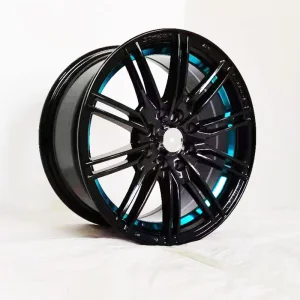
KIPARDO 15-Inch Machined Face Precision Alloy Wheel for Compact & Sedan Fleets
- Spec: 15x6.5J | PCD 4x100 / 4x10⁸ / 5x100
- Coating: Multi-Layer Anti-Salt Clear Coat
- Application: Chevrolet Onix, VW Gol, Fiat Cronos
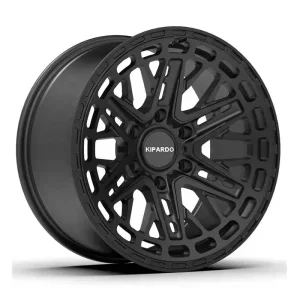
Kipardo 20-Inch Heavy-Duty 5/6 Hole Cast Off-Road Rim for Light Commercial Trucks
- Spec: 20x9.0J | PCD 6x139.7 / 5x150 / 6x135
- Load Index: 1,250 kg per corner (Reinforced Hub)
- Target: Toyota Hilux, Ford Ranger, VW Amarok
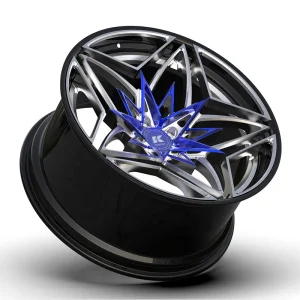
Kipardo Custom Modular 18-30 Inch 2-Piece/3-Piece Aircraft Aluminum Forged Rims
- Material: 6061-T6 Aerospace Forged Billet
- Construction: Modular 2-PC/3-PC Titanium Fasteners
- Profile: Deep Concave Custom Offset (ET0 to ET-44)
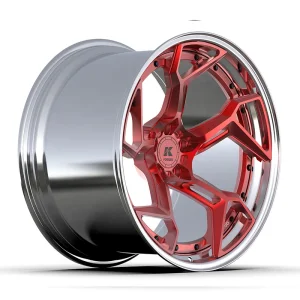
OEM Kipardo Monoblock 18-22 Inch Concave 6061-T6 Forged Rims for Luxury SUVs & EVs
- Weight Reduction: 28% lighter than standard casting
- Compatibility: BYD Han/Tang, Porsche, BMW, Mercedes
- Certification: JWL, VIA, SAE J2530 Compliant
The Strategic Realities of the Uruguayan Aftermarket Wheel Sector
Operating as the logistics gateway to the Southern Cone via the Port of Montevideo, the Eastern Republic of Uruguay presents a distinct automotive environment requiring resilient engineering, specialized wheel designs, and agile Tier-1 manufacturing partnerships.
Complete Import Dependence & Mercosur Strategic Hub
Unlike neighboring Brazil or Argentina, Uruguay maintains no domestic automotive wheel smelting or casting industrial facilities. As a consequence, 100% of the country's aftermarket alloy wheels, steel wheels, and high-performance forged components are imported. Automotive parts distributors based in Montevideo, Canelones, and Maldonado depend entirely on foreign supply chains to satisfy replacement, restyling, and fleet maintenance demands.
Furthermore, Uruguay benefits from the Régimen de Puerto Libre (Free Port Regime) of Montevideo. Goods arriving in the terminal can be warehoused, divided, repacked, and cross-docked duty-free before entering domestic distribution or being re-exported across Mercosur members. Wheel suppliers providing optimized palletization, barcode integration, and multi-SKU containerization give Uruguayan import houses an immense logistical edge across the Rio de la Plata corridor.
Fleet Composition: 1-Ton Pickups, Compact Commuters & EV Disruption
The vehicle parc across Uruguay is polarized by geographical realities. In the vast agricultural interior—encompassing departments like Tacuarembó, Durazno, Paysandú, and Soriano—1-ton body-on-frame pickups represent over 40% of localized automotive consumption. Workhorse platforms such as the Toyota Hilux, Ford Ranger, Volkswagen Amarok, Chevrolet S10, and Nissan Frontier operate under grueling payload and unpaved terrain stresses, demanding heavy-duty cast and flow-formed wheels rated for high structural fatigue.
Simultaneously, the metropolitan hub of Montevideo showcases a high density of subcompact hatchbacks (e.g., Chevrolet Onix, Hyundai HB20, Fiat Mobi), juxtaposed with Latin America's fastest-growing electric vehicle adoption curve. Driven by national decarbonization incentives and state utility UTE’s comprehensive charging infrastructure, Chinese EV powerhouses like BYD, Chery, and Geely have captured unprecedented market shares. These high-torque electric vehicles require lightweight, aero-optimized alloy wheels engineered with elevated load indices to handle heavy battery pack inertia without penalizing kilowatt-hour range.
Localized Application Scenarios: Where Engineering Meets Uruguayan Reality
A wheel sold in Uruguay must withstand extreme variances—from corrosive marine humidity on the Atlantic coast to severe mechanical impacts across rural gravel roads (*caminos de balasto*).
Agricultural Haulage & Unpaved Corridors (Interior)
Across the grain, beef, and forestry corridors connecting Route 5 and Route 2, commercial pickup trucks routinely navigate washboard surfaces and unpaved ballast roads. Gravity-cast wheels from budget suppliers frequently suffer spoke-root micro-fissuring and rim flange deformation under these cyclic shock loads.
Rimax Solution: Low-pressure cast A356.2 aluminum-silicon alloy treated to T6 thermal temper, featuring reinforced inner bead seats and safety bead contours rated up to 1,250 kg per corner. Engineered to eliminate crack propagation during high-velocity stone strikes.
Marine Salinity Resistance (Montevideo & Punta del Este)
Over 70% of Uruguay's population resides along the Rio de la Plata estuary and the Atlantic littoral. The maritime environment in Punta del Este, Piriápolis, and the Montevideo Rambla exposes wheels to intense airborne sodium chloride and galvanic oxidation, leading to rapid filiform corrosion on cheap diamond-cut clear coats.
Rimax Solution: High-specification 4-stage surface finishing featuring automated degreasing, zinc phosphate passivation, epoxy powder electrostatic priming, and ultra-durable aliphatic polyurethane clear topcoats passing 240-hour Copper Accelerated Acetic Acid Salt Spray (CASS) tests.
Urban Torque & Electric Vehicle Dynamics (Montevideo)
Montevideo’s rapid shift toward commercial electric delivery vans and private BYD, Geely, and Tesla passenger vehicles introduces extreme instant torque loads (up to 400+ Nm instantly) and heightened axle curb weights caused by lithium-iron-phosphate (LFP) traction batteries.
Rimax Solution: Rotary Flow-Formed (Spin-Forged) and monoblock 6061-T6 forged designs. By mechanically stretching the barrel grain structure over high-speed mandrels, we yield a tensile strength surpassing 310 MPa while reducing un-sprung rotational mass by 15-20%, protecting vehicle suspension joints.
China Factory 4.0: Delivering Precision, Efficiency & Supply Resilience
Modern B2B wheel sourcing is no longer about raw labor arbitrage—it is an engineering discipline anchored in robotic automation, digital twin quality verification, and flexible batch production.
Automated Low-Pressure Casting & Flow-Forming
At our intelligent casting facility, molten A356.2 aluminum undergoes robotic ultrasonic degassing and spectrographic composition verification before being transferred to our computerized low-pressure casting carousel. Liquid alloy is injected from underneath under precisely monitored nitrogen pressure cycles (0.2 to 0.7 bar), dramatically eliminating ambient air entrapment, cold shuts, and internal gas micro-porosity compared to archaic gravity casting.
For high-tier passenger and commercial applications, our multi-roller CNC rotary flow-forming lines compress and elongate the wheel rim barrel under immense pressure and 350°C heat. This mechanical work refines the dendritic aluminum grain boundary into a continuous, aligned crystalline structure similar to forged metal, enhancing barrel radial yield limits by up to 35%.
100% In-Line Radiography & JWL/VIA Validation
Every single cast wheel unit is routed through fully automated real-time X-ray non-destructive testing (NDT) chambers equipped with artificial intelligence defect detection algorithms. Any casting demonstrating subsurface shrinkage cavities, slag inclusions, or density anomalies in high-stress spoke roots is immediately rejected prior to CNC machining.
Our internal physical testing laboratory continuously validates serial production batches against the industry's most rigorous global criteria: JWL, JWL-T (Japan Light Wheel standards), VIA, and SAE J2530. Dynamic Cornering Fatigue rigs subject wheels to over 100,000 bending cycles; Dynamic Radial Fatigue machines apply continuous multi-ton rotational loads to simulate 500,000 km of road life; and 13-degree / 30-degree impact pendulum droppers ensure catastrophic brittle fractures never occur during unexpected pothole collisions.
Structural Process Comparison for Automotive Importers
Equipping Uruguayan distributors with quantitative mechanical criteria to balance production costs, payload ratings, and consumer price margins across product lines.
| Evaluation Parameter | Low-Pressure Cast Wheel | Rotary Flow-Formed Wheel | 6061-T6 Forged Wheel (Monoblock/Multi-PC) |
|---|---|---|---|
| Base Material & Metallurgy | Primary A356.2 Aluminum Alloy (Si 6.5-7.5%) | Primary A356.2 with Thermally Spun Barrel | Solid Billet Aerospace 6061-T6 Aluminum (Al-Mg-Si) |
| Tensile Strength (Rm) | 230 – 260 MPa | 290 – 330 MPa (Barrel Region) | 380 – 420 MPa (Uniform throughout structure) |
| Yield Strength (Rp 0.2) | 160 – 190 MPa | 220 – 250 MPa | 310 – 350 MPa |
| Weight Differential | Standard Industry Baseline (100%) | 12% – 18% Lighter than Casting | 25% – 32% Lighter than Casting |
| Impact Resistance (13° Pendulum) | Meets standard JWL / VIA requirements | High ductility, exceptional barrel bounce | Extreme plasticity; absorbs energy without fracturing |
| B2B Unit Cost Index | Cost-Optimal / Highest Margin | Balanced Performance / Mid-Tier | Ultra-Premium / High Ticket |
| Optimal Uruguayan Application | Replacement market, rental fleets, mass retail | Overland 4x4 trucks, long-range EVs, SUVs | Custom luxury SUVs (Punta del Este), motorsports |
Navigating Latin American Procurement: Overcoming Lead Times & SKU Complexity
How sophisticated Tier-1 importers in Montevideo structure supply agreements to maintain healthy working capital while serving fragmented vehicle fitments.
Mixed-SKU Container Consolidation
The single greatest obstacle facing wheel distributors in medium-sized markets like Uruguay is minimum order quantity (MOQ) friction. Sourcing 40HQ containers strictly in single-SKU configurations causes severe capital freeze and unsold dead inventory.
Our agile Factory 4.0 production scheduling enables mixed-SKU consolidation. In a single 40-foot high-cube container (typically holding 1,400 to 1,900 wheels depending on diameter mix), Uruguayan partners can combine 4 to 8 unique tooling profiles, spanning 15-inch sedan geometries, 17-inch 4x4 off-road fitments, and bespoke 20-inch SUV designs.
Customs Compliance & LATU Standards
Importing automotive components into Uruguay requires strict adherence to customs clearance protocols and potential oversight by regulatory bodies like LATU (Laboratorio Tecnológico del Uruguay) ensuring mechanical roadworthiness and load conformity.
Every shipment we dispatch is backed by comprehensive digital audit documentation: spectrographic metal analysis sheets, JWL/VIA destructive test certifications, serialized heat-treatment batch logs, and bilingual English-Spanish commercial invoices and packing lists aligned to Uruguayan Harmonized Tariff Codes (NCM 8708.70).
Buffer Stocking & Maritime Freight Resilience
Transit times from Ningbo or Shanghai to the Port of Montevideo average 38 to 50 days. Disruptions along oceanic lanes can strain wholesale supply lines right before seasonal peak purchasing periods (such as the spring harvest prep in October or the summer tourism rush in December).
We work with strategic distributors to implement scheduled container flow programs. By forecasting regional rolling orders 90 to 120 days in advance, our automated inventory buffering guarantees reliable container departures every month, maintaining retail shop shelf availability without bullwhip inventory swings.
Expanded Catalog: Specialized Rims Serving Uruguay & Regional Trade
Full technical breadth including off-road beadlocks, deep-lip staggered fitments, rotary flow-formed tuners, and ultra-durable cast commercial alloy wheels.
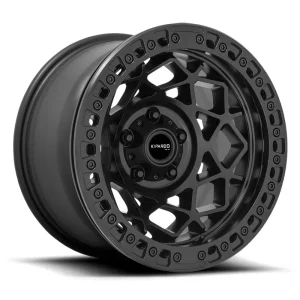
ODM Kipardo 17-20 Inch Satin Black Custom Cast 4x4 Off-Road Alloy Wheel
- Diameter: 17x8.5J / 18x9.0J / 20x9.0J
- Bolt Pattern: 6x139.7, 5x127, 6x135
- Finish: Satin Black Electrostatic Powder
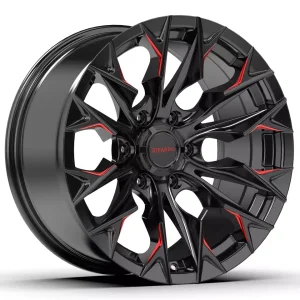
Kipardo RTS 17x9 4x4 Alloy Rim for Hilux, Frontier & Land Cruiser 70 Series
- Size: 17x9.0J | ET: -12 to +15
- PCD Options: 6x139.7, 6x114.3, 5x150
- Reinforced Flange: Simulated Beadlock Ring
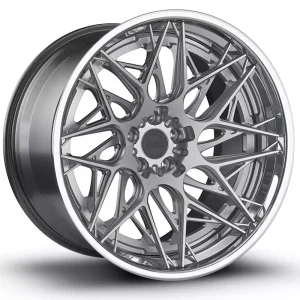
Kipardo 18-24 Inch Fully Custom 6061-T6 Aluminum Concave Forged Wheel
- Engineering: FEA Computer Optimized Profiles
- Brake Clearance: High-Pad Brembo/Carbon Ceramic
- Finish: Brushed Bronze, Gloss Black, Champagne
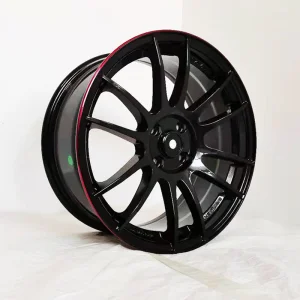
KIPARDO 15-Inch Sport Undercut Red Japanese Street-Style Alloy Wheel
- Fitment: 15x7.0J | PCD 5x100 / 4x100
- Styling: CNC Milled Inner Red Undercut Stripe
- Application: VW Polo, Toyota Yaris, Honda Civic
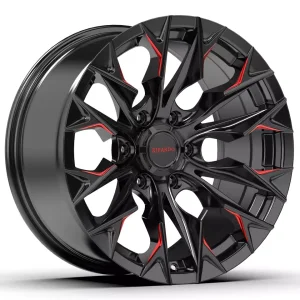
Kipardo 16-18 Inch 6-Hole Cast Commercial All-Terrain Alloy Rim
- Sizes: 16x8.0J / 17x8.5J / 18x9.0J
- Center Bore: 106.1mm Hubcentric (Toyota Spec)
- Finish: Matte Gunmetal & Machined Lip
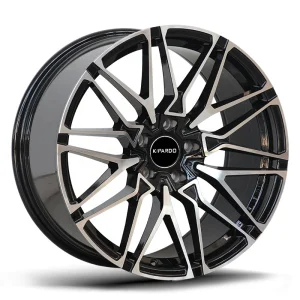
Custom Kipardo 19-22 Inch Precision Luxury Crossover & 4x4 Alloy Rim
- Target Vehicles: Range Rover, Audi Q7/Q8, Porsche
- Load Rating: 980 kg per wheel (SUV Verified)
- Precision: Optical Centering & Runout <0.3mm
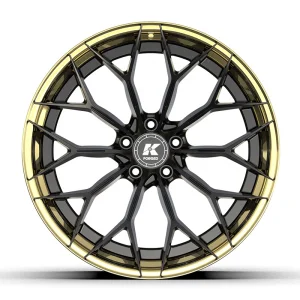
OEM Kipardo Ultra-Luxury 3-Piece Modular Forged Rims with Step-Lip Barrels
- Architecture: Forged Center + Spun Rim Halves
- Hardware: ARP Grade-5 Aerospace Titanium Bolts
- Fitment: Bespoke Widths from 8.0J to 13.5J
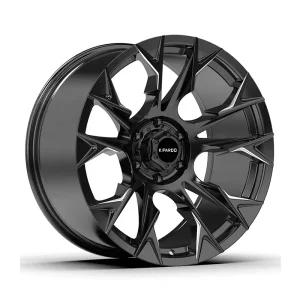
Custom Kipardo 20-Inch Multi-Spoke 5/6-Hole All-Terrain Aluminum Alloy Wheel
- Specification: 20x9.5J | PCD 6x139.7 / 5x120
- Structural Load: Certified 1,150 kg per corner
- Application: VW Amarok V6, RAM 1500, F-150
Frequently Asked Questions: Sourcing Alloy Wheels for Uruguay
Clear, definitive technical and commercial answers addressing common logistical, compliance, and engineering queries from Uruguayan import houses.